Grocery stores and supermarkets · Content marketing
Answer the questions a family asks before it trusts you with its ration.
Content marketing for a grocery store means short pages, messages and videos that answer a household's doubts about freshness, delivery and price. GullySales finds those questions in your own calls and chats, and writes the answers in the store's voice.
Scope, fee, reporting and term are agreed in writing after we have read your brief and spoken to you.
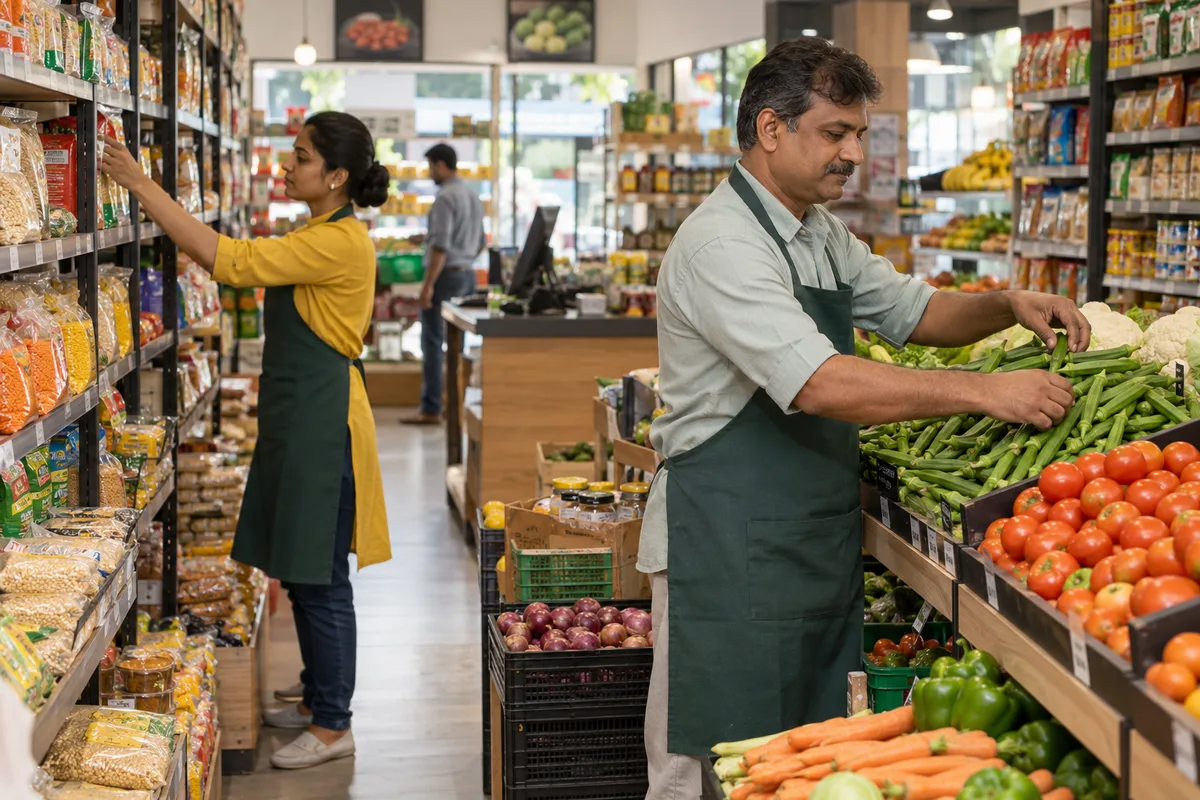
What content marketing means
Content marketing is writing articles, guides and pages that answer the questions buyers search before they are ready to enquire. This makes your business visible and trusted before the first call. GullySales plans this content from the first conversation onward, choosing topics that match real search demand rather than guesses.
Also for grocery stores and supermarkets
- social media marketing for grocery stores and supermarkets
- SEO for grocery stores and supermarkets
- local SEO for grocery stores and supermarkets
- PPC ads for grocery stores and supermarkets
- reputation management for grocery stores and supermarkets
- WhatsApp marketing for grocery stores and supermarkets
- referral marketing for grocery stores and supermarkets
- follow-up systems for grocery stores and supermarkets
Sales and marketing for grocery stores and supermarkets, the overview.
Last updated 11 Oct 2026. Rules for this trade differ by state and professional body, and they change. We describe restrictions in general terms, so check the current position with your own council or adviser before you publish anything.
For grocery stores and supermarkets
Where it usually goes wrong, and what we would do.
“Posts show products and not the reasons to switch”
A photograph of a shelf tells a family nothing about why your store is better than the one with the lower price.
“Nobody explains how substitution and credit work”
Families hesitate to send a list because they do not know what happens when an item is out, or whether they can pay later.
“Content is made for festivals and then abandoned”
A Diwali post goes up, and the store is silent until the next festival, so the audience forgets that the store exists.
What we do
What we deliver for grocery stores and supermarkets.
The work available for this need. We agree the deliverables and responsibilities for your engagement in writing.
How ordering and delivery work
A page and a short video that show how to send a list, how substitutions are handled, the delivery area and how to pay.
Result: A hesitant family knows exactly how to place a first order.
A freshness and sourcing page
A plain explanation of where vegetables, fruit and dairy come from, how often stock arrives and how you check dates.
Result: A family can judge freshness before it visits.
Shopping guides by household type
A starter list for a new family, a list for a hostel or PG, and a festival list for a joint family, each with real items and pack sizes.
Result: A family copies the list and sends it to you.
Seasonal notes
A short note ahead of pickle season, school reopening, wedding months and festivals about what the store will stock and when to order.
Result: Customers plan with you instead of at the last minute.
Store stories with permission
A short post about a staff member, a supplier farm or a family who has shopped with you for years, with their agreement.
Result: The store is a place with people, not only a shelf.
Reporting by piece
Visits, WhatsApp taps and orders from each page, video and message, set against the starting baseline.
Result: You learn which kind of content brings families.
How the result is measured
- Pages published
- Organic traffic
- Enquiries from content pages
Recorded as a baseline before work starts, so every later report has an honest comparison.
Questions families ask first
What a household wants to know before trusting a grocery store, and the piece that answers it.
- Is the produce really fresh, and when does it arrive?
- A short page or video from the morning arrival: the vegetables unloaded, the fruit being sorted, and the time stock reaches the shelf.
- What happens when something is out of stock?
- A plain note on your substitution rule. Say you will call or message before replacing an item, and the family may refuse a substitute.
- Do you deliver to my building, and what is the minimum order?
- An area page with the list of towers and streets, the minimum order, the delivery slots and the payment options, kept current.
- Can I pay later, and how does credit work?
- A clear explanation, if you offer credit, of who is eligible and how the account is settled. Skip it if you do not offer it.
- What should a new family buy in the first week?
- A starter list in English and the local language with pack sizes and approximate quantities for two, four and six members.
Who it is for
This is written for these grocery stores and supermarkets.
- Neighbourhood kirana and provision stores
- Supermarkets of one or two floors in a locality
- Small chains of three to ten stores in one city
- Fruits, vegetables and fresh produce stores
- Organic and natural food stores
- Milk booths and bakeries that also carry provisions
- Stores inside gated communities, where the association decides who delivers
- Imported and specialty food stores
Not for
It is not the right fit if.
- You have not decided how substitution and credit work, so a page explaining them would invent a policy.
- Nobody in the store can take photographs of the shelf and the morning stock, and a piece without them looks like the apps.
- You expect an article to replace the ration list orders that currently arrive through a known cashier.
Before you decide
Agree the work. Know how to judge it.
content marketing for grocery stores and supermarkets: use these checks to prepare, choose the scope, and review what changes.
Bring the right evidence
Bring questions from sales calls and examples of objections that delay a decision. Choose a subject expert who can check the substance, and identify evidence that can be published.
Make the scope clear
Agree the reader, buying question, format, and distribution route for each piece. Set the approval process and distinguish new research from rewriting material you already have.
Check the work in use
Ask a colleague to use the draft in a real buyer conversation. It should answer the question, support its claims, and make the next step clear without requiring a sales pitch to explain it.
Know when to change course
If the same unanswered question appears in several articles, improve the strongest page before commissioning another. More words are not a substitute for missing evidence.
These are discussion points, not a fixed package. GullySales confirms the deliverables, responsibilities, fee, and term in writing after reading your brief and speaking with you.
How it works
How the content marketing work runs
The work itself, in order. How an engagement starts, from your brief to a written scope, is set out on our method page.
- 1
Topic and responsibility approval
You approve the topics drawn from the strategy and nominate the factual reviewer. We agree who supplies information and who has authority to release each piece.
- 2
Brief approval and source handoff
Your team provides relevant documents and answers the brief's questions. A short subject conversation fills gaps, with recording only if the speaker permits it.
- 3
Factual review and release decision
GullySales sends the draft with marked claims. Your reviewer approves or corrects them, and any required professional review is completed before publication.
- 4
Publication and sales handoff
The approved piece goes on your website before agreed distribution. Your sales contact receives the link and the buyer question it answers.
- 5
Results and revision decision
We compare results with the baseline recorded before work starts. Your team confirms enquiry quality so we can decide which topics to update, continue, or stop.
Where this fits
Three pieces of sales work, in this order.
This work sits inside sales process design, at stage 0, foundation. The audit comes before it, and sales management keeps it running.
Step 1
Sales audit
Find where deals are being lost and what to fix first.
Start here if you cannot say where orders are lost.
Step 2 · you are here
Sales process design
One written way to sell, from first enquiry to repeat order.
Start here if every salesperson sells differently.
Step 3
Sales management
A target, a review routine and someone who owns the number.
Start here if the team has targets and no routine.
FAQ
Questions owners ask before they call.
Not here? More answers, or ask on WhatsApp.
Who writes the content for a grocery store?
Should we make videos or text pages?
Do we need content in more than one language?
Can we use photographs of customers or children in our posts?
How much does it cost?
How long is the contract?
How soon will we see results?
Who will actually do the work?
What do you need from us?
What if we are not happy with the work?
More for grocery stores and supermarkets
Related work to consider.
Closest to this: content and social
Also for grocery stores and supermarkets
Or start from the overview: sales and marketing for grocery stores and supermarkets.
Your next practical step
Tell us what you are trying to grow, and we will read it before we call.
Eight short steps, mostly taps. Skip anything you would rather answer on the call.