Grocery stores and supermarkets · WhatsApp marketing
Take the ration list on WhatsApp, and confirm it before the rider leaves.
WhatsApp marketing for a grocery store means using one business number to take lists, confirm orders and tell opted-in families what has arrived. GullySales sets up the profile, the catalogue and the replies, and teaches staff to keep the inbox in order.
Scope, fee, reporting and term are agreed in writing after we have read your brief and spoken to you.
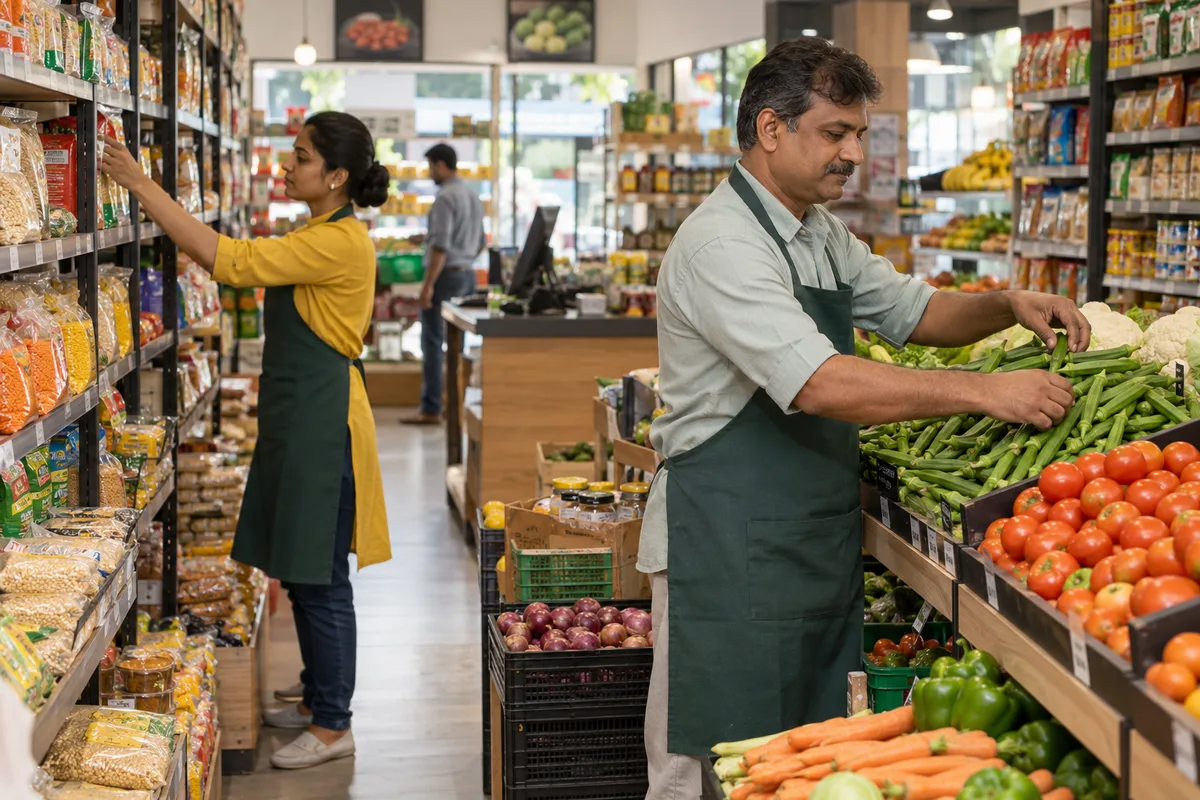
What WhatsApp marketing means
WhatsApp marketing is sending updates, offers and reminders to customers on the app most Indian buyers already check daily. GullySales sets up business WhatsApp, writes the message templates and keeps the list consented and current.
Also for grocery stores and supermarkets
- SEO for grocery stores and supermarkets
- local SEO for grocery stores and supermarkets
- PPC ads for grocery stores and supermarkets
- reputation management for grocery stores and supermarkets
- content marketing for grocery stores and supermarkets
- social media marketing for grocery stores and supermarkets
- referral marketing for grocery stores and supermarkets
- follow-up systems for grocery stores and supermarkets
Sales and marketing for grocery stores and supermarkets, the overview.
Last updated 11 Oct 2026. Rules for this trade differ by state and professional body, and they change. We describe restrictions in general terms, so check the current position with your own council or adviser before you publish anything.
For grocery stores and supermarkets
Where it usually goes wrong, and what we would do.
“Orders arrive on four staff phones”
Staff share orders from their own numbers, and when one of them leaves, the family's history leaves with the phone.
“Broadcasts go to families who never agreed”
A bulk message to an old customer list gets reported, and the store's number is blocked or restricted.
“Lists are read but not confirmed”
A family sends a list and hears nothing, so it orders from an app to be safe.
What we do
What we deliver for grocery stores and supermarkets.
The work available for this need. We agree the deliverables and responsibilities for your engagement in writing.
A business profile with a catalogue
Name, address, timings, delivery area and a catalogue of the fast-moving items with pack sizes, kept current by one person.
Result: A family sees the store properly before it writes.
Greeting and quick replies
A welcome that asks for the list, address and delivery slot, and saved replies for price, substitution and payment questions.
Result: Every list gets an answer, even during a rush.
An opt-in record
A sheet that notes who agreed to hear from the store, when, and how, with a clear way to stop messages.
Result: You message only the families who asked.
Order confirmation and delivery message
A confirmation of items and amount, a message when the order is out for delivery, and a short check after it arrives.
Result: A missing item is caught before the family has to complain.
Festival and arrival broadcasts
A few approved messages for hampers, fresh arrivals and shop timing changes, sent to opted-in families in short, useful form.
Result: Families hear from you when you have news, not every day.
Staff hand-off rules
One business number, a roster for who answers and a simple way to pass a chat on, so no conversation depends on one phone.
Result: The inbox survives a day off.
How the result is measured
- Messages delivered
- Reply rate
- Enquiries from WhatsApp
Recorded as a baseline before work starts, so every later report has an honest comparison.
What must be in place first
What a grocery store needs before it sends a single WhatsApp message to families.
- Opt-in record for every family
- Note the name, number, the date and how they agreed, such as a form at billing or a message they sent first. Do not add people from a bought or old list.
- A WhatsApp Business profile
- Use a separate store number with the name, address, timings and catalogue filled in, so families see a business and not a person's phone.
- Message templates for the API
- If you move to the Business API for volume, templates are approved by WhatsApp. Check WhatsApp's current business policy and pricing before you plan the budget.
- A way to stop
- Tell families how to stop messages, and honour it straight away. A family who leaves quietly is better than one who reports you.
- A person to reply
- Name who answers during store hours and who covers on days off. A reply path matters more than the broadcast itself.
Who it is for
This is written for these grocery stores and supermarkets.
- Neighbourhood kirana and provision stores
- Supermarkets of one or two floors in a locality
- Small chains of three to ten stores in one city
- Fruits, vegetables and fresh produce stores
- Organic and natural food stores
- Milk booths and bakeries that also carry provisions
- Stores inside gated communities, where the association decides who delivers
- Imported and specialty food stores
Not for
It is not the right fit if.
- Orders come in on four staff phones and nobody has agreed which one is the store's number, so a business profile would only move the confusion.
- Your customer numbers were collected for billing only and nobody has agreed to receive messages from you.
- You have no one to confirm a list before the rider leaves, and WhatsApp would only speed up the wrong deliveries.
Before you decide
Agree the work. Know how to judge it.
WhatsApp marketing for grocery stores and supermarkets: use these checks to prepare, choose the scope, and review what changes.
Bring the right evidence
Describe how the contact list was collected, what people asked to receive, and which messages are currently sent. Include opt-outs and replies when reviewing campaign performance.
Make the scope clear
Agree the audience, message purpose, sending system, and response owner. Separate promotional communication from order or service updates, and check current platform requirements before launch.
Check the work in use
Test the message with a small appropriate audience before wider use. Check links, reply handling, opt-outs, and whether the response leads to a relevant conversation or order.
Know when to change course
Do not use an unexplained contact list as a shortcut to demand. If recipients do not expect the message, resolve the permission and relevance questions before sending.
These are discussion points, not a fixed package. GullySales confirms the deliverables, responsibilities, fee, and term in writing after reading your brief and speaking with you.
How it works
How the whatsapp marketing work runs
The work itself, in order. How an engagement starts, from your brief to a written scope, is set out on our method page.
- 1
Conversation review and priorities
You share relevant chats and explain where enquiries stall. We agree which questions belong in the first scope and record the available baseline before changes begin.
- 2
App or API decision
We compare your reply needs with the current setup. You approve the route, including any separate API setup work, before committing to provider costs.
- 3
Contact and content approval
Your team confirms which contacts have permission and approves the replies. Clinics and other regulated organisations arrange their own compliance review before messages are used.
- 4
Routing and record agreement
The person responsible for sales confirms ownership rules and required CRM fields. We identify any wider CRM work that needs a separate scope.
- 5
Testing and release approval
Test conversations check the reply path and human takeover. You approve release after reviewing the messages and sample records.
- 6
Outcome review and changes
We review unanswered questions and recorded outcomes against the baseline at the agreed reporting points. Changes to replies or routing return to your nominated approver.
Where this fits
Three pieces of sales work, in this order.
This work sits inside sales process design, at stage 0, foundation. The audit comes before it, and sales management keeps it running.
Step 1
Sales audit
Find where deals are being lost and what to fix first.
Start here if you cannot say where orders are lost.
Step 2 · you are here
Sales process design
One written way to sell, from first enquiry to repeat order.
Start here if every salesperson sells differently.
Step 3
Sales management
A target, a review routine and someone who owns the number.
Start here if the team has targets and no routine.
FAQ
Questions owners ask before they call.
Not here? More answers, or ask on WhatsApp.
Is a broadcast list enough, or do we need the Business API?
Can we run a family WhatsApp group for regular customers?
Can staff use their own numbers to take orders?
Should the catalogue show prices for vegetables and fruit?
How long is the contract?
How soon will we see results?
Who will actually do the work?
What do you need from us?
What if we are not happy with the work?
More for grocery stores and supermarkets
Related work to consider.
Or start from the overview: sales and marketing for grocery stores and supermarkets.
Your next practical step
Tell us what you are trying to grow, and we will read it before we call.
Eight short steps, mostly taps. Skip anything you would rather answer on the call.