Kitchen appliance stores · Retail
A kitchen designer needs one shop to send clients to for the chimney and hob.
A homeowner in the middle of a modular kitchen job stands in the showroom with the cabinet drawing in hand. The carpenter has left a gap of 60 centimetres for the hob and 90 for the chimney, and the shop that can read that drawing and say what fits wins the order.
Scope, fee, reporting and term are agreed in writing after we have read your brief and spoken to you.
In one paragraph
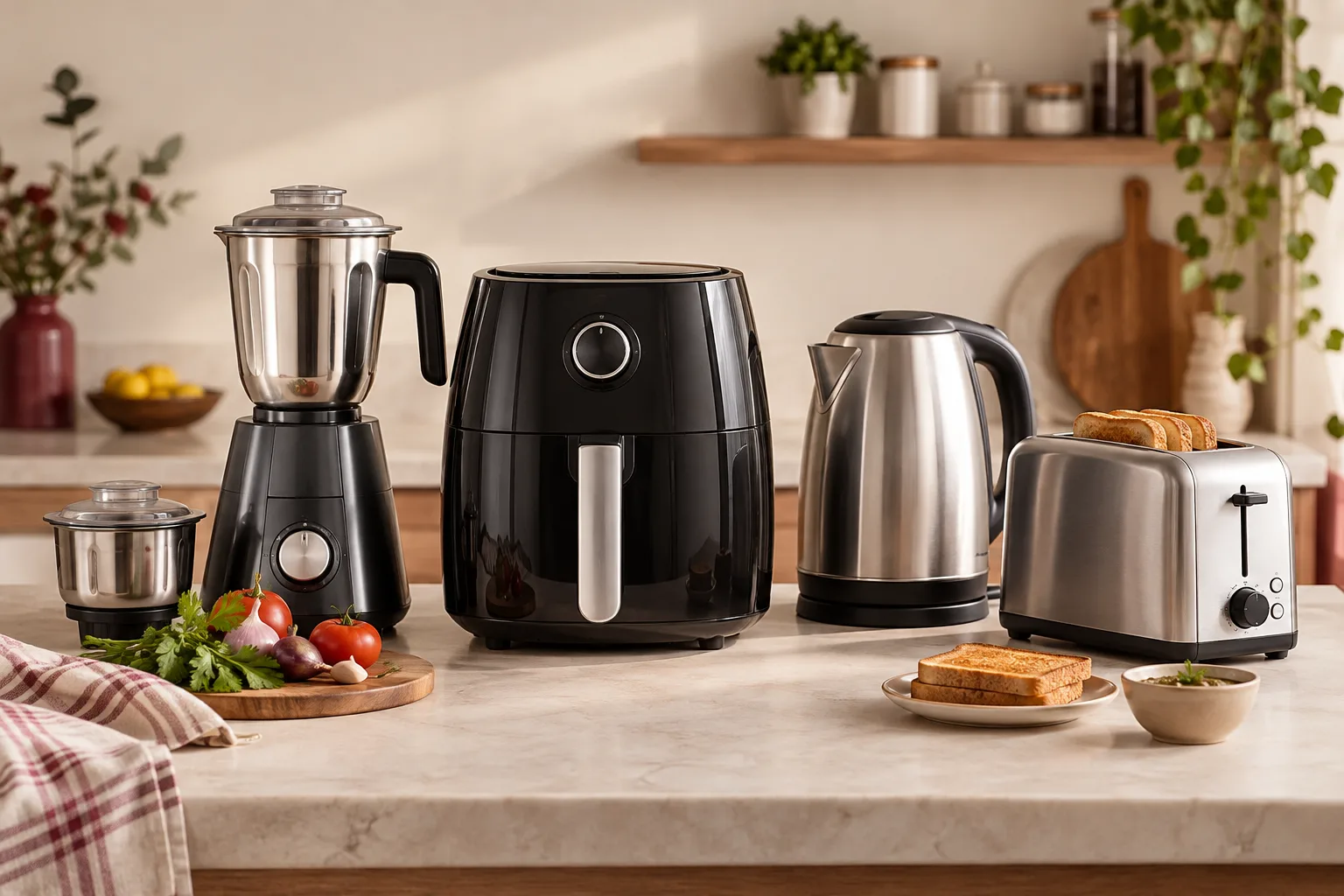
A kitchen appliance store sells built-in and countertop equipment for the kitchen: chimneys, hobs, built-in ovens, dishwashers, mixers, water purifiers and small appliances. The buyer is a household while the kitchen is being planned, and the designer who specifies the fittings. GullySales prepares the Google listing, the designer introduction and the follow-up after a showroom visit.
Kitchen appliances are bought once, fixed into a wall, and used every day for years. The person who cooks, the designer who draws the kitchen and the one who pays may be three different people, and the shop has to satisfy all three.
Last updated 14 Nov 2026.
How buyers decide
How kitchen appliance stores are chosen.
A built-in purchase is tied to a kitchen being built or redone. The interior designer or modular kitchen company hands over a size list, and the household checks the appliances at a few stores. A shop that cannot read the drawing cannot confirm what fits.
Indian cooking shapes the choice. Chimney suction, auto-clean filters, the strength of the hob burners and the noise level are discussed in the language of frying and tempering, not specifications. A pan on the display hob answers those questions better than a brochure can.
Service keeps the shop in the picture. Chimney cleaning, hob repairs and water purifier filter changes keep the store's number in the household's phone, which is where a later dishwasher or oven enquiry starts.
The problem
What usually goes wrong for kitchen appliance stores.
Common situations to check against your own enquiry records.
“The designer's size list goes to the cheapest shop”
We never met the designer, so the quote arrives as a price comparison and not as a recommendation.
“People come in with a photo of a chimney from Instagram”
They want exactly that model, and we cannot tell them within a minute whether it suits their hob, their wall or their cooking.
“Our display kitchen is dusty and half the demo units do not work”
The customer who wants to see the chimney pull smoke sees a switch that does nothing and walks out.
“Service calls for chimneys and purifiers go to the brand, not to us”
The household complains to the shop, the shop passes the number, and the repeat sale goes with the service.
“Small appliances sell on festival days, built-ins sell all year”
We stock for Diwali mixers and then have nothing planned for the quiet months when kitchens are actually being built.
“Our WhatsApp has photos of kitchens and no names”
A designer sent a layout last month and nobody recorded who it was or whether the order happened.
What we do
What we do for kitchen appliance stores.
Possible deliverables for kitchen appliance stores. Your written scope confirms what is included.
A designer introduction kit
A catalogue of what you stock with cut-out sizes and installation notes, a sample quotation, and a standing offer for designers' clients, written for a designer who specifies fittings for several clients at once.
A showroom demonstration routine
A short checklist for staff to run a chimney and hob demonstration, keep the display units working and note what the visitor cooks.
Product pages that answer fit questions
A page per appliance type explaining suction, duct length, cut-out sizes and what kitchen layouts suit it, written for a homeowner and not an engineer.
A quotation follow-up record
Every quote logged with the household, the designer, the models and the next call, with a rule for who calls whom.
Service reminders from the purchase record
Chimney clean and filter change reminders sent by WhatsApp to households you supplied, with a booking number that rings.
A Google Business Profile built around the display kitchen
Photographs of the live display, categories for each appliance type, and a reply to every question and review.
How the result is measured
- Designer referrals received and converted
- Showroom visits from Google and WhatsApp enquiries
- Quotations sent against bills raised
- Service bookings from reminders
- Small appliances sold in Diwali week against the same week before
- Calls answered during showroom hours
Recorded as a baseline before work starts, so every later report has an honest comparison.
Every service, written for kitchen appliance stores
Each has its own page: what it involves for kitchen appliance stores, what you get, and what it is measured on.
- Lead generationReach the household while the kitchen drawing is still on the carpenter's table.
- SEORank for the questions a household asks before choosing a chimney or hob.
- Local SEOBe the nearest shop where the chimney is running on the wall.
- Social media marketingShow the chimney pulling smoke and let the kitchen do the selling.
- Content marketingWrite the guide that settles the chimney question before the household visits.
- Buyer personasKnow who cooks, who draws the kitchen and who pays for the chimney.
- CRMKeep every quotation, drawing and designer in one place the whole shop can read.
- Follow-up systemsCall back the household that left with a quotation and a promise to think.
- WhatsApp marketingTurn the chat where the kitchen drawing arrives into a record and a sale.
- Digital marketingJoin the listing, the website, the chat and the ads into one route to the showroom.
- WebsiteBuild a site where a household can check fit and send the drawing in one step.
- Sales processSales process for kitchen appliance stores defines the evidence for each next step.
- Sales managementSales management for kitchen appliance stores gives every open enquiry a responsible owner.
- Sales strategySales strategy for kitchen appliance stores starts with choosing which opportunities to pursue.
Worth a page and a campaign of their own
A working display kitchen with chimney and hob demonstrations · Relationships with interior designers and modular kitchen makers · Reading a kitchen drawing and giving a clear size recommendation · Google listing and photographs of the display kitchen · Service reminders for chimney cleaning and filter changes · A WhatsApp catalogue by appliance type · Follow-up of showroom visitors who took a quotation · Festival offers on mixers, cookers and small appliances
Priority campaigns
Campaigns for what kitchen appliance stores most want to sell.
Each one planned around when your buyers decide, and measured against the baseline.
Modular kitchen designer partnership
Meetings and a short referral scheme with local interior designers, backed by a showroom morning where they can see new chimney and hob models running.
Chimney trial week
A campaign inviting households to bring their own cooking to a demonstration, advertised on Instagram and local Facebook groups with a booking by WhatsApp.
New flat and home loan buyer campaign
Outreach to builders' sales offices and registered new-flat buyers, offering a kitchen appliance package list that matches typical cabinet sizes.
Diwali small appliance campaign
A festival catalogue of mixers, pressure cookers, air fryers and gift sets sent to past customers first, with stock shown on the day.
Water purifier filter reminder drive
A reminder run to every purifier customer when the cartridge is due, offering a visit and a replacement.
Beyond search
Where we reach buyers of kitchen appliance stores, beyond Google.
Search matters, but it is rarely the only way this industry's buyers find a supplier.
Interior designers and modular kitchen makers
Local studios and fabricators who draw kitchens, each sent an introduction with your cut-out sheets.
Builders and show-flat teams
Developers near you whose flats are handed over with an empty kitchen need a package list their sales office can pass to buyers.
Carpenters and civil contractors
A short pack for the carpenter or contractor who builds the kitchen on site and is asked, on the day, which chimney to leave space for.
Restaurant and cloud kitchen owners
Restaurant and cloud kitchen owners who need a commercial hob, a hood or a countertop grinder, if you supply them.
Housing society groups
Notes for resident groups on chimney cleaning and kitchen safety, with a number to book. Check each group's rules on shop posts before sharing.
Why GullySales
Kitchen appliance stores need one firm that reads the designer's size list through to the bill.
A built-in purchase starts with a kitchen being fitted, a designer's size list and a household checking a few stores. You are choosing between a firm that advertises products and one that handles the drawing, the quotation and the later service call. GullySales does the second.
From the designer's size list to the bill
The designer hands over a size list, and a shop that cannot confirm what fits loses the sale. We build how drawings are received, how the quotation confirms the cut-out and fit, and how the bill leads to a service booking, so one chain runs from list to installation.
Chimney suction, burner strength and the noise level
Home cooking decides the choice: frying, tadka and heavy gravies shape what a chimney must pull and what a hob must hold. We start from that kitchen talk and write your pages and counter replies in those words, so the buyer hears answers about their own cooking.
Designer referrals, quotations and service reminders counted
Your current quotation book and bill register are set down first. We then read in the store's counts: designer referrals received and converted, showroom visits from enquiries, quotations against bills, service bookings from reminders and calls answered during showroom hours.
A scope and fee written before the first quotation format
The scope and the fee are fixed on paper before the quotation format is touched. No footfall, sales or designer referrals are promised. If your store already holds every kitchen it can fit in a season, we say that more marketing would not suit.
Sales and channel services
Choose the sales work your business needs.
Review the sales and channel catalogue in the context of kitchen appliance stores. Each page states what the service covers and when it is unsuitable. A specialist programme is not assumed to fit every industry.
210 services available.
Sales strategy and process (29)
- Account-based selling (check programme fit)
- Appointment setting
- Bid or no-bid decision framework
- Business development strategy
- Competitive intelligence
- Dedicated sales team services
- Enterprise and solution selling (check programme fit)
- Inside sales
- Institutional and government sales strategy
- Outbound sales prospecting
- Outsourced sales and business development
- Precast and construction materials tender-to-order programme (check programme fit)
- Pricing and packaging strategy
- Pricing waterfall and discount leakage analysis
- Product and service launch strategy
- Quotation and proposal follow-up
- Quotation management
- Retail sales conversion consulting
- RFP and tender management
- Sales audit
- Sales discount management
- Sales margin improvement
- Sales performance improvement
- Sales strategy and consulting
- Sales strategy, management and enablement
- Sales transformation consulting
- Sales turnaround consulting
- Technical presales and sales engineering support
- Win-loss analysis
Sales training and enablement (29)
- Capability statement writing
- Consultative selling implementation
- Field sales support
- Negotiation and closing support
- Negotiation training
- Objection handling training
- Product and service brochure copywriting
- Product one-pager writing
- Product specification sheet writing
- Proposal development
- Sales certification programme design
- Sales closing training
- Sales coaching
- Sales collateral development
- Sales competency assessment
- Sales discovery process design
- Sales enablement
- Sales leadership development
- Sales manager training
- Sales messaging, scripts and follow-up sequences
- Sales playbook development
- Sales presentation and demo improvement
- Sales presentation and demo script writing
- Sales team onboarding
- Sales team training programme
- Sales training and development
- Sales training needs assessment
- Value-based selling implementation
- WhatsApp sales process
CRM, sales operations and RevOps (46)
- Conversation intelligence
- CPQ consulting
- CRM administration and support
- CRM adoption and training
- CRM consulting and selection
- CRM data cleansing, deduplication and governance
- CRM data migration
- CRM implementation and customisation
- Deal desk services
- Deal risk assessment
- Engineering college admissions enquiry management (check programme fit)
- Enquiry response starter
- Field sales beat planning
- Hospital enquiry-to-appointment conversion programme (check programme fit)
- Lead capture and lifecycle management
- Lead database management
- Lead leakage analysis
- Lead qualification
- Lead response and follow-up
- Lead routing and assignment
- Lead scoring
- Lead-to-order process design
- Marketplace lead management programme
- Order booking process improvement
- Pipeline hygiene and governance
- Pipeline management
- Revenue and sales operations
- Revenue operations, CRM data and AI
- Revenue process documentation
- Revenue technology stack audit and architecture
- RFQ management
- Sales activity management
- Sales administrative support
- Sales approval workflow design
- Sales call auditing and conversation quality assessment
- Sales cycle optimisation
- Sales escalation process design
- Sales handoff process design
- Sales metrics and KPI development
- Sales process design and implementation
- Sales productivity improvement
- Sales to operations order handover design
- Sales workflow automation
- Stalled opportunity recovery
- Territory planning
- Truck and commercial vehicle dealer lead-to-booking programme (check programme fit)
Customer success and retention (42)
- Account management and key account growth
- Account whitespace and contract expansion analysis
- B2B customer reference programme (check programme fit)
- Churn analysis and reduction
- Complaint and escalation management
- Customer adoption programmes
- Customer advocacy and proof marketing
- Customer advocacy programmes
- Customer case studies
- Customer education and knowledge base development
- Customer engagement campaigns
- Customer experience strategy and journey mapping
- Customer experience, success and retention
- Customer health scoring
- Customer lifecycle marketing
- Customer loyalty programmes
- Customer onboarding
- Customer onboarding implementation assurance
- Customer reactivation
- Customer referral campaign copywriting
- Customer referral programmes
- Customer renewal, re-engagement and upsell message writing
- Customer research and voice of customer
- Customer retention and reactivation campaigns
- Customer retention strategy
- Customer satisfaction, NPS and feedback programmes
- Customer segmentation
- Customer service strategy
- Customer success automation
- Customer success consulting
- Customer support process design
- Customer testimonials
- Customer welcome and onboarding content writing
- Digital customer journey design
- Helpdesk and contact centre setup
- Referral and loyalty campaign creative design
- Referral marketing
- Renewal management
- Repeat sales management
- Service recovery programmes
- Strategic account management (check programme fit)
- Upselling and cross-selling
Fractional leadership and audits (22)
- Annual revenue planning
- Founder to sales team transition
- Founder-led sales advisory
- Fractional chief revenue officer (CRO)
- Fractional head of sales
- Interim sales leadership
- Management dashboards and reporting
- Quota and capacity planning
- Revenue analytics and intelligence
- Revenue growth audit
- Revenue leadership and management reviews
- Revenue model and monetisation strategy
- Revenue planning and fractional leadership
- Revenue target planning
- Sales compensation and incentive design
- Sales forecasting
- Sales management
- Sales organisation design
- Sales profitability analysis
- Sales recruitment and candidate assessment
- Sales review management
- Sales team structure and role definition
Dealers, distributors and partners (42)
- Channel governance and conflict management
- Channel opportunity generation and follow-up
- Channel partner engagement campaigns
- Channel partner franchise and retail growth
- Channel partner recruitment
- Channel performance management
- Channel sales strategy and route to market execution
- Channel territory planning
- Cloud marketplace listing and co-sell (check programme fit)
- Co-operative partner marketing
- Dealer and distributor audits
- Dealer and distributor programme
- Dealer co-funded lead generation programmes
- Dealer development
- Dealer lead generation
- Dealer network brand visibility
- Dealer sell-through analytics
- Distributor development
- Distributor onboarding digital academy
- Distributor sales force effectiveness
- Export and international market development
- Franchise development, recruitment and expansion
- Industrial distributor dealer sell-through programme (check programme fit)
- Market development fund management
- Outsourced dealer sales support
- Partner compensation and incentive design
- Partner enablement, training and certification
- Partner onboarding
- Partner portal and PRM implementation
- Partner programme design
- Partner relationship management
- Partner segmentation and tiering
- Partnership and co-marketing
- Point-of-sale marketing
- Referral partner programmes
- Reseller programme development
- Retail execution and merchandising
- Retailer marketing
- Route to market and distribution strategy
- Secondary sales tracking
- Trade and dealer marketing
- Trade promotion planning
A practical starting point · Kitchen appliance stores
Start with one buying journey.
Use a real enquiry to find the first useful change. You do not need to buy every service listed on this page.
- The record to review
- Choose one product category and compare enquiries with purchases, cancellations, and repeat orders. Distinguish a stock enquiry from a buyer who visited or purchased.
- The buyer's question
- Check that product availability, store details, and purchase options agree across the website and listings. A promotion needs a clear route to an item the customer can actually buy.
- The handover to agree
- Agree who confirms stock and who responds to messages during a campaign. Store staff should know which offer the customer has seen.
Who it is for
This is written for these kitchen appliance stores.
- Built-in chimney, hob and oven specialists
- Multi-brand kitchen appliance showrooms
- Modular kitchen studios that also supply appliances
- Water purifier and RO dealers with service teams
- Mixer-grinder, cookware and small appliance stores
- Dishwasher and microwave dealers
- Commercial kitchen equipment suppliers for restaurants and canteens
- Appliance stores supplying builders' show flats
Before you decide
When this may not be the right fit.
- You want a guaranteed Google ranking or a guaranteed number of leads. Nobody honest can promise either.
- You need enquiries by next week and have nobody to answer them.
- You want posts and reach reported, not enquiries and orders.
How it works
How the work runs for kitchen appliance stores
The work itself, in order. How an engagement starts, from your brief to a written scope, is set out on our method page.
- 1
Walk the showroom
The display kitchen, the stock list, the quote papers and where designers' drawings end up.
- 2
Fix the quotation record
A simple log of every quote, who sent the drawing and what was said last.
- 3
Build the designer channel
An introduction kit and a list of the studios in your area, with the showroom morning invitation ready.
- 4
Put the products online properly
Product pages, a Google listing built around the display kitchen, and a WhatsApp catalogue.
- 5
Keep the households
Service reminder and festival lists from your purchase record, and a read of which source produced bills.
Where this fits
Three pieces of sales work, in this order.
Start by finding where enquiries and orders are being lost. Agree the changes to your sales process, then decide who will manage the work and review the results.
Step 1
Sales audit
Find where deals are being lost and what to fix first.
Start here if you cannot say where orders are lost.
Step 2
Sales process design
One written way to sell, from first enquiry to repeat order.
Start here if every salesperson sells differently.
Step 3
Sales management
A target, a review routine and someone who owns the number.
Start here if the team has targets and no routine.
FAQ
Questions kitchen appliance stores ask before they call.
Not here? More answers, or ask on WhatsApp.
Do designers really send customers to a shop they do not own?
Is it worth keeping a display kitchen in a small shop?
Can you run our Instagram, with videos of the demonstration?
Should we publish prices online?
We also sell commercial kitchen equipment. Same page?
How long is the contract?
How soon will we see results?
Who will actually do the work?
What do you need from us?
What if we are not happy with the work?
Part of Retail. See the other industries in the sector.
Your next practical step
Tell us what you are trying to grow, and we will read it before we call.
Eight short steps, mostly taps. Skip anything you would rather answer on the call.