How people choose in this industry
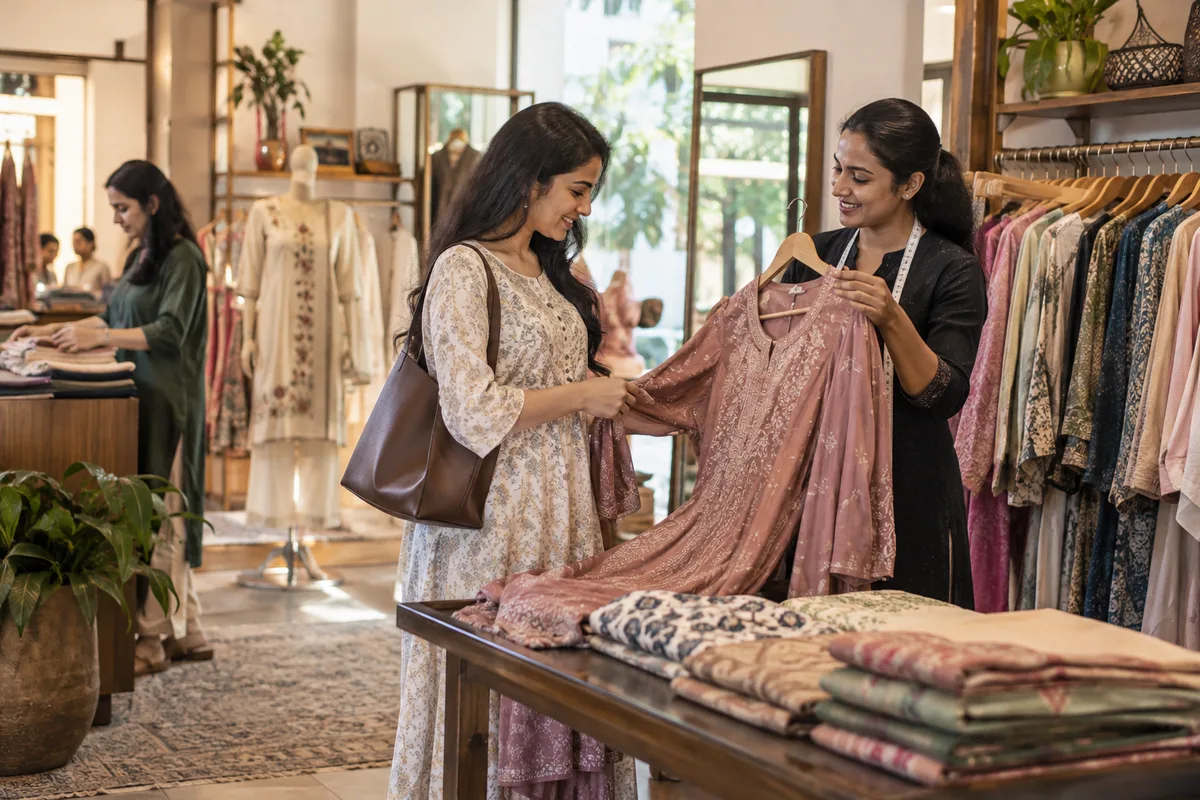
The walk-in is the main buyer. Passing a shop on a market road, a man looks at the window, checks whether the brands and price range suit, and goes in. For anything unfamiliar, such as a suit or a sherwani, the search goes to Google Maps for men's wear nearby, with photographs and reviews read before the trip.
Brand and fit decide the rest. Buyers of formal shirts keep returning to a brand whose size they trust, and a multi-brand shop wins by having that size in stock. Wedding buyers behave differently: the groom's family, father and brother included, comes together, compares two or three shops, and choose the one that can alter the trouser and deliver the blazer before the function.
Offices and institutions buy in bulk. A company that wants shirts for its sales team, or a hotel that wants blazers for its front desk, calls two or three suppliers and asks for samples. The supplier whose quote names sizes, colours and fabric clearly is easier to compare, and a reply that comes late is easy to skip.
The decision before implementation
A direct-only business may not need a partner programme. Agree the channel role and conflict boundaries first.
Existing industry priorities to review
- Maps visibility for formal wear, suits and wedding wear nearby
- A customer list with size, brand and last purchase
- WhatsApp reminders before Diwali, Eid, Pongal and the wedding season
- Follow-up on wedding and groom-party enquiries
- Quick quotes for corporate shirt and uniform orders
These describe the industry's wider priorities. The written scope identifies which this service will address.