Online fashion stores · Ecommerce conversion optimisation
Help a shopper decide on the kurta before the size doubt sends them back to Instagram.
Ecommerce conversion optimisation for a fashion store is the measured work on size guidance, photographs, cash on delivery and the cart, so more visits end in an order that stays kept. GullySales reads your store, fixes the step where shoppers stop and tests one change at a time, never promising a rise in orders.
Scope, fee, reporting and term are agreed in writing after we have read your brief and spoken to you.
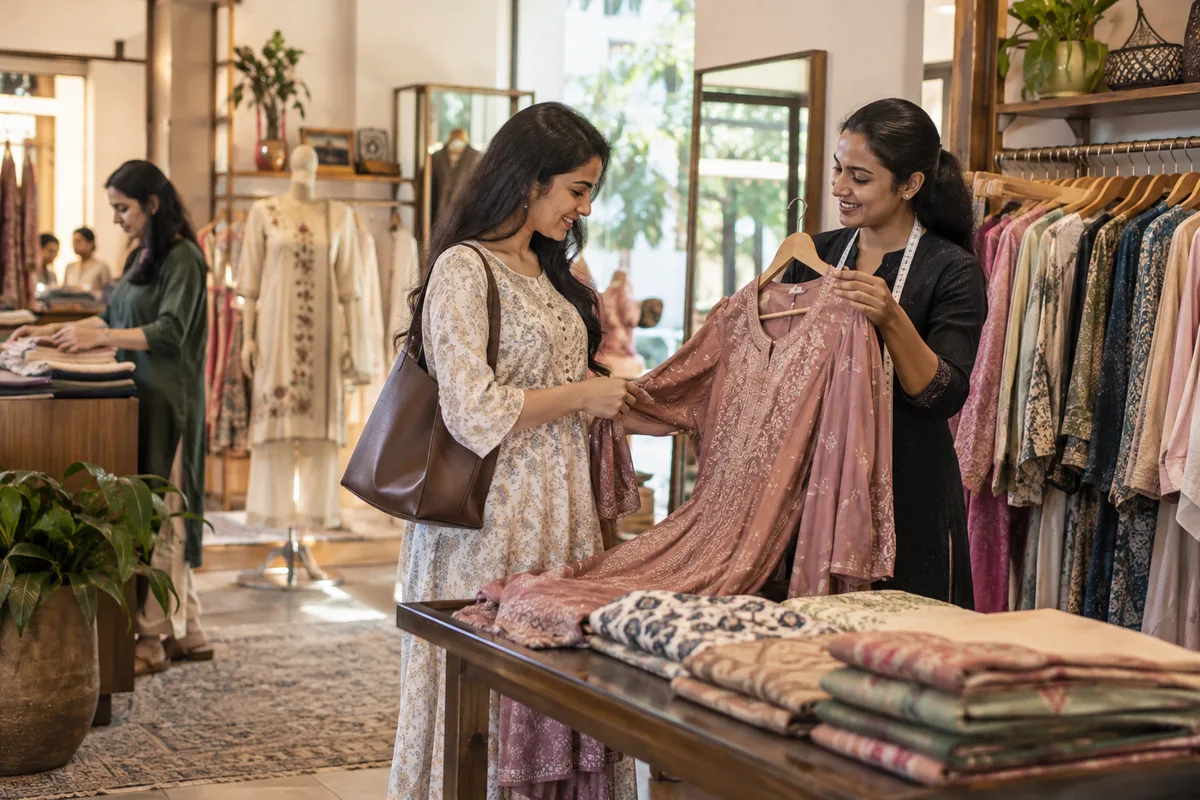
What ecommerce conversion optimisation means
Ecommerce conversion optimisation is the measured improvement of an online store, from product page to filters, cart and payment choice, so more visits end in a paid or confirmed order. GullySales reads your store's records, fixes the steps where buyers stop, and tests changes one at a time against a recorded baseline.
Also for online fashion stores
- SEO for online fashion stores
- Website for online fashion stores
- Lead generation for online fashion stores
- Social media marketing for online fashion stores
- Content marketing for online fashion stores
- Buyer personas for online fashion stores
- CRM for online fashion stores
- Follow-up systems for online fashion stores
Sales and marketing for online fashion stores, the overview.
Last updated 18 Oct 2026.
For online fashion stores
Where it usually goes wrong, and what we would do.
“The size chart is a picture nobody can read on a phone”
A shopper pinches and zooms on a chart saved as an image, cannot find the bust measurement and leaves to ask on WhatsApp, or never asks. The chart works as text, beside the model's height and the size worn, so the shopper reads fit without leaving the page.
“Photographs show the pose, not the fall of the fabric”
A studio shot of a saree or a dress hides how the cloth moves, so the shopper trusts a marketplace listing with buyer photographs instead. A short video, a close view of the weave and pictures from real buyers who agree to share them answer the question the photograph leaves open.
“Cash on delivery decides which buyers return the parcel”
Turning cash on delivery off loses the shopper who trusts no one with advance payment. Leaving it open on every pincode invites refusals at the door. The question is which rule fits your parcels: a confirmation message, a prepaid nudge, or a pincode list.
“Returns policy sits in the footer, where doubt is highest at the cart”
A first-time buyer from a small label looks for the exchange rule just before paying. If the page hides it, the buyer assumes the worst. Plain return and exchange wording near the add-to-cart button settles the doubt at the point it arises.
What we do
What we deliver for online fashion stores.
The work available for this need. We agree the deliverables and responsibilities for your engagement in writing.
Phone walkthrough of the store
A pass from an Instagram link to the order confirmation on a phone first, then a desktop, with each stopping point named against the page where it happens.
Result: A written list of where a shopper hesitates, page by page.
Product-page brief for each garment type
What a kurta, a saree, a shoe or a bag page must show: measurements as text, model details, fabric and care notes, photograph angles and the answers your inbox already repeats.
Result: A template your team fills for every new drop.
Search and filter review
The words shoppers type for a style, what the store returns, and filters that list sizes already sold out.
Result: A list of changes for your platform or developer, ordered by what shoppers meet first.
Cash on delivery and payment plan
A review of the payment options and their order, the failure messages on UPI and cards, and the confirmation rule for cash on delivery orders. Charges and rules are your decision.
Result: A failed payment shows the shopper a next step, and each cash order carries a status.
Delivery, exchange and returns wording
Plain text for delivery area, dispatch expectations you can keep, exchange, refund and seller details. Your adviser checks it against the current e-commerce rules.
Result: The policy sits near the cart and matches what your team actually does.
Test plan and decision log
Each test names the page, the single change, the reason and the measure that decides it, with lost and inconclusive tests kept.
Result: You can read why a change stayed or was dropped.
How the result is measured
- Orders as a share of store visits, on phone and desktop separately
- Product page to cart and cart to paid order
- Payment success and failure by method
Recorded as a baseline before work starts, so every later report has an honest comparison.
Who it is for
This is written for these online fashion stores.
- Women's ethnic wear labels selling on Instagram
- Western wear and casual wear D2C brands
- Men's fashion brands with their own website
- Kids' clothing and school wear online
- Footwear and accessories sold online
- Sustainable, handloom and craft-led labels
- WhatsApp and Instagram-only boutiques
- Sellers on Myntra, Amazon and Flipkart building their own channel
Before you decide
Agree the work. Know how to judge it.
Ecommerce conversion optimisation for online fashion stores: use these checks to prepare, choose the scope, and review what changes.
Bring the right evidence
Choose a product group and follow its journey from the product page to delivery. Review cancelled orders and returns alongside completed purchases, with customer details removed.
Make the scope clear
Agree which catalogue items, payment steps, and sales channels are included. Account for fulfilment costs and returns when deciding what acquisition spend the order can support.
Check the work in use
Test a purchase on mobile, including the address, delivery charge, payment failure, and confirmation. For trade orders, test quotation requests and minimum-order information as well.
Know when to change course
If stock or delivery promises are unreliable, resolve those first. Increasing paid traffic to unavailable products wastes budget and creates avoidable complaints.
These are discussion points, not a fixed package. GullySales confirms the deliverables, responsibilities, fee, and term in writing after reading your brief and speaking with you.
How it works
How the ecommerce conversion optimisation work runs
The work itself, in order. How an engagement starts, from your brief to a written scope, is set out on our method page.
- 1
Read the store records
We start from your requirements brief, then look at store reports, payment-gateway reports, return reasons and customer messages. The baseline is recorded before anything changes.
- 2
Walk the buying path
We place test orders on a phone with each payment option you offer, including cash on delivery, and note every stall.
- 3
Rank the fixes
Product-page content comes first when buyers leave early. Checkout and payment fixes come first when carts are full but orders are few.
- 4
Approve and release
You approve wording, images and policy claims on a preview. Your developer or platform team releases the change, and we recheck tracking afterwards.
- 5
Test one change at a time
Where traffic is enough for a fair comparison, a single change is tested. Where it is not, the fix goes live and is read against the baseline with its limits stated.
- 6
Log and choose the next page
Each result is kept, whether it won or lost, and the next product type or step is picked from the evidence.
Where this fits
Three pieces of sales work, in this order.
This work sits inside sales process design, at stage 1, prospecting and lead generation. The audit comes before it, and sales management keeps it running.
Step 1
Sales audit
Find where deals are being lost and what to fix first.
Start here if you cannot say where orders are lost.
Step 2 · you are here
Sales process design
One written way to sell, from first enquiry to repeat order.
Start here if every salesperson sells differently.
Step 3
Sales management
A target, a review routine and someone who owns the number.
Start here if the team has targets and no routine.
FAQ
Questions owners ask before they call.
Not here? More answers, or ask on WhatsApp.
Our store gets few visitors. Is this still the right work?
Should we switch off cash on delivery to cut returns?
Can you promise a rise in orders after the changes?
How much does it cost?
How long is the contract?
How soon will we see results?
Who will actually do the work?
What do you need from us?
What if we are not happy with the work?
More for online fashion stores
Related work to consider.
Closest to this: search and visibility
Also for online fashion stores
Or start from the overview: sales and marketing for online fashion stores.
Your next practical step
Tell us what you are trying to grow, and we will read it before we call.
Eight short steps, mostly taps. Skip anything you would rather answer on the call.