Pet product stores and brands · Point-of-purchase display design
Design the treat stand and shelf strip a pet shop will actually put out.
Point-of-purchase display design for a pet brand or shop is the artwork and structure of the floor stand, counter unit, shelf strip, dump bin or aisle sign that sells a product where the owner is already standing. GullySales draws the display to the shop's space, the product's weight and your fabricator's specification, then hands over files and a fitting guide.
Scope, fee, reporting and term are agreed in writing after we have read your brief and spoken to you.
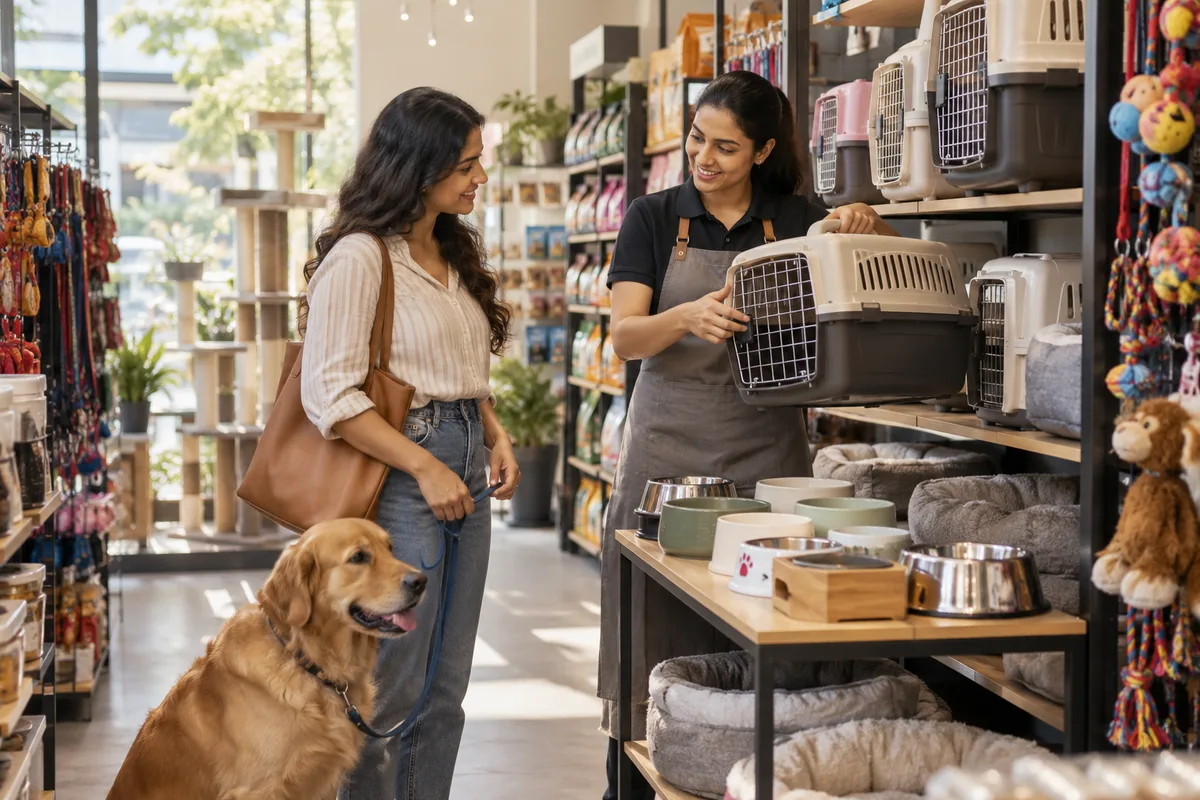
What point-of-purchase display design means
Point-of-purchase (POP) display design is the artwork and structural drawing for a unit that stands where the buyer chooses: a counter box, a shelf strip, a floor stand, a wobbler or a dump bin. GullySales designs the graphics and the build drawing, then hands over print-ready files and a specification sheet for the fabricator.
Also for pet product stores and brands
- PPC for pet product stores and brands
- SEO for pet product stores and brands
- Local SEO for pet product stores and brands
- Reputation management for pet product stores and brands
- Content marketing for pet product stores and brands
- Social media marketing for pet product stores and brands
- WhatsApp marketing for pet product stores and brands
- Referral marketing for pet product stores and brands
Sales and marketing for pet product stores and brands, the overview.
Last updated 14 Nov 2026.
For pet product stores and brands
Where it usually goes wrong, and what we would do.
“A pet shop gives a display very little floor”
A neighbourhood pet shop is narrow, full of heavy bags and crowded by a grooming table or a fish tank. A brand that sends a large stand finds it stored in the back room. A display earns its place by fitting a counter corner, a shelf end or a gap beside the leash wall. We start from the dimensions the shop can spare, and we draw the unit at that size so the shop owner says yes before the first one is built.
“The product is heavy, loose or breakable”
A display for food bags must carry weight without tipping, a treat unit holds a crowd of small packs that slide forward, and a bowl or aquarium accessory can chip. Structure is part of the design: the base, the shelf lip, the back panel and the way a pack is pulled out. We draw to the board, the metal or the plastic your fabricator names, and we ask the fabricator to confirm load before artwork is final.
“The buyer is deciding while a dog pulls on the lead”
An owner at the counter has a dog at the end of a lead, a phone in the other hand and a few seconds. A display with a paragraph of text is not read. A treat stand sells when it shows the animal, the one use of the treat and the pack the owner picks up. We keep the message to a short line, set it at the height a standing adult reads, and keep the reaching height low enough for a child.
“Shops and distributors decide what goes out”
The shop owner, the store manager or the distributor's field person chooses whether your display is put on the floor. Their questions are practical: does it fit, is it easy to refill, will it look dull when half empty, who removes it afterwards. We design for those questions, with a refill guide and a half-empty look, because a display that is hidden after a week sells nothing.
What we do
What we deliver for pet product stores and brands.
The work available for this need. We agree the deliverables and responsibilities for your engagement in writing.
A display brief and size options
A short document that sets out where the display will stand, how much room it has, what it holds and who refills it. We then draw two or three size options, such as a counter unit, a floor stand and a shelf strip, so you can choose the one your stockists will accept.
Result: You can show a stockist a drawing at true size and get a clear yes or no.
Structural drawing for your fabricator
A front, side and top view with dimensions, shelf depths, the pack count each shelf holds, the board or material and the fold lines, drawn to the fabricator's specification. It is a drawing for a maker to build from, and the maker confirms strength and cost.
Result: Your fabricator builds a sample from the drawing without asking for missing dimensions.
Graphic panels and header card
The artwork on the header, sides and shelf fronts: brand mark, animal, the one line that sells the product and the pack picture. Photographs are used only where you hold the right to use them. The header is drawn to be read from the aisle, and the shelf front from arm's length.
Result: The header reads clearly from across the shop floor on a printed mock-up.
Shelf strips, wobblers and price tickets
The small pieces that sit on the existing shelf: a strip that names the range, a wobbler that points to a new flavour and a ticket frame that holds the shop's own price. They need no floor space and are the easiest items for a shop to accept.
Result: A shop can fit the strips on its own shelf without drilling or moving stock.
A refill and fitting guide
One page of pictures that tells shop staff how to build the unit, where to place it, how to load the packs and when to remove it. It keeps the display looking right after the first fortnight of use, and it helps a distributor's field person fit it the same way in every shop.
Result: A new staff member can assemble and load the display from the page alone.
Editable files for later runs
Layered artwork, the structural drawing and the colour specification, filed so a second run or a new flavour is an edit. We name each file and note the fabricator's tolerances.
Result: A later run for a new pack is prepared from your files, not rebuilt from scratch.
How the result is measured
- Outlets that put the display up where the brief asked
- Displays built correctly from the first print proof
- Shopper enquiries that mention the display
Recorded as a baseline before work starts, so every later report has an honest comparison.
Who it is for
This is written for these pet product stores and brands.
- Neighbourhood pet shops and supply stores
- Pet supermarkets and multi-brand pet retail chains
- D2C pet food and treat brands
- Pet accessory, toy and apparel makers
- Aquarium, fish and bird supply shops
- Pet healthcare product sellers who keep to the maker's pack claims
- Pet grooming product and shampoo brands
- Pet food distributors and dealers
- Online-only pet product sellers
Before you decide
Agree the work. Know how to judge it.
Point-of-purchase display design for pet product stores and brands: use these checks to prepare, choose the scope, and review what changes.
Bring the right evidence
State the buyer group, catchment, and dates that matter to the offer. Ask for the proposed inventory and available evidence about its audience, with the source and date shown.
Make the scope clear
Agree the exact placements, formats, booking period, and proof of delivery. Separate media charges from design, production, permissions, and installation where these apply.
Check the work in use
Compare delivery evidence with the agreed booking and record enquiries through a distinct response route where practical. Treat audience estimates separately from measured responses.
Know when to change course
Do not buy a placement only because it is discounted. If the location or audience does not fit the buyer, revisit the plan before committing production costs.
These are discussion points, not a fixed package. GullySales confirms the deliverables, responsibilities, fee, and term in writing after reading your brief and speaking with you.
Before we start
What to have ready before the work starts.
The records, access and decisions this work needs from pet product stores and brands. Anything missing is noted in the written scope, with who will supply it.
- Measurements of the spaces on offer
- The width, depth and height of the counter corner, shelf end or floor gap where you hope to place the display, with a photograph. Without them we design to an imagined shop and the unit does not fit the real one.
- The pack list with sizes and weights
- Every pack the display will hold, with its dimensions and filled weight. Heavy packs change the base, the shelf and the board. A missing weight is the commonest reason a stand leans after a week, so we ask for it before the first drawing.
- A conversation with two stockists
- Two shop owners or one distributor who will say plainly what they will put out and what they will not. Their answers are the brief. Without them the display is designed for you, not for the people who control the floor.
- Your fabricator or a shortlist
- The maker who will build the unit, or two to compare. We draw to a real maker's materials and tolerances. If you have none yet, we can list what to ask for in a quotation, but the fabricator confirms strength and cost.
- A decision on how long it stays
- Whether the display is permanent or tied to a season, a launch or a clearance, and who removes it. A temporary unit can be lighter and cheaper to build; a permanent one needs a stronger base and a design that ages well.
How it works
How the point-of-purchase display design work runs
The work itself, in order. How an engagement starts, from your brief to a written scope, is set out on our method page.
- 1
Visit the shelf and the counter
We begin with photographs and measurements of the spaces where the display might stand: a counter end, an aisle end, a window ledge. If you sell through several shops, we choose two or three that represent the range of shapes. The measured gaps decide the size, not the other way round.
- 2
List the product, weight and handling
We record every pack the display holds, its size, its weight and how a customer lifts it. We note whether it is a food bag, a loose treat jar, a toy or an aquarium accessory, and what happens when it is knocked. This list sets the shelf depth, the lip and the base.
- 3
Learn what the stockist will accept
We ask the shop owners, the distributor and your field staff what a display must do to be put out and kept out. Their answers become a short list of conditions: a maximum footprint, an easy refill, a removal after the promotion. We design against that list.
- 4
Sketch options at true size
We draw two or three size options as flat sketches and print one at true size so you can place it in a real shop. We show stockists the sketch and record what they say. You choose one option before any artwork is finished.
- 5
Draw structure and artwork with the maker
We draw the structure for your fabricator and the graphics on top. The fabricator reviews strength, material and cost, and we revise together. A white sample is built before the printed version, so the fit is tested before the artwork is applied.
- 6
Place a sample and read the result
One printed sample goes into a real shop and we watch how it is handled: whether staff refill it, whether customers pick from it and whether it stays on the floor. We read the outcome against the figures recorded before the work began, which are the sales of that product in that shop and your stockists' answers.
Where this fits
Three pieces of sales work, in this order.
This work sits inside sales process design, at stage 1, prospecting and lead generation. The audit comes before it, and sales management keeps it running.
Step 1
Sales audit
Find where deals are being lost and what to fix first.
Start here if you cannot say where orders are lost.
Step 2 · you are here
Sales process design
One written way to sell, from first enquiry to repeat order.
Start here if every salesperson sells differently.
Step 3
Sales management
A target, a review routine and someone who owns the number.
Start here if the team has targets and no routine.
FAQ
Questions owners ask before they call.
Not here? More answers, or ask on WhatsApp.
Do you build the display?
Will a pet shop really put out a brand's display?
Can a display for loose treats be hygienic?
Can the display carry a claim such as better coat or joint care?
Is a shelf strip worth designing?
How do we know if the display helped?
How much does it cost?
How long is the contract?
How soon will we see results?
Who will actually do the work?
More for pet product stores and brands
Related work to consider.
Closest to this: paid and media
Also for pet product stores and brands
Or start from the overview: sales and marketing for pet product stores and brands.
Your next practical step
Tell us what you are trying to grow, and we will read it before we call.
Eight short steps, mostly taps. Skip anything you would rather answer on the call.