Plumbing and sanitaryware distributors · Local SEO
A plumber looks on Maps for a counter that is open at seven, and yours says ten.
Local SEO for a plumbing and sanitaryware distributor is a Google Maps listing that tells a plumber, a retailer and a family which counter is open, what it stocks and whether it delivers. GullySales sets the categories, hours, photographs and brand list, and checks that every directory carries the same name and number.
Scope, fee, reporting and term are agreed in writing after we have read your brief and spoken to you.
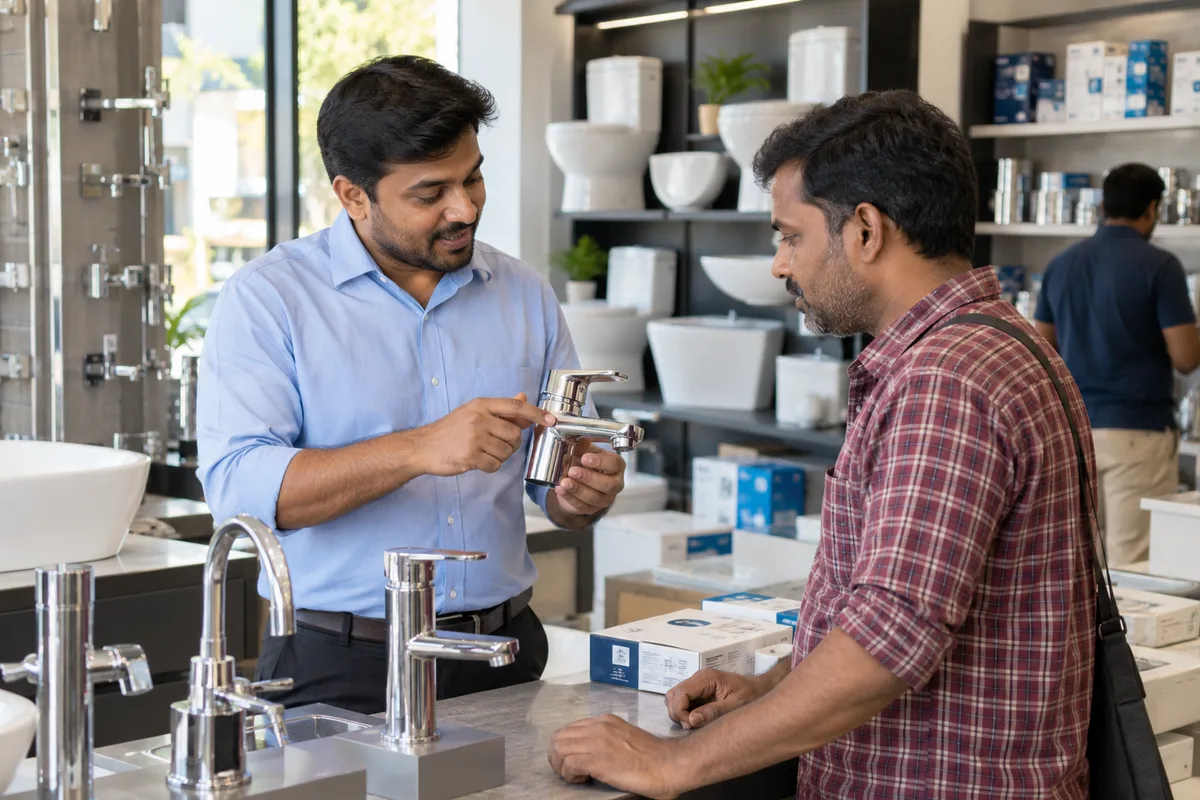
What local SEO means
Local SEO is the work of making your business show up for searches that name your town or locality, such as a service plus an area name. GullySales sets up locality pages, local citations and map listings so nearby customers find you before a competitor across town.
Also for plumbing and sanitaryware distributors
- SEO for plumbing and sanitaryware distributors
- Website development for plumbing and sanitaryware distributors
- Lead generation for plumbing and sanitaryware distributors
- WhatsApp marketing for plumbing and sanitaryware distributors
- CRM for plumbing and sanitaryware distributors
- Referral marketing for plumbing and sanitaryware distributors
- Email marketing for plumbing and sanitaryware distributors
- Sales management for plumbing and sanitaryware distributors
Sales and marketing for plumbing and sanitaryware distributors, the overview.
Last updated 6 Oct 2026.
For plumbing and sanitaryware distributors
Where it usually goes wrong, and what we would do.
“Counter hours are what the plumber is searching”
A site starts early and the part is needed before the first cut. A listing that opens at ten sends the buyer to the counter that opens at eight.
“A godown is not a shop to Google”
If buyers do not visit the stockyard, the listing may have to be set up as a service-area business with the address hidden. Google's current guidelines decide which, and a wrong choice gets the listing suspended.
“Three searchers share one listing”
A plumber wants the counter, a new retailer wants a supplier, a family wants a bathroom to look at. One set of categories and photographs has to speak to all three.
“The brand's dealer locator holds an old number”
Brands copy dealer details into their own locators once and rarely update them. The phone nobody answers is the one the household enquiry rings.
What we do
What we deliver for plumbing and sanitaryware distributors.
Every deliverable, what it covers for you, and the result it is there to produce. Nothing here is an extra.
Categories set for the trade
A primary category for the counter business and a secondary one for the bathroom display, chosen from Google's current list, with product families added.
Result: The listing appears for the right searches and the wrong ones fall away.
Counter hours and delivery cut-off
Early opening for the trade counter, showroom hours, the weekly closing day and the time after which dispatch moves to the next day.
Result: Nobody is sent to a locked shutter.
Photographs of stock, counter and display
Racks of pipes and fittings, the counter in use, the bathroom displays lit, and the vehicle that delivers.
Result: A new retailer can see a real operation before ringing.
Brand locator and directory corrections
Each brand's dealer locator, JustDial and IndiaMART checked and corrected to the same name, address and order desk number.
Result: Enquiries routed through those listings reach a phone that is answered.
Questions and posts handled by staff
Stock and brand questions on the profile answered by a named person, with posts when new ranges arrive.
Result: The listing stops carrying wrong answers.
Maps calls and direction requests counted
Calls, messages and direction requests recorded beside the baseline, with the counter asking each new face how they found the shop.
Result: You can see what Maps brings to the counter and to the showroom.
How the result is measured
- Map pack ranking
- Local search visibility
- Enquiries by locality
Recorded as a baseline before work starts, so every later report has an honest comparison.
What Google weighs here
What decides whether a plumber or a retailer nearby sees your counter before the next one.
- Relevance: the category and the products
- Choose the category that matches most of your sales and add the bathroom display only if visitors can see it. List product families, such as CPVC fittings and wash basins, not every item code.
- Distance, which you cannot move
- Google ranks counters by how far the searcher is. You cannot move the shop, but you can give a retailer in the next town a reason to look past the nearest one: stock, delivery and a stated delivery area.
- Prominence: who else points to you
- Dealer locators of the brands you hold, JustDial, IndiaMART and builders' supplier lists all count. Ask each brand's area officer to confirm that your entry is correct and current.
- Name, address and phone, identical everywhere
- One spelling of the firm's name, one address, one number the order desk answers. A distributor listed as three different names on three directories splits what Google knows about it.
- Reviews from the buyers who matter
- A review from a plumber or a retailer reads like a reference to the next one. Ask after a delivery that went well, and check Google's current rules on how reviews may be requested.
- Delivery area, said once
- Name the towns you deliver to in the description and the service area, where Google allows it. A sub-dealer two towns away should not have to ring to find out whether you reach their town.
Who it is for
This is written for these plumbing and sanitaryware distributors.
- CPVC, UPVC and SWR pipe and fittings distributors
- Sanitaryware and CP fittings distributors
- Water tank and storage distributors
- Multi-brand plumbing wholesalers supplying sub-dealers
- Distributors with a bathroom showroom and a trade counter
- Project suppliers to builders and contractors
- Valve, pump and water heater stockists
- District sub-distributors and stockists
Not for
It is not the right fit if.
- Your godown is not open to walk-in buyers, so a Maps listing would send plumbers to a gate that stays shut.
- Counter hours change every day and nobody will keep the listing current, so it would show the wrong time.
- You share an address with another distributor and the two of you have not agreed on a listing.
How it works
How the local SEO work runs
The work itself, in order. How an engagement starts, from your brief to a written scope, is set out on our method page.
- 1
Write down what is true
Each branch's real address, signboard name, phone, hours and owning Google account go into one record you sign off. Every later listing is copied from it.
- 2
Search as your buyer does
We search each branch on a phone from points around it, in your buyers' words, and note who appears with what reviews and photos.
- 3
Fix the profile first
Ownership first, then name, address, pin, phone, hours and business type. Google can suspend a profile with extra words in its name or an address that is not a real premises.
- 4
Build the branch pages and match the listings
Each real branch gets its own page, and the other listings are changed to agree with it. We write none for towns without a branch, because Google treats near-identical pages as doorway pages.
- 5
Ask, reply and measure
We agree with each branch who asks for reviews, when and how. Results are set against the baseline recorded before work began, and the branch that is behind gets the next round.
Where this fits
Three pieces of sales work, in this order.
This work sits inside sales process design, at stage 1, prospecting and lead generation. The audit comes before it, and sales management keeps it running.
Step 1
Sales audit
Find where deals are being lost and what to fix first.
Start here if you cannot say where orders are lost.
Step 2 · you are here
Sales process design
One written way to sell, from first enquiry to repeat order.
Start here if every salesperson sells differently.
Step 3
Sales management
A target, a review routine and someone who owns the number.
Start here if the team has targets and no routine.
FAQ
Questions owners ask before they call.
Not here? More answers, or ask on WhatsApp.
Our godown is on the outskirts and the counter is in town. Which address goes on Maps?
We share a building with a sister firm. Can both have listings?
A competitor has listed a fake branch near us. What can we do?
We have counters in two towns. One listing or two?
How much does it cost?
How long is the contract?
How soon will we see results?
Who will actually do the work?
What do you need from us?
What if we are not happy with the work?
From the blog
Further reading for plumbing and sanitaryware distributors.
 6 min read · 6 Oct 2026How trade buyers pick a dealer when the brands matchWhen every counter in town carries the same brands, trade buyers choose on stock, delivery, paperwork and returns. This post sets out how contractors, electricians, plumbers and purchase managers compare dealers.
 5 min read · 6 Oct 2026How plumbing distributors quote a builder's quantity listA builder's quantity list is quoted line by line against the approved makes, with what each rate includes, a dispatch plan, a credit position and a named person who calls back.
More for plumbing and sanitaryware distributors
Everything else we would do for you.
Closest to this: search and visibility
Also for plumbing and sanitaryware distributors
- Lead generation for plumbing and sanitaryware distributors
- WhatsApp marketing for plumbing and sanitaryware distributors
- CRM for plumbing and sanitaryware distributors
- Referral marketing for plumbing and sanitaryware distributors
- Email marketing for plumbing and sanitaryware distributors
- Sales management for plumbing and sanitaryware distributors
Or start from the overview: sales and marketing for plumbing and sanitaryware distributors.
Your next practical step
Tell us what you are trying to grow, and we will read it before we call.
Eight short steps, mostly taps. Skip anything you would rather answer on the call.