Plumbing and sanitaryware distributors · WhatsApp marketing
The new rate list reaches the trade on WhatsApp whether you plan it or not.
WhatsApp marketing for a plumbing and sanitaryware distributor is a consented list of retailers, plumbers and contractors who get rate changes, stock arrivals and scheme dates, plus a shared number where orders are taken. GullySales sets up the business profile, the list, the message templates and the reply rota.
Scope, fee, reporting and term are agreed in writing after we have read your brief and spoken to you.
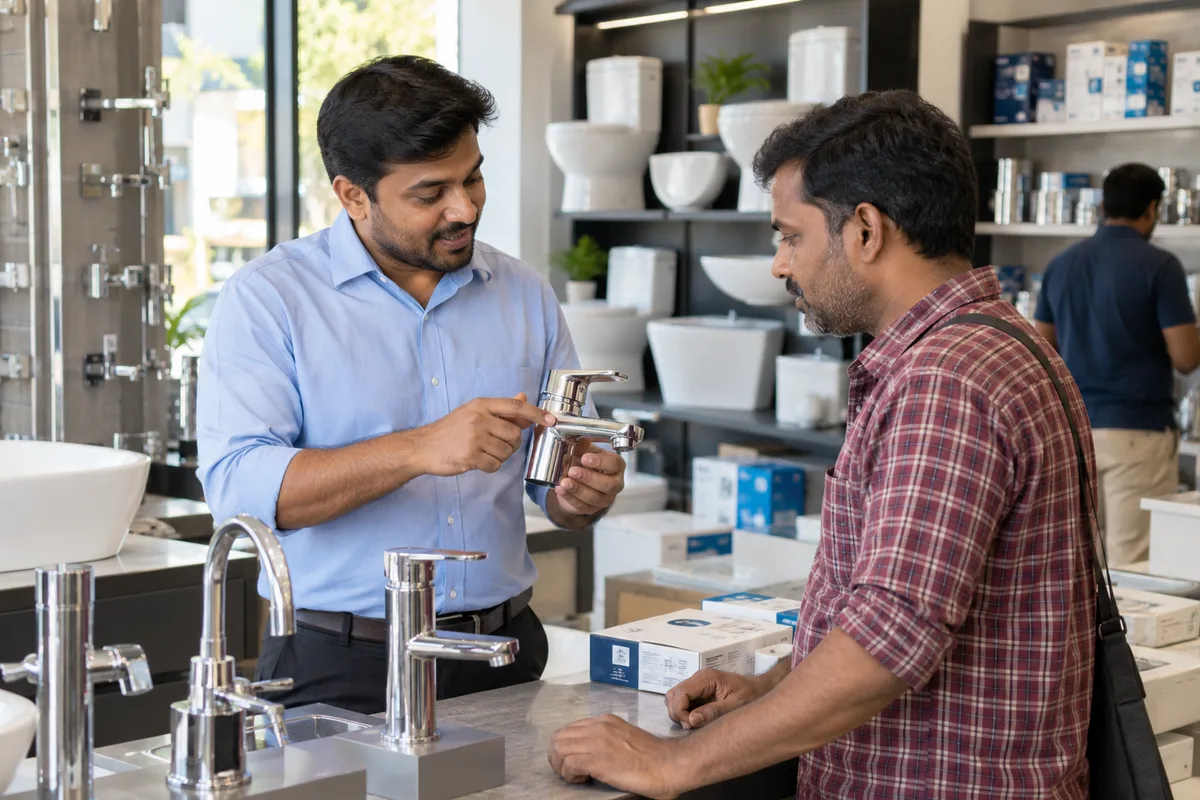
What WhatsApp marketing means
WhatsApp marketing is sending updates, offers and reminders to customers on the app most Indian buyers already check daily. GullySales sets up business WhatsApp, writes the message templates and keeps the list consented and current.
Also for plumbing and sanitaryware distributors
- Email marketing for plumbing and sanitaryware distributors
- SEO for plumbing and sanitaryware distributors
- Local SEO for plumbing and sanitaryware distributors
- Lead generation for plumbing and sanitaryware distributors
- CRM for plumbing and sanitaryware distributors
- Referral marketing for plumbing and sanitaryware distributors
- Sales management for plumbing and sanitaryware distributors
- Website development for plumbing and sanitaryware distributors
Sales and marketing for plumbing and sanitaryware distributors, the overview.
Last updated 6 Oct 2026.
For plumbing and sanitaryware distributors
Where it usually goes wrong, and what we would do.
“The trade list sits on salesmen's personal phones”
Each salesman holds the numbers of the retailers and plumbers. When the salesman leaves or changes phone, the distributor loses the list it paid for.
“An old rate screenshot circulates for weeks”
The brand revises the price list on a date and the picture of the old one keeps travelling. A retailer quotes it to the customer and then argues with you.
“A plumbers' group turns into a noticeboard”
Forty plumbers and a flood of festival greetings and rival offers. The ones who matter mute it within a week.
“Orders arrive as unlabelled photographs”
A handwritten list from a number nobody saved, sent when the counter is shut. Whoever sees it first decides what it means.
What we do
What we deliver for plumbing and sanitaryware distributors.
Every deliverable, what it covers for you, and the result it is there to produce. Nothing here is an extra.
A WhatsApp Business profile and catalogue
One shop profile on a shared number with address, hours, categories and a catalogue of product families, not of every item.
Result: A new contact sees a business, not a salesman's chat.
An opt-in record
A simple register of who agreed to receive trade messages, when, and who took the consent.
Result: You can show that every number on the list asked to be there.
Templates for the usual news
Messages for a rate revision, a stock arrival, a scheme closing date and a delivery on the way, each with a validity line.
Result: An old rate can no longer pass for today's.
An order-taking routine
A named person answering the shared number in counter hours, a confirmation message listing items, quantity and delivery date, and a place where each order is entered.
Result: A photographed order is read, confirmed and billed by someone.
Lists by buyer type
Retailers, plumbers and contractors, and builders kept apart, so a scheme meant for shops does not reach a household.
Result: Each group gets news that applies to it.
Replies and opt-outs counted
Messages sent, replies, orders started on WhatsApp and opt-outs, set against the baseline.
Result: You see whether the list is read or only tolerated.
How the result is measured
- Messages delivered
- Reply rate
- Enquiries from WhatsApp
Recorded as a baseline before work starts, so every later report has an honest comparison.
What must be in place first
What a plumbing and sanitaryware distributor sets up before it messages the trade at scale.
- An opt-in record
- Note who agreed to receive rate and stock messages, on what date, and through which person. A retailer whose number is in your phone book has not agreed to a broadcast.
- A business profile on a shared number
- Use a WhatsApp Business number that more than one person can answer, with the shop name, address and product families filled in. Leave salesmen's personal numbers for personal chat.
- Templates with a valid-until line
- Write the rate-revision and stock-arrival messages once, each with a date after which they no longer apply, so a forwarded copy cannot pass for the current rate.
- Who pays for what
- Check WhatsApp's current business policy and pricing before sending to a long list. The rules on what a business may start a conversation with, and what it costs, change.
- Opt-out in plain words
- End each broadcast with a line telling the reader how to stop messages, and remove that number from every list the same day, including any list a salesman keeps.
- A human who replies
- Name who answers the order number during counter hours and who covers the lunch break and the weekly off. A retailer who gets a template and then silence stops reading.
Who it is for
This is written for these plumbing and sanitaryware distributors.
- CPVC, UPVC and SWR pipe and fittings distributors
- Sanitaryware and CP fittings distributors
- Water tank and storage distributors
- Multi-brand plumbing wholesalers supplying sub-dealers
- Distributors with a bathroom showroom and a trade counter
- Project suppliers to builders and contractors
- Valve, pump and water heater stockists
- District sub-distributors and stockists
Not for
It is not the right fit if.
- Your trade list has no record that retailers agreed to receive messages, so a broadcast could get the number blocked.
- The rate list changes before it is approved and a photograph may circulate with a wrong price.
- Orders come by phone call from shops that do not use messages, and effort would go to a channel they ignore.
How it works
How the whatsapp marketing work runs
The work itself, in order. How an engagement starts, from your brief to a written scope, is set out on our method page.
- 1
Read the chats you already have
We read how customers write to you, which questions repeat and where a chat goes quiet. The repeated questions decide what gets automated first.
- 2
Sort the list and the permission
Contacts who asked to hear from you are separated from numbers that only sit in a phone book. We agree the wording new contacts will see before they say yes.
- 3
Choose the app or the API
One phone and a small team can stay on the ordinary app. Several people on one number, templates or a CRM link need the API through a provider, which is its own piece of setup work.
- 4
Write the replies and the plan
The greeting, away message, saved replies and handover rule are written in your words and approved by you. The message plan and its templates follow.
- 5
Connect the record and test
Each link carries its source line and each chat lands in the CRM. We test on real phones, including a customer who asks for a person.
- 6
Read the unanswered questions
A question the first reply could not answer becomes a new saved reply or a fixed handover. Stop requests are watched too, with the number's quality rating where the API is used, since both show a message plan that has gone too far.
Where this fits
Three pieces of sales work, in this order.
This work sits inside sales process design, at stage 0, foundation. The audit comes before it, and sales management keeps it running.
Step 1
Sales audit
Find where deals are being lost and what to fix first.
Start here if you cannot say where orders are lost.
Step 2 · you are here
Sales process design
One written way to sell, from first enquiry to repeat order.
Start here if every salesperson sells differently.
Step 3
Sales management
A target, a review routine and someone who owns the number.
Start here if the team has targets and no routine.
FAQ
Questions owners ask before they call.
Not here? More answers, or ask on WhatsApp.
Is a broadcast list enough, or do we need the WhatsApp Business API?
Can we run a WhatsApp group for our plumbers?
Our salesmen use their own numbers. What happens when one leaves?
Is the WhatsApp catalogue worth setting up for a distributor?
How much does it cost?
How long is the contract?
How soon will we see results?
Who will actually do the work?
What do you need from us?
What if we are not happy with the work?
From the blog
Further reading for plumbing and sanitaryware distributors.
 6 min read · 6 Oct 2026How trade buyers pick a dealer when the brands matchWhen every counter in town carries the same brands, trade buyers choose on stock, delivery, paperwork and returns. This post sets out how contractors, electricians, plumbers and purchase managers compare dealers.
 5 min read · 6 Oct 2026How plumbing distributors quote a builder's quantity listA builder's quantity list is quoted line by line against the approved makes, with what each rate includes, a dispatch plan, a credit position and a named person who calls back.
More for plumbing and sanitaryware distributors
Everything else we would do for you.
Closest to this: messaging and automation
Also for plumbing and sanitaryware distributors
- SEO for plumbing and sanitaryware distributors
- Local SEO for plumbing and sanitaryware distributors
- Lead generation for plumbing and sanitaryware distributors
- CRM for plumbing and sanitaryware distributors
- Referral marketing for plumbing and sanitaryware distributors
- Sales management for plumbing and sanitaryware distributors
Or start from the overview: sales and marketing for plumbing and sanitaryware distributors.
Your next practical step
Tell us what you are trying to grow, and we will read it before we call.
Eight short steps, mostly taps. Skip anything you would rather answer on the call.