Supermarkets · Content marketing
Give the household a list or a guide it keeps, and the store stays in the kitchen.
Content marketing for a supermarket means making shopping lists, seasonal guides and fresh-food notes that a household keeps and returns to. GullySales works on what the store knows best, which is what families buy and when.
Scope, fee, reporting and term are agreed in writing after we have read your brief and spoken to you.
What content marketing means
Content marketing is writing articles, guides and pages that answer the questions buyers search before they are ready to enquire. This makes your business visible and trusted before the first call. GullySales plans this content from the first conversation onward, choosing topics that match real search demand rather than guesses.
Last updated 14 Nov 2026.
For supermarkets
Where it usually goes wrong, and what we would do.
“The store already knows the content”
The billing counter sees which staples run out together, what families buy before a festival and which fresh items sell out first. That knowledge, written as a short guide, is more useful than a generic article.
“A list is kept, an advertisement is skipped”
A staples list for the home, a festival puja list or a school-tiffin list is saved on the phone and read again. It carries the store name every time the family opens it.
“Fresh produce explanations build trust”
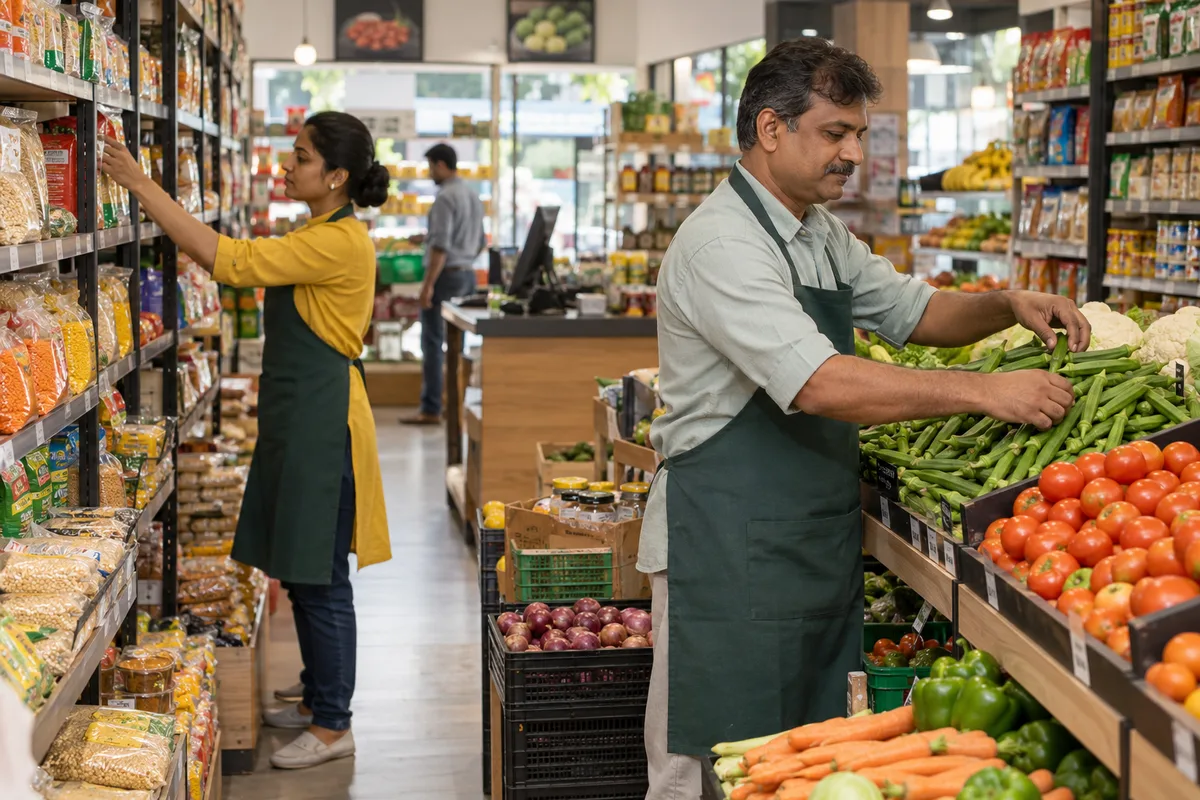
How to choose a ripe mango, which vegetables are in season or how the store stores its dairy answers a doubt that stops a first purchase. A short note beside the shelf and online shows the store knows its goods.
“Recipes and combinations lift the basket”
A short note that pairs ingredients, such as a sambar set or a breakfast basket, points the buyer to items from different shelves. The aim is a fuller bill, not a long article.
What we do
What we deliver for supermarkets.
The work available for this need. We agree the deliverables and responsibilities for your engagement in writing.
A content plan from your billing patterns
A list of topics drawn from what families buy, when they buy it and what they ask at the counter.
Result: Each topic is tied to a product group the store sells.
Printable and shareable shopping lists
One-page lists for festivals, school terms and household stock-ups, designed to be saved and forwarded.
Result: A family can save the list and bring it to the store.
Fresh-section notes
Short pieces on seasonal produce, the bakery and the dairy shelf, with a photograph from the store.
Result: A buyer learns what is in season from the store itself.
Written answers to counter questions
Short answers to questions staff hear daily, such as delivery slots, return of damaged goods and how to claim a scheme.
Result: Staff can point a buyer to the same answer every time.
A content calendar tied to festivals
Pieces timed ahead of festivals, with the hamper list and booking dates attached.
Result: Content goes out before the buyer starts planning.
How the result is measured
- Pages published
- Organic traffic
- Enquiries from content pages
Recorded as a baseline before work starts, so every later report has an honest comparison.
Posts and pieces to plan
Lists and guides a household would keep from a supermarket.
- Monthly staples list for a family of four
- A printable list of the rice, atta, oil, dal and spices by quantity, with the shelf row. Keep it free of prices so it does not date quickly.
- How to pick vegetables from the counter
- A short guide with photographs, written by the produce supervisor, on choosing and storing common vegetables. It builds trust in the fresh counter.
- Festival shopping list
- A list for the festival, with items grouped by shelf and a note of the day stock arrives. The family keeps it, and the store stays in the kitchen.
- What to do with leftover vegetables
- A recipe note that lifts the basket by suggesting companion items on the shelf. Test each recipe in your own kitchen before publishing.
- Return and exchange policy in plain words
- A page stating what the store takes back, for packaged and fresh goods. It answers a question at the counter before an argument starts.
Who it is for
This is written for these supermarkets.
- Single-store supermarkets of one floor in a residential locality
- Two-floor supermarkets with a dedicated household and general merchandise section
- Supermarkets inside apartment complexes and gated townships
- Small chains of three to ten stores in one city
- Supermarkets attached to a wholesale or cash-and-carry outlet
- Family-run supermarkets in smaller towns that serve the surrounding villages
- Cooperative and society-run supermarkets
- Supermarkets that serve a hospital, college or industrial campus
Before you decide
When this may not be the right fit.
- You do not yet have a person who writes in the store's voice, and a piece that reads as an advertisement will not be kept.
- Your policies on returns and stock are not agreed, so a page would state rules staff do not follow.
- You plan to publish daily, though a list that is kept is worth more than a daily post.
Before you decide
Agree the work. Know how to judge it.
Content marketing for supermarkets: use these checks to prepare, choose the scope, and review what changes.
Bring the right evidence
Bring questions from sales calls and examples of objections that delay a decision. Choose a subject expert who can check the substance, and identify evidence that can be published.
Make the scope clear
Agree the reader, buying question, format, and distribution route for each piece. Set the approval process and distinguish new research from rewriting material you already have.
Check the work in use
Ask a colleague to use the draft in a real buyer conversation. It should answer the question, support its claims, and make the next step clear without requiring a sales pitch to explain it.
Know when to change course
If the same unanswered question appears in several articles, improve the strongest page before commissioning another. More words are not a substitute for missing evidence.
These are discussion points, not a fixed package. GullySales confirms the deliverables, responsibilities, fee, and term in writing after reading your brief and speaking with you.
Before we start
What to have ready before the work starts.
The records, access and decisions this work needs from supermarkets. Anything missing is noted in the written scope, with who will supply it.
- A recent month of item-wise sales
- An export or printout from billing showing items sold, in whatever form the software gives. It lets us write about what households buy rather than what we imagine. Without it the content plan follows a generic grocery calendar.
- What shoppers keep asking at the billing counter
- The cashiers' and shelf staff's own list of the questions they hear again and again. It need not be tidy. Missing, we spend time at the counter ourselves, which delays the first piece.
- Fresh section head's time
- A short sitting with the person who runs the fresh section, who knows the produce and the season. They are busy at stock time, so choose a quiet hour. Without them the fresh notes are general and could belong to any store.
- The festival and season dates the store plans for
- The occasions that change the basket, with the approximate dates, as the buying desk plans for them. They set the calendar of pieces. If they are missing, we use the common festivals and the calendar may miss local ones.
- A place to put printed lists at the counter
- A space by the billing counter or the entrance where a printed list can sit, and a person who restocks it. Without a place, the list lives only on the phone, and households who do not use group messaging never see it.
How it works
How the content marketing work runs
The work itself, in order. How an engagement starts, from your brief to a written scope, is set out on our method page.
- 1
Read a month of bills for what repeats
We sit with the billing report and mark the items that appear in basket after basket, the items bought together and the items that rise with a festival. You and the manager add what the shelf staff notice. What exists afterwards is a list of what households buy and when, which tells us what is worth writing about.
- 2
Ask the counter what customers ask
We spend time at the billing counter and the help desk and write down the questions households put: where an item is kept, how to choose a ripe fruit, whether a brand is in stock. You approve the list. These questions become the first pieces, because the store already knows the answer.
- 3
Write the fresh section notes with the section head
The head of the fresh section tells us how to choose, store and use the produce on sale this season, and we write short notes from that talk. You approve every claim about freshness, origin and handling. The notes exist as text and as a card for the shelf.
- 4
Make a shopping list a family can keep
We draft printable and shareable lists, such as a festival week list or a staples list for the home, laid out in the order of the store's aisles. The manager checks that every item is stocked. A household can save it on the phone, which brings it back to the shop in the right order.
- 5
Place each piece where a household will find it
We decide with you where each piece lives: on the website's page, in the store's messaging, on a card at the counter, in the group share. Each piece carries the store name, the address and one next step. You approve the placing, and the calendar records which festival each piece serves.
- 6
Read saves, shares and counter mentions
We compare saved lists, shares and visits with the figures taken before publication and ask cashiers which households mentioned a piece. You decide which pieces to repeat next season. Nothing is promised in advance; the reading shows which notes were used rather than only read.
Where this fits
Three pieces of sales work, in this order.
This work sits inside sales process design, at stage 0, foundation. The audit comes before it, and sales management keeps it running.
Step 1
Sales audit
Find where deals are being lost and what to fix first.
Start here if you cannot say where orders are lost.
Step 2 · you are here
Sales process design
One written way to sell, from first enquiry to repeat order.
Start here if every salesperson sells differently.
Step 3
Sales management
A target, a review routine and someone who owns the number.
Start here if the team has targets and no routine.
FAQ
Questions owners ask before they call.
Not here? More answers, or ask on WhatsApp.
What should a supermarket write about?
Do we need to publish every day?
Where should the content live?
Where should the content live?
Who writes the shopping lists?
Can we copy recipes from the internet?
How much does it cost?
How long is the contract?
How soon will we see results?
Who will actually do the work?
More for supermarkets
Related work to consider.
Closest to this: content and social
Also for supermarkets
Or start from the overview: sales and marketing for supermarkets.
Your next practical step
Tell us what you are trying to grow, and we will read it before we call.
Eight short steps, mostly taps. Skip anything you would rather answer on the call.