Tile, flooring and bathware dealers · Website
A tile showroom website earns its place by getting the buyer to visit.
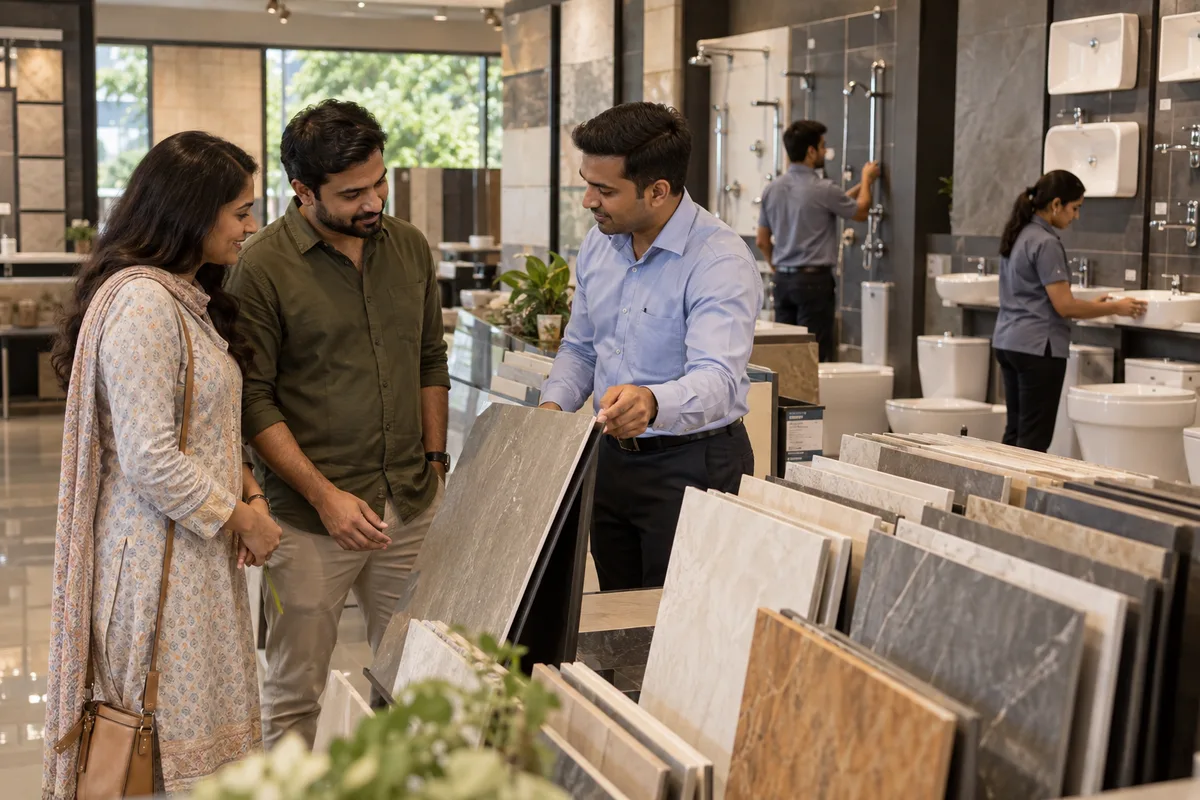
A website for a tile, flooring and bathware dealer is the page a family or designer opens after finding your Maps listing, to see ranges, rooms and how to reach the showroom. GullySales works on a site that shows your ranges honestly and gives the visitor an easy way to ask for a quote or book a visit.
Scope, fee, reporting and term are agreed in writing after we have read your brief and spoken to you.
What website means
A website is the page a customer lands on after searching, clicking an advert or scanning a code, and it decides whether they call or leave. GullySales builds and maintains sites that load quickly, explain the offer plainly and make the enquiry form or phone number easy to find.
Also for tile, flooring and bathware dealers
- SEO for tile, flooring and bathware dealers
- Local SEO for tile, flooring and bathware dealers
- PPC for tile, flooring and bathware dealers
- Lead generation for tile, flooring and bathware dealers
- Digital marketing for tile, flooring and bathware dealers
- Reputation management for tile, flooring and bathware dealers
- Branding for tile, flooring and bathware dealers
- Social media marketing for tile, flooring and bathware dealers
Sales and marketing for tile, flooring and bathware dealers, the overview.
Last updated 5 Oct 2026.
For tile, flooring and bathware dealers
Where it usually goes wrong, and what we would do.
“A catalogue dump does not help anyone choose”
Hundreds of tile photographs with no grouping leave the visitor scrolling. Grouped by room, finish and size, with a note on where each suits, the same photographs help a family narrow down before visiting.
“The visitor wants to know if you stock their brand”
People arrive with a brand or a design already in mind from Instagram or a designer. A site that lists the brands you carry, and which ones are on display, answers the question that decides whether they drive over.
“Phone screens decide the first impression”
Visitors open the page from a link on WhatsApp or Maps on a phone. Heavy images, tiny text or a form that fails to submit send them back to the listing, and to a competitor.
“Premium ranges stay invisible without their own pages”
Wooden flooring, imported bathware and large-format slabs sit in a back room and nowhere online. A page for each lets a search for that range find you, and gives a designer something to forward.
What we do
What we deliver for tile, flooring and bathware dealers.
Every deliverable, what it covers for you, and the result it is there to produce. Nothing here is an extra.
Pages by room and by range
Floor tiles, bathroom tiles, sanitaryware, CP fittings, wooden flooring and stone, each written around size, finish, slip resistance and upkeep.
Result: A buyer can find the range they want in a few taps.
Installed-room photographs
A gallery of real rooms with the tile and fittings named, taken in homes and in the showroom with the owner's permission.
Result: A visitor can see how a tile looks on a wall, not just in a sample.
Brands and display list
A page showing the brands stocked, which are on display and which are by order.
Result: The visitor knows whether the trip is worth making.
Quote and visit enquiry form
A short form and a WhatsApp button asking for rooms, area and a preferred time, with enquiries landing in the visitor record.
Result: Every enquiry reaches a named person.
Trade page for designers and builders
A page explaining sample requests, trade terms and project supply, separate from the family pages.
Result: Designers and builders have a route that does not go through the retail desk.
Maps and contact details kept consistent
The same name, address, hours and phone number on the site and on the Maps listing.
Result: Search engines and visitors see one showroom.
How the result is measured
- Page load time
- Bounce rate
- Enquiries from the website
Recorded as a baseline before work starts, so every later report has an honest comparison.
Searches your buyers type
The searches that bring a family to a tile showroom's site, and the page each lands on.
- tile showroom in your area
- The home page and Maps profile, leading with the display photographs, the address and the hours. A family planning a Sunday visit checks the address first.
- bathroom tiles and fittings
- A bathroom page with the wall and floor ranges, the sanitaryware and CP fittings on display, and how to book a visit with the designer.
- wooden or laminate flooring
- A flooring page with the types stocked, the underlay and fitting notes and the care guidance. It shows flooring is a separate range from tiles.
- brand name plus dealer
- A brand page for each brand you are authorised to sell, listing the ranges on display. Leave out any brand you cannot supply.
- tile dealer for architects
- A trade page for designers and builders with samples on request, the range sheet and a named contact for specifiers.
Who it is for
This is written for these tile, flooring and bathware dealers.
- Multi-brand tile and sanitaryware showrooms
- Single-brand exclusive tile galleries
- Bathware, CP fittings and bath accessories dealers
- Wooden, laminate and vinyl flooring retailers
- Granite, marble and natural stone dealers
- Tile distributors supplying builders and sub-dealers
- Premium imported tile and bathroom studios
- Flooring retail and installation businesses
Not for
It is not the right fit if.
- You have no photographs of the display, so a site would show the brand's images and not your showroom.
- Nobody can update the site when ranges change, and a page for a discontinued tile would send a family to the wrong shop.
How it works
How the website work runs
The work itself, in order. How an engagement starts, from your brief to a written scope, is set out on our method page.
- 1
Confirm structure and content
We agree the page list, what each page must answer, and who supplies the text and photographs, before any design starts.
- 2
Design the templates
The home page, a service page, a location page and the enquiry page are designed first, on phone and desktop, and shown to you.
- 3
Build and test
The site is built and checked on real phones and the common browsers. Every form, call button and WhatsApp link is tested end to end.
- 4
Load real content
Actual copy, images and information replace placeholders. Pages are read through once by you, since you spot wrong details we cannot.
- 5
Check before launch
Tracking, page titles, the sitemap and the privacy page are checked on the staging site. If an old site exists, its addresses are mapped so old links still land somewhere.
- 6
Launch and hand over access
The site goes live and we record the domain, hosting, content login and analytics in your name. The first live enquiry is traced to confirm tracking works.
Where this fits
Three pieces of sales work, in this order.
This work sits inside sales process design, at stage 1, prospecting and lead generation. The audit comes before it, and sales management keeps it running.
Step 1
Sales audit
Find where deals are being lost and what to fix first.
Start here if you cannot say where orders are lost.
Step 2 · you are here
Sales process design
One written way to sell, from first enquiry to repeat order.
Start here if every salesperson sells differently.
Step 3
Sales management
A target, a review routine and someone who owns the number.
Start here if the team has targets and no routine.
FAQ
Questions owners ask before they call.
Not here? More answers, or ask on WhatsApp.
Do we need an online store to sell tiles?
How do we keep prices off the site without losing the buyer?
Who updates the site when new ranges arrive?
Do we list the brands we can order but do not display?
How long is the contract?
How soon will we see results?
Who will actually do the work?
What do you need from us?
What if we are not happy with the work?
From the blog
Further reading for tile, flooring and bathware dealers.
 5 min read · 6 Oct 2026Why homeowners pick one quote out of threeInterior, kitchen, window, tile and AC buyers collect three quotes and choose the firm they understood and heard back from. Here is what they compare and where the quote loses.
 7 min read · 21 Sept 2026How to advertise to interior designersA designer does not buy your product. They specify it, and somebody else pays for it. That one fact changes what you advertise, when, and what you are actually asking for.
 8 min read · 21 Sept 2026How to advertise to contractorsA contractor is on site, on a phone, with one hand free. Work out first whether your product is chosen by him or by the person paying him, because that decides everything.
More for tile, flooring and bathware dealers
Everything else we would do for you.
Closest to this: search and visibility
Also for tile, flooring and bathware dealers
- PPC for tile, flooring and bathware dealers
- Lead generation for tile, flooring and bathware dealers
- Digital marketing for tile, flooring and bathware dealers
- Reputation management for tile, flooring and bathware dealers
- Branding for tile, flooring and bathware dealers
- Social media marketing for tile, flooring and bathware dealers
Or start from the overview: sales and marketing for tile, flooring and bathware dealers.
Your next practical step
Tell us what you are trying to grow, and we will read it before we call.
Eight short steps, mostly taps. Skip anything you would rather answer on the call.