Trophy and award makers · Local SEO
Rush and walk-in buyers search near them, so the map listing must show real work.
Local SEO for a trophy and award maker is the work of appearing in map results for the buyer searching a short distance from the shop. GullySales works on the listing, the photographs of finished sets and the reviews.
Scope, fee, reporting and term are agreed in writing after we have read your brief and spoken to you.
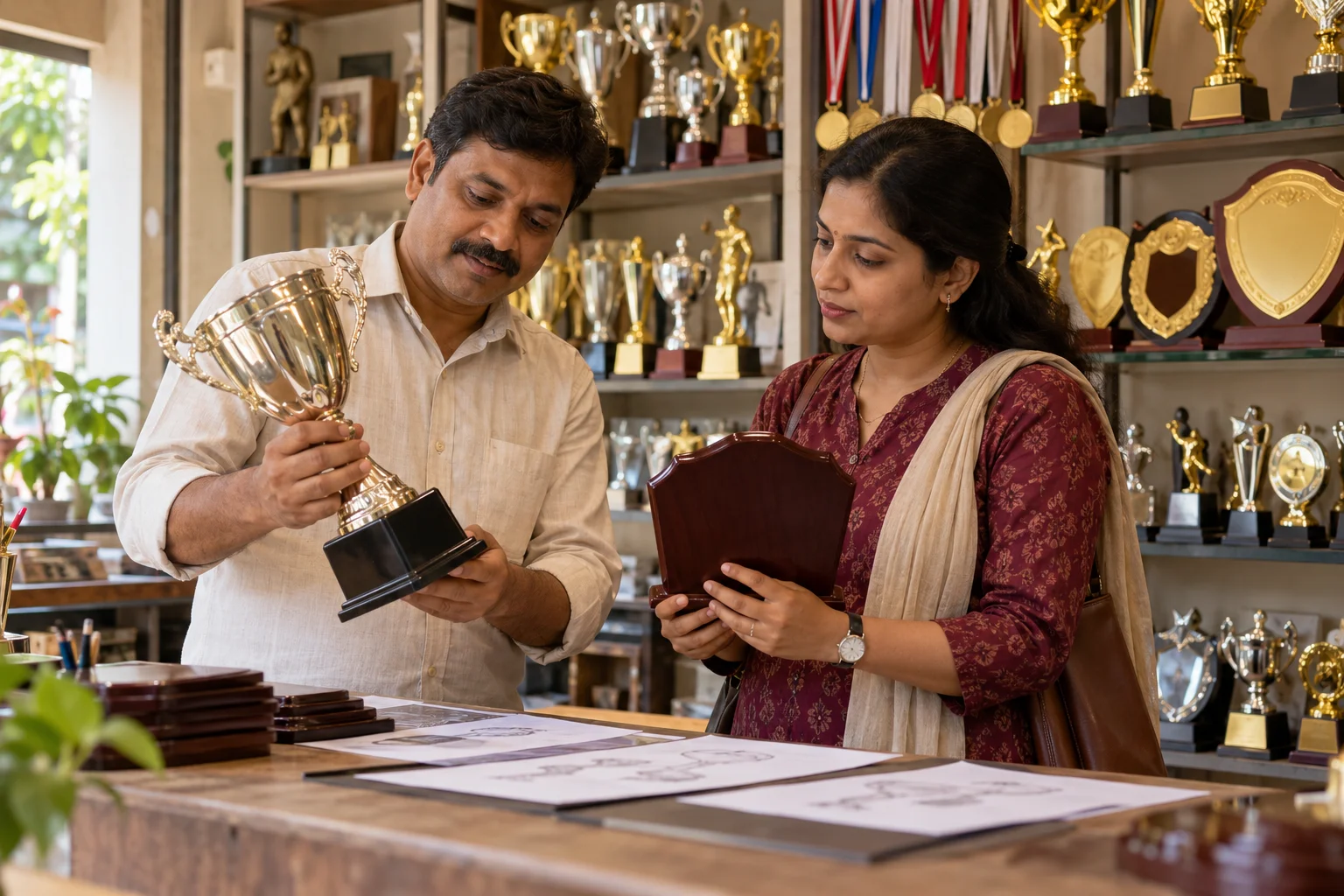
What local SEO means
Local SEO is the work of making your business show up for searches that name your town or locality, such as a service plus an area name. GullySales sets up locality pages, local citations and map listings so nearby customers find you before a competitor across town.
Also for trophy and award makers
- SEO for trophy and award makers
- Website for trophy and award makers
- Lead generation for trophy and award makers
- Social media marketing for trophy and award makers
- Content marketing for trophy and award makers
- Buyer persona for trophy and award makers
- CRM for trophy and award makers
- Follow-up systems for trophy and award makers
Sales and marketing for trophy and award makers, the overview.
Last updated 14 Nov 2026.
For trophy and award makers
Where it usually goes wrong, and what we would do.
“The rush buyer takes the nearest open shop”
A coordinator with a day to spare searches near them and calls the first shop that looks capable. Hours, a phone line that answers and photographs of real work decide who gets the call.
“Stock photographs lose to real ones”
A listing with catalogue images looks like a reseller. Photographs of the shop's own engraved plaques and medal sets show a maker. A coordinator comparing three shops reads the pictures before the text.
“Reviews should name the event”
A review that mentions the sports day set or the retirement plaque tells the next coordinator that the shop delivers on time. Ask for the review when the order is collected. Reviews like that are the ones the next coordinator trusts.
“The phone must be answered on event days”
Before a school function, the shop is busy and calls go unanswered. A missed call to a coordinator is a lost order. The profile needs a number someone answers, and a message option as a fallback.
What we do
What we deliver for trophy and award makers.
The work available for this need. We agree the deliverables and responsibilities for your engagement in writing.
A profile with finished work
Photographs of real orders with the item and event named, and services listed for trophies, medals, plaques and engraving.
Result: A stranger sees what the shop makes.
Hours and late-collection notes
Opening hours and any special hours before school events, set on the profile.
Result: The search finds a shop that is open.
A review ask at collection
A card or message with the review link, asking the coordinator to name the event.
Result: Recent reviews describe real orders.
Replies to every review
Written replies, including to complaints about a late delivery or a wrong spelling.
Result: Readers see how the shop corrects mistakes.
Calls and direction counts read
The listing's own counts set against the baseline.
Result: The owner sees whether the profile brings people.
A message route on the profile
A chat button and a phone line that someone is assigned to watch.
Result: Calls and messages are answered, not lost.
How the result is measured
- Map pack ranking
- Local search visibility
- Enquiries by locality
Recorded as a baseline before work starts, so every later report has an honest comparison.
Searches your buyers type
A map listing for a trophy shop wins on near-me searches only when it shows the workshop and the finished plates.
- trophy shop near me
- Your primary category, address, opening hours and a photograph of the counter and the engraving machine, so a buyer in a hurry sees a working shop.
- engraving shop near me
- A listed service for engraving on metal, wood and acrylic, with photographs of plates cut for real orders and the text styles on offer.
- medals and shields for school events
- A product entry with a photograph of a medal set and a shield, the sizes and a line saying orders are taken with a proof before engraving.
- trophy shop open Sunday
- Hours that show what is true on festival and event weekends, since a rush buyer searches on the day the function is held.
- award makers in your locality name
- A service area that lists the localities you deliver to and a description naming the schools, clubs and offices nearby that you supply.
Who it is for
This is written for these trophy and award makers.
- Schools needing annual day, sports day and board topper trophies and medals
- Colleges and universities with convocations and inter-college meets
- Sports clubs, cricket, football and badminton tournaments and associations
- Corporate recognition: employee awards, long-service shields and sales-champion trophies
- Event agencies buying awards for client functions
- Residents' associations and clubs for cultural and festival competitions
- Government departments and public bodies giving commemoratives
- Engraved gift buyers: retirement plaques, wedding anniversary momentos and desk name plates
Before you decide
When this may not be the right fit.
- Your shop is a home workshop without a public address and you do not want visitors, so a map pin would send people to a closed door.
- You do not take walk-in or same-day orders, which is what most map searches in this trade are looking for.
- You have no photographs of finished work and nobody to reply to messages on the listing, so the profile would show an empty shop.
Before you decide
Agree the work. Know how to judge it.
Local SEO for trophy and award makers: use these checks to prepare, choose the scope, and review what changes.
Bring the right evidence
Confirm the real business address, service area, contact details, and who controls the business listings. Keep examples of calls that came from the wrong location or asked for a service you do not provide.
Make the scope clear
Choose the locations you actually serve and the information each needs. Agree who approves listing changes, responds to enquiries, and keeps opening hours accurate.
Check the work in use
Check the journey from a local search to a call or enquiry on a phone. The address, service area, and description should agree across your website and listings.
Know when to change course
Do not create an office claim for a place where you only serve customers remotely. Clear service coverage is more useful than a misleading local presence.
These are discussion points, not a fixed package. GullySales confirms the deliverables, responsibilities, fee, and term in writing after reading your brief and speaking with you.
Before we start
What to have ready before the work starts.
The records, access and decisions this work needs from trophy and award makers. Anything missing is noted in the written scope, with who will supply it.
- Owner access to the Maps listing
- Owner or manager rights, not a login borrowed from someone who left. Without them we cannot change a photograph or an hour. If a former helper holds the listing, getting it back comes before any other work.
- Opening hours with event-day exceptions
- Your regular hours and the days you open early, shut for a festival or collect late. A wrong hour sends a rushed buyer to a locked shop. If you are unsure, we log the real pattern for a short time at the counter before changing anything.
- Photographs taken inside the shop
- Clear pictures of the counter, the display and the bench, with your consent for anyone shown. Without them the profile shows what other people uploaded, which may be poor or out of date.
- A phone that is answered on event days
- A number someone picks up when annual days and tournaments are close. Calls from the profile are urgent. If no one can answer, we set a message that promises a return call and tell the counter to return it first.
- A list of events past buyers came for
- Events such as annual days and long-service awards, written from memory or the order book. We use them as examples when we write replies and ask for reviews. Missing the list, reviews stay general. Even three or four events, such as an annual day and a retirement, give the replies something real to mention.
How it works
How the local SEO work runs
The work itself, in order. How an engagement starts, from your brief to a written scope, is set out on our method page.
- 1
Stand at the shop door as a buyer
We walk up to the shop as a rushed organiser would, from the road, on foot or by auto, and note what is visible: the board, the display and the opening times. Then we search the shop's name on a phone. You tell us what a first-time buyer finds hard, such as a lane that is difficult to locate. We also check whether the board is visible from the direction buyers approach, because a rushed buyer will not circle the lane twice.
- 2
Photograph finished sets on the counter
Real sets on your counter and bench replace stock pictures on the profile. Each is shot in daylight with its occasion noted. Photographs of a buyer's name on a plaque are taken only with permission. You choose the work that represents the shop.
- 3
Fix hours and the late-collection note
Opening hours are checked against how the shop really runs, including event days when buyers collect late. A line on the profile says how to arrange a late collection. You tell us which days the shop opens early or shuts, so the profile never sends a buyer to a closed door.
- 4
Set the review ask at collection
The counter asks for a review when the buyer picks up, with a card showing the way. We suggest that the reviewer names the event, since a review that mentions an annual day tells the next organiser more. You decide who at the counter makes the ask.
- 5
Write replies to existing reviews
Every review already on the profile gets a reply in your voice, thanking the buyer and naming the piece or event when it is safe to do so. Complaints get a calm reply that offers a call. You read each one before it is posted.
- 6
Count calls and directions against the start
We note the calls, direction requests and messages the profile shows now and compare them after the changes. Reviews are read for the occasions named. You see which part of the work brought a person to the door and which only brought a view.
Where this fits
Three pieces of sales work, in this order.
This work sits inside sales process design, at stage 1, prospecting and lead generation. The audit comes before it, and sales management keeps it running.
Step 1
Sales audit
Find where deals are being lost and what to fix first.
Start here if you cannot say where orders are lost.
Step 2 · you are here
Sales process design
One written way to sell, from first enquiry to repeat order.
Start here if every salesperson sells differently.
Step 3
Sales management
A target, a review routine and someone who owns the number.
Start here if the team has targets and no routine.
FAQ
Questions owners ask before they call.
Not here? More answers, or ask on WhatsApp.
Why do I see a rival above me on the map?
Should the profile show prices?
Can I list engraving as a service?
Should the listing say I make trophies myself or resell them?
Can the listing show that we deliver to schools?
What if another shop has the same name nearby?
How long is the contract?
How soon will we see results?
Who will actually do the work?
What do you need from us?
More for trophy and award makers
Related work to consider.
Closest to this: search and visibility
Also for trophy and award makers
Or start from the overview: sales and marketing for trophy and award makers.
Your next practical step
Tell us what you are trying to grow, and we will read it before we call.
Eight short steps, mostly taps. Skip anything you would rather answer on the call.