Trophy and award makers · Search engine optimisation
Organisers search for the thing they need to buy, so write a page for each.
SEO for a trophy and award maker is the work of making the shop's website appear when an organiser searches for school medals, corporate shields or tournament trophies. GullySales builds the pages, wording and structure that answer those searches.
Scope, fee, reporting and term are agreed in writing after we have read your brief and spoken to you.
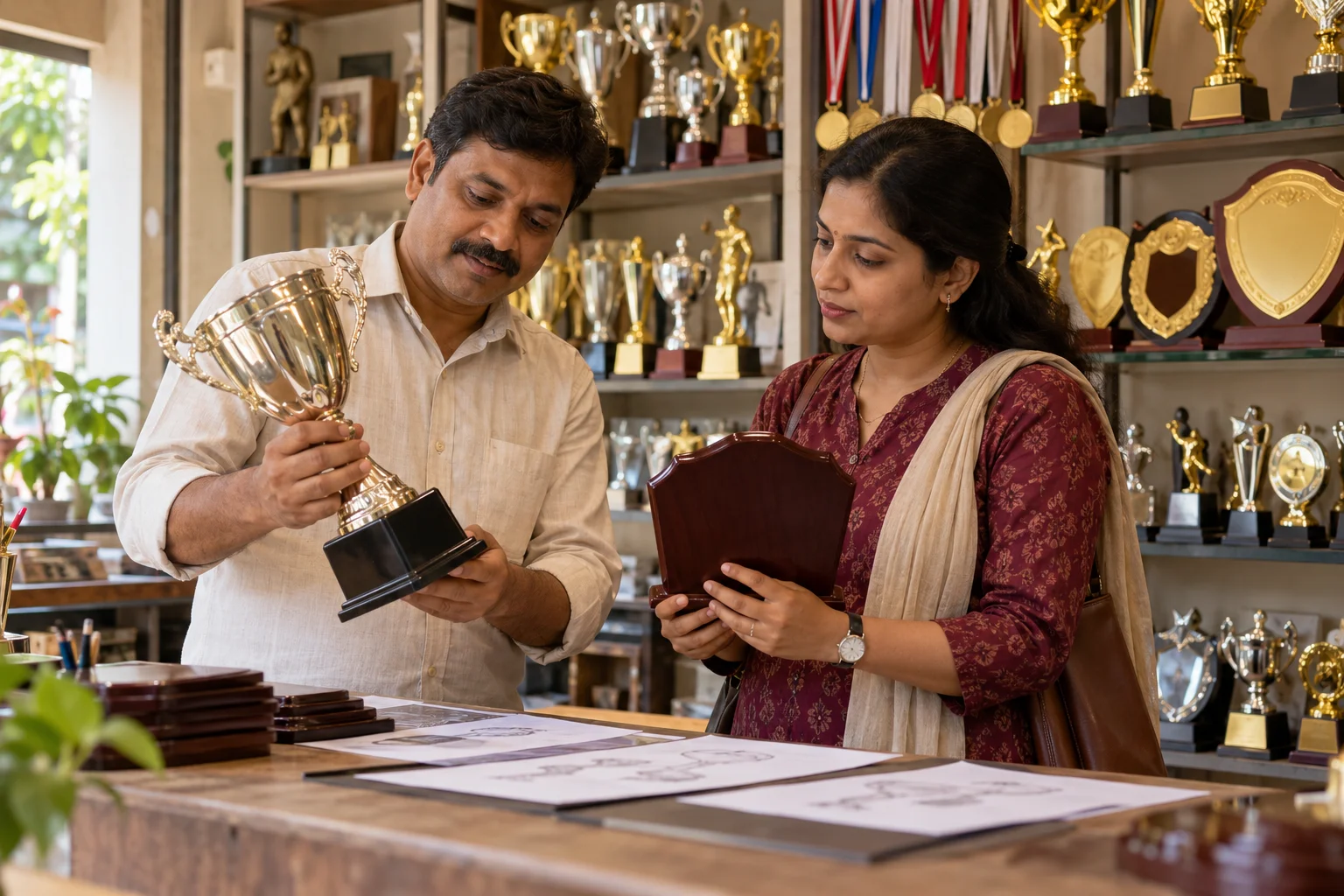
What search engine optimisation means
Search engine optimisation (SEO) is the work of getting your website to appear when a buyer searches Google for what you sell. GullySales builds pages around real search terms, fixes technical issues that block ranking, and tracks which searches actually bring enquiries.
Also for trophy and award makers
- Local SEO for trophy and award makers
- Website for trophy and award makers
- Lead generation for trophy and award makers
- Social media marketing for trophy and award makers
- Content marketing for trophy and award makers
- Buyer persona for trophy and award makers
- CRM for trophy and award makers
- Follow-up systems for trophy and award makers
Sales and marketing for trophy and award makers, the overview.
Last updated 14 Nov 2026.
For trophy and award makers
Where it usually goes wrong, and what we would do.
“The search names the occasion”
An organiser types sports day medals or corporate award shield, and not trophy maker. A site built on one page of 'Products' does not match either. A page for each occasion does. Add the city name where it is true to the shop's reach.
“Catalogue pages with codes say nothing”
A product code and a price give a committee nothing to forward. A page that shows a finished set with a described finish and an example proof helps the coordinator make the case. Picture the page the way a principal would read it.
“Two spellings split the traffic”
Trophy and trophies, momento and memento, shield and plaque. Buyers use all of them. A site that picks one and uses it everywhere misses the searcher who uses another. A thorough page uses every spelling once, in the places a reader would expect it.
“Marketplaces rank above your own site”
Listings on directories fill the first page for the word trophy. Your own site wins on occasions and cities, where the buyer's phrase is longer and the directories write little. Pages for each occasion are where the shop can be read.
What we do
What we deliver for trophy and award makers.
The work available for this need. We agree the deliverables and responsibilities for your engagement in writing.
A page for each occasion
Separate pages for sports day, annual day, tournaments, corporate awards and retirement gifts, with examples of finished work.
Result: An organiser lands on the page for their event.
Spelling variants handled
The words buyers use for the same item gathered and worked into headings and text naturally.
Result: The site matches how people search.
Finished work photographed and captioned
Images of real orders with the item, material and engraving described.
Result: Visitors see proof of work.
A proof explainer page
A page showing how a proof is prepared, confirmed and signed off before engraving.
Result: Buyers see how mistakes are prevented.
A fix list from the present site
A short list of missing titles, thin pages and broken links in order of importance.
Result: The owner knows what to change.
City and occasion wording
Headings and text that join the occasion to the city, such as annual day medals in the shop's own area.
Result: The site matches the longer searches.
How the result is measured
- Ranking positions
- Organic traffic
- Enquiries from organic search
Recorded as a baseline before work starts, so every later report has an honest comparison.
Searches your buyers type
Organisers search by event and by piece, so each search deserves a page that shows finished work.
- school sports day medals and trophies
- A page of medal and trophy sets for sports day with sizes, ribbons and the logo-plate options, and a quote form that asks for the date and the quantity.
- annual day shields for school
- A page that shows shields made for annual functions, the plate wording that schools use and how a proof is approved before engraving.
- employee recognition awards for companies
- A corporate page covering long-service shields and sales-champion trophies, with the GST invoice, the sample on request and the process for HR teams.
- retirement plaque with engraving
- An engraved plaque page with text examples, wood and metal finishes, and a note on how the wording is confirmed before the plate is cut.
- trophy maker near me
- The service area page and map listing, showing real workshop photographs and the pieces that can be collected the same day if stock exists.
Who it is for
This is written for these trophy and award makers.
- Schools needing annual day, sports day and board topper trophies and medals
- Colleges and universities with convocations and inter-college meets
- Sports clubs, cricket, football and badminton tournaments and associations
- Corporate recognition: employee awards, long-service shields and sales-champion trophies
- Event agencies buying awards for client functions
- Residents' associations and clubs for cultural and festival competitions
- Government departments and public bodies giving commemoratives
- Engraved gift buyers: retirement plaques, wedding anniversary momentos and desk name plates
Before you decide
When this may not be the right fit.
- Your site is a product list with stock cup photographs and no finished work, so search visitors would meet the same sight as every other listing.
- You take orders only from a few schools you already serve and have no spare capacity, so search enquiries would have nowhere to go.
- You have no one to write or approve text about your materials and finishes, and a page copied from a supplier catalogue carries nothing that is yours.
Before you decide
Agree the work. Know how to judge it.
SEO for trophy and award makers: use these checks to prepare, choose the scope, and review what changes.
Bring the right evidence
Bring the pages for the products or services you want to sell, the search queries available in your reports, and examples of enquiries from search. Separate branded searches from buyers discovering you for the first time.
Make the scope clear
Agree which pages and technical fixes come first, who can publish changes, and who supplies subject knowledge. Link search work to a relevant enquiry route on each priority page.
Check the work in use
Follow the trail from a relevant query to its landing page and then to an enquiry. Review whether those enquiries fit your offer, alongside indexing and search visibility.
Know when to change course
A ranking movement alone is not a buying signal. If traffic grows but relevant enquiries do not, revisit page intent and the offer before producing more pages.
These are discussion points, not a fixed package. GullySales confirms the deliverables, responsibilities, fee, and term in writing after reading your brief and speaking with you.
Before we start
What to have ready before the work starts.
The records, access and decisions this work needs from trophy and award makers. Anything missing is noted in the written scope, with who will supply it.
- Website and search report logins
- A login to the site and to the reports that show which searches bring visitors. A shared login is acceptable. Without it we work from the live pages alone and cannot tell you which of your pages are quietly doing the work.
- Photographs of finished orders, with permission
- Pictures of recent sets where the buyer has agreed to being shown. Phone photographs in good light are enough. Missing these, the pages carry placeholders for the first weeks, and we mark which orders to photograph next.
- A list of what you make in the shop
- Which pieces you engrave or assemble yourself and which you buy in and resell. The pages must not claim a skill you lack. When the list is missing, we describe only the services you confirm at the counter.
- The cities and districts you deliver to
- Where you deliver, where buyers collect, and where you will not go. City wording on a page invites enquiries from there. Without the list, we write for your own city only and leave the wider area for later.
- The wording you use for proofs
- How you show a proof, what you ask the buyer to check and how they confirm. The proof page copies your method. If you have none written down, we describe what you say at the counter, and you correct us.
How it works
How the search engine optimisation work runs
The work itself, in order. How an engagement starts, from your brief to a written scope, is set out on our method page.
- 1
List the occasions buyers type in
We start from the events your orders were for: annual day, sports meet, long-service award, farewell, tournament. For each, we write how an organiser might phrase the search. You add the occasions you wish you got more of. The list decides which pages are built first, before any technical work begins.
- 2
Photograph finished sets at the bench
Finished work is photographed in daylight on a plain surface, one set at a time, with a note of the occasion, material and size. We caption each photograph so the page and the picture say the same thing. Pieces with a client's name or logo on them are shown only with permission.
- 3
Handle both spellings in the page text
Buyers type the same piece in several ways, such as memento and mementos or shield and plaque. We list the variants you hear at the counter and use them naturally in headings and body text. You tell us which words buyers in your city actually use, since some are local.
- 4
Read the present site for a fix list
We go through your current site page by page and list what is broken, slow, duplicated or missing, in order of what costs the shop the greatest number of enquiries. Catalogue pages made only of codes go to the top. You decide which pages to keep as they are.
- 5
Write the proof explainer page
One page explains how a proof is shown, how the spelling is checked and who signs it off before engraving starts. A coordinator who fears a misprint reads it first. You tell us how you really run proofs so that the page describes your shop, not a general one.
- 6
Read enquiries by occasion against the old count
We compare the enquiries now arriving, by occasion, with the figures noted before the pages were built. Each page is judged by the enquiry it brought, not its position in a search. Together we decide which occasions need another page and which need less.
Where this fits
Three pieces of sales work, in this order.
This work sits inside sales process design, at stage 1, prospecting and lead generation. The audit comes before it, and sales management keeps it running.
Step 1
Sales audit
Find where deals are being lost and what to fix first.
Start here if you cannot say where orders are lost.
Step 2 · you are here
Sales process design
One written way to sell, from first enquiry to repeat order.
Start here if every salesperson sells differently.
Step 3
Sales management
A target, a review routine and someone who owns the number.
Start here if the team has targets and no routine.
FAQ
Questions owners ask before they call.
Not here? More answers, or ask on WhatsApp.
Do I need a website if I use a marketplace?
Can you promise a first-page position?
Should the site list prices?
Is one page enough for all my pieces?
Who writes the occasion pages, the shop or GullySales?
What happens to the pages if I change my website later?
How long is the contract?
How soon will we see results?
Who will actually do the work?
What do you need from us?
More for trophy and award makers
Related work to consider.
Closest to this: search and visibility
Also for trophy and award makers
Or start from the overview: sales and marketing for trophy and award makers.
Your next practical step
Tell us what you are trying to grow, and we will read it before we call.
Eight short steps, mostly taps. Skip anything you would rather answer on the call.