Trophy and award makers · Website
A trophy website shows finished sets and makes asking for a quote easy.
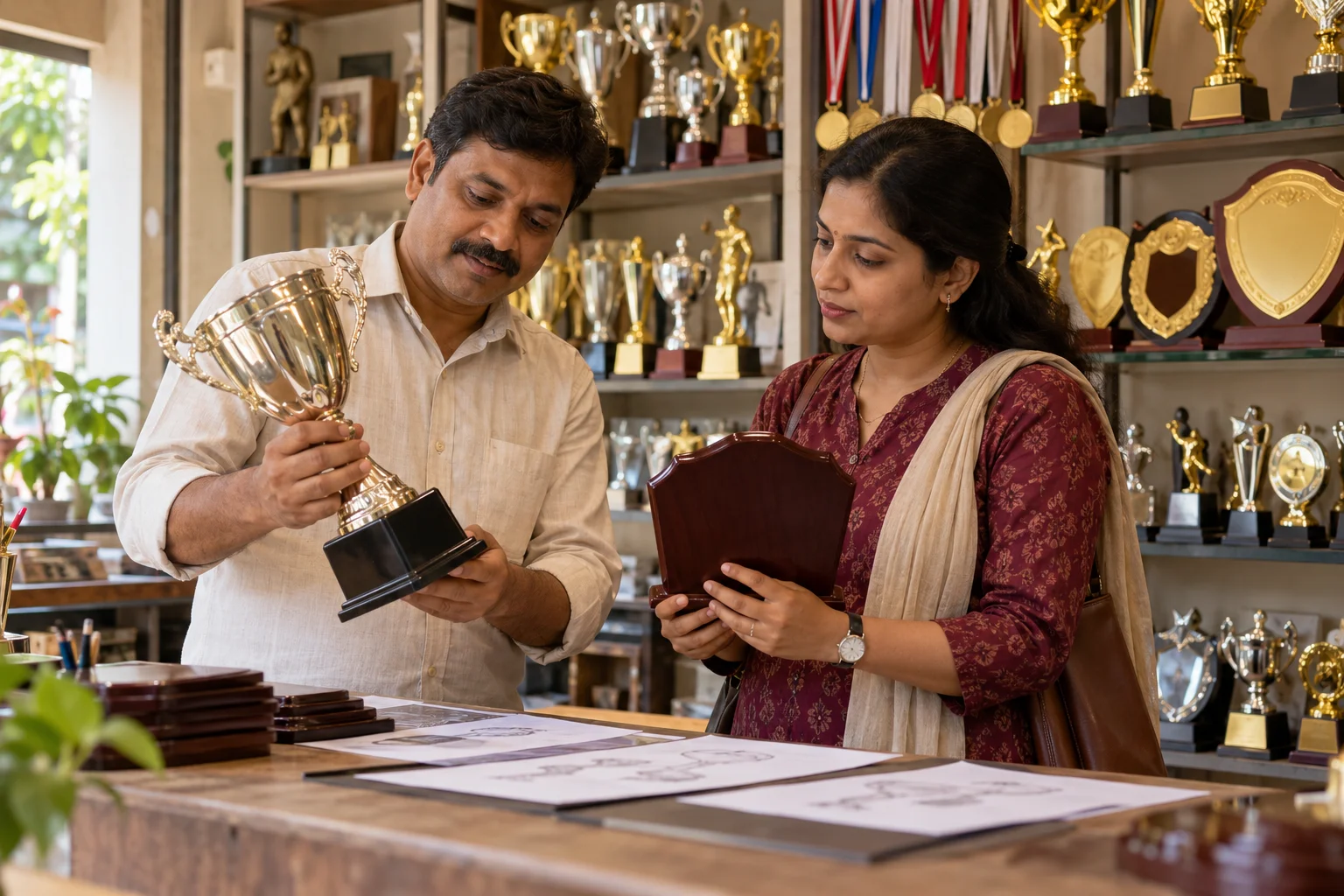
A website for a trophy and award maker is a short set of pages showing finished work by occasion, with a clear way to send the event, date and quantity. GullySales plans and builds the pages around the enquiry.
Scope, fee, reporting and term are agreed in writing after we have read your brief and spoken to you.
What website means
A website is the page a customer lands on after searching, clicking an advert or scanning a code, and it decides whether they call or leave. GullySales builds and maintains sites that load quickly, explain the offer plainly and make the enquiry form or phone number easy to find.
Also for trophy and award makers
- SEO for trophy and award makers
- Local SEO for trophy and award makers
- Lead generation for trophy and award makers
- Social media marketing for trophy and award makers
- Content marketing for trophy and award makers
- Buyer persona for trophy and award makers
- CRM for trophy and award makers
- Follow-up systems for trophy and award makers
Sales and marketing for trophy and award makers, the overview.
Last updated 14 Nov 2026.
For trophy and award makers
Where it usually goes wrong, and what we would do.
“A catalogue of codes does not help a committee”
Codes and prices give an approver nothing to picture. Pages of finished sets by occasion do. Show the finished set, the finish and the engraving on each page, and the approver sees what the money buys.
“The button matters more than the banner”
Visitors who cannot find how to ask leave. A button that opens WhatsApp with a prompt for the event, date and quantity sits on every page. Put it where a thumb reaches on a phone, on every page.
“Photographs are heavy”
Large images slow the page on a phone. They need to be prepared so the gallery loads easily. Prepare each image once for the web and the gallery opens without a wait on a mobile connection.
“Committees forward links”
A coordinator sends a link to a principal or a manager. If the page shows finished sets by occasion with a plain way to request a quote, the approver sees enough to say yes without visiting the shop.
What we do
What we deliver for trophy and award makers.
The work available for this need. We agree the deliverables and responsibilities for your engagement in writing.
A five-page structure
Home, finished work, occasions, corporate and institutional buyers, and contact.
Result: The site covers what a buyer needs.
A gallery of described orders
Finished work with the item, material and engraving named.
Result: Visitors see proof.
An enquiry button on every page
A button that opens a chat with a prefilled prompt.
Result: Every visit has a next step.
A page for institutions
A page for schools, clubs and companies with a rate sheet request and the shop's proof process.
Result: Approvers find what they need.
Mobile-first build
Pages checked on a phone with images prepared.
Result: The site opens easily.
A shareable page per occasion
Each occasion page built to be forwarded as a link, with examples and a quote request.
Result: Approvers see what they need from one link.
How the result is measured
- Page load time
- Bounce rate
- Enquiries from the website
Recorded as a baseline before work starts, so every later report has an honest comparison.
Searches your buyers type
A trophy site should answer the search that brought the organiser and make the next step a quote request.
- trophies for sports day with price
- A page of sets by age group and size, with a note that price depends on quantity and plate text, and a quote form on the same page.
- corporate trophy supplier with GST invoice
- A vendor page for purchase teams with company details, GST registration and a sample on request.
- how to order trophies online
- A short page that walks through list, logo file, proof, advance and delivery, written in the order the shop actually works.
- school shield design with logo
- A gallery of shields made for schools, with the logo and plate placement visible and the school named only with its consent.
- engraving text ideas for awards
- A page of plate wording for different awards, which brings organisers who are still deciding and ends in a quote link.
Who it is for
This is written for these trophy and award makers.
- Schools needing annual day, sports day and board topper trophies and medals
- Colleges and universities with convocations and inter-college meets
- Sports clubs, cricket, football and badminton tournaments and associations
- Corporate recognition: employee awards, long-service shields and sales-champion trophies
- Event agencies buying awards for client functions
- Residents' associations and clubs for cultural and festival competitions
- Government departments and public bodies giving commemoratives
- Engraved gift buyers: retirement plaques, wedding anniversary momentos and desk name plates
Before you decide
When this may not be the right fit.
- You will not update the site after launch, and a gallery of last year's pieces with no new work tells buyers the shop has gone quiet.
- You have no one to answer the quote form, so a visitor's enquiry would sit unread.
- You have no photographs of your own work, and a site made from stock pictures looks like every listing the buyer already rejected.
Before you decide
Agree the work. Know how to judge it.
Website for trophy and award makers: use these checks to prepare, choose the scope, and review what changes.
Bring the right evidence
List the pages that support a buying decision and the actions visitors must complete. Keep examples of failed forms, unclear product information, and questions your team answers repeatedly.
Make the scope clear
Agree the page list, content ownership, integrations, and who controls the domain and hosting. Include redirects and existing search traffic in a redesign brief, before changing addresses.
Check the work in use
Complete a real enquiry journey on a phone and a laptop. Check that the confirmation appears, the enquiry reaches the right person, and tracking records the action once.
Know when to change course
If visitors can enquire but the team does not follow up, start with the sales handover. A larger website will not resolve that delay.
These are discussion points, not a fixed package. GullySales confirms the deliverables, responsibilities, fee, and term in writing after reading your brief and speaking with you.
Before we start
What to have ready before the work starts.
The records, access and decisions this work needs from trophy and award makers. Anything missing is noted in the written scope, with who will supply it.
- Photographs of finished orders, sized for web
- Recent pieces, photographed in good light, with the occasion noted. Phone photographs are enough. If you have few, the gallery starts small and grows as new orders are photographed. Name each file after the piece and the occasion, so we do not have to guess.
- Domain and hosting details
- Where your domain is registered and where the site would be held. Without the login we cannot connect the new pages. If a former helper bought the domain, we recover it first. Please also tell us who receives email sent to the domain, since a launch can interrupt it.
- A description of each occasion you serve
- A few lines on each occasion from your own experience: annual day, sports meet, retirement. They are the headings of the work pages. When missing, we write them from the order book and you correct. Add the months when each occasion peaks in your experience, since the pages are ordered by the buyer's year.
- Your logo in a usable file
- A logo file with a clear background, or the original if you have it. Without one, we redraw it from a photograph, which takes time and rarely matches. If you have only a printed visiting card, a clear photograph of it is a start.
- Terms you set for advance and approval
- What you ask a school or company to pay in advance and how a proof is approved. The institutions page repeats them. If you decide order by order, we say so on the page. Tell us also whether an institution may pay the balance after delivery, since the page mentions it.
How it works
How the website work runs
The work itself, in order. How an engagement starts, from your brief to a written scope, is set out on our method page.
- 1
Choose the five pages with you
A small site of five pages is enough: home, work by occasion, how an order runs, pages for institutions and contact. We draw each as a sketch and you move things about. Pieces you do not want to sell online are left off. We also decide which pages come second, such as a page for sports trophies or a page for corporate shields, once the first five carry the shop.
- 2
Photograph described orders
A gallery of orders shows the set, the occasion and a line on what was asked and made. Photographs are taken in daylight at the bench. Orders go on the site only with the buyer's agreement. We note the size and material of every piece so that the caption tells an organiser what they would receive, not only what it looks like.
- 3
Place the enquiry button on every page
A button on each page opens WhatsApp with a prepared message asking for event, date and quantity, and a second option offers a phone call. It is tested with a real handset. You tell us which route you prefer a buyer to take. The prepared message already carries the page the buyer came from, so you know which occasion they are asking about.
- 4
Write the page for institutions
A page for schools, associations and companies explains how an order runs, what to send and how a proof is approved. It is written to be forwarded to a committee. You tell us what a principal or manager asks before approving. A short list of what an institution must send, in the order the bench needs it, sits at the foot of the page so a committee secretary can copy it.
- 5
Build and test on a mid-range phone
The site is built to load on a modest phone and a slow connection, with photographs reduced to a sensible size. We test it on a handset like your buyers use. Anything that stalls on that handset is corrected before the pages are shown to you.
- 6
Read enquiries against the earlier count
After launch we count enquiries from the button, the form and the pages, and compare them with the figures noted before. Each occasion page is read for the enquiries it carried. You decide which page needs more work. Pages that carry visitors but no enquiries are rewritten before any new page is added.
Where this fits
Three pieces of sales work, in this order.
This work sits inside sales process design, at stage 1, prospecting and lead generation. The audit comes before it, and sales management keeps it running.
Step 1
Sales audit
Find where deals are being lost and what to fix first.
Start here if you cannot say where orders are lost.
Step 2 · you are here
Sales process design
One written way to sell, from first enquiry to repeat order.
Start here if every salesperson sells differently.
Step 3
Sales management
A target, a review routine and someone who owns the number.
Start here if the team has targets and no routine.
FAQ
Questions owners ask before they call.
Not here? More answers, or ask on WhatsApp.
Do I need an online basket?
Who holds the log-in?
Do I need an online basket?
Should the site show every piece I make?
Can the shop's staff edit the site?
Will the site work on a slow connection?
How much does it cost?
How long is the contract?
How soon will we see results?
Who will actually do the work?
More for trophy and award makers
Related work to consider.
Closest to this: search and visibility
Also for trophy and award makers
Or start from the overview: sales and marketing for trophy and award makers.
Your next practical step
Tell us what you are trying to grow, and we will read it before we call.
Eight short steps, mostly taps. Skip anything you would rather answer on the call.