Ayurveda and alternative wellness centres · Search engine optimisation
Rank for the therapy and the physician, not for a cure you cannot claim.
Search engine optimisation (SEO) for an Ayurveda centre is awkward, because people search by their condition while the law limits what you may claim about treating one. GullySales builds pages around the therapies, the physician and what a programme involves, so the centre is found for Panchakarma or Abhyanga without a claim it should not be making.
Scope, fee, reporting and term are agreed in writing after we have read your brief and spoken to you.
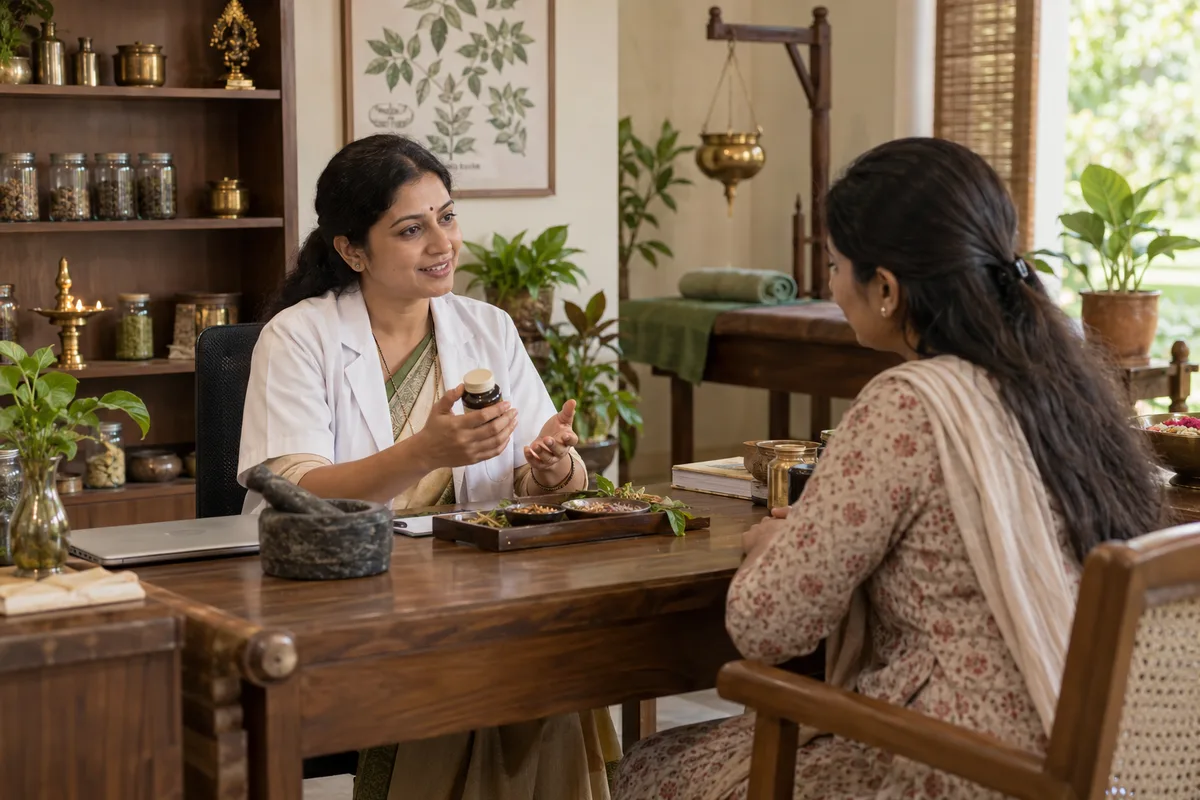
What search engine optimisation means
Search engine optimisation (SEO) is the work of getting your website to appear when a buyer searches Google for what you sell. GullySales builds pages around real search terms, fixes technical issues that block ranking, and tracks which searches actually bring enquiries.
Also for ayurveda and alternative wellness centres
- Local SEO for Ayurveda and alternative wellness centres
- Websites for Ayurveda centres
- PPC ads for Ayurveda and alternative wellness centres
- Lead generation for Ayurveda and alternative wellness centres
- Digital marketing for Ayurveda and alternative wellness centres
- Reputation management for Ayurveda and alternative wellness centres
- Branding and identity for Ayurveda and alternative wellness centres
- Social media marketing for Ayurveda and alternative wellness centres
Sales and marketing for ayurveda and alternative wellness centres, the overview.
Last updated 5 Oct 2026. Rules for this trade differ by state and professional body, and they change. We describe restrictions in general terms, so check the current position with your own council or adviser before you publish anything.
For ayurveda and alternative wellness centres
Where it usually goes wrong, and what we would do.
“The search is a condition, the page cannot promise one”
People type the name of their complaint next to the word Ayurveda. A page that ranks honestly explains what the therapy involves and who it is traditionally used for, and leaves the clinical judgement to the consultation.
“Therapy names are the searchable words you own”
Panchakarma, Abhyanga, Shirodhara and Kizhi are searched by name. A page for each, describing the procedure and the number of sittings, is both truthful and rankable.
“A retreat competes nationally, a clinic competes by road”
Someone choosing a fortnight in Kerala compares centres across three states. Someone with a stiff shoulder searches their own locality. Those need two different sets of pages on one website.
What we do
What we deliver for ayurveda and alternative wellness centres.
The work available for this need. We agree the deliverables and responsibilities for your engagement in writing.
A page for each therapy you actually offer
Panchakarma, Abhyanga, Shirodhara and the rest, each setting out the procedure, the sittings involved, the preparation asked of the guest and who it may not suit.
Result: Every therapy can be found by its own name.
Physician pages carrying qualification and registration
A page per doctor with the BAMS or MD, the registration number, the years in practice and the consultations they take.
Result: A visitor sees a qualified doctor behind the therapy.
A claims pass over every page before it goes live
A read-through for cure, permanent relief and guaranteed result wording, with replacement lines your physician approves and your adviser can check.
Result: Nothing goes up that your council could object to.
Separate pages for the clinic and the residential stay
Locality-led pages for consultation and day therapy, and programme pages for the stay, because the two are searched from entirely different places.
Result: A local patient and a travelling guest each land on the right page.
Structured data for the clinic, doctors and programmes
Markup so search engines read the physician, the address, the hours and the programme lengths instead of guessing from the paragraphs.
Result: Search results describe the centre correctly.
Search and enquiry report by page
Position and enquiries per therapy and programme page, set against the baseline recorded before work started.
Result: You can see which therapy is bringing people in.
How the result is measured
- Ranking positions
- Organic traffic
- Enquiries from organic search
Recorded as a baseline before work starts, so every later report has an honest comparison.
Searches your guests type
What a guest types before choosing a centre, and the page that answers it.
- Panchakarma treatment centre near me
- A therapy page. Describe the stages as your physician practises them, whether the programme is residential or by day, who prescribes it after consultation, and what the guest should prepare. No cure claims.
- Karkidakam chikitsa packages in Kerala
- A seasonal programme page. Say when the programme runs, what the stay includes, who the physician is and what the guest should discuss before booking. Keep the dates current each year.
- Ayurvedic doctor for back pain
- A consultation page, not a promise. Name the physician, the qualification and registration, and how a consultation proceeds. Check your state's AYUSH advertising rules before mentioning any condition.
- Abhyanga massage near me
- A therapy page. State the session length, the oils used, who performs it, and who should speak to the physician before booking. Show the room and the therapist's training.
- Ayurveda retreat for stress and sleep
- A retreat page. Describe the days: consultation, therapies, diet, rest. Show rooms, food and the physician, and state clearly that the programme supports wellbeing without claiming to treat a disease.
- BAMS doctor near me
- A physician page. Give the name, degrees, council registration, languages and years of practice, with a photograph. Searchers using a degree are trying to verify you.
Who it is for
This is written for these ayurveda and alternative wellness centres.
- Ayurveda clinics run by BAMS and MD Ayurveda physicians
- Panchakarma and therapy centres
- Residential Ayurveda retreats and wellness resorts
- Naturopathy and nature cure centres
- Homoeopathy clinics
- Siddha and Unani practices
- AYUSH hospitals and multi-therapy wellness centres
- Traditional therapy and marma centres
- Ayurveda wellness centres attached to hotels
Not for
It is not the right fit if.
- The centre has no physician page with a registered qualification yet, so ranking would send searchers to a page that cannot reassure them.
- The only copy ready to publish promises relief from named diseases, which must be cleared first, because ranking such pages brings more attention to the claim.
- No one at the desk can answer a therapy enquiry on the day it arrives, so more searchers would only mean more unanswered messages.
Before you decide
Agree the work. Know how to judge it.
SEO for Ayurveda and alternative wellness centres: use these checks to prepare, choose the scope, and review what changes.
Bring the right evidence
Bring the pages for the products or services you want to sell, the search queries available in your reports, and examples of enquiries from search. Separate branded searches from buyers discovering you for the first time.
Make the scope clear
Agree which pages and technical fixes come first, who can publish changes, and who supplies subject knowledge. Link search work to a relevant enquiry route on each priority page.
Check the work in use
Follow the trail from a relevant query to its landing page and then to an enquiry. Review whether those enquiries fit your offer, alongside indexing and search visibility.
Know when to change course
A ranking movement alone is not a buying signal. If traffic grows but relevant enquiries do not, revisit page intent and the offer before producing more pages.
These are discussion points, not a fixed package. GullySales confirms the deliverables, responsibilities, fee, and term in writing after reading your brief and speaking with you.
How it works
How the search engine optimisation work runs
The work itself, in order. How an engagement starts, from your brief to a written scope, is set out on our method page.
- 1
Requirements and scope agreement
Send the requirements brief first. GullySales reads it, discusses your priorities with you, and provides the scope, fee, and term in writing before work begins.
- 2
Access and baseline confirmation
Your website contact provides agreed access to the site, Search Console, and Analytics. We record search performance and available enquiry outcomes, identifying missing records before drawing conclusions.
- 3
Priority and responsibility approval
You approve the search opportunity map and page priorities. Technical tasks go to the responsible developer, with access requirements and dependencies recorded.
- 4
Content approval and publication
Your nominated expert approves factual content and business details. Published pages and technical changes are checked on the live website and through available search tools.
- 5
Sales review and next decisions
Your sales owner reviews enquiry relevance alongside the search report. We agree the next page revisions and priorities; reporting intervals are agreed in writing.
Where this fits
Three pieces of sales work, in this order.
This work sits inside sales process design, at stage 1, prospecting and lead generation. The audit comes before it, and sales management keeps it running.
Step 1
Sales audit
Find where deals are being lost and what to fix first.
Start here if you cannot say where orders are lost.
Step 2 · you are here
Sales process design
One written way to sell, from first enquiry to repeat order.
Start here if every salesperson sells differently.
Step 3
Sales management
A target, a review routine and someone who owns the number.
Start here if the team has targets and no routine.
FAQ
Questions owners ask before they call.
Not here? More answers, or ask on WhatsApp.
Can a page mention the condition someone is searching for?
Why do aggregator sites sit above us for our own therapy?
Should the clinic and the retreat share one website?
Is it safe to write articles about herbs and what they treat?
How much does it cost?
How long is the contract?
How soon will we see results?
Who will actually do the work?
What do you need from us?
What if we are not happy with the work?
From the blog
Further reading for ayurveda and alternative wellness centres.
- 6 min read · 11 May 2026What a prospective member checks before joining a wellness centre in your areaThe quiet checks a visitor makes on a gym or wellness centre tour: hygiene, trainer credentials, timings and safety, with a walk-through checklist.
- 6 min read · 24 Feb 2026Seasonal demand for wellness in India: planning around January, monsoon and festival monthsHow a gym, studio or salon can read its joining and drop-off pattern by month, then plan budget and offers around New Year, monsoon and festivals.
More for ayurveda and alternative wellness centres
Related work to consider.
Closest to this: search and visibility
Also for ayurveda and alternative wellness centres
- PPC ads for Ayurveda and alternative wellness centres
- Lead generation for Ayurveda and alternative wellness centres
- Digital marketing for Ayurveda and alternative wellness centres
- Reputation management for Ayurveda and alternative wellness centres
- Branding and identity for Ayurveda and alternative wellness centres
- Social media marketing for Ayurveda and alternative wellness centres
Or start from the overview: sales and marketing for ayurveda and alternative wellness centres.
Your next practical step
Tell us what you are trying to grow, and we will read it before we call.
Eight short steps, mostly taps. Skip anything you would rather answer on the call.