Homeopathy clinics · Buyer persona
Know the kinds of patient who walk into a homeopathy clinic and why each came.
A buyer persona for a homeopathy clinic is a written portrait of one kind of patient, covering what prompted the search, what they check and what makes them book. GullySales works on building these from your register and your front desk's memory.
Scope, fee, reporting and term are agreed in writing after we have read your brief and spoken to you.
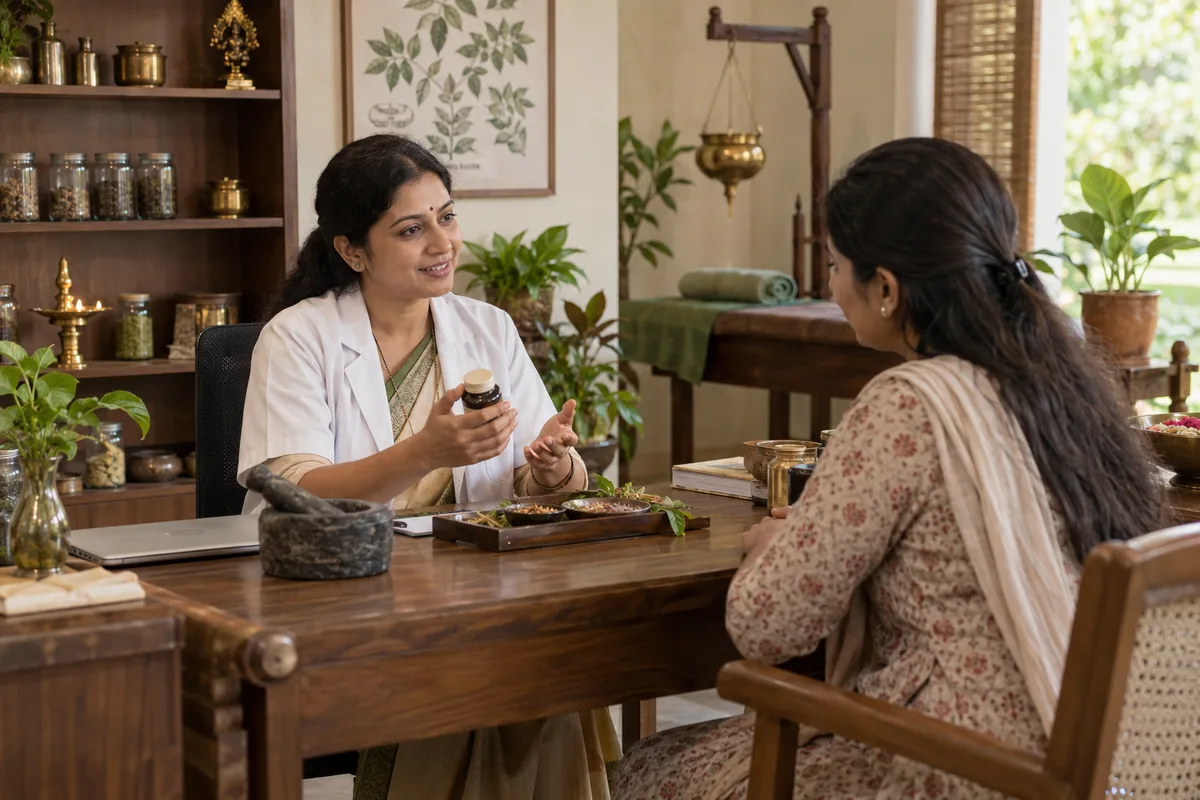
What buyer persona means
A buyer persona is a plain description of the kind of customer who actually buys from you. It includes what they search, what worries them and who else they ask before deciding. GullySales builds this from real enquiries and past sales rather than a generic template, then uses it to write every page and advert.
Last updated 14 Nov 2026.
For homeopathy clinics
Where it usually goes wrong, and what we would do.
“The worried parent”
A parent whose child has a recurring cold or allergy has tried the usual route and wants a doctor with time. They check the qualification, read the reviews for words like patient and kind, and ask on the phone how long the first visit lasts.
“The adult tired of repeating the same medicines”
This patient has a long-standing skin, digestive or hair complaint and has visited several doctors. They want someone to take a full history and are wary of promises, so a page that sets out the consultation honestly earns more than one that claims relief.
“The relative who was told to go”
A patient sent by a spouse, parent or in-law arrives sceptical, and the first visit decides whether they return. This persona needs the clinic to explain the process plainly and to make the booking easy.
“The patient who moved away”
A student in another city or a family transferred elsewhere still wants the doctor who knows the history. They need to know whether a video consultation is offered and how medicines reach them, which clinics leave unsaid.
What we do
What we deliver for homeopathy clinics.
The work available for this need. We agree the deliverables and responsibilities for your engagement in writing.
Personas built from the register
Patterns in age, complaint, source and visit count read from the patient register, with names and details removed.
Result: The personas describe real patterns in your clinic rather than guesses.
A page of questions for each persona
The questions each kind of patient asks before booking, collected from the front desk and the doctor.
Result: The front desk can see what each patient needs answered.
Messages suited to each persona
A first reply and a first-visit note for each persona, written in the doctor's tone.
Result: The same enquiry gets an answer that fits the person who sent it.
A map of where each persona looks
Search, Maps, a relative, a paediatrician or social media, recorded for each persona.
Result: You can see where to be present and where not to spend effort.
A short brief for new staff
One page that tells a new receptionist who the patients are and how each is best met.
Result: A new front-desk hire answers the way the clinic wants from the first day.
How the result is measured
- Enquiry match to persona
- Conversion rate by persona
- Content aligned to persona
Recorded as a baseline before work starts, so every later report has an honest comparison.
Who is asking
Five kinds of patient, each with a different question.
- The parent of a child with a recurring complaint
- Wants to know how long the first visit takes, whether the doctor is patient with children and whether school hours can be worked around.
- The adult with a long-standing skin or digestive complaint
- Wants to hear that a full history will be taken and that nobody will promise relief, because earlier doctors did.
- The relative who was sent along
- Wants the process explained plainly and the booking made easy, since they arrive sceptical and decide on the first visit.
- The student or family living in another city
- Wants to know whether a video consultation is offered, how medicines are sent and who to call if a parcel is late.
- The referring doctor
- Wants a clear statement of what the clinic treats, what it does not claim and how a referred patient is welcomed.
Who it is for
This is written for these homeopathy clinics.
- Single-doctor family homeopathy clinics
- Homeopathy clinics for children and for recurring complaints
- Homeopathy skin and hair clinics
- Homeopathy clinics for women's health
- Homeopathy practices that consult online and send medicines by courier
- Multi-branch homeopathy clinic chains
- Homeopathy clinics inside integrated or multi-speciality centres
- Homeopathy pharmacies with a consulting doctor
Before you decide
When this may not be the right fit.
- The register is empty or still on loose paper, so a persona would be guesswork rather than a portrait of your patients.
- You want personas to decide what disease claims to make, which they cannot and must not do.
- The front desk has not been asked what patients say on the phone, and that is the best source.
Before you decide
Agree the work. Know how to judge it.
Buyer personas for homeopathy clinics: use these checks to prepare, choose the scope, and review what changes.
Bring the right evidence
Write the decision the research must support, such as entering a market or choosing a buyer group. Separate what you know from sales records from what the team currently assumes.
Make the scope clear
Agree which buyers to speak to, which sources to review, and what access you can provide. Include lost enquiries and people who chose another supplier, where they are willing to take part.
Check the work in use
Look for source dates, sample limitations, and evidence that disagrees with the preferred answer. A recommendation should show how it follows from the findings.
Know when to change course
Do not treat a few positive conversations as proof of demand. Test the proposed offer with an actual buying decision before committing to a wider launch.
These are discussion points, not a fixed package. GullySales confirms the deliverables, responsibilities, fee, and term in writing after reading your brief and speaking with you.
Before we start
What to have ready before the work starts.
The records, access and decisions this work needs from homeopathy clinics. Anything missing is noted in the written scope, with who will supply it.
- A sample of register entries, names removed
- We need type of complaint, age group, source and number of visits for a sample of patients. The doctor removes names first. Without this, the personas are built from the loudest memory in the room.
- The front desk's time for a conversation
- The desk staff know who asks what, in the words patients use. A short talk is enough. If the desk is too busy, the portraits miss the questions that cause bookings to fall through.
- A few patients willing to be called
- Choose patients and parents who are comfortable talking and have agreed in advance. Include one who stopped coming if possible. Without any, the personas reflect only the clinic's view.
- A rule on what health details we may see
- The doctor decides what may be shown to us and what stays in the case file. We never ask for case details. If the rule is unclear, we work from the type of complaint only.
- The patient group to serve first
- Decide whether the next effort is aimed at parents, adults with repeat complaints or relatives of patients. If you cannot, we begin with the group that fills the register.
How it works
How the buyer persona work runs
The work itself, in order. How an engagement starts, from your brief to a written scope, is set out on our method page.
- 1
Decide which patients need a portrait
We read the register with the front desk and sort patients by why they came: a parent for a child, an adult tired of repeat prescriptions, a relative sent on advice, a patient who moved away. You pick the kinds that matter first. We write down why, so the choice can be checked later.
- 2
Open the register and take notes from the desk
With your permission, we read a sample of register entries, with names removed, noting complaint type, age group, how the patient came and how many visits followed. The front desk adds what they remember about who asked what. What exists afterwards is a pattern drawn from the clinic's own book.
- 3
Speak to families who agree to talk
The doctor or desk asks a few patients and parents whether they would speak to us. We ask what they searched, what they checked on arrival and what nearly stopped them. We record no health details, and we take no name beyond what the patient chooses.
- 4
Write one page for each kind of patient
Each persona says what prompted the search, what the person looks for online, what they ask at the desk and what makes them book. The doctor reads each page and corrects what is wrong. Anything the clinic cannot support is struck out, and a line such as a patient who never returns after the first visit is only kept if the register bears it out.
- 5
Test the portraits against patients who left
We look at the register for people who came once and did not return, and ask whether the portraits explain it. The desk adds reasons they remember, such as a family that moved away, a course ended on the doctor's advice, or a patient who found the travel too long, and each reason is noted against the pattern it explains. Any persona that cannot account for those who left is rewritten.
- 6
Give each portrait a message and a place
For each persona we write the first line a clinic page or message should open with, and where that person looks. You pick which persona the next piece of work serves. A short brief for new staff is written from the finished pages, so a new person at the desk knows who the parent, the adult with repeat complaints and the relative are, and what each is likely to ask first.
Where this fits
Three pieces of sales work, in this order.
This work sits inside sales process design, at stage 0, foundation. The audit comes before it, and sales management keeps it running.
Step 1
Sales audit
Find where deals are being lost and what to fix first.
Start here if you cannot say where orders are lost.
Step 2 · you are here
Sales process design
One written way to sell, from first enquiry to repeat order.
Start here if every salesperson sells differently.
Step 3
Sales management
A target, a review routine and someone who owns the number.
Start here if the team has targets and no routine.
FAQ
Questions owners ask before they call.
Not here? More answers, or ask on WhatsApp.
Do personas use patient records?
What number of personas does a clinic need?
Can personas change what we say about treatment?
May we record patients' complaints to build personas?
Do the personas hold any patient's health record?
Will the persona change how the doctor treats patients?
How much does it cost?
How long is the contract?
How soon will we see results?
Who will actually do the work?
More for homeopathy clinics
Related work to consider.
Closest to this: strategy and research
Also for homeopathy clinics
Or start from the overview: sales and marketing for homeopathy clinics.
Your next practical step
Tell us what you are trying to grow, and we will read it before we call.
Eight short steps, mostly taps. Skip anything you would rather answer on the call.