Homeopathy clinics · Website
Build a clinic site that shows the doctor, the registration and the way to book.
A website for a homeopathy clinic is the clinic's own page on the internet, where a patient checks the doctor, the timings and the booking route before arriving. GullySales works on the pages, the wording and the technical basics that make it clear on a phone.
Scope, fee, reporting and term are agreed in writing after we have read your brief and spoken to you.
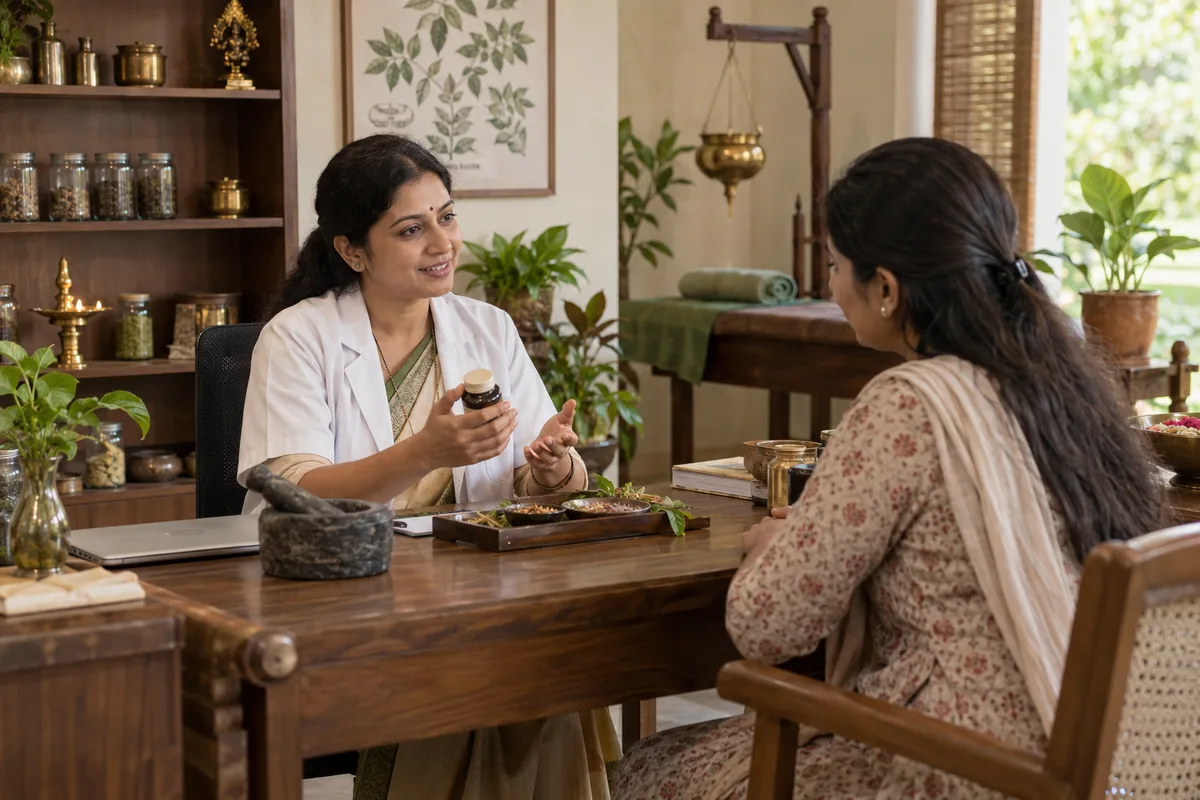
What website means
A website is the page a customer lands on after searching, clicking an advert or scanning a code, and it decides whether they call or leave. GullySales builds and maintains sites that load quickly, explain the offer plainly and make the enquiry form or phone number easy to find.
Last updated 14 Nov 2026.
For homeopathy clinics
Where it usually goes wrong, and what we would do.
“The patient arrives on a phone, after a recommendation”
A relative has named the doctor, and the patient is checking in a spare minute. A site that loads slowly, hides the timings and buries the phone number loses them before they have read a line.
“The credentials are what a careful visitor looks for”
BHMS or MD (Hom), the council registration as issued and a real photograph of the doctor in the clinic are what separate a trusted practice from a stranger's page. They belong on the front page, not three clicks in.
“A list of every disease is a warning sign”
Sites that name dozens of conditions look desperate and break advertising rules that differ by state and body. A site that describes the consultation, the families of complaints seen and the review process looks like a clinic worth visiting.
“An unchecked enquiry form fails the patient”
An enquiry form that sends to an unchecked email address leaves a patient waiting for a reply that never comes. The site must send enquiries to a person, and say who.
What we do
What we deliver for homeopathy clinics.
The work available for this need. We agree the deliverables and responsibilities for your engagement in writing.
A front page that answers the first questions
The doctor, the place, the timings, the fee approach and the booking route above the fold on a phone.
Result: A visitor knows where, when and who within one screen.
A doctor page with credentials
Qualification, registration as issued, years in practice, the approach to case taking and a photograph taken in the clinic.
Result: The page a careful reader scans for is complete.
Pages for the complaints seen
One page per family of complaints, describing the consultation without cure claims, each linked to the booking route.
Result: Each complaint page answers a search and leads to a booking.
A first-visit page and a video consultation page
What to bring, how long to allow, how review dates work and how online consultation and courier operate.
Result: Patients elsewhere can see what the clinic offers them.
An enquiry route that reaches a person
A form and a WhatsApp link that send to a named person at the front desk, with a reply rule behind them.
Result: Every enquiry from the site has an owner.
Basic technical set-up
Speed on a phone, page titles, a sitemap, secure connection and a privacy note, checked before the site goes up.
Result: The site passes a mobile and indexing check.
How the result is measured
- Page load time
- Bounce rate
- Enquiries from the website
Recorded as a baseline before work starts, so every later report has an honest comparison.
Searches your buyers type
A site that answers the first question a visitor asks.
- homeopathy clinic timings today
- A front page with true hours, the address, a map link and a tap-to-call number, readable on a phone without scrolling.
- who is the homeopathy doctor
- A doctor page with the degree, the council registration as issued, a real photograph and a few lines on how the doctor works.
- homeopathy for child's recurring complaint
- A complaint-family page that explains the consultation and review visits without naming a cure.
- book homeopathy appointment online
- A booking route, whether a form that reaches a person or a WhatsApp button, with a note on what to expect after sending.
- homeopathy video consultation
- A page on how a remote visit is arranged, what to send beforehand and how medicines reach a patient in another city.
Who it is for
This is written for these homeopathy clinics.
- Single-doctor family homeopathy clinics
- Homeopathy clinics for children and for recurring complaints
- Homeopathy skin and hair clinics
- Homeopathy clinics for women's health
- Homeopathy practices that consult online and send medicines by courier
- Multi-branch homeopathy clinic chains
- Homeopathy clinics inside integrated or multi-speciality centres
- Homeopathy pharmacies with a consulting doctor
Before you decide
When this may not be the right fit.
- Nobody can check the enquiry form each day, so it would collect messages that go unread.
- The doctor wants every disease listed with outcomes, which breaks the advertising rules and drives careful patients away.
- You do not control the domain or the hosting account, and that must be settled before any rebuild.
Before you decide
Agree the work. Know how to judge it.
Website for homeopathy clinics: use these checks to prepare, choose the scope, and review what changes.
Bring the right evidence
List the pages that support a buying decision and the actions visitors must complete. Keep examples of failed forms, unclear product information, and questions your team answers repeatedly.
Make the scope clear
Agree the page list, content ownership, integrations, and who controls the domain and hosting. Include redirects and existing search traffic in a redesign brief, before changing addresses.
Check the work in use
Complete a real enquiry journey on a phone and a laptop. Check that the confirmation appears, the enquiry reaches the right person, and tracking records the action once.
Know when to change course
If visitors can enquire but the team does not follow up, start with the sales handover. A larger website will not resolve that delay.
These are discussion points, not a fixed package. GullySales confirms the deliverables, responsibilities, fee, and term in writing after reading your brief and speaking with you.
Before we start
What to have ready before the work starts.
The records, access and decisions this work needs from homeopathy clinics. Anything missing is noted in the written scope, with who will supply it.
- Domain and hosting logins
- The person who bought the domain must be found and its login recovered. If an old vendor holds it, a release is needed. The new site stays offline until the domain is in your hands.
- The doctor's certificates and registration
- Copies of the degree and registration are needed for the doctor page. A visitor checks. If a copy is missing, the doctor obtains one, and the page waits.
- Photographs of the clinic, with no patients
- Pictures of the entrance, waiting area and consulting room, taken with the doctor's agreement, help a patient recognise the place. Phone pictures will do. Without them, the site uses a plain map and the address.
- A person to receive enquiries
- Every form submission and call must reach a named person at the desk, with a back-up. Without one, enquiries wait unseen and the site seems unresponsive.
- The privacy wording from your adviser
- The enquiry form collects names and numbers, so a privacy note is needed. Your adviser decides its text. We place it, and we do not write legal terms ourselves.
How it works
How the website work runs
The work itself, in order. How an engagement starts, from your brief to a written scope, is set out on our method page.
- 1
List what a patient checks before booking
With the doctor and the desk we write down what a patient looks for on arrival: the doctor's qualification, the address, the timings, the first-visit routine, the route to book. This list decides which pages exist. You approve it, and anything a patient would not look for is left out.
- 2
Gather the content and the access
You provide the domain and hosting access, the doctor's certificates, photographs of the clinic and the timings. We list what is missing and who will bring it. The page set is not designed around anything we cannot show.
- 3
Draw the page map for a phone
We sketch the pages and show them on a phone first, since patients arrive on one. The doctor and the desk read the map and remove what looks like a list of diseases. A parent looking for a children's doctor and an adult looking for a second opinion should each find a page that begins with the visit, not with a long list of conditions. Visual design follows only after the structure is accepted.
- 4
Fill a private test site with the clinic's words
Pages are written from the doctor's explanations and loaded on a private test site. The doctor checks facts, including years in practice and the course of the visit, and your adviser reads every line of health wording. The enquiry form is tested by sending an enquiry from a phone, and it must reach a named person at the desk whose name is written in the handover note.
- 5
Approve the launch and point the old addresses
Open every page on a handset and on a computer, then sign it off in writing. Old addresses are pointed to the new pages, so a link from a directory or a printed card does not end on an error. A privacy note for the enquiry form is added, worded by your adviser.
- 6
Pass on the logins, then review early enquiries
After launch we check speed and layout on phones and pass the logins to the named owner. We then compare calls and form enquiries with the figures taken at the start, and you decide which page to improve first.
Where this fits
Three pieces of sales work, in this order.
This work sits inside sales process design, at stage 1, prospecting and lead generation. The audit comes before it, and sales management keeps it running.
Step 1
Sales audit
Find where deals are being lost and what to fix first.
Start here if you cannot say where orders are lost.
Step 2 · you are here
Sales process design
One written way to sell, from first enquiry to repeat order.
Start here if every salesperson sells differently.
Step 3
Sales management
A target, a review routine and someone who owns the number.
Start here if the team has targets and no routine.
FAQ
Questions owners ask before they call.
Not here? More answers, or ask on WhatsApp.
Can the website carry patient reviews?
Is a full rebuild needed for the clinic site?
Who owns the site and the domain?
Does the site need a privacy note for the enquiry form?
Can we keep our old site and just add pages?
Who writes the doctor's page?
How much does it cost?
How long is the contract?
How soon will we see results?
Who will actually do the work?
More for homeopathy clinics
Related work to consider.
Closest to this: search and visibility
Also for homeopathy clinics
Or start from the overview: sales and marketing for homeopathy clinics.
Your next practical step
Tell us what you are trying to grow, and we will read it before we call.
Eight short steps, mostly taps. Skip anything you would rather answer on the call.