Ladies-only fitness centres · Follow up systems
The trial class only becomes a membership if somebody asks how it went.
A follow-up system for a ladies-only fitness centre is the set of messages and calls that move a woman from enquiry to trial to membership, and then keep attendance steady. GullySales works on the sequence, the wording and the person responsible for each step.
Scope, fee, reporting and term are agreed in writing after we have read your brief and spoken to you.

What follow up systems means
A follow-up system is the set routine for calling, messaging or emailing an enquiry more than once, since most buyers do not decide on the first conversation. GullySales sets the number and timing of follow-ups so an undecided buyer keeps hearing from you until they decide either way.
Also for ladies-only fitness centres
- Lead generation for ladies-only fitness centres
- CRM for ladies-only fitness centres
- SEO for ladies-only fitness centres
- Local SEO for ladies-only fitness centres
- Social media marketing for ladies-only fitness centres
- Content marketing for ladies-only fitness centres
- Buyer personas for ladies-only fitness centres
- WhatsApp marketing for ladies-only fitness centres
Sales and marketing for ladies-only fitness centres, the overview.
Last updated 14 Nov 2026.
For ladies-only fitness centres
Where it usually goes wrong, and what we would do.
“The warm moment is the hour after the trial”
A woman leaves the class pleased and then returns to the day's tasks. A message or call that same day finds the intention fresh. A call a week later finds it gone.
“Silence after an enquiry reads as disinterest”
A woman who asked about privacy and timing and heard nothing assumes the centre does not care. The first reply and a gentle second check should be written down, not left to mood.
“The family conversation needs a second touch”
When a woman says the family must be asked, a note offering the family page and a visit invitation keeps the door open without pressing.
“Attendance is the quietest alarm”
A member who stops coming rarely announces it. A check on missed weeks, kindly worded, catches the drift before the renewal date does.
What we do
What we deliver for ladies-only fitness centres.
The work available for this need. We agree the deliverables and responsibilities for your engagement in writing.
A reply to every enquiry
A written first response for calls and messages, answering privacy, timing and trainer questions in plain words.
Result: The woman hears back the way you intended.
A post-trial sequence
A welcome before the class, a thank-you after and a call before the trial ends, each with a clear next step.
Result: The trial ends in a conversation.
A family follow-up
A short message offering the family page and an invitation to see the space, sent when a woman says the family must be asked.
Result: Waiting enquiries get a respectful nudge.
An attendance check
A kind message to members who have missed sessions, asking whether the batch still suits.
Result: Drifting members are noticed.
A renewal conversation
A note and call ahead of each expiry date, with a look at which batch the member has attended.
Result: Renewals are asked for, not assumed.
How the result is measured
- Follow-up completion rate
- Average number of follow-ups before close
- Enquiries closed after repeat follow-up
Recorded as a baseline before work starts, so every later report has an honest comparison.
What to send
Each moment after the trial needs its own short message.
- Within the same day of enquiry
- A reply that answers the privacy question asked and offers a trial slot, so the first message matches the first worry.
- After the trial class
- A short call from the trainer asking how the class felt and whether the timing worked, rather than a price message.
- The family message
- A note the woman can forward to a husband or parent describing the space, the staffing and the batch hours.
- After a missed batch
- A kind check from the trainer asking if the timing or the class is the problem, sent before the pattern sets in.
- Before renewal
- A conversation about the member's goal and what the next stretch could focus on, not a reminder of the fee date.
Who it is for
This is written for these ladies-only fitness centres.
- Ladies-only gyms
- Women's fitness studios offering group classes
- Ladies-only yoga and Zumba centres
- Postnatal and women's wellness studios
- Women's fitness inside housing complexes
- Ladies' batches within mixed gyms
Before you decide
When this may not be the right fit.
- You have no trainer free to call after a trial, so a follow-up plan would depend on a person who is not there.
- Your batches are full for the coming term, so contacting every trial visitor would only produce a waiting list you cannot serve.
- You have not recorded who attended a trial, so messages would reach women who never came or miss the ones who did.
Before you decide
Agree the work. Know how to judge it.
Follow-up systems for ladies-only fitness centres: use these checks to prepare, choose the scope, and review what changes.
Bring the right evidence
Trace recent enquiries from arrival to the last recorded action. Include a won enquiry, an unsuitable one, and one that went quiet, with personal details removed for the initial discussion.
Make the scope clear
Agree who accepts each enquiry, what makes it qualified, and how ownership changes. Include a rule for missed replies and a clear reason for closing an enquiry.
Check the work in use
Pick an enquiry at random and ask the team to find its owner, latest conversation, and next action. Check that the record agrees with what actually happened.
Know when to change course
If no one has capacity to respond, assign that responsibility before buying more leads. Automation can support the owner, but it cannot replace an unresolved handover.
These are discussion points, not a fixed package. GullySales confirms the deliverables, responsibilities, fee, and term in writing after reading your brief and speaking with you.
Before we start
What to have ready before the work starts.
The records, access and decisions this work needs from ladies-only fitness centres. Anything missing is noted in the written scope, with who will supply it.
- A sample of recent enquiries and replies
- Bring call notes or messages from recent enquiries, names covered. We read how they were answered. Include a few enquiries that never became a trial, because the silence after them is where the new routine has to do its work. Without them, the new routine is written without seeing where the old one fails.
- A decision on who calls after a trial
- Choose whether the trainer who took the trial, the receptionist or the manager makes the call. It must be a person the woman has met. Name a second person for the days the first is on leave, since a woman who has just done a trial is not helped by a call that comes late. Without a decision, the call is made by whoever remembers or not at all.
- Names of trainers who will send checks
- List the trainers who will message a member who has gone quiet, and say how many members each knows. Without this, the attendance check has no sender and members hear from a stranger.
- A list of renewal dates
- Write when current memberships end. A fee book will do. Without it, the renewal conversation has no dates and members lapse before anyone speaks to them.
- A limit on how many messages are sent
- Decide the largest number of messages a woman receives after an enquiry, and what you do when there is no reply. Only you can set this. Without a limit, the routine either stops too soon or becomes a chase.
How it works
How the follow up systems work runs
The work itself, in order. How an engagement starts, from your brief to a written scope, is set out on our method page.
- 1
Trace the last twenty enquiries from call to outcome
We take a sample of recent enquiries from the notebook and phone, with names covered, and follow each: who replied, when, what was said and whether the woman came for a trial. The pattern shows where replies were slow, where the family question went unanswered and where a woman joined and drifted away. This is the baseline, and we note the women who asked a family question that was never answered, since those are the ones a second message would have helped.
- 2
Agree who calls and when the day's calls happen
You decide who replies to enquiries, who calls after a trial and who speaks to a family member. We write it on one page. On the days the trainer is in a class and the desk is busy, the page says who takes the call, so an enquiry is never waiting for someone who is on the floor. A woman who enquires at night is told truthfully when someone will reply, so nobody is left wondering.
- 3
Write the reply and the post-trial message
We draft the first reply to an enquiry and the message sent after a trial, in the voice of the trainer or manager. They thank the woman, answer the usual question and offer one next step. The post-trial message names the batch the woman tried and asks one question about it, which invites a reply without pressing for a decision. They contain no offer that presses and no claim about what training will do.
- 4
Write the family follow-up
Some women need the husband or parent to agree. We write a short second message that can be passed on, saying who trains, what the timings are and where the centre stands, and an invitation for the family member to visit or call. The tone is courteous, never pushy.
- 5
Set the attendance check and the renewal talk
We write a gentle message for a member who has not come for a while, asking if the batch still suits, and a short guide for the renewal conversation. The check is sent only by the trainer the member knows. The renewal guide starts from the batch the member has attended and enjoyed, as the front desk knows it, and leaves out any talk of results. You change any line that sounds like chasing.
- 6
Try the routine, then compare with the start
We enquire as invented women and watch the replies, the post-trial call and the family message. Once the routine is in use, we compare enquiries answered, trials attended and renewals with the figures taken at the start. Any step the desk skipped is walked through again with the person responsible, and the routine is handed over only when the desk can run it unaided. We report what was recorded and promise no members.
Where this fits
Three pieces of sales work, in this order.
This work sits inside sales process design, at stage 2, qualification. The audit comes before it, and sales management keeps it running.
Step 1
Sales audit
Find where deals are being lost and what to fix first.
Start here if you cannot say where orders are lost.
Step 2 · you are here
Sales process design
One written way to sell, from first enquiry to repeat order.
Start here if every salesperson sells differently.
Step 3
Sales management
A target, a review routine and someone who owns the number.
Start here if the team has targets and no routine.
FAQ
Questions owners ask before they call.
Not here? More answers, or ask on WhatsApp.
Will automatic messages feel impersonal?
How many follow-ups are too many?
Do we need software for this?
Who should make the call after a trial?
Do automatic reminders suit a women-only centre?
How do we follow up with a woman whose family said no?
How long is the contract?
How soon will we see results?
Who will actually do the work?
What do you need from us?
From the blog
Further reading for ladies-only fitness centres.
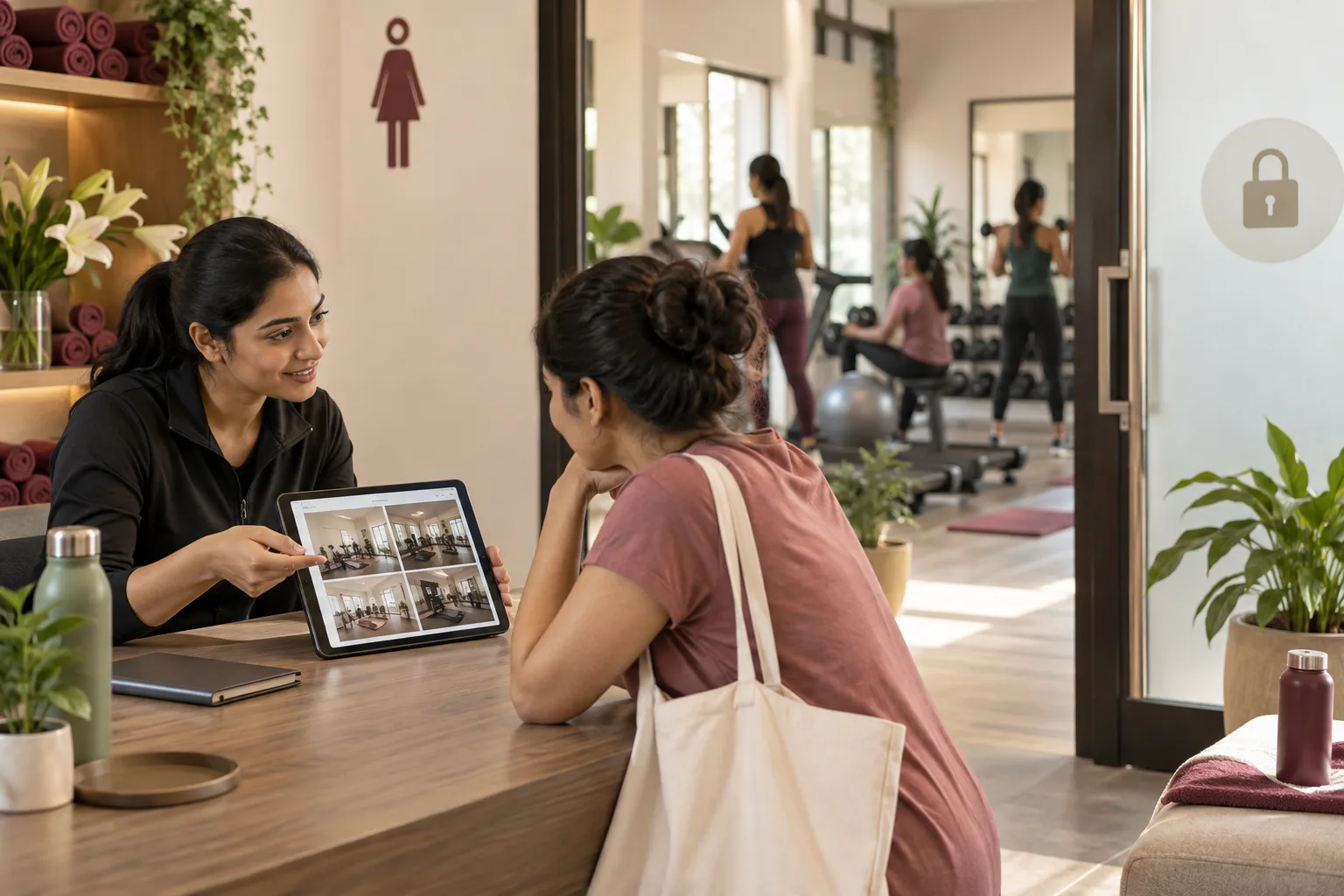 7 min read · 25 Jun 2026Marketing a ladies-only gym: trust before the trialThe first question about a ladies-only gym is who can see inside, not what equipment it has. Answer that on the listing, in photographs and on the phone.
 6 min read · 6 Oct 2026Why wellness members drop out in the second month, and a register to catch itMembers stop coming weeks before they cancel. An attendance register with two trigger rules gives your team a reason to call while they can return.
 6 min read · 11 May 2026What a prospective member checks before joining a wellness centre in your areaThe quiet checks a visitor makes on a gym or wellness centre tour: hygiene, trainer credentials, timings and safety, with a walk-through checklist.
More for ladies-only fitness centres
Related work to consider.
Closest to this: leads and follow-up
Also for ladies-only fitness centres
Or start from the overview: sales and marketing for ladies-only fitness centres.
Your next practical step
Tell us what you are trying to grow, and we will read it before we call.
Eight short steps, mostly taps. Skip anything you would rather answer on the call.