Ladies-only fitness centres · Search engine optimisation
Be the page a woman finds when the search is ladies gym and a locality.
SEO for a ladies-only fitness centre is the work of making your website the answer when a woman searches for a women-only gym, class or batch nearby. GullySales works on the pages, the wording women use and the proof that the space is private.
Scope, fee, reporting and term are agreed in writing after we have read your brief and spoken to you.
What search engine optimisation means
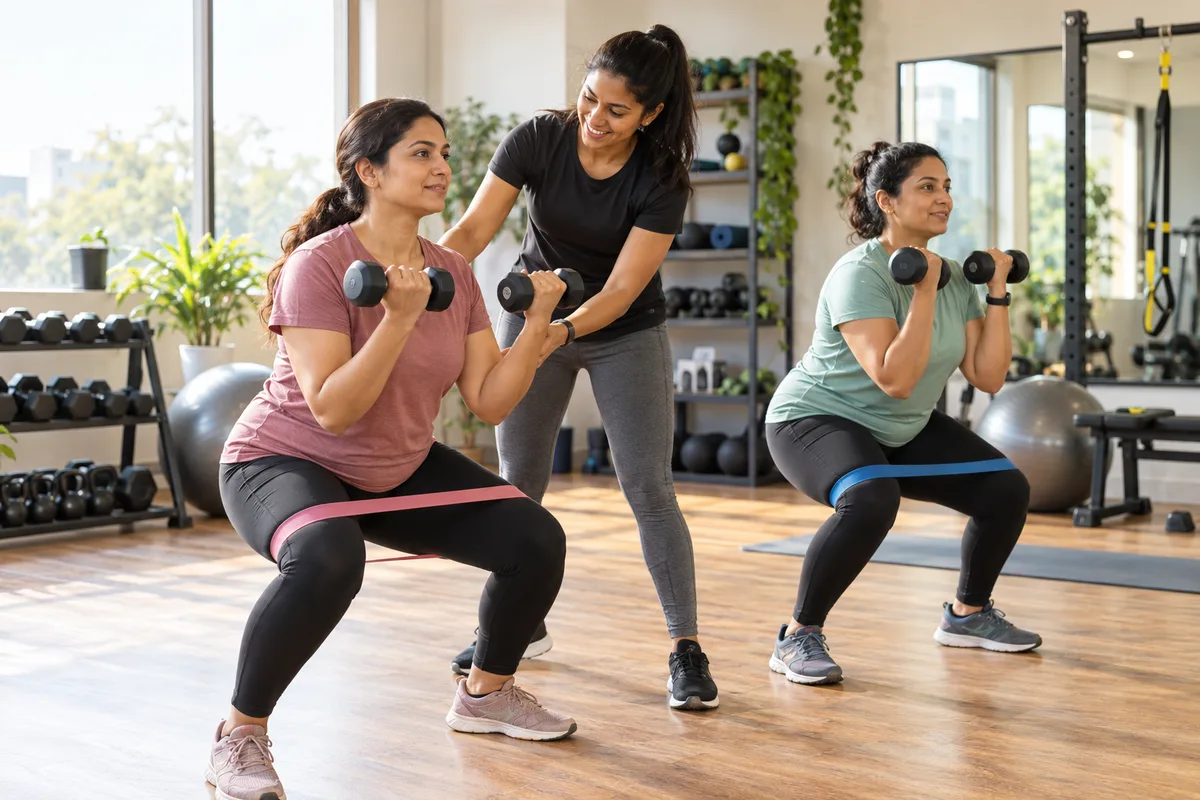
Search engine optimisation (SEO) is the work of getting your website to appear when a buyer searches Google for what you sell. GullySales builds pages around real search terms, fixes technical issues that block ranking, and tracks which searches actually bring enquiries.
Also for ladies-only fitness centres
- Local SEO for ladies-only fitness centres
- Websites for ladies-only fitness centres
- Lead generation for ladies-only fitness centres
- Social media marketing for ladies-only fitness centres
- Content marketing for ladies-only fitness centres
- Buyer personas for ladies-only fitness centres
- CRM for ladies-only fitness centres
- Follow-up systems for ladies-only fitness centres
Sales and marketing for ladies-only fitness centres, the overview.
Last updated 14 Nov 2026.
For ladies-only fitness centres
Where it usually goes wrong, and what we would do.
“Women search by the worry, not the brand”
The query is ladies gym near me, women only gym or gym with women trainers. Those words describe privacy and who the trainers are. A page that never uses them is invisible to the exact searcher the centre wants.
“A single homepage cannot carry every batch”
Morning batch, postnatal class, Zumba for women and weight management each draw a different search. One page trying to answer all of them answers none, so each programme earns its own page with its own photographs.
“Photographs are part of the ranking, not decoration”
A search visitor leaves when the page shows only equipment. The entrance, the changing room and the women trainers answer the privacy question, and a visitor who stays tells the search engine the page was useful.
“Copied descriptions sink the page”
Gym text borrowed from a chain or a competitor reads the same as a hundred others. Specific words about your batches, your trainers and your lane or locality are what separate your page from them.
What we do
What we deliver for ladies-only fitness centres.
The work available for this need. We agree the deliverables and responsibilities for your engagement in writing.
A search wording list built from women's questions
The phrases women use for ladies gyms, batches and classes in your city, gathered from your own enquiries and from the questions asked on calls.
Result: The pages use words women actually type.
A page for each programme
Separate pages for morning batches, postnatal classes and group formats, each with its own timings, trainer and photographs.
Result: Each programme can be found on its own.
Titles and descriptions rewritten
Page titles and short descriptions that say ladies-only, the locality and the programme, in plain sentences.
Result: The search result tells a woman what is behind the click.
A privacy section on every key page
A plain paragraph and photographs about the entrance, the changing room and who works there.
Result: Privacy is answered before the visitor has to ask.
A search report against the baseline
Which pages are visited, which searches reach them and which visits became an enquiry, set against the figures taken before work began.
Result: You see whether search is sending women.
How the result is measured
- Ranking positions
- Organic traffic
- Enquiries from organic search
Recorded as a baseline before work starts, so every later report has an honest comparison.
Searches women type
Women search for privacy and a locality, and the page must answer both.
- ladies gym near me
- Answered by a map listing and a locality page that opens with who the centre is for and how the space is screened.
- women only gym with female trainer
- A page naming the trainers' roles and the staffing on the floor, with no photographs of members.
- ladies zumba classes in [locality]
- A timetable page for group classes that lists the batch hours and says what a first visit involves.
- postnatal exercise classes for women
- A page explaining what the studio offers new mothers and asking them to check with their doctor first.
- ladies gym timings morning batch
- A batch-timings page that matches school and office hours, since the household schedule decides the search.
- women's yoga classes near home
- A page for the yoga batch with the space shown empty and a clear way to book a trial.
Who it is for
This is written for these ladies-only fitness centres.
- Ladies-only gyms
- Women's fitness studios offering group classes
- Ladies-only yoga and Zumba centres
- Postnatal and women's wellness studios
- Women's fitness inside housing complexes
- Ladies' batches within mixed gyms
Before you decide
When this may not be the right fit.
- Your centre has no page that explains the space and staffing, so a search click would land on a bare contact number.
- You are still choosing the locality you want to serve, so pages written now would aim at the wrong neighbourhoods.
- Nobody can update timings and batch changes, so a page that goes out of date would send women to a closed class.
Before you decide
Agree the work. Know how to judge it.
SEO for ladies-only fitness centres: use these checks to prepare, choose the scope, and review what changes.
Bring the right evidence
Bring the pages for the products or services you want to sell, the search queries available in your reports, and examples of enquiries from search. Separate branded searches from buyers discovering you for the first time.
Make the scope clear
Agree which pages and technical fixes come first, who can publish changes, and who supplies subject knowledge. Link search work to a relevant enquiry route on each priority page.
Check the work in use
Follow the trail from a relevant query to its landing page and then to an enquiry. Review whether those enquiries fit your offer, alongside indexing and search visibility.
Know when to change course
A ranking movement alone is not a buying signal. If traffic grows but relevant enquiries do not, revisit page intent and the offer before producing more pages.
These are discussion points, not a fixed package. GullySales confirms the deliverables, responsibilities, fee, and term in writing after reading your brief and speaking with you.
Before we start
What to have ready before the work starts.
The records, access and decisions this work needs from ladies-only fitness centres. Anything missing is noted in the written scope, with who will supply it.
- Admin access to the website
- We need a login or an invitation, or the name of whoever holds the site. Changes are shown to you first. If the site sits with a former designer, the plan moves to new pages on an address you control and starts only after you hold it.
- A list of questions asked at the desk
- Write the last dozen questions from women and families, in their own words. An approximate list is fine. Without it, the pages answer questions nobody asked and miss the ones that decide whether a woman books.
- The current batch timetable
- Bring the timings, the trainer for each batch and the capacity, as they stand. A timetable that changes after publication misleads a reader. Without a current one, programme pages state batches that no longer run.
- Photographs with no member in view
- Take images of the entrance, reception, changing area from the door and the floor when empty. If you offer none, we use plain wording and the page loses the proof of privacy that women look for first.
- A named person to approve the facts
- Name the manager who confirms each page is true about the space and the staff. Without a named person, pages wait for a reading and an error about a trainer or a timing reaches a family.
How it works
How the search engine optimisation work runs
The work itself, in order. How an engagement starts, from your brief to a written scope, is set out on our method page.
- 1
Collect the questions women asked at the desk
We start from the questions women and families put to the front desk, in the words they used: are there women trainers, can we come after the school run, is the changing room private. We add what appears in the search suggestions near the centre. The list of wording comes from enquiries, not from a keyword tool, and you strike out what the centre cannot answer.
- 2
Photograph the privacy details for the pages
With the manager we choose which features to show: the entrance, the screening, the reception and the changing area from the doorway. No member appears. Images are described in words as well, so the page speaks to a worried reader even where a photograph is slow to load. You approve each one, and we describe it in words as well so that the page works when the picture is slow to load.
- 3
Take stock of the site and Search Console
You add us to the site's admin and Search Console, or tell us there is none. We note which pages exist, which bring visits, what each title says and which descriptions are copied from elsewhere. These figures are written down with the date and become the baseline for the later search report.
- 4
Agree which programmes get their own page
We lay the batches and programmes beside the questions and decide which deserve a page, such as a morning batch, a postnatal class or a yoga hour. You decide which you can stand behind. A programme that is not yet running is left off. Each page opens with the worry it answers.
- 5
Write the pages with a privacy section
We draft each page in plain words, with a section on privacy and trainers, the batch times and one way to ask for a trial. No page claims a result for health, weight or any condition. You read every page and the manager checks the facts of the space before it is published.
- 6
Compare searches and enquiries with the baseline
We read Search Console and the enquiry sheet against the figures taken at the start: queries shown, pages visited and enquiries that mention a page. You see which programmes bring women who book. We promise no ranking and we say plainly what the figures cannot show.
Where this fits
Three pieces of sales work, in this order.
This work sits inside sales process design, at stage 1, prospecting and lead generation. The audit comes before it, and sales management keeps it running.
Step 1
Sales audit
Find where deals are being lost and what to fix first.
Start here if you cannot say where orders are lost.
Step 2 · you are here
Sales process design
One written way to sell, from first enquiry to repeat order.
Start here if every salesperson sells differently.
Step 3
Sales management
A target, a review routine and someone who owns the number.
Start here if the team has targets and no routine.
FAQ
Questions owners ask before they call.
Not here? More answers, or ask on WhatsApp.
Is SEO enough, or do we also need Google Maps?
Will we rank first for ladies gym?
Do we need a blog?
Does a ladies-only centre need pages for each locality?
Should the pages name individual trainers?
Do we need Google Maps and the website both?
How much does it cost?
How long is the contract?
How soon will we see results?
Who will actually do the work?
From the blog
Further reading for ladies-only fitness centres.
 6 min read · 6 Oct 2026Why wellness members drop out in the second month, and a register to catch itMembers stop coming weeks before they cancel. An attendance register with two trigger rules gives your team a reason to call while they can return.
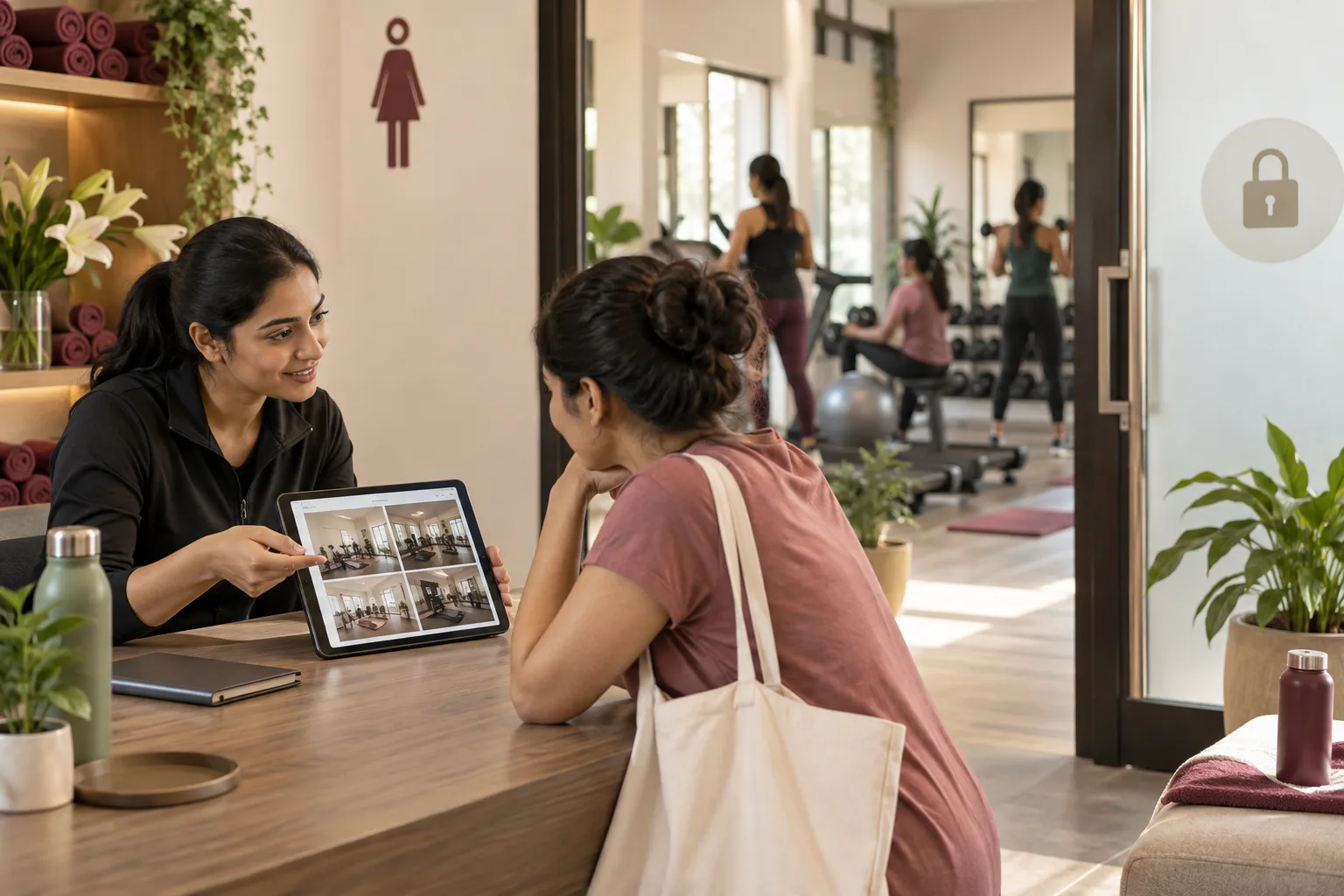 7 min read · 25 Jun 2026Marketing a ladies-only gym: trust before the trialThe first question about a ladies-only gym is who can see inside, not what equipment it has. Answer that on the listing, in photographs and on the phone.
 6 min read · 11 May 2026What a prospective member checks before joining a wellness centre in your areaThe quiet checks a visitor makes on a gym or wellness centre tour: hygiene, trainer credentials, timings and safety, with a walk-through checklist.
More for ladies-only fitness centres
Related work to consider.
Closest to this: search and visibility
Also for ladies-only fitness centres
Or start from the overview: sales and marketing for ladies-only fitness centres.
Your next practical step
Tell us what you are trying to grow, and we will read it before we call.
Eight short steps, mostly taps. Skip anything you would rather answer on the call.