Ladies-only fitness centres · Website
A ladies-only website should answer the privacy question before the visitor scrolls.
A website for a ladies-only fitness centre is the page a woman or a family opens to decide whether the space is safe, the batches fit and the trial is worth booking. GullySales works on the structure, the photographs and the single next step on each page.
Scope, fee, reporting and term are agreed in writing after we have read your brief and spoken to you.
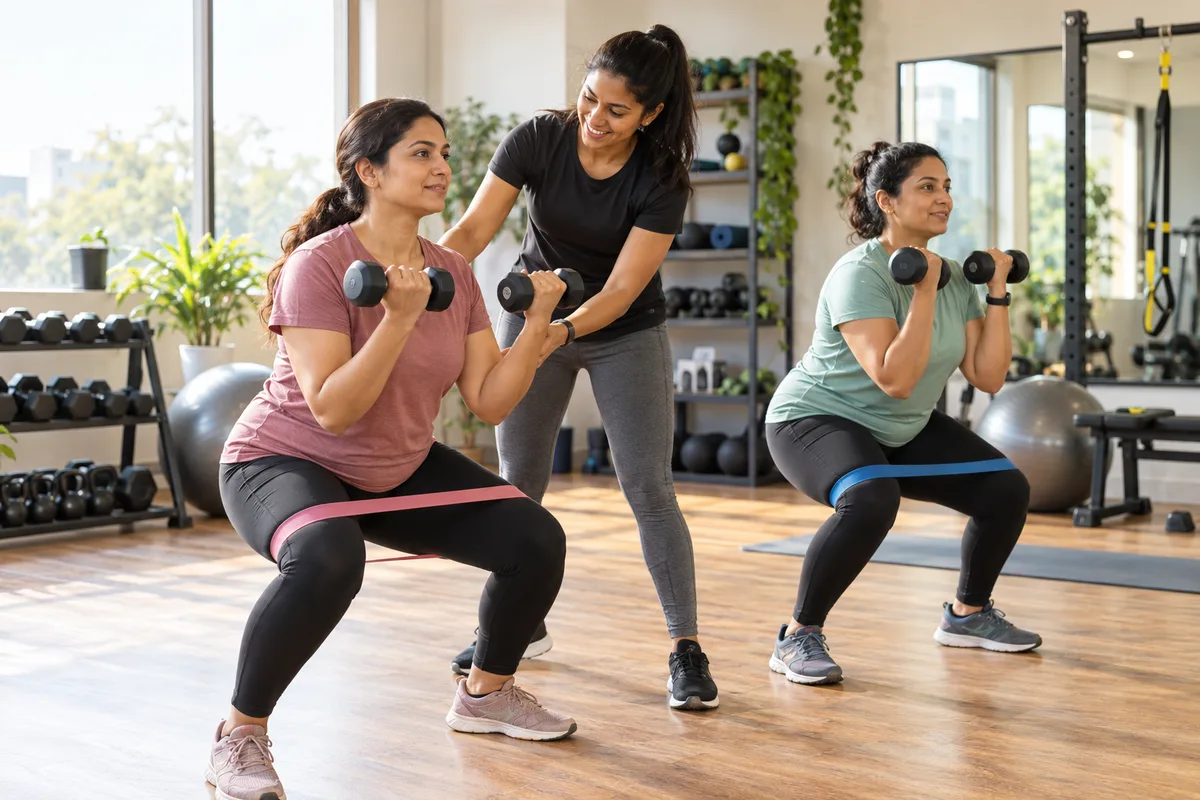
What website means
A website is the page a customer lands on after searching, clicking an advert or scanning a code, and it decides whether they call or leave. GullySales builds and maintains sites that load quickly, explain the offer plainly and make the enquiry form or phone number easy to find.
Also for ladies-only fitness centres
- SEO for ladies-only fitness centres
- Local SEO for ladies-only fitness centres
- Lead generation for ladies-only fitness centres
- Social media marketing for ladies-only fitness centres
- Content marketing for ladies-only fitness centres
- Buyer personas for ladies-only fitness centres
- CRM for ladies-only fitness centres
- Follow-up systems for ladies-only fitness centres
Sales and marketing for ladies-only fitness centres, the overview.
Last updated 14 Nov 2026.
For ladies-only fitness centres
Where it usually goes wrong, and what we would do.
“The first screen has one job”
A visitor decides in moments whether the place is meant for women like them. The top of the page must say ladies-only, show the space and offer a trial, not open with a slogan about transformation.
“Equipment photographs answer the wrong question”
A page full of machines tells a woman nothing about privacy. The entrance, the changing room, the reception and the women trainers are the pictures that settle the doubt.
“Batch timings hidden in a PDF lose the visitor”
A woman checking whether a class fits school hours will not download a file. Timings belong on the page in plain text, kept current when they change.
“A form that asks too much scares the enquirer”
A long enquiry form with several personal fields feels intrusive to a woman nervous about a new place. A name, a number and a preferred batch is enough to begin.
What we do
What we deliver for ladies-only fitness centres.
The work available for this need. We agree the deliverables and responsibilities for your engagement in writing.
A first screen built for reassurance
A clear statement of who the centre is for, a photograph of the space and one button to book a trial.
Result: The page answers the first question.
A page for each programme
Separate pages for batches, postnatal classes and group formats, each with timings, trainer and photographs.
Result: Visitors find the programme they want.
A privacy and staffing section
Plain words and photographs about the entrance, changing rooms and who works there, and your policy on visitors.
Result: The privacy answer is on the page.
A page for families
A respectful explanation written for a husband or parent, which a woman can forward.
Result: The second reader has somewhere to go.
A short enquiry form and WhatsApp link
A form with only the details needed and a button that opens a chat, tested on a phone.
Result: Asking takes little effort.
Checks on speed and use on a phone
The pages tested on an ordinary phone connection, since that is how most visitors arrive.
Result: The site works where women use it.
How the result is measured
- Page load time
- Bounce rate
- Enquiries from the website
Recorded as a baseline before work starts, so every later report has an honest comparison.
Pages to build
The site should answer the privacy question before the visitor scrolls.
- Who the centre is for
- An opening line and photograph of the empty floor stating women only, so a visitor knows within seconds that the space is for them.
- Staff and who may enter
- A page naming roles on the floor and the rule on visitors, since staffing is the first thing a family wants to read.
- Batch timetable
- A table of batches by hour and class type, kept current by the desk, because timings decide whether a woman can join.
- Book a trial
- A short form asking for name, locality and preferred batch, and nothing the visitor would hesitate to share.
- A page for the family
- A plain section for husbands and parents with the space, the staffing and the closing hour in a form that can be shared.
Who it is for
This is written for these ladies-only fitness centres.
- Ladies-only gyms
- Women's fitness studios offering group classes
- Ladies-only yoga and Zumba centres
- Postnatal and women's wellness studios
- Women's fitness inside housing complexes
- Ladies' batches within mixed gyms
Before you decide
When this may not be the right fit.
- You have not settled your batch timings and fees, so a site would publish details that change the following week.
- Nobody can update the timetable after launch, and a stale schedule would send women to classes that no longer run.
- You have only a few photographs and no permission to show the space, so the site would open with stock images that undo the trust.
Before you decide
Agree the work. Know how to judge it.
Websites for ladies-only fitness centres: use these checks to prepare, choose the scope, and review what changes.
Bring the right evidence
List the pages that support a buying decision and the actions visitors must complete. Keep examples of failed forms, unclear product information, and questions your team answers repeatedly.
Make the scope clear
Agree the page list, content ownership, integrations, and who controls the domain and hosting. Include redirects and existing search traffic in a redesign brief, before changing addresses.
Check the work in use
Complete a real enquiry journey on a phone and a laptop. Check that the confirmation appears, the enquiry reaches the right person, and tracking records the action once.
Know when to change course
If visitors can enquire but the team does not follow up, start with the sales handover. A larger website will not resolve that delay.
These are discussion points, not a fixed package. GullySales confirms the deliverables, responsibilities, fee, and term in writing after reading your brief and speaking with you.
Before we start
What to have ready before the work starts.
The records, access and decisions this work needs from ladies-only fitness centres. Anything missing is noted in the written scope, with who will supply it.
- Logins for the domain and hosting
- Give us the registrar and host details, or the name of whoever holds them. Missing logins stop the launch because the address cannot be pointed at the new site. If the domain was bought by someone who has left, we recover it first.
- Photographs with no member in view
- Take images of the entrance, reception, changing area from the door and an empty floor. Phone images will do. Choose images that show the entrance as a visitor sees it from the lane, not only from inside. Without them, the site is text, and the proof of privacy that women look for is missing.
- Trainer details with each person's consent
- List the trainers who agree to appear, with a line about the class each teaches. Without consent we name no one. Without this list, the staff section is bare.
- A decision on payment and fees
- Say whether fees appear on the site, and whether any payment is taken online. Only you can decide. Without a choice, the booking page has a gap that every visitor notices.
- A person who answers the form and the link
- Name who reads enquiries from the form and from WhatsApp, and when. If the answer is the manager, the form also needs a second name for the days the manager is away. Without a named person, the form sends enquiries to an inbox nobody opens.
How it works
How the website work runs
The work itself, in order. How an engagement starts, from your brief to a written scope, is set out on our method page.
- 1
Decide what a first-time visitor must see
With the manager we decide the facts a woman or a family member checks first: who the centre is for, who trains, where it is, which batches suit and how to book a trial. These become the brief for every page. We also decide what is left off the first screen, such as a long list of equipment, since an equipment list answers a question that the family is not yet asking. Anything that sounds like a promise of a result for the body is left off.
- 2
Hand over the domain, host and old content
You give us the registrar and hosting details and any old site, brochure or social text. We note who holds each login. If the domain sits with a former designer, we help you recover it before building. Old text is reused only after the manager has reread it.
- 3
Take the photographs the pages need
We agree a short list: the entrance, reception, the changing area from the doorway, an empty floor and the trainers who consent. We plan the order in which a visitor sees them. No member appears, and each image has a plain caption that says what it shows.
- 4
Agree the site map and the first screen
We draw a small map: home, one page for each programme, a privacy and staff page, a page for families and a booking page. The first screen says who the centre is for and offers one next step. The privacy and staff page tells a visitor who will be present, which doors are used and what a family member may see, in the order the visitor asks. You approve the map before pages are written.
- 5
Draft the pages and a brief enquiry form
We write each page in plain words and build an enquiry form with a name, a number and a preferred batch, plus a WhatsApp link. Batch timings sit on the page as text, not in a file that must be downloaded. The manager reads each page for accuracy before the site is shown.
- 6
Test on a phone and hand over the logins
We open the site on a phone on a slow connection, send an invented enquiry and confirm it reaches the person you named. We then hand over every login and record who holds the domain. We also read each page aloud as a family member would, and mark any sentence that sounds like a promise about a body or a health condition for removal. We compare enquiries and trials with the starting figures and promise no number.
Where this fits
Three pieces of sales work, in this order.
This work sits inside sales process design, at stage 1, prospecting and lead generation. The audit comes before it, and sales management keeps it running.
Step 1
Sales audit
Find where deals are being lost and what to fix first.
Start here if you cannot say where orders are lost.
Step 2 · you are here
Sales process design
One written way to sell, from first enquiry to repeat order.
Start here if every salesperson sells differently.
Step 3
Sales management
A target, a review routine and someone who owns the number.
Start here if the team has targets and no routine.
FAQ
Questions owners ask before they call.
Not here? More answers, or ask on WhatsApp.
Do we need a website if we have Instagram and a map listing?
Can we show members on the site?
Does a ladies-only gym site have to take payment online?
Should the site list fees?
Can the site show a gallery of the classes?
What if batch timings change from season to season?
How long is the contract?
How soon will we see results?
Who will actually do the work?
What do you need from us?
From the blog
Further reading for ladies-only fitness centres.
 6 min read · 6 Oct 2026Why wellness members drop out in the second month, and a register to catch itMembers stop coming weeks before they cancel. An attendance register with two trigger rules gives your team a reason to call while they can return.
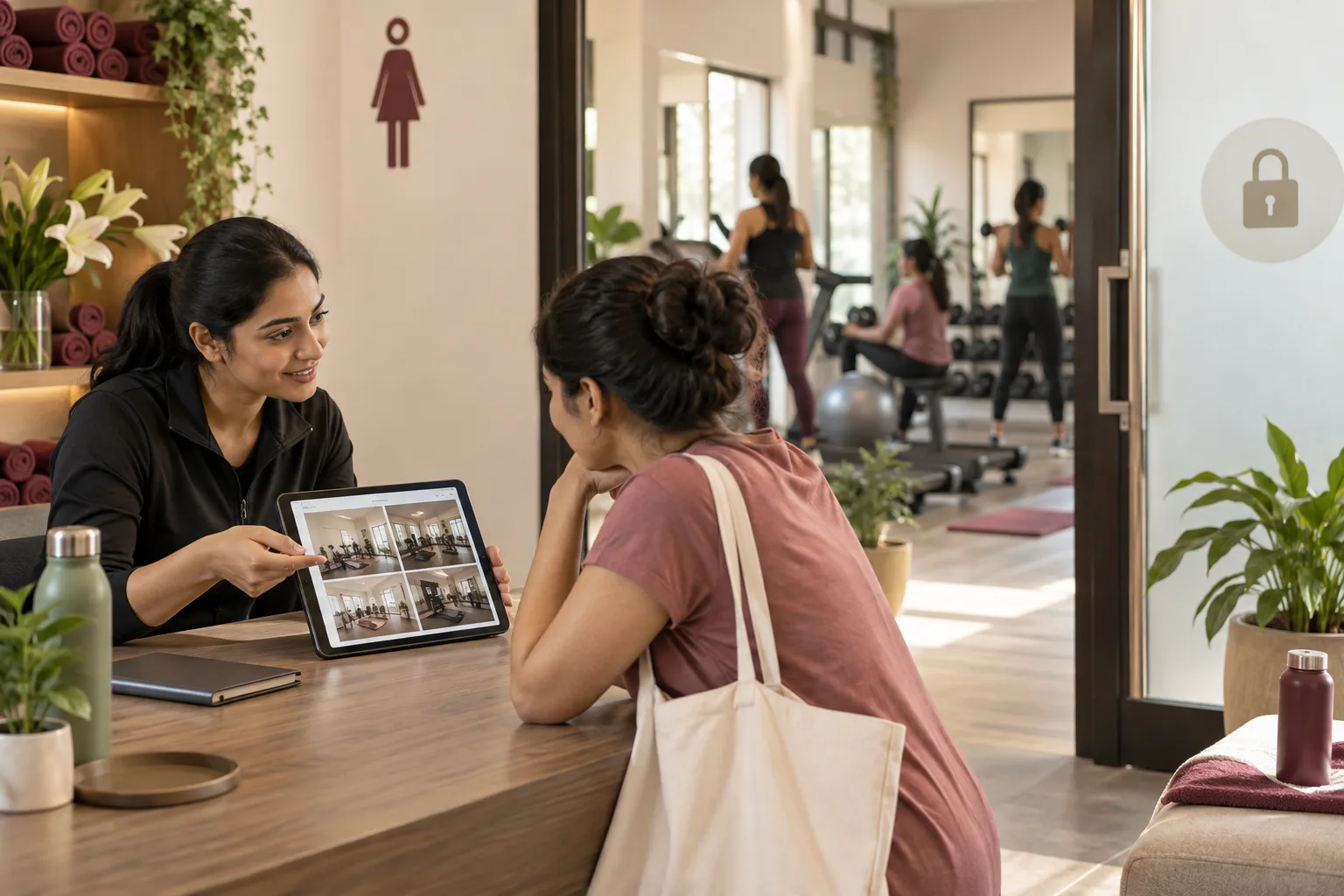 7 min read · 25 Jun 2026Marketing a ladies-only gym: trust before the trialThe first question about a ladies-only gym is who can see inside, not what equipment it has. Answer that on the listing, in photographs and on the phone.
 6 min read · 11 May 2026What a prospective member checks before joining a wellness centre in your areaThe quiet checks a visitor makes on a gym or wellness centre tour: hygiene, trainer credentials, timings and safety, with a walk-through checklist.
More for ladies-only fitness centres
Related work to consider.
Closest to this: search and visibility
Also for ladies-only fitness centres
Or start from the overview: sales and marketing for ladies-only fitness centres.
Your next practical step
Tell us what you are trying to grow, and we will read it before we call.
Eight short steps, mostly taps. Skip anything you would rather answer on the call.