Mehendi artists · Content marketing
Answer the questions a bride's family asks before they ever message you.
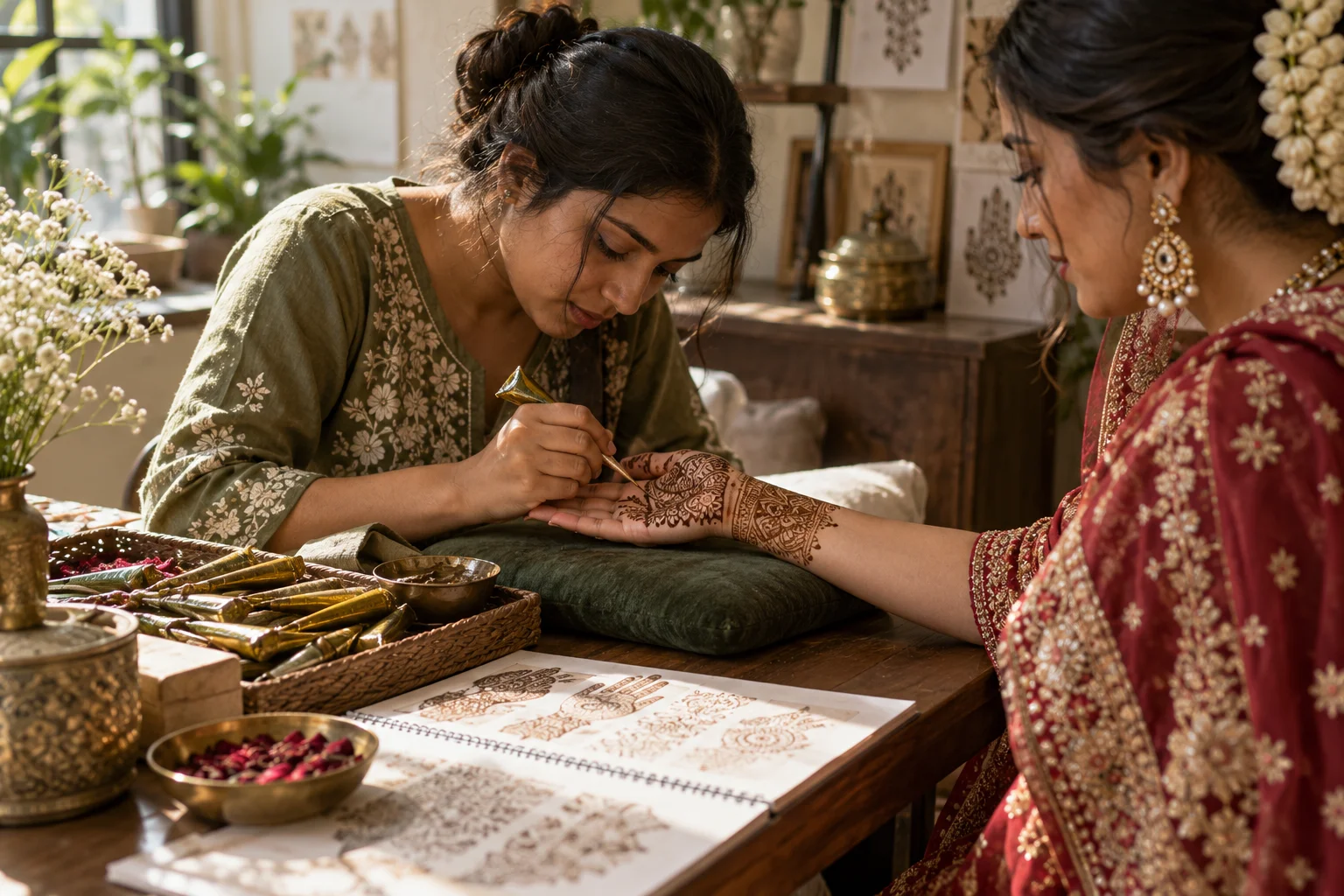
Content marketing for a mehendi artist is the writing and the pictures that answer a family's planning questions in your own voice. GullySales works on guides and pages that help a family decide, and on the way each piece points to your booking.
Scope, fee, reporting and term are agreed in writing after we have read your brief and spoken to you.
What content marketing means
Content marketing is writing articles, guides and pages that answer the questions buyers search before they are ready to enquire. This makes your business visible and trusted before the first call. GullySales plans this content from the first conversation onward, choosing topics that match real search demand rather than guesses.
Last updated 14 Nov 2026.
For mehendi artists
Where it usually goes wrong, and what we would do.
“Families do not know how long mehendi takes”
A bride's mother wants to know whether full hands and feet fit before the haldi, and how many guests you can do. A page that answers this saves your time and shows you have done it before.
“Design words are confusing to a first-time bride”
Arabic, Rajasthani, Marwari and contemporary mean different things to different families. A short guide with a photograph beside each term helps the bride choose, and makes you the explainer.
“Aftercare is asked about and rarely answered”
Brides worry about how to keep the colour and protect the design before the ceremony. Plain, practical guidance in your own words gives them a reason to follow you and not just save a reel.
“Content must end at the booking”
An article that teaches and then stops sends the reader away. Each piece should close with the date question and a link to WhatsApp, so reading becomes an enquiry.
What we do
What we deliver for mehendi artists.
The work available for this need. We agree the deliverables and responsibilities for your engagement in writing.
A planning guide for the bridal family
A page that walks through when to book, what to prepare and how the session runs, in the order the family thinks about it.
Result: A family can plan with your page open beside them.
A guide to the styles you do
A visual explainer of Arabic, Rajasthani, Marwari and contemporary work, with your own photographs next to each name.
Result: The family can choose a style before the first message.
An aftercare note in your own words
A short page and a shareable image on caring for the design, written as practical advice without promises about colour.
Result: The bride has something to save and send on.
A question-and-answer page for guests
A page for sangeet and event hosts covering station size, the number of guests and how a queue is run.
Result: Hosts planning an event see that you can handle it.
A content calendar tied to the season
A list of what to write before wedding months, festivals and exam-break holidays, so pieces are ready when families search.
Result: Content is published ahead of demand.
How the result is measured
- Pages published
- Organic traffic
- Enquiries from content pages
Recorded as a baseline before work starts, so every later report has an honest comparison.
Posts and pieces to plan
Write these pieces from the questions brides and families ask you.
- Preparing hands before a sitting
- A short guide from your own practice, stated as your advice. The proof is how you actually prepare, with no medical claim.
- Hours to set aside for a bridal sitting
- Helps a family plan the morning. The proof is your own booking record, shown as the hours you need and not a fixed promise.
- Choosing a style to match the outfit
- Matches design to sleeve length and the lehenga. The proof is your portfolio, shown by pairing a style with an outfit.
- Looking after the design afterward
- Plain instructions from your method. The proof is that you give them to every client and have written them down.
- How booking and the advance work
- Steps from enquiry to a held date. The proof is your written terms, quoted exactly.
- Guest stations at sangeets
- Space, artists and setup for a guest station. The proof is events you have run, described with the host's consent.
Who it is for
This is written for these mehendi artists.
- Bridal mehendi artists who work from home and travel to the wedding venue
- Arabic and contemporary design specialists popular with younger brides
- Rajasthani and Marwari bridal full-hands artists
- Chand Raat and Eid stall artists in old-city markets
- Festival-season artists for Karwa Chauth, Teej and Diwali gatherings
- Event mehendi teams who run guest stations at sangeets and corporate events
- Mehendi artists attached to bridal makeup studios and salons
- Mehendi cone and kit sellers who also teach short classes
Before you decide
When this may not be the right fit.
- You have not decided your booking terms, so a guide would describe an advance process you do not follow.
- You have no time to write and no one to edit, so pieces would stop after the first.
- You expect an article to replace a portfolio, which brides judge first.
Before you decide
Agree the work. Know how to judge it.
Content marketing for mehendi artists: use these checks to prepare, choose the scope, and review what changes.
Bring the right evidence
Bring questions from sales calls and examples of objections that delay a decision. Choose a subject expert who can check the substance, and identify evidence that can be published.
Make the scope clear
Agree the reader, buying question, format, and distribution route for each piece. Set the approval process and distinguish new research from rewriting material you already have.
Check the work in use
Ask a colleague to use the draft in a real buyer conversation. It should answer the question, support its claims, and make the next step clear without requiring a sales pitch to explain it.
Know when to change course
If the same unanswered question appears in several articles, improve the strongest page before commissioning another. More words are not a substitute for missing evidence.
These are discussion points, not a fixed package. GullySales confirms the deliverables, responsibilities, fee, and term in writing after reading your brief and speaking with you.
Before we start
What to have ready before the work starts.
The records, access and decisions this work needs from mehendi artists. Anything missing is noted in the written scope, with who will supply it.
- A voice note on each common question
- Record yourself answering the common questions, one at a time, even unpolished. It is the base of the guides. Without it, we write from conversation and it takes you more time to correct.
- The cones and paste you use
- Tell us what you use and what you say about it to clients. Where you cannot support a statement, we leave it out. If you mix your own paste, tell us what goes in it so the guide describes it truthfully, and leave out any statement about skin that you cannot support. We never write that a paste is natural or safe without something you can show.
- Your own aftercare instructions
- Bring the instructions you give a bride after application, however short. The aftercare note is written from them. If you have none, we write a plain note from your answers for your approval.
- Photographs for each guide
- Bring images that illustrate the styles, the setup and the day, with consent. A guide with no picture reads thin. If there are none, we plan a shoot at an upcoming booking.
- Time to review each draft
- Set aside time during the quieter weeks to read what we write. The guides are published only after you approve. If an assistant handles your messages, include them in the review, since they will be asked about the guide. If you are too busy to review them, the content waits for the quiet stretch.
How it works
How the content marketing work runs
The work itself, in order. How an engagement starts, from your brief to a written scope, is set out on our method page.
- 1
List the questions families ask you first
We ask you to recall the questions brides and mothers put to you before booking: how long does it take, can the paste be applied the night before, what do I wear, what if I am pregnant. You answer in your own words. We keep the questions in the order families asked them, not in the order we think they matter. We keep your answers as the base of everything we write.
- 2
Decide which questions get a full guide
Some questions need a short answer and some need a guide. With you, we choose the three or four that stop a family from booking, such as the sitting time and the planning of the day. You decide what you will not advise on, for example skin conditions, where the family should ask a doctor.
- 3
Record your explanation before writing it
We ask you to explain each answer aloud, as you would to a bride, and we write from that. This keeps the wording yours. Where you use a regional word, we keep it and explain it. These recordings are kept as the source, so a later correction can be traced to what you said. You hear the draft read back before we change anything.
- 4
Write the aftercare note with care
We draft the note on how to leave the paste on, protect the design and what the family should expect, using only what you tell your clients. It makes no claim about safety or about ingredients beyond what you can show. You read it as if you were speaking to the bride.
- 5
Place each piece where families will find it
We put the guide on the page for the style it belongs to, add the question-and-answer page for guests, and make a short post from each. You decide the order. Each piece ends at the booking form or the chat.
- 6
See which pieces brought families to you
We ask new clients what they read or saw, and look at which pages were opened before an enquiry, against the record at the start. You tell us what families still ask. We promise nothing. We decide which piece to rewrite and what to write next before the season turns.
Where this fits
Three pieces of sales work, in this order.
This work sits inside sales process design, at stage 0, foundation. The audit comes before it, and sales management keeps it running.
Step 1
Sales audit
Find where deals are being lost and what to fix first.
Start here if you cannot say where orders are lost.
Step 2 · you are here
Sales process design
One written way to sell, from first enquiry to repeat order.
Start here if every salesperson sells differently.
Step 3
Sales management
A target, a review routine and someone who owns the number.
Start here if the team has targets and no routine.
FAQ
Questions owners ask before they call.
Not here? More answers, or ask on WhatsApp.
Do I need to write long articles?
Can I use videos instead of writing?
Can I use a client's photographs in my content?
Can I call my cones natural or safe?
Do I have to share my techniques in a guide?
Can I publish a guide in my own language?
How much does it cost?
How long is the contract?
How soon will we see results?
Who will actually do the work?
More for mehendi artists
Related work to consider.
Closest to this: content and social
Also for mehendi artists
Or start from the overview: sales and marketing for mehendi artists.
Your next practical step
Tell us what you are trying to grow, and we will read it before we call.
Eight short steps, mostly taps. Skip anything you would rather answer on the call.