Mehendi artists · Social media
Turn reels and stories into bookings instead of compliments.
Social media marketing for a mehendi artist is how your work reaches brides and their families on Instagram, and how an admiring comment turns into a date in your diary. GullySales works on what you post, how enquiries are answered and what the profile asks a visitor to do.
Scope, fee, reporting and term are agreed in writing after we have read your brief and spoken to you.
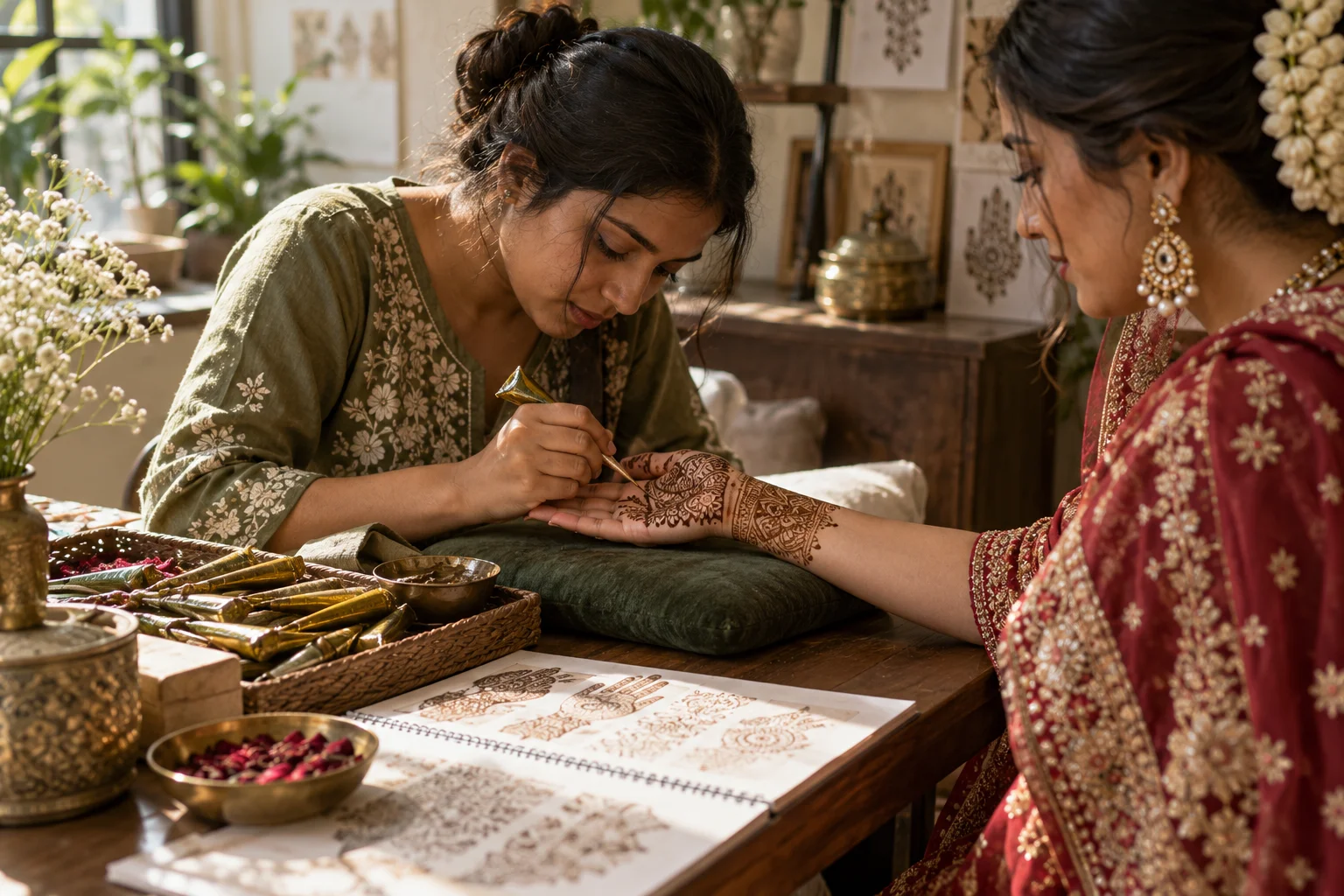
What social media means
Social media is the ongoing posting your business does on platforms such as Instagram, Facebook and LinkedIn to stay visible to customers and prospects between purchases. GullySales plans a posting calendar, writes captions and designs the images so the page looks active and answers what a visitor would ask.
Last updated 14 Nov 2026.
For mehendi artists
Where it usually goes wrong, and what we would do.
“A reel of the finished hand is half the story”
Viewers want the pace of the cone, the bride's reaction and the final result. A post that shows the whole session tells a family how long they must plan for, which a still photo cannot.
“Comments are not enquiries”
A heart under a bridal design is an admirer. The profile should end each post with one ask, such as sending the ceremony date on WhatsApp, so the admirer has a next step.
“The grid is judged in three seconds”
A family landing on your profile sees nine squares. If they are all bridal hands in the same pose, they learn nothing about your range, and you look like the artist next door.
“Stories hold the proof”
Your stories show a real day: reaching a venue, a group of guests waiting, a finished set. Saved into highlights by style and occasion, they answer the questions a cautious family has.
What we do
What we deliver for mehendi artists.
The work available for this need. We agree the deliverables and responsibilities for your engagement in writing.
A set of highlights by style and occasion
Story highlights titled bridal, guest, festival and kids, with a short caption of what each includes and how to book.
Result: A visitor finds your range without scrolling the feed.
A posting plan around the season
A calendar of what to post before wedding months and festivals, planned around the dates when families decide.
Result: Posts go out before the family starts looking.
A booking line in the profile
The profile text and link set to a WhatsApp opener that asks for the date, area and style.
Result: Every visitor has one clear action.
A reply routine for direct messages
Saved replies for the common questions, with a rule for who answers and when the inbox is checked.
Result: No bridal message sits unread under a reel.
A consent note for client photographs
A short permission message sent before posting a client's hands, so posts are made with agreement.
Result: You post with the family's approval on record.
How the result is measured
- Posts published
- Engagement rate
- Enquiries from social profiles
Recorded as a baseline before work starts, so every later report has an honest comparison.
Posts and pieces to plan
Plan posts that make a bride's family save your page.
- A full bridal hand, line by line
- A reel of your own work in progress, hands only. The proof is the real process, filmed on a real sitting with consent.
- Design styles explained
- Arabic, Rajasthani and minimal, each with your own examples. The proof is the work itself, labelled by style.
- Looking after a fresh design
- Plain tips from your own practice. The proof is your method, and the post makes no claim about skin or health.
- The cone and tools you use
- Show what is in the cone and how you store it. The proof is the ingredients you name truthfully.
- Dates still open
- A post showing which wedding dates remain, so planners can book. The proof is the diary behind the post.
- An event station at a sangeet
- A guest station in action, posted with the host's consent and without faces or the venue tag.
Who it is for
This is written for these mehendi artists.
- Bridal mehendi artists who work from home and travel to the wedding venue
- Arabic and contemporary design specialists popular with younger brides
- Rajasthani and Marwari bridal full-hands artists
- Chand Raat and Eid stall artists in old-city markets
- Festival-season artists for Karwa Chauth, Teej and Diwali gatherings
- Event mehendi teams who run guest stations at sangeets and corporate events
- Mehendi artists attached to bridal makeup studios and salons
- Mehendi cone and kit sellers who also teach short classes
Before you decide
When this may not be the right fit.
- You have no time to film or photograph your work in the season, so the page would go quiet.
- You cannot answer direct messages in the season, so posts would bring questions that sit unread.
- You hope followers alone will book with no booking route or advance process behind the posts.
Before you decide
Agree the work. Know how to judge it.
Social media marketing for mehendi artists: use these checks to prepare, choose the scope, and review what changes.
Bring the right evidence
Review the posts that produced useful conversations, not only the ones with the most views. Gather buyer questions and decide which team member can contribute credible material.
Make the scope clear
Choose the audience and channel before setting a posting volume. Agree who supplies material, approves posts, and handles messages, including complaints or questions the agency cannot answer.
Check the work in use
Follow a post through to the profile, website, and response. A useful report explains the quality of conversations and enquiries, alongside reach and engagement.
Know when to change course
If publishing takes time away from unanswered buyer messages, fix the response routine first. Do not expand to another channel without a clear reason for being there.
These are discussion points, not a fixed package. GullySales confirms the deliverables, responsibilities, fee, and term in writing after reading your brief and speaking with you.
Before we start
What to have ready before the work starts.
The records, access and decisions this work needs from mehendi artists. Anything missing is noted in the written scope, with who will supply it.
- Access to the account and its insights
- Bring the login or add us as a collaborator, and the view of past post performance. If a former helper still holds the login, bring them so the account is yours again before the season. Without access we work only from what is visible, and cannot see which posts brought messages.
- A folder of finished-hand videos
- Gather the reels and clips of applications and finished work that you own. Even unedited clips are useful. If you have few, we plan to record more at the next bookings.
- Written consent from families
- A message or a signed line saying the family agrees to have their hands shown. Without it, the post waits. Photographs of the same family on the day and a week later help us choose a post that is honest about how the colour deepens. We add a consent note to your booking confirmation so future photographs are covered.
- A rule for when you reply
- Decide when you check messages, who covers during a wedding, and what you will not answer in a chat. Bring it in your own words. Tell us also the hours when you are at a venue and cannot reply, so the profile does not promise a prompt answer. Without a rule, replies depend on whether you are free.
- Dates of festivals you work
- Bring the festival evenings and the group bookings you have taken before. The posting plan builds toward them. Without dates, the plan stays general and the posts miss the weeks when families decide.
How it works
How the social media work runs
The work itself, in order. How an engagement starts, from your brief to a written scope, is set out on our method page.
- 1
Scroll your grid as a bride's mother would
We go through your profile together on a phone, as a mother checking an artist for a daughter's wedding would, in three seconds. We note what the first nine pictures say about your work and what they leave out. We also open the saved posts and the tagged ones, because families look at what others say about you before they look at what you say. You tell us which pictures you are proud of and which you posted because they were handy.
- 2
Sort highlights by style and occasion
We group your stories into highlights a family can tap: bridal, sangeet stations, festivals, simple designs, the setup. You decide what goes into each. A family looking for a sangeet station should not have to scroll through bridal reels to find it, and the highlight names are written in the words a host would use. The highlight cover and name are plain and match the pages we build.
- 3
Plan posts around the wedding calendar
With you, we map the months when families are choosing, the weeks before festivals and the quiet stretch. You tell us how many posts you can really make while you are busy applying. The plan matches that limit and lists what to prepare in advance.
- 4
Put a booking line in the profile
We write the line in your profile that tells a visitor how to book and which date to ask for, and connect it to the enquiry form or the chat. You read it as a bride would. The line names the one thing a visitor should do, such as sending the ceremony date, so every compliment has somewhere to go. Every reel and story then ends by pointing there.
- 5
Write the replies to direct messages
Brides send a photograph and ask whether you can copy it. We draft replies for that, for the rate question and for the date question, in your voice. You decide which questions get a call instead. A bride who sends another artist's design is told kindly what you can and cannot recreate, since copying a signature pattern is something you decide case by case. We test by messaging the account from another phone.
- 6
Check bookings against the compliments
We place the enquiries and booked dates that came from the profile beside the count we took at the start, and look at which posts led to a message. You tell us which families mentioned a reel. We promise no growth. We decide which kinds of post to repeat.
Where this fits
Three pieces of sales work, in this order.
This work sits inside sales process design, at stage 0, foundation. The audit comes before it, and sales management keeps it running.
Step 1
Sales audit
Find where deals are being lost and what to fix first.
Start here if you cannot say where orders are lost.
Step 2 · you are here
Sales process design
One written way to sell, from first enquiry to repeat order.
Start here if every salesperson sells differently.
Step 3
Sales management
A target, a review routine and someone who owns the number.
Start here if the team has targets and no routine.
FAQ
Questions owners ask before they call.
Not here? More answers, or ask on WhatsApp.
How often should I post?
Should I show the paste and the cones?
Do hashtags still matter?
Is it fine to post a bride's design before the wedding?
Should I post a design before the wedding has happened?
Is it worth showing a time-lapse of an application?
How much does it cost?
How long is the contract?
How soon will we see results?
Who will actually do the work?
More for mehendi artists
Related work to consider.
Closest to this: content and social
Also for mehendi artists
Or start from the overview: sales and marketing for mehendi artists.
Your next practical step
Tell us what you are trying to grow, and we will read it before we call.
Eight short steps, mostly taps. Skip anything you would rather answer on the call.