Mehendi artists · Follow up systems
Reply to the family who asked the rate and went silent.
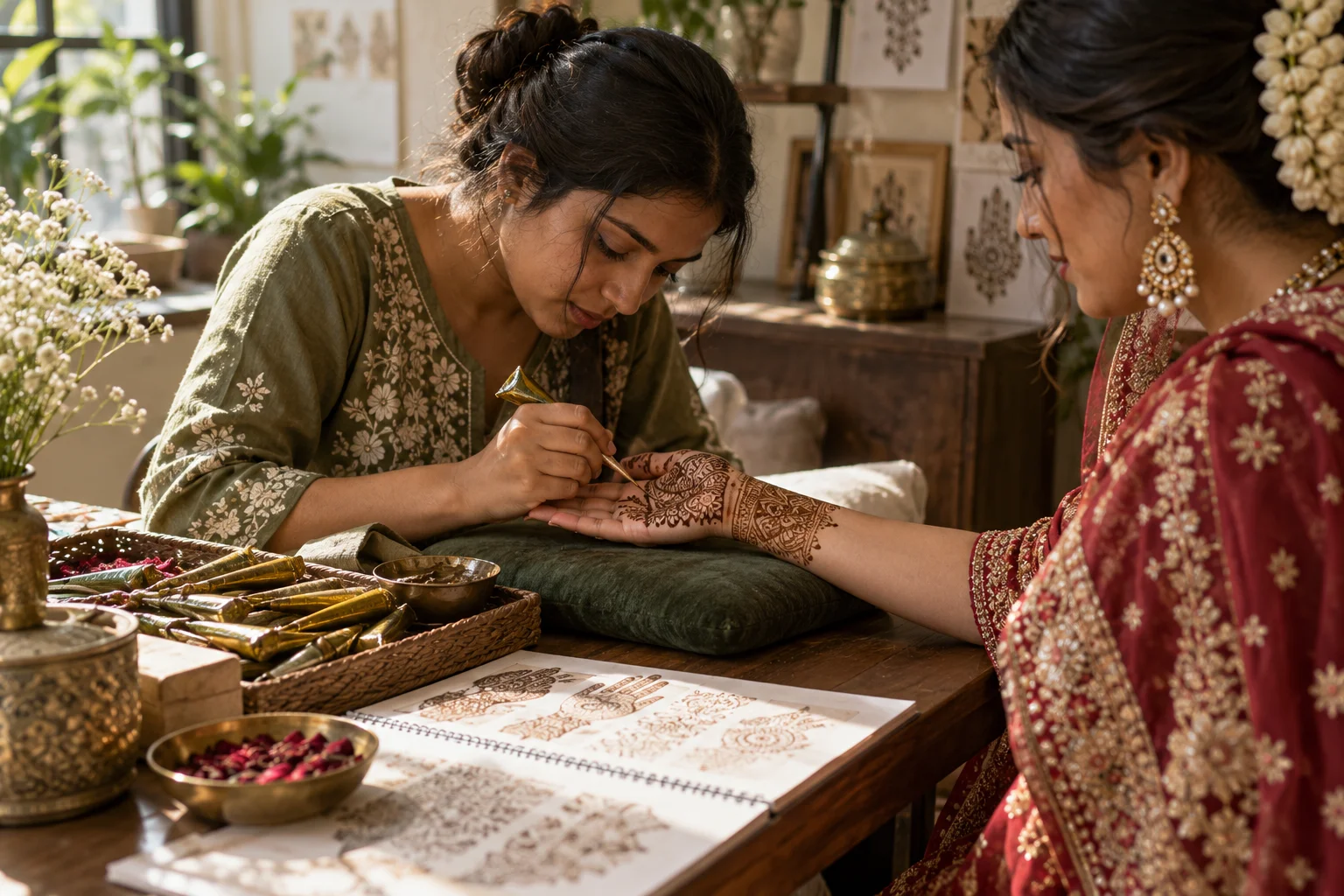
A follow-up system for a mehendi artist is the set of messages and reminders that reach a family after the first quote, before the event and after it. GullySales works on writing them, timing them against the diary and keeping a record of who has been told what.
Scope, fee, reporting and term are agreed in writing after we have read your brief and spoken to you.
What follow up systems means
A follow-up system is the set routine for calling, messaging or emailing an enquiry more than once, since most buyers do not decide on the first conversation. GullySales sets the number and timing of follow-ups so an undecided buyer keeps hearing from you until they decide either way.
Last updated 14 Nov 2026.
For mehendi artists
Where it usually goes wrong, and what we would do.
“The rate is asked and the chat ends”
A family compares three artists by rate before they compare anything else. A follow-up that explains what the rate includes, such as travel, assistants and hours, brings the conversation back to the work.
“A booking can wobble in the last week”
Dates move, venues change and a family begins to doubt. A confirmation message a few days before, listing the time and the address, settles it for both sides.
“The festival rush leaves no room for chasing”
On a festival evening you are working hands, not phones. A prepared set of reminders sent beforehand handles the confirmations that you cannot do on the day.
“The review request is forgotten”
After the event the family is busy and you are tired. A short message sent when they are sharing photographs is the best moment to ask for a review and a referral.
What we do
What we deliver for mehendi artists.
The work available for this need. We agree the deliverables and responsibilities for your engagement in writing.
A quote follow-up message
A written follow-up to send when a family has gone silent after a rate, explaining the inclusions and offering a next step.
Result: Silent enquiries get a second chance to reply.
A booking confirmation note
A message with date, time, address, number of hands and advance paid, sent when the booking is agreed and again before the event.
Result: Both sides hold the same facts.
A festival reminder set
Messages prepared for past clients before each festival, offering slots and stating the booking cut-off.
Result: Past clients hear from you before they look elsewhere.
An after-event message
A thank you with the review link and a gentle request to pass your name to others, sent when the photographs are going round.
Result: Every event ends with an ask.
A record of who has been messaged
A column in the client sheet that shows the last message sent and the next one due.
Result: You never message the same family twice by mistake.
How the result is measured
- Follow-up completion rate
- Average number of follow-ups before close
- Enquiries closed after repeat follow-up
Recorded as a baseline before work starts, so every later report has an honest comparison.
What to capture or send
Send these at each step from enquiry to thank-you.
- After a quote
- A polite check that the date is still held. Record yes, no or later, and release the date if the answer is no.
- After the advance
- Confirm date, venue, hour and number of hands. Record the client's acknowledgement so nothing is argued later.
- Before the event
- Remind the client of the arrival time and how to prepare. Record any change of venue or guest count.
- After the event
- A thank-you with a request to share pictures. Record the answer so you only post what was allowed.
- Festival invitations
- A note to past clients about open dates before Karwa Chauth, Teej or Diwali, sent only to those who agreed to hear from you.
Who it is for
This is written for these mehendi artists.
- Bridal mehendi artists who work from home and travel to the wedding venue
- Arabic and contemporary design specialists popular with younger brides
- Rajasthani and Marwari bridal full-hands artists
- Chand Raat and Eid stall artists in old-city markets
- Festival-season artists for Karwa Chauth, Teej and Diwali gatherings
- Event mehendi teams who run guest stations at sangeets and corporate events
- Mehendi artists attached to bridal makeup studios and salons
- Mehendi cone and kit sellers who also teach short classes
Before you decide
When this may not be the right fit.
- Your quotes change with each conversation, so a follow-up would repeat a figure you cannot hold.
- No one can send messages for you in the season, so follow-ups would stop when you are on site.
- You intend to keep messaging people who have said no.
Before you decide
Agree the work. Know how to judge it.
Follow-up systems for mehendi artists: use these checks to prepare, choose the scope, and review what changes.
Bring the right evidence
Trace recent enquiries from arrival to the last recorded action. Include a won enquiry, an unsuitable one, and one that went quiet, with personal details removed for the initial discussion.
Make the scope clear
Agree who accepts each enquiry, what makes it qualified, and how ownership changes. Include a rule for missed replies and a clear reason for closing an enquiry.
Check the work in use
Pick an enquiry at random and ask the team to find its owner, latest conversation, and next action. Check that the record agrees with what actually happened.
Know when to change course
If no one has capacity to respond, assign that responsibility before buying more leads. Automation can support the owner, but it cannot replace an unresolved handover.
These are discussion points, not a fixed package. GullySales confirms the deliverables, responsibilities, fee, and term in writing after reading your brief and speaking with you.
Before we start
What to have ready before the work starts.
The records, access and decisions this work needs from mehendi artists. Anything missing is noted in the written scope, with who will supply it.
- The chats that went silent
- Bring the chats, with names hidden, where a quote or a date was asked and nothing followed. They show where messages are needed. Without them, the plan begins with common points of silence.
- A list of the dates you hold
- Write the dates for which you have promised to keep a slot and what you told the family. The follow-up must not offer a date that is gone. Include dates held informally, such as a promise made on a call, because those are the ones likelier to be forgotten. Without the list, we cannot write a message that names the date.
- Your saved replies on the phone
- Show us the replies you already use for the rate and the date. We build on them. Include any reply you have regretted, so we write around it. If you have none, we write the first set from your answers.
- A decision on who sends in the rush
- During the rush you cannot message each family yourself. Decide whether an assistant sends the follow-ups and from which number. If the assistant is a relative, agree what they may promise about the date and the advance. Without a decision, the messages stop when you are busiest.
- A list of those who asked to stop
- Note any family who asked not to be messaged. Every festival note and reminder respects it. If you have no list, we start with the families who wrote to you in the last season only.
How it works
How the follow up systems work runs
The work itself, in order. How an engagement starts, from your brief to a written scope, is set out on our method page.
- 1
Look at the chats that stopped at the rate
We open the chats in which a family asked the rate and then fell silent, and read what you wrote. You tell us what you think happened in each. We also count how many silent chats had a rate in the last message, because a rate sent without a question back leaves the family nothing to answer. We mark the point where the chat stopped, whether after the quote, before the advance or in the last week, and count the types.
- 2
Decide what a family should hear next
For each point where chats stop, we decide the next message: after a quote, after the advance, before the date and after the event. You say what you are willing to send and what feels pushy. You tell us the days before a date on which you are comfortable writing, and the hours you will not message a family at all. We write the plan on a single page.
- 3
Write the quote follow-up in your voice
We draft the message that follows a quote, offering the date still held and a reason to answer, such as the portfolio link or a question. You read it aloud and change any line that is not yours. The message names the date, the venue and the style the family asked for, so it reads as a reply to them and not a circular. It makes no claim of scarcity that is untrue.
- 4
Write the booking confirmation and reminder
We draft the confirmation that states the date, the venue, the number of hands and the advance taken, and the reminder before the date, asking about the venue timing and the family's preparation. The reminder also asks whether the bride has decided on the time of the sitting, since a late sitting is the commonest reason a date wobbles. You approve both, and we put them in your saved replies.
- 5
Set up the festival and after-event messages
For festival evenings we write a note to past clients ahead of the date, sent only to those who agreed. After an event we write the message that thanks the family and asks for a review. The message to past clients names the festival and the evenings you have free, and offers the earlier booking line to families you have worked for before. You decide who sends them while you are working.
- 6
Compare confirmed dates with the silent chats
We compare how many quotes became booked dates against the count of silent chats at the start, and ask you which messages families replied to. We promise no number. We decide which messages to shorten, drop or send again.
Where this fits
Three pieces of sales work, in this order.
This work sits inside sales process design, at stage 2, qualification. The audit comes before it, and sales management keeps it running.
Step 1
Sales audit
Find where deals are being lost and what to fix first.
Start here if you cannot say where orders are lost.
Step 2 · you are here
Sales process design
One written way to sell, from first enquiry to repeat order.
Start here if every salesperson sells differently.
Step 3
Sales management
A target, a review routine and someone who owns the number.
Start here if the team has targets and no routine.
FAQ
Questions owners ask before they call.
Not here? More answers, or ask on WhatsApp.
Will repeated messages annoy people?
Should I follow up on WhatsApp or Instagram?
Can an assistant send these messages?
What if a bride goes silent after getting a quote?
How many times should I message a silent family?
Can I use a template without sounding mechanical?
How much does it cost?
How long is the contract?
How soon will we see results?
Who will actually do the work?
More for mehendi artists
Related work to consider.
Closest to this: leads and follow-up
Also for mehendi artists
Or start from the overview: sales and marketing for mehendi artists.
Your next practical step
Tell us what you are trying to grow, and we will read it before we call.
Eight short steps, mostly taps. Skip anything you would rather answer on the call.