Professional makeup artists · Lead generation
Bring in brides who have a date, a venue and a budget in mind.
Lead generation for a makeup artist means putting your work where a bride, a photographer or a planner is already looking, and making it simple to send a date. GullySales works on the sources that send real enquiries, the reply that meets them and a record of which source sent whom.
Scope, fee, reporting and term are agreed in writing after we have read your brief and spoken to you.
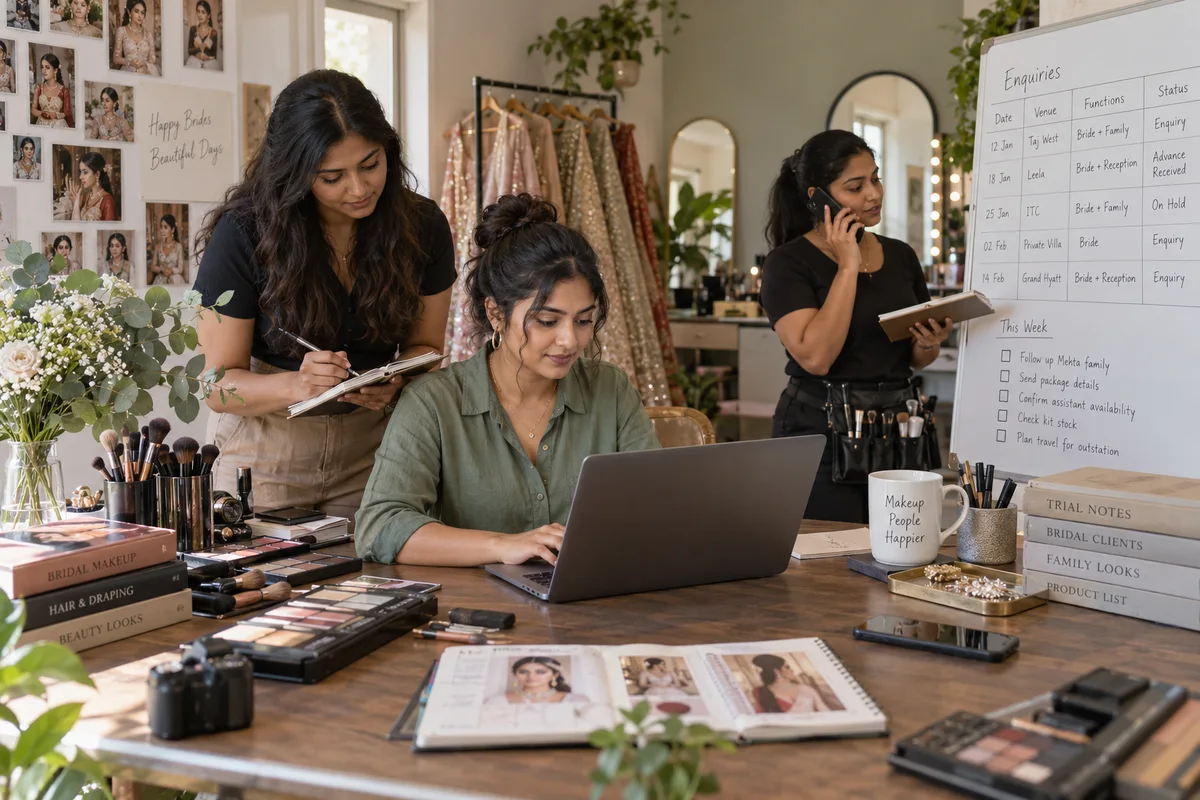
What lead generation means
Lead generation is the combined work of every channel that brings in a new enquiry, whether from search, adverts, referrals or a stall at an exhibition. GullySales runs these channels together and reports the number of enquiries each one produced, not the activity behind it.
Also for professional makeup artists
Sales and marketing for professional makeup artists, the overview.
Plan the next part of the work
Last updated 21 Nov 2026.
For professional makeup artists
Where it usually goes wrong, and what we would do.
“A rate request is a lead only when it carries a date”
A message that says only "rates?" tells you nothing about whether the bride has a date, a venue or a party of family members. A lead worth chasing names the date, the place and how many people need makeup. Asking for those three things in the first reply sorts the real from the browsing.
“Photographers send brides before the bride has chosen anyone”
The photographer is in the room during the getting-ready hours and is asked who did the makeup. A photographer who knows your style and your coverage area passes your name on without being asked. One who has never seen a look-book recommends the artist they met last.
“Listing sites and Instagram send different kinds of bride”
A bride on a wedding listing site compares several artists side by side and wants a quote. A bride who finds you through a reel has already liked a look and wants a trial. The same reply fits neither, so each source needs its own opening line.
“Enquiries from the previous season are a quiet source”
A guest who admired a bridal look, a bridesmaid who is next in the family, a sister of a past bride: these people already trust the work. They only need to hear that you take bookings and which dates are open.
What we do
What we deliver for professional makeup artists.
The work available for this need. We agree the deliverables and responsibilities for your engagement in writing.
A source map for your enquiries
A list of where each enquiry came from: Instagram, a listing site, a photographer, a boutique, a past bride, a guest.
Result: You can read off which source sent the brides who actually booked.
Opening replies for each source
Short WhatsApp and Instagram replies written in your voice, one for a listing-site quote request and one for a reel admirer.
Result: Each reply asks for date, venue and party size before any price is sent.
A photographer and planner introduction
A one-page look-book with your style, coverage area and how to forward a bride's details.
Result: A photographer has something to forward instead of describing you from memory.
A past-bride and guest message
A short note to past clients and guests saying which seasons you are taking bookings for.
Result: The people who already trust the work hear about open dates.
A lead log with a reason for each loss
One sheet recording the source, the date asked, the next step and, when a bride goes elsewhere, the reason given.
Result: Every lost enquiry has a note beside it, so patterns show up.
How the result is measured
- Relevant enquiries by source
- Duplicate and unsuitable enquiries
- Time to the first response
- Accepted enquiries reaching an agreed next step
Recorded as a baseline before work starts, so every later report has an honest comparison.
What to capture or send
A bridal enquiry is worth chasing once it carries these details.
- Wedding date and muhurtham time
- Note the date and the hour the bride must be ready, because a peak morning slot can only be given to one bride and decides whether you can take the booking at all.
- Venue and getting-ready location
- Record whether the work is at a hotel, a hall or the family home, so you can judge the travel and the set-up space before you quote.
- Number of people needing makeup
- Ask for the bride, the mother, sisters and others separately. A party of six is a different job from a single bride and changes the artists you send.
- Which functions are wanted
- Mehendi, sangeet, engagement and wedding are separate days. Write down each one so the quote does not quietly cover only the main ceremony.
- Who referred the bride
- A photographer, a boutique or a past bride. Keep the name beside the lead so you can thank them and see whose recommendations actually turn into bookings.
Who it is for
This is written for these professional makeup artists.
- Bridal makeup artists working from a home studio
- Freelance artists who travel to the venue or the home
- Artists who also do hairstyling and saree draping
- Party, engagement and reception makeup specialists
- Editorial, fashion and ad-shoot makeup artists
- Film, TV and OTT makeup artists and hair-and-makeup crews
- Prosthetic and special effects makeup artists
- Makeup artists who also teach masterclasses
- Teams of three or four artists under one name for large wedding parties
Before you decide
When this may not be the right fit.
- Your calendar is already full for the season, so more rate requests would only mean turning brides away and leaving them with a poor first impression.
- You have no one to answer a bridal message on the day it arrives, so a new source of enquiries would send brides to the next artist on the list.
- You do not yet have a portfolio you can show a bride, and an enquiry with nothing to look at ends with the bride choosing another artist.
Before you decide
Agree the work. Know how to judge it.
Lead generation for makeup artists: use these checks to prepare, choose the scope, and review what changes.
Bring the right evidence
Define the organisations or buyers you can serve and the reasons they would consider a conversation. Bring examples of accepted and rejected prospects so the selection rule is visible.
Make the scope clear
Agree the research sources, contact approach, qualification rules, and handover. Clarify which meetings count as accepted and what happens to replies that are not ready to buy.
Check the work in use
Review why a prospect was selected and what was learned from the response. Count held, relevant conversations separately from contacts found, messages sent, or meetings booked.
Know when to change course
If the same objection appears repeatedly, adjust the offer or buyer group before increasing outreach. Respect a request to stop contact and keep the exclusion in the record.
These are discussion points, not a fixed package. GullySales confirms the deliverables, responsibilities, fee, and term in writing after reading your brief and speaking with you.
Before we start
What to have ready before the work starts.
The records, access and decisions this work needs from professional makeup artists. Anything missing is noted in the written scope, with who will supply it.
- Your phone chats from the last season
- Access to your chat list for the last season, with clients' names covered if you prefer. The chats show how each bride first arrived and what was asked. If chats were deleted, the source map is rebuilt from your diary and memory and marked as an estimate.
- The booking diary with dates and fees
- Your diary or notes showing each wedding, its date and whether an advance was paid. It separates enquiries from bookings. A photograph of a handwritten diary is acceptable, and without it the loss reasons cannot be told from the wins.
- Names of photographers you trust
- A short list of photographers, planners and decorators you would be glad to be recommended by, with how you met. We introduce you only to those. If you work alone and know nobody, the introduction note is left until you have done a few shared weddings.
- A decision on past-client messages
- Only you can say which past brides and guests may be written to. A bride who asked to be left alone, or whose wedding ended badly, stays off the list. If you cannot decide, the message goes to a handful of friendly clients first.
How it works
How the lead generation work runs
The work itself, in order. How an engagement starts, from your brief to a written scope, is set out on our method page.
- 1
Count last season's brides by source
We open your phone, your chats and your booking diary and trace each bride of the last season back to the person or place that sent them: a photographer, a listing site, a reel, a cousin's wedding, a planner. You tell us where memory fails. What exists afterwards is a rough map of sources, with the unknowns shown plainly.
- 2
Write one opening reply per source
A bride sent by a photographer wants to hear that you know the photographer's style, and one from a listing site wants a date and a trial. We draft a different opening reply for each source, in your voice. You read them aloud and strike anything you would never say.
- 3
Prepare the photographer and planner note
We write a short introduction for the photographers, planners and decorators you work beside, saying what you do, which weddings suit you and what they need to send. You choose which five or six you actually trust. The note goes from you, never from us.
- 4
Write to last season's brides and guests
Past brides and their guests are a quiet source, so we draft a message for each, with a question about a date and not a request. You read your list and remove anyone you would not message. Only people who have dealt with you are contacted.
- 5
Read the log against the first count
Each new enquiry goes into the lead log with its source and, if lost, the reason. After the season you set the log beside the map we began with, source by source. You decide which sources to keep feeding and which to leave, and nothing here promises an enquiry.
Where this fits
Three pieces of sales work, in this order.
This work sits inside sales process design, at stage 1, prospecting and lead generation. The audit comes before it, and sales management keeps it running.
Step 1
Sales audit
Find where deals are being lost and what to fix first.
Start here if you cannot say where orders are lost.
Step 2 · you are here
Sales process design
One written way to sell, from first enquiry to repeat order.
Start here if every salesperson sells differently.
Step 3
Sales management
A target, a review routine and someone who owns the number.
Start here if the team has targets and no routine.
FAQ
Questions owners ask before they call.
Not here? More answers, or ask on WhatsApp.
Should I pay for ads to get bridal leads?
Is a rate request from a stranger worth replying to?
What should the first reply to a rate request say?
How do I get bridal enquiries without a big city address?
What if a bride finds me but the date is already taken?
How much does it cost?
How long is the contract?
How soon will we see results?
Who will actually do the work?
What do you need from us?
More for professional makeup artists
Related work to consider.
Closest to this: leads and follow-up
Also for professional makeup artists
Or start from the overview: sales and marketing for professional makeup artists.
Your next practical step
Tell us what you are trying to grow, and we will read it before we call.
Eight short steps, mostly taps. Skip anything you would rather answer on the call.