Snooker, pool and billiards parlours · Lead generation
Find the groups, colleges and office teams who would book a table on a slow afternoon.
Lead generation for a snooker, pool or billiards parlour is the work of finding the student groups, office teams and league players who would book tables in the hours you want to fill. GullySales works on the lists, the pages and the enquiry routine that reach them.
Scope, fee, reporting and term are agreed in writing after we have read your brief and spoken to you.
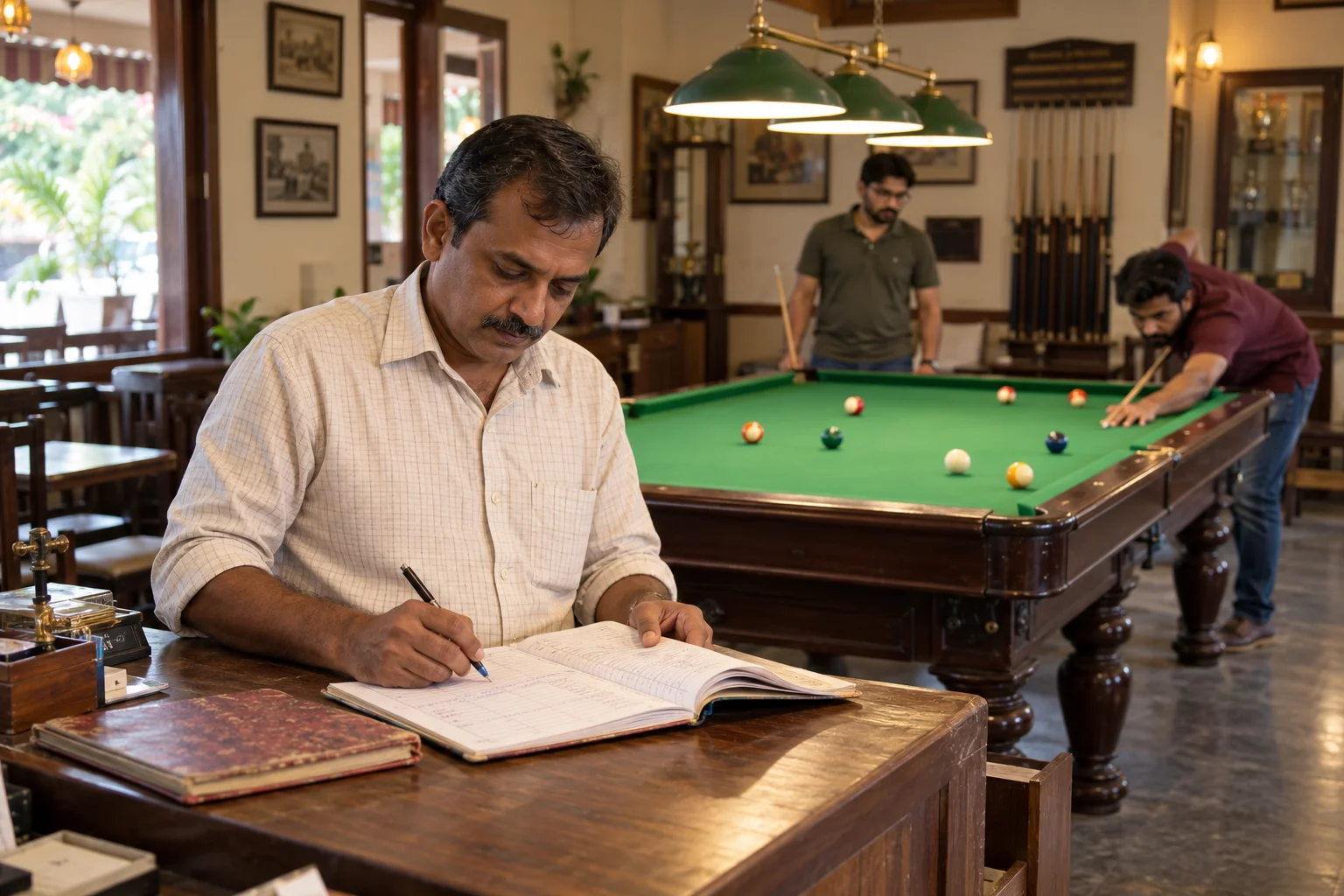
What lead generation means
Lead generation is the combined work of every channel that brings in a new enquiry, whether from search, adverts, referrals or a stall at an exhibition. GullySales runs these channels together and reports the number of enquiries each one produced, not the activity behind it.
Also for snooker, pool and billiards parlours
- CRM for snooker and pool parlours
- Follow-up systems for snooker and pool parlours
- SEO for snooker and pool parlours
- Local SEO for snooker and pool parlours
- Social media marketing for snooker and pool parlours
- Content marketing for snooker and pool parlours
- Buyer persona for snooker and pool parlours
- WhatsApp marketing for snooker and pool parlours
Sales and marketing for snooker, pool and billiards parlours, the overview.
Plan the next part of the work
Last updated 21 Nov 2026.
For snooker, pool and billiards parlours
Where it usually goes wrong, and what we would do.
“Groups decide together, so one person must be reached”
A college group or a birthday party picks a venue through whoever organises the evening. Reaching that organiser with a clear table rate and a booking number matters more than a poster on the wall.
“Offices have a Friday evening and nowhere to go”
A team lead planning an after-work outing wants a place that takes a booking for a dozen people. A short note to nearby offices that states your tables and your group arrangement fills that gap.
“The slow hours have their own audience”
Students between classes, shift workers coming off duty and night owls are free when the regulars are not. Talking to them directly is a different job from advertising the busy evening.
“League and tournament players bring others”
A serious player comes with friends and a rivalry. A league night or a ranking board gives them a reason to bring the next group, which no promotion can buy.
What we do
What we deliver for snooker, pool and billiards parlours.
The work available for this need. We agree the deliverables and responsibilities for your engagement in writing.
A group booking note
A single message and page stating the tables, the hours, the group rate you set and how an organiser reserves.
Result: An organiser can book from one message.
A target list of colleges and offices nearby
Names of the student bodies, offices and clubs within reach, with the person who plans outings.
Result: Outreach goes to a named organiser.
A slow-hours offer written for the right crowd
A message for students and shift workers about the open afternoon tables, with the rate you decide.
Result: The quiet hours are described to the people free then.
An enquiry log showing the source
A record of each enquiry and where it came from, such as search, a friend, a college or a poster.
Result: You see which route brings groups.
A player list from league nights
Names and numbers of league and tournament players, with consent, ready for the next invitation.
Result: Your best players are on a list you own.
How the result is measured
- Relevant enquiries by source
- Duplicate and unsuitable enquiries
- Time to the first response
- Accepted enquiries reaching an agreed next step
Recorded as a baseline before work starts, so every later report has an honest comparison.
What to capture or send
What to record when a group asks about a table.
- Headcount and game
- Ask whether it is snooker, 8-ball or 9-ball and how many are coming, so you can hold the right number of tables and quote the right rate.
- Organiser's name and number
- One person books for the group. Record who, because the reply and the reminder both go to them and not to the whole party.
- Requested hours
- Note the start time and how long they want the table. Afternoon requests are the ones you want to say yes to quickly.
- Group type
- College, office team, birthday or league side. It tells you which rate you set for them and what the organiser will ask next.
- Table held until
- Write the time you will release the table if nobody confirms, so the counter does not hold a slot for a group that has moved on.
- Where they heard of you
- A friend, Maps or a college notice board. Over time it shows which door brings groups and which poster is wasted.
Who it is for
This is written for these snooker, pool and billiards parlours.
- Snooker clubs with full-size tables and league players
- Pool parlours for 8-ball and 9-ball with younger crowds
- Billiards parlours inside gymkhanas and clubs
- Cue sports lounges with a cafe or a games area
- Standalone parlours near colleges and coaching centres
- Parlours in malls and gaming zones
- Pool halls attached to restaurants, with food as the main hook
- Coaching academies for snooker and billiards players
Before you decide
When this may not be the right fit.
- You have no one at the counter to reply to a group message between frames, so more enquiries would only go cold.
- You have not yet decided a group rate for the empty hours, so there is nothing definite to offer an organiser.
- The licence for your premises does not cover the group events you would be advertising.
Before you decide
Agree the work. Know how to judge it.
Lead generation for snooker and pool parlours: use these checks to prepare, choose the scope, and review what changes.
Bring the right evidence
Define the organisations or buyers you can serve and the reasons they would consider a conversation. Bring examples of accepted and rejected prospects so the selection rule is visible.
Make the scope clear
Agree the research sources, contact approach, qualification rules, and handover. Clarify which meetings count as accepted and what happens to replies that are not ready to buy.
Check the work in use
Review why a prospect was selected and what was learned from the response. Count held, relevant conversations separately from contacts found, messages sent, or meetings booked.
Know when to change course
If the same objection appears repeatedly, adjust the offer or buyer group before increasing outreach. Respect a request to stop contact and keep the exclusion in the record.
These are discussion points, not a fixed package. GullySales confirms the deliverables, responsibilities, fee, and term in writing after reading your brief and speaking with you.
Before we start
What to have ready before the work starts.
The records, access and decisions this work needs from snooker, pool and billiards parlours. Anything missing is noted in the written scope, with who will supply it.
- The booking book or phone calendar
- Whatever you use to record tables, a book at the counter, a phone calendar or a spreadsheet, for the last few months. It need not be neat. It shows which hours are empty, and when it is missing the slow-hours offer is aimed at a guess, so the discount lands on the wrong evening.
- Table count and the rate for each game
- A short written list of tables by type, snooker, pool or billiards, and the rate you charge per hour or per frame. The group note quotes these. If rates change by time of day, bring that too, otherwise the organiser is quoted a figure the counter then contradicts.
- Photographs of the room under good light
- Clear pictures of the tables, the seating, the cue rack and the entrance, taken with the lights on. A phone is enough. Without them, a target list of colleges receives a message with no picture, and the group chooses the parlour whose tables they can see.
- A person who answers enquiry messages
- Name the staff member who replies to messages while the counter is busy. Groups choose the first parlour that answers. Where nobody is named, enquiries wait until closing time, and the log we set up records only the ones that happened to be picked up.
- Your decision on discounts and advances
- Settle whether you will discount slow hours, ask for an advance for a group and how a cancellation is handled. Only you can decide. Left open, the offer is written without a price and the first organiser who asks gets an answer made up at the counter.
How it works
How the lead generation work runs
The work itself, in order. How an engagement starts, from your brief to a written scope, is set out on our method page.
- 1
Read the table booking book for gaps
We start with your booking book, the counter register or the phone calendar, and mark which hours fill without effort and which stay empty. You tell us which tables run hot and which stand idle on weekday afternoons. What exists afterwards is a map of the slow hours by day and table, and every lead we look for is aimed at one of those gaps and not at the busy Saturday night.
- 2
List the colleges and offices within walking range
We walk or map the area around the parlour and list the colleges, coaching centres, offices and apartment clusters within a short ride. You cross out places that would cause trouble, such as a school, and add the ones where you already know a student or a manager. The result is a named target list that your counter staff can actually approach.
- 3
Write the group booking note with the counter
Together with whoever runs the counter, we write one sheet that states the tables a group of four to six can take, the extra charge for food if any, the cut-off for confirming a slot and how the person organising pays. You decide what is offered. The sheet is what the organiser receives in the first reply, so the deal is clear before the second message.
- 4
Shape the slow-hours offer for one crowd
From the gap map we pick one crowd for each slow slot, perhaps students after lectures or an office team on Friday evening, and write the offer in that crowd's words. You fix what you can afford to give and on which tables. We keep each offer apart so a student does not see an office deal, and the parlour does not discount a busy hour by mistake.
- 5
Take the league night names with consent
On league and practice nights we set out a sign-up sheet at the counter, asking players whether they would like to hear about tournaments and table times. Only those who write their name and number are added. You see the list grow into a player list we can use for events, and nobody is added from a phone book or a borrowed list.
- 6
Test one lead from enquiry to table
We send ourselves, as a student organiser, through the whole route: the first message, the group note, the booking and the arrival at the counter, and your staff respond as usual. Anything that confuses us is corrected. Later we compare the enquiry log with the booking book recorded in the first step, and you decide which source and which slow hour to push further.
Where this fits
Three pieces of sales work, in this order.
This work sits inside sales process design, at stage 1, prospecting and lead generation. The audit comes before it, and sales management keeps it running.
Step 1
Sales audit
Find where deals are being lost and what to fix first.
Start here if you cannot say where orders are lost.
Step 2 · you are here
Sales process design
One written way to sell, from first enquiry to repeat order.
Start here if every salesperson sells differently.
Step 3
Sales management
A target, a review routine and someone who owns the number.
Start here if the team has targets and no routine.
FAQ
Questions owners ask before they call.
Not here? More answers, or ask on WhatsApp.
Should I advertise on social media for walk-in crowds?
Can I run offers for groups?
How do I reach colleges without being pushy?
Do we need a separate number for group bookings?
Who contacts the colleges and offices on the list?
How do we keep the player list from becoming spam?
How much does it cost?
How long is the contract?
How soon will we see results?
Who will actually do the work?
More for snooker, pool and billiards parlours
Related work to consider.
Closest to this: leads and follow-up
Also for snooker, pool and billiards parlours
Or start from the overview: sales and marketing for snooker, pool and billiards parlours.
Your next practical step
Tell us what you are trying to grow, and we will read it before we call.
Eight short steps, mostly taps. Skip anything you would rather answer on the call.