Snooker, pool and billiards parlours · Buyer persona
Know the student, the regular, the organiser and the coach before you set a rate.
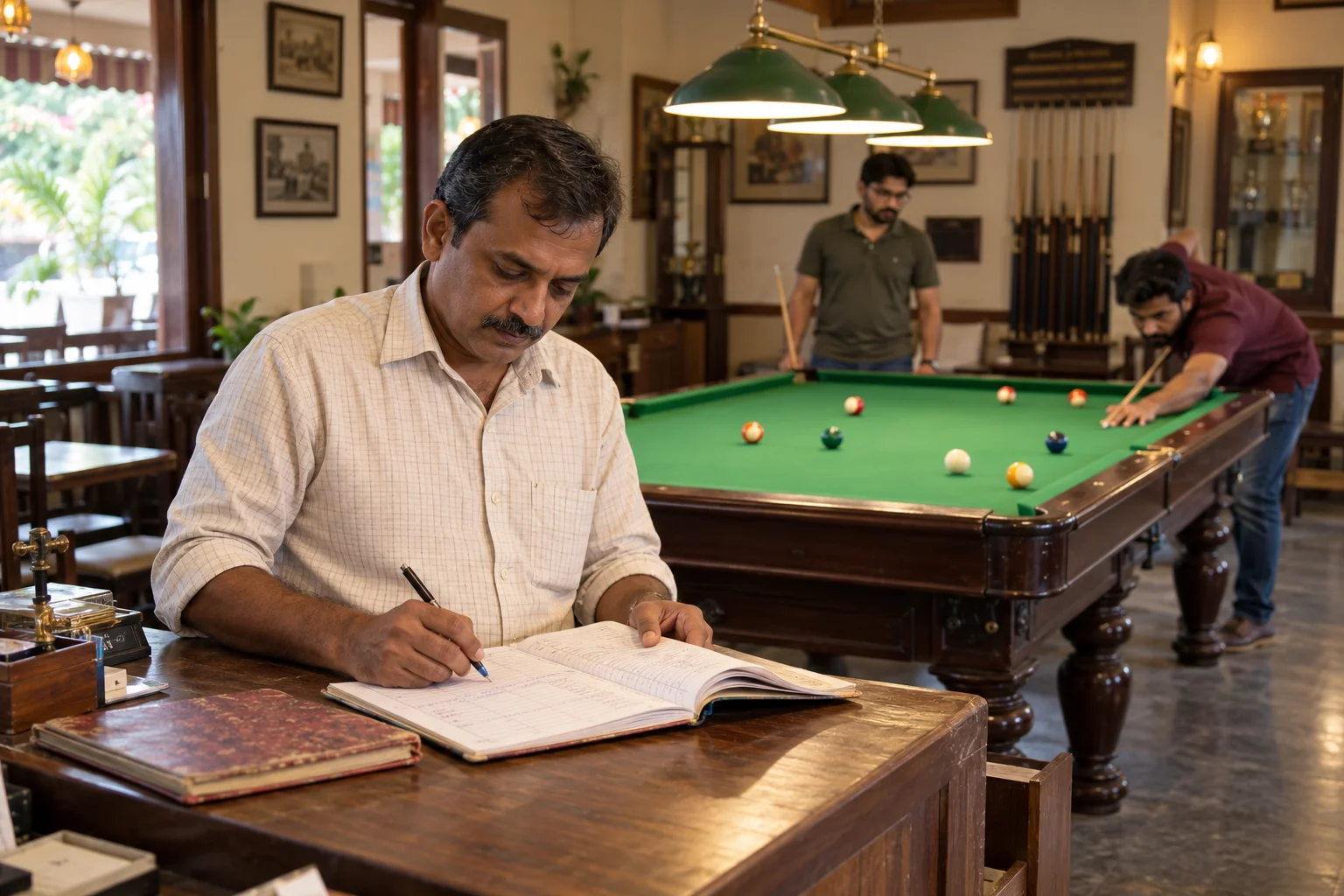
A buyer persona for a snooker, pool or billiards parlour describes the student group, the league regular, the office organiser and the beginner, since each wants something different from a table. GullySales writes each one down so the reply to a student differs from the reply to an organiser.
Scope, fee, reporting and term are agreed in writing after we have read your brief and spoken to you.
What buyer persona means
A buyer persona is a plain description of the kind of customer who actually buys from you. It includes what they search, what worries them and who else they ask before deciding. GullySales builds this from real enquiries and past sales rather than a generic template, then uses it to write every page and advert.
Also for snooker, pool and billiards parlours
- Digital marketing for snooker and pool parlours
- Lead generation for snooker and pool parlours
- SEO for snooker and pool parlours
- Local SEO for snooker and pool parlours
- Social media marketing for snooker and pool parlours
- Content marketing for snooker and pool parlours
- CRM for snooker and pool parlours
- Follow-up systems for snooker and pool parlours
Sales and marketing for snooker, pool and billiards parlours, the overview.
Last updated 14 Nov 2026.
For snooker, pool and billiards parlours
Where it usually goes wrong, and what we would do.
“The student group buys on price and time”
College friends pool money and look for a parlour with an open afternoon and a rate they can split. They decide in minutes and move on to a rival if the first reply is slow.
“The league regular buys on the table”
A serious player cares about the cloth, the cushions, the lighting and whether the table is free at their hour. They stay loyal to the parlour that keeps standards and respects their time.
“The office organiser buys on ease”
The person arranging an after-work evening wants a number to call, a table for the whole team and a clear rate. They are judged by how well the evening goes, so they favour a place that handles it.
“The beginner buys on comfort”
Someone new to the game wants a quiet corner, a patient friend or coach and a place that does not feel like a closed members' club. How the room welcomes them decides the next visit.
What we do
What we deliver for snooker, pool and billiards parlours.
The work available for this need. We agree the deliverables and responsibilities for your engagement in writing.
Four persona sheets
One page each for the student group, the league regular, the office organiser and the beginner.
Result: Everyone answering enquiries knows who is asking.
First questions for each persona
A short list for each buyer, such as group size and time for a student group or day and headcount for an organiser.
Result: The first reply moves the chat forward.
Reply templates by persona
Saved messages for each buyer, written in a tone that suits a student differently from an office organiser.
Result: The reply fits the reader.
A note on what each persona worries about
A list of concerns for each buyer, such as cost, safety, queue and noise, and where on the site you address them.
Result: Every page deals with one real worry.
A seasonal review of the personas
A check of which personas booked and which did not, from your own enquiry notes, to correct the sheets.
Result: The sheets stay true to your actual customers.
How the result is measured
- Enquiry match to persona
- Conversion rate by persona
- Content aligned to persona
Recorded as a baseline before work starts, so every later report has an honest comparison.
Who is asking
The four people who ask a parlour about a table, and what each wants to know.
- A student group of friends
- They want the afternoon rate you set, whether they can split it, and whether a student identity card is needed. They compare two parlours in a single chat.
- A league player
- They want to know the table standard, the cloth, the lighting and whether a league night runs. They will not book a room they cannot picture.
- An office organiser
- They want a group rate, a quiet slot after work and a simple way to confirm headcount. They report back to colleagues, so the reply must be clear.
- A first-time beginner
- They want to know whether staff will help with the rules and whether they will be stared at. A friendly line on the page answers it.
- A parent asking for a young player
- They want the age rule, the hours and who supervises. State your policy plainly and check it against the licence for your premises.
Who it is for
This is written for these snooker, pool and billiards parlours.
- Snooker clubs with full-size tables and league players
- Pool parlours for 8-ball and 9-ball with younger crowds
- Billiards parlours inside gymkhanas and clubs
- Cue sports lounges with a cafe or a games area
- Standalone parlours near colleges and coaching centres
- Parlours in malls and gaming zones
- Pool halls attached to restaurants, with food as the main hook
- Coaching academies for snooker and billiards players
Before you decide
When this may not be the right fit.
- You have not yet spoken to a single regular, so the sheets would be guesses written in a quiet office.
- You plan to write personas to display on the wall and not to change how enquiries are answered.
- The parlour is changing its whole concept soon, and the personas would describe a room that will not exist.
Before you decide
Agree the work. Know how to judge it.
Buyer persona for snooker and pool parlours: use these checks to prepare, choose the scope, and review what changes.
Bring the right evidence
Write the decision the research must support, such as entering a market or choosing a buyer group. Separate what you know from sales records from what the team currently assumes.
Make the scope clear
Agree which buyers to speak to, which sources to review, and what access you can provide. Include lost enquiries and people who chose another supplier, where they are willing to take part.
Check the work in use
Look for source dates, sample limitations, and evidence that disagrees with the preferred answer. A recommendation should show how it follows from the findings.
Know when to change course
Do not treat a few positive conversations as proof of demand. Test the proposed offer with an actual buying decision before committing to a wider launch.
These are discussion points, not a fixed package. GullySales confirms the deliverables, responsibilities, fee, and term in writing after reading your brief and speaking with you.
Before we start
What to have ready before the work starts.
The records, access and decisions this work needs from snooker, pool and billiards parlours. Anything missing is noted in the written scope, with who will supply it.
- The booking book for recent months
- A record of bookings with group size and time, even if informal. It shows how groups really behave. Without it, the personas rest on memory, which favours the memorable customers and not the typical ones. Names are not needed, only the size of the group, the day, the hour and whether the same people returned.
- Time with the counter staff
- A sitting of reasonable length with the staff who see the customers. They must be free to speak honestly. If staff are not available, the sheets lack the small details, such as what students ask at the counter.
- Names of a few regulars willing to talk
- Three or four regular players who agree to a short conversation. You should ask them first. Without them, the league regular persona is built from the counter's view alone, and may be wrong about what players value.
- Which customers you want more of
- A short statement of the customers you would like more of and those you would not. Only you can decide. If it is open, the personas describe everyone equally and give no direction for slow hours. Think of the customer who pays on time and tells friends, and the one whose group leaves a mess; both teach us something about who the parlour is for.
- A rule on age and recording personal details
- Decide whether ages and details are written on persona sheets or only broad types are named. Our sheets avoid recording age and income unless you ask. If left undecided, we keep the sheets general and add nothing personal.
How it works
How the buyer persona work runs
The work itself, in order. How an engagement starts, from your brief to a written scope, is set out on our method page.
- 1
Sort recent groups by who booked them
We ask your counter staff to recall the last dozen or so groups and write down who made the booking, how many came, what time they arrived and whether they returned. You add the regulars you know by name. The result is a set of real visits sorted by type, from which the four personas will be drawn.
- 2
Listen to the counter's account of each type
We sit with the staff who see the customers closely and ask what each type asks first, what they complain about and what makes them come back. You are free to correct their view. We write the words they use, because the counter's phrases become the replies that suit each customer. We keep the notes under each type's heading, with the time of day each was seen, so the sheets show who comes in the afternoon and who comes late.
- 3
Ask a few regulars why they chose you
With your introduction, we ask three or four regular players what made them choose this parlour: the table, the light, the people or the distance. You select who is asked and nobody is named afterwards. Their answers separate what players say from what the counter assumes.
- 4
Compare what was said with the booking book
We set the statements beside the booking book. Did the group that said price mattered book on the cheaper hour? Did the league regular book the same table each time? You help us reconcile the differences, and anything the book contradicts is marked as opinion.
- 5
Write four sheets and the first questions
We draft one sheet each for the student group, the league regular, the office organiser and the beginner, with the first questions each asks and what each worries about. You read and correct. Reply templates for each persona are written from the corrected sheets.
- 6
Check the personas after a college term
After a term or a league season, we revisit the sheets with the counter: which persona booked more, which did not match and which new type appeared. We compare with the booking figures recorded at the start, and you decide which sheet needs rewriting. If a new type has appeared, such as a corporate team or a visiting league side, we add a fifth sheet instead of forcing them into an old one.
Where this fits
Three pieces of sales work, in this order.
This work sits inside sales process design, at stage 0, foundation. The audit comes before it, and sales management keeps it running.
Step 1
Sales audit
Find where deals are being lost and what to fix first.
Start here if you cannot say where orders are lost.
Step 2 · you are here
Sales process design
One written way to sell, from first enquiry to repeat order.
Start here if every salesperson sells differently.
Step 3
Sales management
A target, a review routine and someone who owns the number.
Start here if the team has targets and no routine.
FAQ
Questions owners ask before they call.
Not here? More answers, or ask on WhatsApp.
Does a small parlour need personas?
How do we learn what customers want?
Should the personas include age and income?
Should the personas record age and income?
Should the personas be shown to the whole staff?
What if our customers do not fit the four types?
How much does it cost?
How long is the contract?
How soon will we see results?
Who will actually do the work?
More for snooker, pool and billiards parlours
Related work to consider.
Closest to this: strategy and research
Also for snooker, pool and billiards parlours
Or start from the overview: sales and marketing for snooker, pool and billiards parlours.
Your next practical step
Tell us what you are trying to grow, and we will read it before we call.
Eight short steps, mostly taps. Skip anything you would rather answer on the call.