Snooker, pool and billiards parlours · Search engine optimisation
Be the page that appears when a group searches for a snooker or pool table.
SEO for a snooker, pool or billiards parlour is the practice of making your pages the answer when someone searches for a place to play. GullySales works on the pages, the names of the games and the links that lead to a booking.
Scope, fee, reporting and term are agreed in writing after we have read your brief and spoken to you.
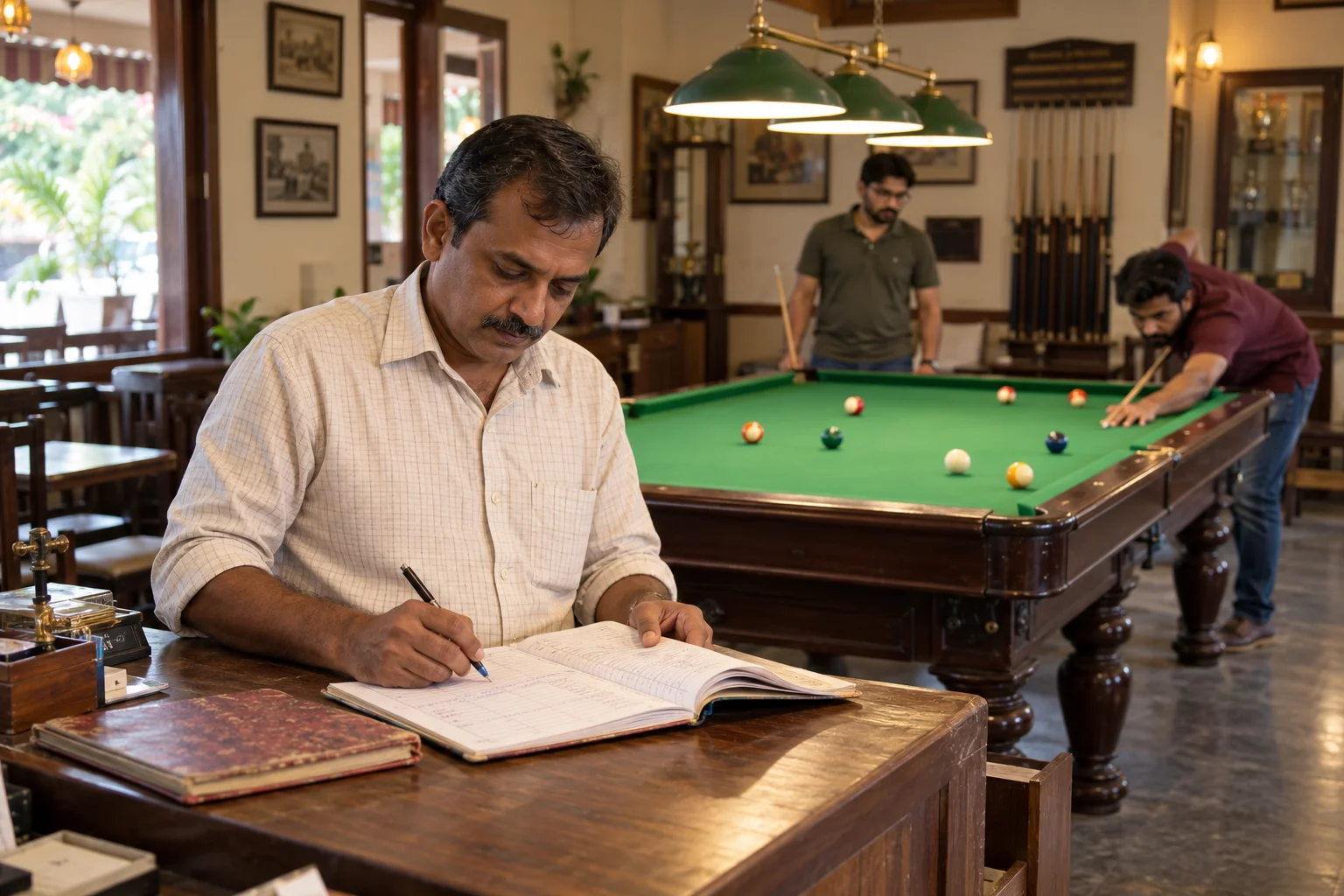
What search engine optimisation means
Search engine optimisation (SEO) is the work of getting your website to appear when a buyer searches Google for what you sell. GullySales builds pages around real search terms, fixes technical issues that block ranking, and tracks which searches actually bring enquiries.
Also for snooker, pool and billiards parlours
- Local SEO for snooker and pool parlours
- Website for snooker and pool parlours
- Lead generation for snooker and pool parlours
- Social media marketing for snooker and pool parlours
- Content marketing for snooker and pool parlours
- Buyer persona for snooker and pool parlours
- CRM for snooker and pool parlours
- Follow-up systems for snooker and pool parlours
Sales and marketing for snooker, pool and billiards parlours, the overview.
Last updated 14 Nov 2026.
For snooker, pool and billiards parlours
Where it usually goes wrong, and what we would do.
“People search by game and by area”
The words typed are snooker club near me, pool table booking or billiards hall, with an area name. A page for each game and each area you serve matches the search that a single home page cannot.
“A parlour website is one photograph and a number”
A single dark image and a phone number tell search nothing. Text stating the tables, the games, the hours and the location gives the page something to be found for.
“Events are search opportunities”
League nights, tournaments and group parties each have a name that people look up. A page for each, kept and updated, brings in organisers who are not yet customers.
“The competition is on the map as well as the web”
A group choosing a parlour sees three map results before it sees a website. The page and the Google profile must say the same thing so each strengthens the other.
What we do
What we deliver for snooker, pool and billiards parlours.
The work available for this need. We agree the deliverables and responsibilities for your engagement in writing.
A page for each game you offer
Separate pages for snooker, pool and billiards, each describing the tables, the rules in the house and the booking route.
Result: Each game can be found by name.
Pages for the areas you serve
A page for each neighbourhood or college area close to you, written about the real roads and landmarks and not copied with a swapped name.
Result: People nearby see that you are close.
A group and party page
A page for birthdays, office outings and student groups explaining how booking works and what is on offer.
Result: Organisers land on a page made for them.
An events and league page
A permanent page for league nights and tournaments, with each edition added below the last.
Result: The events address gains value each season.
Captions and file names on photographs
Table, lighting and room photographs named and captioned with the game and the room, in plain words.
Result: Your images appear when people search for the game.
How the result is measured
- Ranking positions
- Organic traffic
- Enquiries from organic search
Recorded as a baseline before work starts, so every later report has an honest comparison.
Searches your buyers type
What a group types before it picks a parlour, and the page that answers it.
- snooker club near me
- A page for the full-size tables. Show the number of tables, the cloth and lighting in clear photographs, the opening hours and how to reserve a table.
- pool table booking in Koramangala
- An area page. Name the neighbourhood, the nearest landmark and the road to reach you, then put the booking route directly under it.
- 9 ball pool parlour for students
- A page for college groups. State the afternoon rate you set, the proof of enrolment you ask for, and how a class representative reserves.
- billiards hall with league nights
- A league page. List the format you run, how a player enters, and where results are posted, so a serious player can judge the room.
- birthday party at a pool parlour
- An event page. Say how many can play at once, what food can come in, and how an organiser holds a table for the evening.
- snooker coaching for beginners
- A coaching page. Describe the coach, the table time on offer and what a first lesson covers, without promising how good the player will become.
Who it is for
This is written for these snooker, pool and billiards parlours.
- Snooker clubs with full-size tables and league players
- Pool parlours for 8-ball and 9-ball with younger crowds
- Billiards parlours inside gymkhanas and clubs
- Cue sports lounges with a cafe or a games area
- Standalone parlours near colleges and coaching centres
- Parlours in malls and gaming zones
- Pool halls attached to restaurants, with food as the main hook
- Coaching academies for snooker and billiards players
Before you decide
When this may not be the right fit.
- Your Google profile still shows old, dim photographs, and fixing that would bring more groups sooner than a new page.
- The parlour has not decided what a new visitor should do next, so a page would send them nowhere.
- You plan to move premises soon and the address on every new page would be wrong.
Before you decide
Agree the work. Know how to judge it.
SEO for snooker and pool parlours: use these checks to prepare, choose the scope, and review what changes.
Bring the right evidence
Bring the pages for the products or services you want to sell, the search queries available in your reports, and examples of enquiries from search. Separate branded searches from buyers discovering you for the first time.
Make the scope clear
Agree which pages and technical fixes come first, who can publish changes, and who supplies subject knowledge. Link search work to a relevant enquiry route on each priority page.
Check the work in use
Follow the trail from a relevant query to its landing page and then to an enquiry. Review whether those enquiries fit your offer, alongside indexing and search visibility.
Know when to change course
A ranking movement alone is not a buying signal. If traffic grows but relevant enquiries do not, revisit page intent and the offer before producing more pages.
These are discussion points, not a fixed package. GullySales confirms the deliverables, responsibilities, fee, and term in writing after reading your brief and speaking with you.
Before we start
What to have ready before the work starts.
The records, access and decisions this work needs from snooker, pool and billiards parlours. Anything missing is noted in the written scope, with who will supply it.
- Login for the website and the search account
- Access to wherever your site is edited and to the search console account if one exists. If a developer set it up, ask for the details. Without them we write pages that someone else must upload, and we cannot read the searches that already reach you.
- The list of games and tables you run
- For each game, the number of tables, whether full size, and any rule that differs from the standard. Pages must agree with the room. If the list is wrong, a visitor arrives for a table type you do not have, and the review that follows names it.
- The rate card as it stands today
- Current rates per hour or per frame, with any change by hour or day. We quote them, so they must be correct. If rates change by time of day, bring the rule that decides it and we write the page around that rule and not a fixed figure.
- Photographs with permission from visitors
- Pictures where no customer's face shows, or where those present agreed. Keep a note of who agreed. Without usable pictures the pages rely on plain text, which is the weakest thing a group sees when comparing parlours.
- A decision on league and event details
- Which leagues you host, the nights, and whether results may be published. The events page depends on it. Where the association or players have not agreed to publication, the page shows only the fixture and the entry route.
How it works
How the search engine optimisation work runs
The work itself, in order. How an engagement starts, from your brief to a written scope, is set out on our method page.
- 1
Name every game as a player says it
We sit with your regular players and the counter staff and write down how they refer to each game: snooker, 8-ball pool, 9-ball, billiards, carom and any local name. You add the games you actually have tables for. This produces the list of game names that every page title is built from, so a search by game finds a page that really offers it.
- 2
Search the area as a group of students would
We search on a phone for each game plus the neighbourhood, the nearest college and the nearest landmark, and record who appears in the map results and in the web results. You name the parlours you see as your real competition. We learn which searches a plain parlour page can answer and which belong only to the map listings.
- 3
Photograph the room for the page captions
We go through the images you have, or arrange a short session, and choose pictures that show the tables, the lighting and the seating. Each is given a descriptive file name and caption. You check that no customer appears without agreement. Afterwards there is a folder of named images ready to go on the right pages.
- 4
Draft the game pages and the area pages
We write a page for each game you offer and for each area you serve, from your table list and rate card. You read them for accuracy, particularly table counts and rules. The group and party page and the events and league page follow, written for a person arranging an evening and for a player looking for a match.
- 5
Place the titles and the booking button
Every page receives its title, description and a booking button that opens WhatsApp with the game already named. You or your web person make the final change and we check each page on a phone. A search by game now lands on a page that offers a clear way to book.
- 6
Read the search report against bookings
We read which game and area searches brought visitors and which pages they landed on, and your counter staff note how many new groups said they found you online. We compare with the booking figures set before the work. You decide which game page to enlarge and which area page to leave alone, and we promise no position.
Where this fits
Three pieces of sales work, in this order.
This work sits inside sales process design, at stage 1, prospecting and lead generation. The audit comes before it, and sales management keeps it running.
Step 1
Sales audit
Find where deals are being lost and what to fix first.
Start here if you cannot say where orders are lost.
Step 2 · you are here
Sales process design
One written way to sell, from first enquiry to repeat order.
Start here if every salesperson sells differently.
Step 3
Sales management
A target, a review routine and someone who owns the number.
Start here if the team has targets and no routine.
FAQ
Questions owners ask before they call.
Not here? More answers, or ask on WhatsApp.
Can a small parlour compete with a large club?
Do I need a blog?
Will you promise a top position?
Does the name of our area matter for the page?
Should we write about snooker and pool on separate pages?
Will a page about our area name nearby places?
How much does it cost?
How long is the contract?
How soon will we see results?
Who will actually do the work?
More for snooker, pool and billiards parlours
Related work to consider.
Closest to this: search and visibility
Also for snooker, pool and billiards parlours
Or start from the overview: sales and marketing for snooker, pool and billiards parlours.
Your next practical step
Tell us what you are trying to grow, and we will read it before we call.
Eight short steps, mostly taps. Skip anything you would rather answer on the call.