Snooker, pool and billiards parlours · Website
Show the tables, state the rate card and end every page at a booking.
A website for a snooker, pool or billiards parlour is a small set of pages that show the room, state the rates and rules and end at a booking. GullySales shapes the pages, the photographs and the enquiry route around the group deciding tonight.
Scope, fee, reporting and term are agreed in writing after we have read your brief and spoken to you.
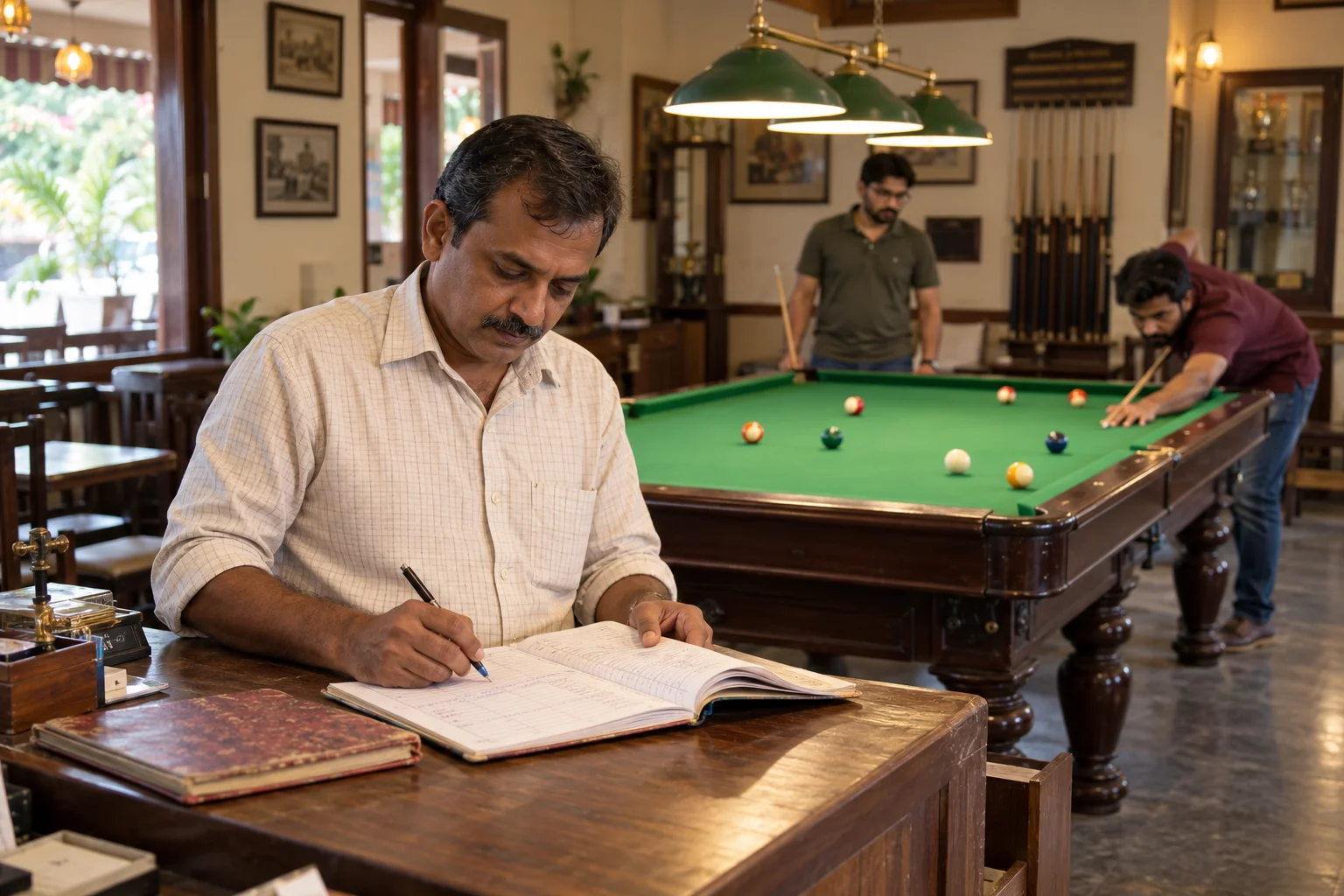
What website means
A website is the page a customer lands on after searching, clicking an advert or scanning a code, and it decides whether they call or leave. GullySales builds and maintains sites that load quickly, explain the offer plainly and make the enquiry form or phone number easy to find.
Also for snooker, pool and billiards parlours
- SEO for snooker and pool parlours
- Local SEO for snooker and pool parlours
- Lead generation for snooker and pool parlours
- Social media marketing for snooker and pool parlours
- Content marketing for snooker and pool parlours
- Buyer persona for snooker and pool parlours
- CRM for snooker and pool parlours
- Follow-up systems for snooker and pool parlours
Sales and marketing for snooker, pool and billiards parlours, the overview.
Last updated 14 Nov 2026.
For snooker, pool and billiards parlours
Where it usually goes wrong, and what we would do.
“A dark photograph tells a visitor nothing”
One dim image of a room does not show the tables, the cloth or the space. Clear, well-lit pictures of each table and the seating show the standard you keep.
“The rate card is the first thing a group wants”
A group deciding where to play wants to know the hourly rate and the table count. A rate card kept on the site, current and plain, saves a call and wins the booking.
“Different games need different pages”
Snooker players, pool groups and billiards regulars want different tables and rules. A page for each lets the right visitor see the right information.
“A contact form nobody reads is worse than none”
If a form sends an email to an inbox that is checked once a week, the group has gone by then. The page should lead to the channel you actually answer.
What we do
What we deliver for snooker, pool and billiards parlours.
The work available for this need. We agree the deliverables and responsibilities for your engagement in writing.
A home page that shows the room
An opening with photographs, a one-line description and three clear doors for tables, groups and leagues.
Result: Each visitor finds their entrance.
A tables and rates page
The games, the number of tables and the rate card you have set, kept current.
Result: A group can decide without calling.
A groups and parties page
How an organiser books for a birthday, an office outing or a student group, with the headcount and time asked up front.
Result: Organisers have a page made for them.
A house rules and visitor information page
Hours, entry conditions, behaviour rules and directions, written politely.
Result: A first-timer knows what to expect.
An enquiry button that opens WhatsApp
A button on every page that opens a chat with the group size, time and game prompts already written.
Result: Each enquiry lands with the group size and time filled in.
A page for tournaments and league nights
A permanent page listing formats, entry routes and results for each edition.
Result: Players and organisers can find the next event.
How the result is measured
- Page load time
- Bounce rate
- Enquiries from the website
Recorded as a baseline before work starts, so every later report has an honest comparison.
Searches your buyers type
The searches your website should answer before a group visits.
- snooker table booking online
- A booking page with the games, the tables and a form or a chat link. The page ends at a request, not at a gallery.
- pool parlour rates per hour
- A rate page with the figures you set, the group terms and what each includes. Groups compare rates before they compare rooms.
- billiards hall photographs
- A gallery of well-lit pictures of each table and the seating, so the room is judged by the real one and not a dim photograph.
- cue sports league registration
- A league page with the format, the entry route and a form. It turns a serious player's interest into a name on a list.
- party hall with pool tables
- A page for events, naming the capacity at the tables, the food rules and how an organiser holds a slot.
- snooker coaching class near me
- A coaching page with the coach's background, the table time and the fee you set. It states no player results.
Who it is for
This is written for these snooker, pool and billiards parlours.
- Snooker clubs with full-size tables and league players
- Pool parlours for 8-ball and 9-ball with younger crowds
- Billiards parlours inside gymkhanas and clubs
- Cue sports lounges with a cafe or a games area
- Standalone parlours near colleges and coaching centres
- Parlours in malls and gaming zones
- Pool halls attached to restaurants, with food as the main hook
- Coaching academies for snooker and billiards players
Before you decide
When this may not be the right fit.
- You have not decided your rates and rules, so a page would repeat uncertainty.
- Your Google profile still has the old photographs, and that should be fixed first.
- Nobody can update the page when a league round or a price changes.
Before you decide
Agree the work. Know how to judge it.
Website for snooker and pool parlours: use these checks to prepare, choose the scope, and review what changes.
Bring the right evidence
List the pages that support a buying decision and the actions visitors must complete. Keep examples of failed forms, unclear product information, and questions your team answers repeatedly.
Make the scope clear
Agree the page list, content ownership, integrations, and who controls the domain and hosting. Include redirects and existing search traffic in a redesign brief, before changing addresses.
Check the work in use
Complete a real enquiry journey on a phone and a laptop. Check that the confirmation appears, the enquiry reaches the right person, and tracking records the action once.
Know when to change course
If visitors can enquire but the team does not follow up, start with the sales handover. A larger website will not resolve that delay.
These are discussion points, not a fixed package. GullySales confirms the deliverables, responsibilities, fee, and term in writing after reading your brief and speaking with you.
Before we start
What to have ready before the work starts.
The records, access and decisions this work needs from snooker, pool and billiards parlours. Anything missing is noted in the written scope, with who will supply it.
- The web address and its login
- The domain and where it is managed. If an earlier developer bought it, ask for the transfer. Without the login, the new site cannot be pointed to your address, and launch waits. Tell us too who in the family or staff can renew the address when the time comes, so the site does not vanish with a missed payment.
- A current rate card in writing
- Rates by game, hour and package, with advance and cancellation rules. The pages quote them. If rates are only remembered, the pages are built without figures and a group still has to ask.
- Permission to photograph the room
- A time when the parlour is empty or players agree to appear, and permission from the owner of the premises if the building is shared. Without usable pictures, the home page falls back to plain text.
- House rules you apply at the counter
- A list of the rules actually enforced, on cues, damage, food and age. We publish nothing you do not apply. Where rules are unwritten, the page is held until the counter agrees them. Include what you say to a guest who breaks a rule, since the page can then state the consequence in the counter's own measured tone.
- A WhatsApp number that is answered
- A number watched during opening hours. Every button on the site opens a chat there. With no such number, the site becomes a brochure and groups ring the counter, interrupting play.
How it works
How the website work runs
The work itself, in order. How an engagement starts, from your brief to a written scope, is set out on our method page.
- 1
Light the room and photograph the tables
A dark photograph tells a visitor nothing, so we begin with the room. We plan a session with every light on, shooting each table type, the seating, the cue rack and the entrance, and your staff move any clutter. You approve which customers appear. The pages are designed around these pictures. We also ask the staff to shift the loose chairs, cue cases and bags out of frame, since clutter near a table makes the room look smaller than it is.
- 2
Take the rate card from the counter
We copy the current rates for each game and hour, the group packages and any advance exactly as the counter states them. You confirm each line. The tables and rates page is built from this card, so a group sees the same figure on the page that it will be told at the door.
- 3
Sketch the home page for tonight's decision
We draw a home page that shows the room first, then the games, the rates link and the booking button, for a person deciding tonight. You choose what comes first. Separate pages for groups and parties, house rules and league nights follow from the sketch, and you approve the sitemap before building. The league and tournament page is drawn at the same sitting, with its entry route, so a player looking for a match does not have to go through the group page.
- 4
Read the test site on a phone
We build the pages on a private address and read each on a phone, since that is how a group will see them. You correct table counts, rules and rates. Speed is checked on a weak connection, as the visitors will be on mobile data. We also open each page with the phone turned sideways, to see that the rate table is still readable.
- 5
Connect the button to your WhatsApp
The enquiry button on every page opens a chat with a message already naming the game or package. We test it from several phones. You confirm that someone at the counter answers it during opening hours, since a button that leads nowhere is worse than none.
- 6
Go live and compare with the earlier enquiries
On your approval the site goes live, we check each page on a phone and hand over the logins. Later we read the messages that came from the site beside your earlier tally of walk-ins and phone enquiries. You decide which page to improve and whether to add the league page.
Where this fits
Three pieces of sales work, in this order.
This work sits inside sales process design, at stage 1, prospecting and lead generation. The audit comes before it, and sales management keeps it running.
Step 1
Sales audit
Find where deals are being lost and what to fix first.
Start here if you cannot say where orders are lost.
Step 2 · you are here
Sales process design
One written way to sell, from first enquiry to repeat order.
Start here if every salesperson sells differently.
Step 3
Sales management
A target, a review routine and someone who owns the number.
Start here if the team has targets and no routine.
FAQ
Questions owners ask before they call.
Not here? More answers, or ask on WhatsApp.
Is a website worth it if we have a Google profile?
How many photographs should we show?
Can the site list our menu?
Do we need to take online payments for bookings?
Should we take online payments for bookings?
Can the site show a live calendar of free tables?
How much does it cost?
How long is the contract?
How soon will we see results?
Who will actually do the work?
More for snooker, pool and billiards parlours
Related work to consider.
Closest to this: search and visibility
Also for snooker, pool and billiards parlours
Or start from the overview: sales and marketing for snooker, pool and billiards parlours.
Your next practical step
Tell us what you are trying to grow, and we will read it before we call.
Eight short steps, mostly taps. Skip anything you would rather answer on the call.