Snooker, pool and billiards parlours · Digital marketing
Join search, social and messaging into one path from a curious group to a booked table.
Digital marketing for a snooker, pool or billiards parlour is the plan that links your Google profile, pages, social accounts and messaging number into one route to a booking. GullySales maps that route and sets the calendar of what to do before each college term and league season.
Scope, fee, reporting and term are agreed in writing after we have read your brief and spoken to you.
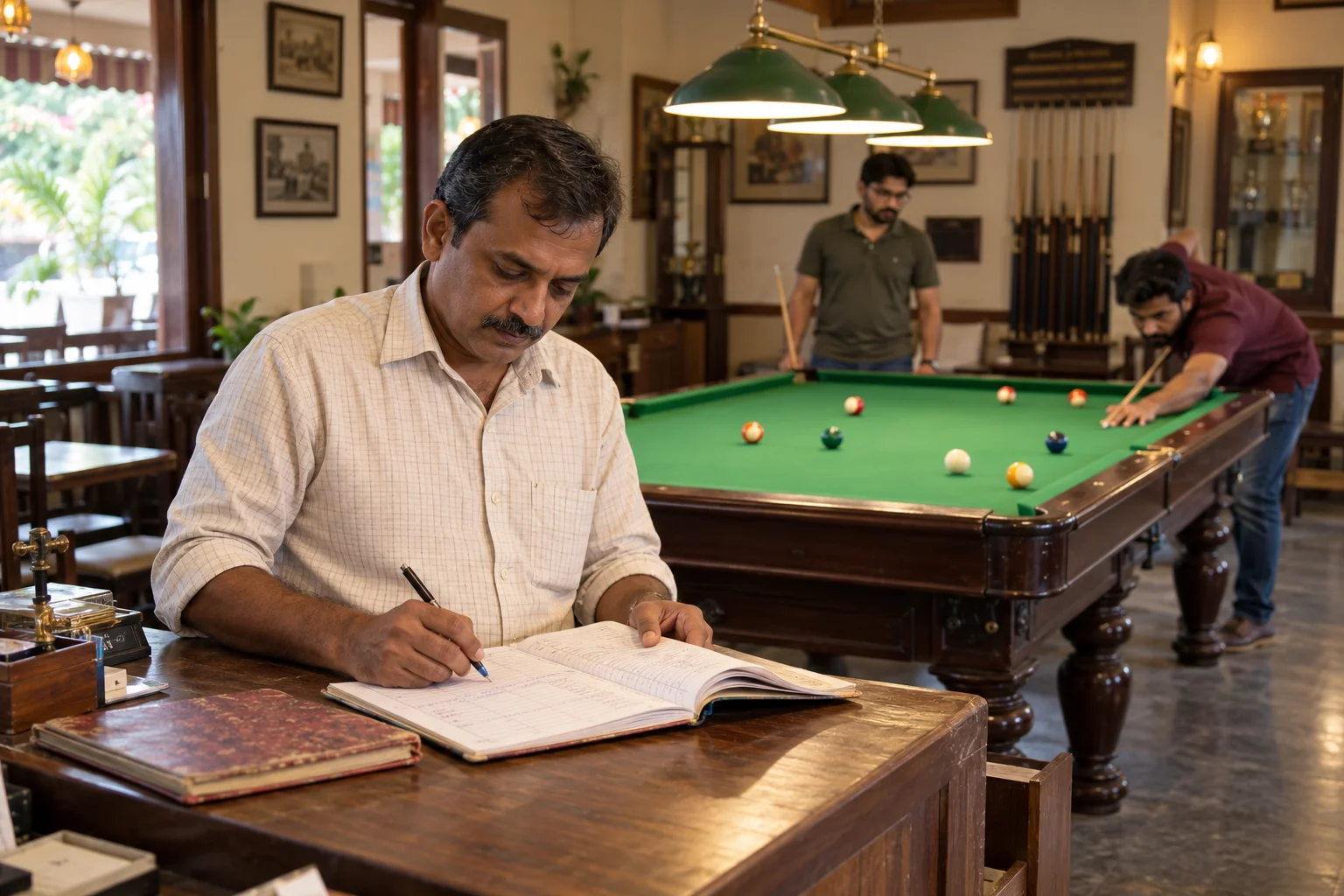
What digital marketing means
Digital marketing is the combined work of search, social media, advertising and website channels running together rather than as separate projects with separate people. GullySales runs these as one connected system so a change in one channel, such as a new offer, is reflected everywhere at once.
Also for snooker, pool and billiards parlours
- Buyer persona for snooker and pool parlours
- Lead generation for snooker and pool parlours
- SEO for snooker and pool parlours
- Local SEO for snooker and pool parlours
- Social media marketing for snooker and pool parlours
- Content marketing for snooker and pool parlours
- CRM for snooker and pool parlours
- Follow-up systems for snooker and pool parlours
Sales and marketing for snooker, pool and billiards parlours, the overview.
Last updated 14 Nov 2026.
For snooker, pool and billiards parlours
Where it usually goes wrong, and what we would do.
“Evenings fill themselves and afternoons need work”
The busy hours do not need marketing. The plan should aim at the afternoons, weekdays and quiet seasons, where an extra group makes a real difference.
“Each channel reaches a different customer”
Search finds the group deciding tonight, social keeps the regulars engaged, and outreach reaches colleges and offices. Treating them as one blurs which is working.
“The first click decides the visit”
If the first thing a group sees is a dark photograph and a phone number, they move on. The first screen should show the room, the tables and a booking action.
“Spend must be tied to bookings”
Clicks and likes are counted, but a table booked by message is not unless you record it. A plan that tags the source of each booking shows what paid for itself.
What we do
What we deliver for snooker, pool and billiards parlours.
The work available for this need. We agree the deliverables and responsibilities for your engagement in writing.
A year plan around exams and league seasons
A calendar mapping college terms, exams, holidays and league seasons to the work to do before each.
Result: Effort follows the rhythm of your customers.
A single path from search to booking
A mapped route from Google, social or a referral to the right page to the booking line, tested on a phone.
Result: Every visitor has a next page to go to.
A review of channels for your area
A note of which channels bring which customers, based on your own enquiry log.
Result: You spend where bookings begin.
A small test for local ads
A modest ad aimed at the streets around the parlour and the nearest colleges, judged by tables booked.
Result: You learn whether paid reach fills slow hours.
A source tag on each booking
The source noted at the time of each booking and reviewed with the plan.
Result: Reports use real bookings.
A map of the colleges and offices nearby
A list of the student bodies and workplaces within walking distance, with the best way to reach each.
Result: Outreach has a target list.
How the result is measured
- Enquiries across channels
- Cost per enquiry overall
- Channel mix by contribution
Recorded as a baseline before work starts, so every later report has an honest comparison.
Searches your buyers type
The searches that a plan for a parlour should be built around.
- snooker club near me
- The core search, answered by your Maps profile and a page for each game. Keep the photographs and hours current so the first impression holds.
- pool parlour for students afternoon
- A page for the empty hours, naming the rate you set and the college area. It points at the slot you want to fill.
- birthday party at a pool parlour
- An event page with a booking route. It answers an organiser who is comparing several venues in an evening.
- billiards league near me
- A league page and a profile post. A serious player finds the room through this search before any social post.
- cue sports lounge with food
- A page tied to the menu, since the group is choosing a place for the evening and not only a table.
- snooker coaching academy
- A coaching page that links a coach profile and the table time on offer. State no results of the students you have taught.
Who it is for
This is written for these snooker, pool and billiards parlours.
- Snooker clubs with full-size tables and league players
- Pool parlours for 8-ball and 9-ball with younger crowds
- Billiards parlours inside gymkhanas and clubs
- Cue sports lounges with a cafe or a games area
- Standalone parlours near colleges and coaching centres
- Parlours in malls and gaming zones
- Pool halls attached to restaurants, with food as the main hook
- Coaching academies for snooker and billiards players
Before you decide
When this may not be the right fit.
- The tables are full every evening and you cannot staff the afternoon, so extra demand has nowhere to go.
- You expect advertising to repair a room that groups leave without returning.
- You cannot yet say who answers a message from a new group on the same day.
Before you decide
Agree the work. Know how to judge it.
Digital marketing for snooker and pool parlours: use these checks to prepare, choose the scope, and review what changes.
Bring the right evidence
Bring a recent won order and an enquiry that went nowhere. Trace how each buyer found you, what they asked, and who handled the next step. A channel list alone will not explain the difference.
Make the scope clear
Choose one offer and one buyer group first. Agree which part needs attention: being found, getting a useful enquiry, or turning an enquiry into an order. Separate recommendations from the work required to carry them out.
Check the work in use
A useful plan names the first change, its owner, the evidence behind it, and the number that will show whether it worked. Ask what has deliberately been left out and why.
Know when to change course
If your team cannot answer the enquiries it already receives, improve that handover before buying more traffic. If the offer itself is unclear, test it with buyers before adding channels.
These are discussion points, not a fixed package. GullySales confirms the deliverables, responsibilities, fee, and term in writing after reading your brief and speaking with you.
Before we start
What to have ready before the work starts.
The records, access and decisions this work needs from snooker, pool and billiards parlours. Anything missing is noted in the written scope, with who will supply it.
- The booking book with hours and group sizes
- Even rough records of recent months. The year plan is built on it. Without it, we cannot tell a slow hour from a quiet week, and the plan covers every hour equally. Add any season when the college nearby is closed, as these weeks show a different pattern from term weeks.
- A spending ceiling, or a decision against ads
- A figure you are willing to risk on a test, or a clear no. Only you can decide. If it is open, the plan contains only free routes, and a local advertisement waits.
- A list of colleges and offices in reach
- Names of nearby colleges, coaching centres and offices, with any contact you have. The map of the area is made from it. When it is missing, we use maps and visits to build it, which takes extra effort from your side.
- Login for your map listing and social accounts
- Owner access to each channel in the plan. Without it, we cannot place the booking route, and the single path from search to booking has gaps. A page of paper kept at the counter is acceptable if the staff will actually fill it in.
- A counter team that records the source
- Agreement from the staff to ask and note where each booking came from. They need a brief and a place to write. Without it the tags are empty and the plan cannot be read.
How it works
How the digital marketing work runs
The work itself, in order. How an engagement starts, from your brief to a written scope, is set out on our method page.
- 1
Chart the empty hours against the college term
We place your quiet hours on a calendar beside exam weeks, term starts, holidays and league fixtures from the booking book. You mark the weeks that matter to you. The chart shows which empty hours have a crowd nearby that could fill them, and decides what we plan first. We also mark any fixed events in the parlour's own diary, such as a tournament weekend, so the empty-hour chart is not distorted by a night that is already booked.
- 2
Trace how a group finds a parlour
We ask recent groups and the counter how they found you: map search, a friend, a post, a college notice. You supply what you know. We draw the single path from search to booking that suits your parlour, with each step named and its owner on your side.
- 3
Review channels for the area
We look at where nearby rivals appear: the map, social accounts, ads and notice boards. You tell us which rival you worry about. We note the channels that students and offices in your area really use and drop the ones that do not reach them. We write down the cost to the parlour of each channel in staff attention, because a reply that takes five minutes and nobody has is the real price of a channel.
- 4
Tag every booking with its source
We set up a simple source tag on each booking, such as map, post, friend or ad, and teach the counter to ask and record it. You test it on a few bookings. Without tags, nobody can tell later which effort filled a slot.
- 5
Test a small local advertisement
If you choose, we plan one small test aimed at a college or office area, with a spending limit you set and a single booking route. You approve the message. Platform rules change, so check the platform's current rules before it starts. Nothing larger is planned until the test is read.
- 6
Read bookings by source and slow hour
We read the tags beside the booking book: which source filled which slow hour, and which brought groups that returned. We compare with the figures recorded at the start. You decide which channel to continue, which to stop and whether the test advertisement earned another.
Where this fits
Three pieces of sales work, in this order.
This work sits inside sales process design, at stage 0, foundation. The audit comes before it, and sales management keeps it running.
Step 1
Sales audit
Find where deals are being lost and what to fix first.
Start here if you cannot say where orders are lost.
Step 2 · you are here
Sales process design
One written way to sell, from first enquiry to repeat order.
Start here if every salesperson sells differently.
Step 3
Sales management
A target, a review routine and someone who owns the number.
Start here if the team has targets and no routine.
FAQ
Questions owners ask before they call.
Not here? More answers, or ask on WhatsApp.
Where should a new parlour start?
Is it worth paying for ads?
How do we measure the results?
Should a parlour advertise in the evening or the afternoon?
Which channel should a new parlour put first?
Does digital marketing help with the afternoon hours?
How much does it cost?
How long is the contract?
Who will actually do the work?
What do you need from us?
More for snooker, pool and billiards parlours
Related work to consider.
Closest to this: strategy and research
Also for snooker, pool and billiards parlours
Or start from the overview: sales and marketing for snooker, pool and billiards parlours.
Your next practical step
Tell us what you are trying to grow, and we will read it before we call.
Eight short steps, mostly taps. Skip anything you would rather answer on the call.