Wellness retreats · Buyer persona
Write down who decides: the guest, the friend who invited, or the organiser.
A buyer persona for a wellness retreat describes who actually chooses and pays, and what that person worries about before sending a deposit. GullySales builds one card for each guest type you want to fill dates with, from your own enquiry history.
Scope, fee, reporting and term are agreed in writing after we have read your brief and spoken to you.
What buyer persona means
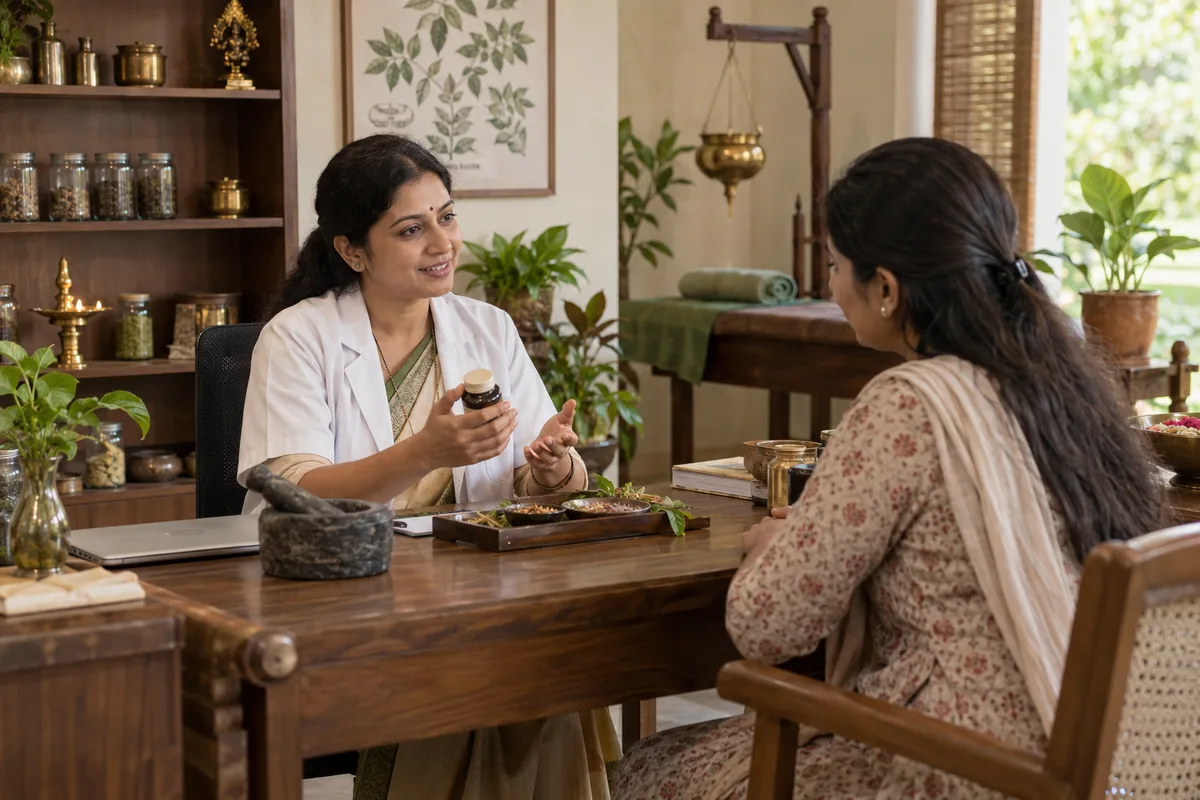
A buyer persona is a plain description of the kind of customer who actually buys from you. It includes what they search, what worries them and who else they ask before deciding. GullySales builds this from real enquiries and past sales rather than a generic template, then uses it to write every page and advert.
Last updated 14 Nov 2026.
For wellness retreats
Where it usually goes wrong, and what we would do.
“The solo city professional wants a quiet reset”
A working person from a metro books a short stay near the city and worries about whether the days are rest or a timetable. The card should note the leave they can take, the travel they will accept and what makes a stay feel safe alone.
“The friend or couple decides together”
Two people compare the same pages and need to agree on room type and price. One of them does the writing. Know who that is, because the replies should answer their questions and be easy to forward to the other.
“The international guest worries about arrival”
A guest from abroad reads for visa guidance, the airport transfer, the food and the safety of the place. Missing information here ends the enquiry. The card should list the checks they make and the language they read.
“The corporate organiser needs approval”
An organiser for a team offsite is choosing for others and must justify the choice upward. They need a sample schedule, a room plan and a quote that an approver can read. They are a different buyer from the individual guest.
What we do
What we deliver for wellness retreats.
The work available for this need. We agree the deliverables and responsibilities for your engagement in writing.
A persona card for each guest type
One card for each type of guest you want to fill dates with: who they are, what starts the search, what worries them and who else decides.
Result: You can name the guest each page is written for.
A reading of your enquiry history
A look at your past enquiries and bookings to see who asked, what they asked and which dates they chose.
Result: The cards rest on your own record, not a guess.
Questions to add to your intake
A few questions in the booking form that reveal how the guest found you and why now.
Result: Every new booking adds to the picture.
Messages matched to each card
Replies and page wording written for each guest type, including the forwardable version for pairs and organisers.
Result: Each guest type receives wording that answers its worries.
A review of dropped enquiries
A look at who stopped replying and at what point.
Result: You see where each guest type leaves.
How the result is measured
- Enquiry match to persona
- Conversion rate by persona
- Content aligned to persona
Recorded as a baseline before work starts, so every later report has an honest comparison.
Who is asking
These are the people who enquire at a retreat and what each wants to know.
- City professional wanting a quiet weekend
- Wants to know if the days are rest or a timetable, how far the retreat is and if phones are allowed.
- First-time guest travelling alone
- Wants to know about safety, who else is staying and whether a beginner will be left behind.
- Friend who invited another
- Wants to know if two can share a room, and what happens if one person drops out.
- Organiser booking a company group
- Wants a single quote for rooms and food, a sample two-day schedule and one contact for the group.
- Overseas guest booking from afar
- Wants arrival directions, visa guidance from their own source, deposit payment from abroad and food notes.
Who it is for
This is written for these wellness retreats.
- Yoga and meditation retreats in hill and forest settings
- Ayurveda and panchakarma-based residential retreats
- Detox and naturopathy retreats
- Weekend wellness retreats near cities for working professionals
- Silent and spiritual retreats
- Women-only and couple retreats
- Corporate offsite and team wellness retreats
- Retreats that host international guests, for example in Kerala, Goa or Rishikesh
Before you decide
When this may not be the right fit.
- You have few guests and know each personally, so a written persona records what the owner already says.
- You have not noted why past guests chose the retreat, so the persona would be a guess.
- The team will not use it to shape replies, so it would sit unread.
Before you decide
Agree the work. Know how to judge it.
Buyer personas for wellness retreats: use these checks to prepare, choose the scope, and review what changes.
Bring the right evidence
Write the decision the research must support, such as entering a market or choosing a buyer group. Separate what you know from sales records from what the team currently assumes.
Make the scope clear
Agree which buyers to speak to, which sources to review, and what access you can provide. Include lost enquiries and people who chose another supplier, where they are willing to take part.
Check the work in use
Look for source dates, sample limitations, and evidence that disagrees with the preferred answer. A recommendation should show how it follows from the findings.
Know when to change course
Do not treat a few positive conversations as proof of demand. Test the proposed offer with an actual buying decision before committing to a wider launch.
These are discussion points, not a fixed package. GullySales confirms the deliverables, responsibilities, fee, and term in writing after reading your brief and speaking with you.
Before we start
What to have ready before the work starts.
The records, access and decisions this work needs from wellness retreats. Anything missing is noted in the written scope, with who will supply it.
- Booking and enquiry records for the past year
- Dates, who enquired, which retreat, outcome. Any shape works if it can be read. Without it the cards rest on memory. Include group bookings as separate lines, naming the organiser and the number of rooms, because their records differ from a solo guest's.
- A list of dropped enquiries with reasons
- Any note on why a guest did not book: price, dates, distance, a doubt. It shows where each type falls away. If none was kept, we start noting reasons now.
- Time with the person who answers messages
- Their account of what guests ask is the main source. A short conversation is enough. Without it, the cards miss the way guests actually put things. Add a sentence on which questions guests ask first, since those shape the opening of each card.
- Names of group and international bookings
- These guests need different replies. Even a short list helps. If there are none, we mark those types as possible and unconfirmed.
- A rule on what the intake may ask
- The owner's decision about which questions are fair to ask a new guest, especially on health. The new intake questions follow that line exactly. Where no rule exists, we add no question beyond who is travelling and for which dates, and the owner can widen it later.
How it works
How the buyer persona work runs
The work itself, in order. How an engagement starts, from your brief to a written scope, is set out on our method page.
- 1
Read past bookings by who booked and why
We go through the booking sheet and the enquiry messages, noting for each guest whether they came alone, as a couple, with friends, from abroad or through a company. You point out the cases that surprised you. The guest types we describe come from the guests you really have. Where a booking was made by one person for another, we record both, because the person who paid and the person who stayed worry about different things.
- 2
Choose the cards worth writing
From that reading we propose three or four guest types, and you decide which to keep. A type that appeared once is noted but gets no card. This keeps the work small, and the people who answer messages will recognise every type on sight. A type that rests on a single booking is written in a short note, so nobody mistakes one guest for a pattern.
- 3
Talk to the teacher and the desk
We interview the person who answers guests and the teacher who meets them on arrival, asking what each guest type worries about, asks first and decides on. You choose who we speak to. Their words are kept, and nothing is added that no one at the retreat has heard.
- 4
Draft each card and its intake questions
Each card records who the guest is, what they ask, what stops them booking and which retreat suits them. We list questions to add to the intake, such as who else is travelling. We do not ask for health details, and the card says that plainly.
- 5
Match the messages and pages to each card
We write the replies and page changes for each type: arrival and safety for the international guest, a single quote for the corporate organiser, a quiet room for the solo professional. You read the language and change what sounds wrong. The replies then fit the person asking. The corporate organiser also gets a reply that mentions a single invoice and a named contact, since approval inside a company depends on both.
- 6
Check the cards against dropped enquiries
After a set of retreats we compare the guests who enquired and did not book with the cards, and ask what stopped them. You tell us where a guest differed from the card. We correct the cards and decide whether a new type has appeared. We also look for a type that has stopped appearing, and remove its card so staff do not write to a guest who no longer books.
Where this fits
Three pieces of sales work, in this order.
This work sits inside sales process design, at stage 0, foundation. The audit comes before it, and sales management keeps it running.
Step 1
Sales audit
Find where deals are being lost and what to fix first.
Start here if you cannot say where orders are lost.
Step 2 · you are here
Sales process design
One written way to sell, from first enquiry to repeat order.
Start here if every salesperson sells differently.
Step 3
Sales management
A target, a review routine and someone who owns the number.
Start here if the team has targets and no routine.
FAQ
Questions owners ask before they call.
Not here? More answers, or ask on WhatsApp.
How many personas do we need?
Are the cards facts about our guests?
Do we ask a guest's health details to build a persona?
How do we tell whether a guest is booking alone or for a group?
Should the card describe a guest's age or income?
How often should the cards be reviewed?
How much does it cost?
How long is the contract?
How soon will we see results?
Who will actually do the work?
More for wellness retreats
Related work to consider.
Closest to this: strategy and research
Also for wellness retreats
Or start from the overview: sales and marketing for wellness retreats.
Your next practical step
Tell us what you are trying to grow, and we will read it before we call.
Eight short steps, mostly taps. Skip anything you would rather answer on the call.