Geographic market research · Marketing
Pick the next city on evidence, not on where your cousin says it will sell.
You have four possible places and one budget. A dealer in one town promises volume, a relative praises another, and a third looks big on the map. Each place needs the same questions asked: who already supplies it, what do buyers search for there, and can you deliver and serve it?
Scope, fee, reporting and term are agreed in writing after we have read your brief and spoken to you.
In one paragraph
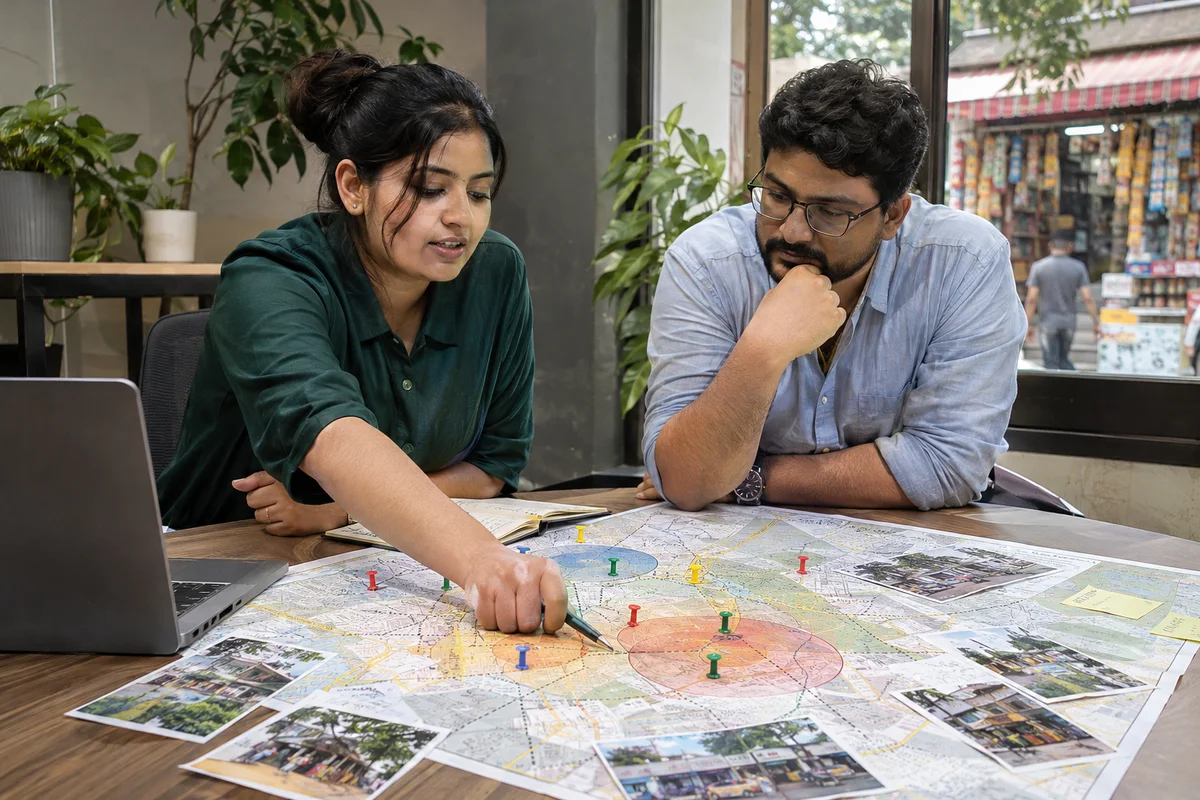
Geographic market research compares cities, districts or states to decide where a business should open, supply or push next. GullySales gathers local demand signals, competitor and dealer presence, language and delivery reach for each place, and writes a ranked shortlist with the reasons and the gaps in the evidence.
GullySales builds a short list of places from your own order and enquiry records, then checks each one against public sources and calls. Population and enterprise counts come from official publications, with their dates stated. Competitor shops, dealers and Google Maps listings are checked place by place, not assumed.
This page is for choosing where. If you have chosen and need the plan to enter, that is new market entry strategy. Other countries belong to export and international market development, and dividing your existing areas among salespeople is territory planning.
Who it is for
This is written for you if these sound familiar.
- Manufacturers deciding which state or industrial district to push next
- Distributors and dealers choosing where to appoint partners or open stock points
- Clinics, schools, coaching centres and shops weighing a second branch in another locality or town
- Software and service firms picking which cities to sell into before hiring people there
- Owners with one office and a pile of enquiries from places they have never visited
Not for
It is not the right fit if.
- You have already chosen the city and need the entry plan. That is new market entry strategy.
- You are looking at other countries. Export and international market development covers that.
- You want a research report to justify a decision the family has already made.
The problem
Does this sound like your business?
Common situations this work addresses.
“We expand to wherever the last enquiry came from”
One enquiry from a town shows one buyer, not a market. Your order records may show repeat buying elsewhere that nobody has looked at.
“The big city looks obvious, but we cannot say why”
A large place also has more suppliers fighting for the same buyers. A smaller district with few dealers can be the easier start.
“Our dealer there says it will sell, and that is all we know”
A dealer's confidence is not evidence about the shops, schools or factories around them. You cannot tell whether the dealer is right until someone checks.
“We opened in a new place and the phone stayed quiet”
The language of the ads, the delivery distance or the local habit of buying through a wholesaler may have been wrong. None of that was checked beforehand.
Choose the right scope
Start with the work your business needs.
Next state for a manufacturer
Compare districts where your buyers are clustered against where your orders already come from. The output is an order of states or districts with the reasons, not a launch plan.
Where to appoint the next dealer
Check who already stocks competing lines in each town and how far your goods travel. Dealer terms and appointment remain with you and your adviser.
Second branch for a clinic or school
Look at which localities your current patients or students come from, the competing providers nearby and the languages families use. Regulated claims stay with your own compliance reviewer.
Cities for a software or service firm
Compare where your enquiries and customers already sit with where target firms are located. The result is a sequence of cities to sell into before any hiring.
What we do
The work we can include.
Each deliverable and the purpose it serves. Your written scope confirms what is included, who is responsible, and what it costs.
Decision question and place list
The decision in one line, the places under consideration and the commercial limits, such as delivery distance or service visits. You approve this before any research starts.
Own-records review
Your invoices, enquiry log and JustDial or IndiaMART leads grouped by PIN code, district and state. It shows which places already buy from you and which only ask.
Place fact sheet
One page per place with population, urban or rural status and enterprise counts from Census and MoSPI publications. Each figure carries its source and year, and gaps are marked.
Competitor and dealer map
Local suppliers, dealers, branches and Google Maps listings found in each place, with how each was verified. A call or visit is noted as such; a listing alone is not treated as a working shop.
Language and buying-habit notes
The language buyers use in the place, whether they buy through wholesalers, dealers or direct, and how they pay. These come from calls with local buyers and your own sales team.
Local search check
Google Trends regional comparison, Maps results and the search phrases buyers use in each place. Trends shows relative interest only, so it is read beside the other evidence.
Logistics and service reach
Whether your stock, installers or engineers can reach each place from your current base, and what a new stock point would involve. GST registration questions go on a list for your own adviser.
Ranked shortlist
The places in order, with the reason for each position, what is still unknown and what would change the order. You decide which to pursue.
How the result is measured
- Places compared and sources used for each
- Existing orders and enquiries by place, from your own records
- Competitors and dealers verified by call or visit
- Delivery or service reach from your current base
- Evidence gaps by place
- Shortlist reasons and what could change the order
Recorded as a baseline before work starts, so every later report has an honest comparison.
Marketing and sales together
Your sales team receives the evidence for the first calls in each place.
The shortlist note names the competitors, dealers and buyer habits found in each chosen place, so the first conversation starts with what is known. Your sales owner records which places answered and which did not, and that record is compared with the ranking. We record the baseline of enquiries by place before work starts; missing history is shown as missing.
Decisions to make before the work starts
Number of places
Comparing four districts and comparing a whole state district by district are different jobs. The written scope states how many places and how deep the checks go.
Field visits
Calls come first. Visits, local interpreters or travel for kick-off and review sessions are costed separately when they are needed, and agreed with you beforehand.
Data limits
Public figures lag, and some places have little verifiable data. Where evidence is thin, the note says so, and a ranking is shown as provisional.
How it works
How the geographic market research work runs
The work itself, in order. How an engagement starts, from your brief to a written scope, is set out on our method page.
- 1
Question and place list
We agree what you are deciding and which places to compare. Your team sends order and enquiry records by place.
- 2
Desk evidence
We assemble the official figures and search checks for each place, noting the year of each. Anything out of date or missing is flagged.
- 3
Local calls and verification
We call dealers, shops or buyers in each place and verify competitor listings. Your sales team adds what they know first-hand.
- 4
Scoring review
You and we agree which points weigh heaviest in this decision, such as buyer concentration or delivery reach. The places are then compared against those points.
- 5
Shortlist and next step
We present the ranked list with its reasons and gaps. You pick the place or places, and decide whether to move to entry planning.
Before you hire anyone
Do this first yourself.
Your own records already say which places buy from you, so sort them before you spend on research.
- List invoices and enquiries for the last two years by town and PIN code.
- Mark which places bought more than once and which only asked.
- Write down the three or four places you are considering and the reason each came up.
- Search your product on Google Maps and JustDial in each place and count who is really open.
- Ask your sales team which of those places they have visited, and what buyers there said.
Judge any provider
What to ask any provider of this service.
Useful whoever you choose, including us.
- Which sources do you use for each place, and what year is each from?
- How do you verify that a competitor or dealer is actually operating?
- Will you use our order records, and what happens where they are thin?
- How do you rank places, and can we change what matters most?
- What will the report say it could not find out?
Where this fits
Three pieces of sales work, in this order.
This work sits inside sales process design, at stage 0, foundation. The audit comes before it, and sales management keeps it running.
Step 1
Sales audit
Find where deals are being lost and what to fix first.
Start here if you cannot say where orders are lost.
Step 2 · you are here
Sales process design
One written way to sell, from first enquiry to repeat order.
Start here if every salesperson sells differently.
Step 3
Sales management
A target, a review routine and someone who owns the number.
Start here if the team has targets and no routine.
FAQ
Questions owners ask before they call.
Not here? More answers, or ask on WhatsApp.
How much does geographic market research cost?
Is this the same as market research?
We have chosen the city. What do we need?
Can you tell us how many customers a city will give us?
Which official data do you use, and is it current?
Do you handle GST registration for a new state?
By industry
Geographic market research, written for your industry.
Related services
Often bought with this, or instead of it.
Your next practical step
Tell us what you are trying to grow, and we will read it before we call.
Eight short steps, mostly taps. Skip anything you would rather answer on the call.