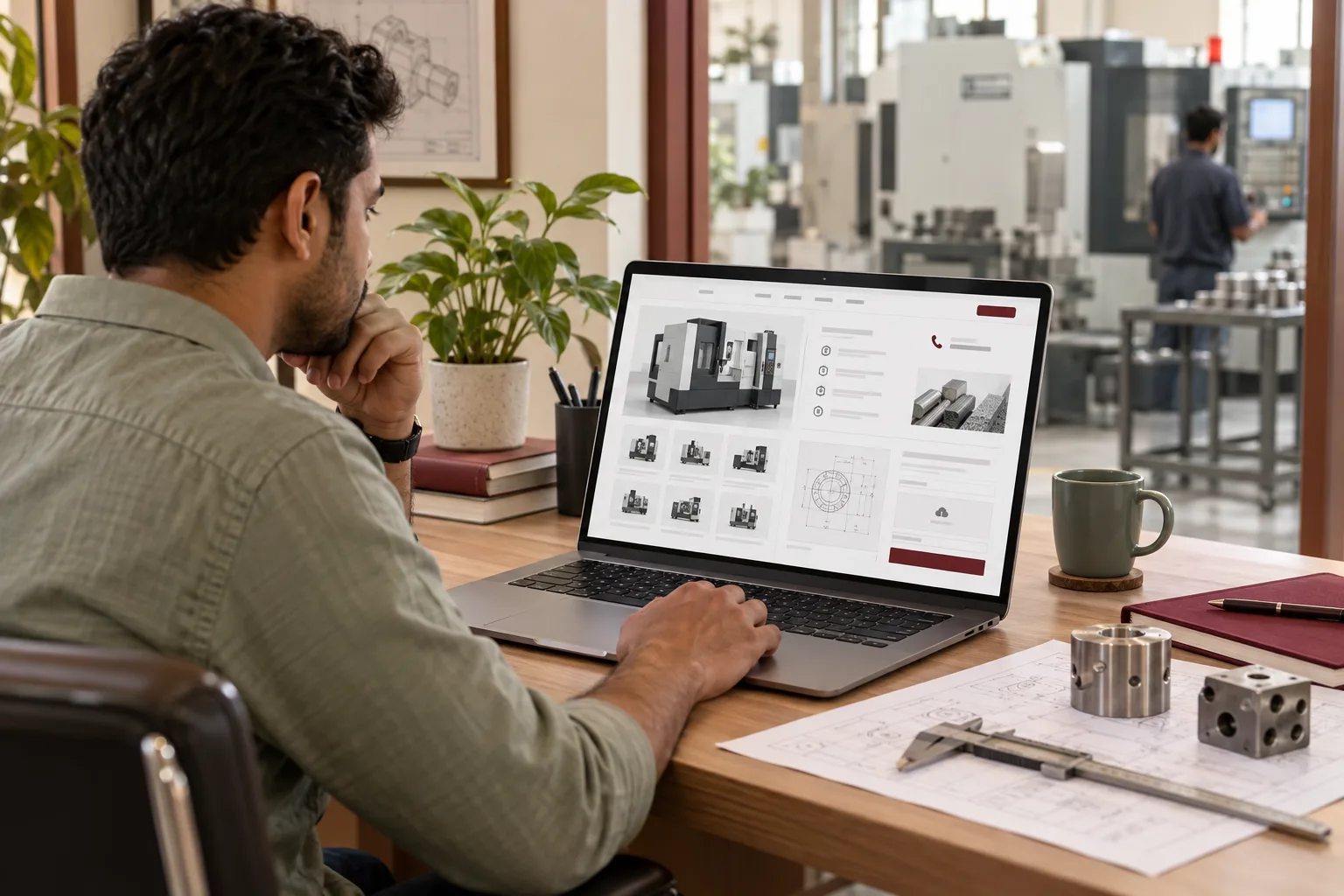
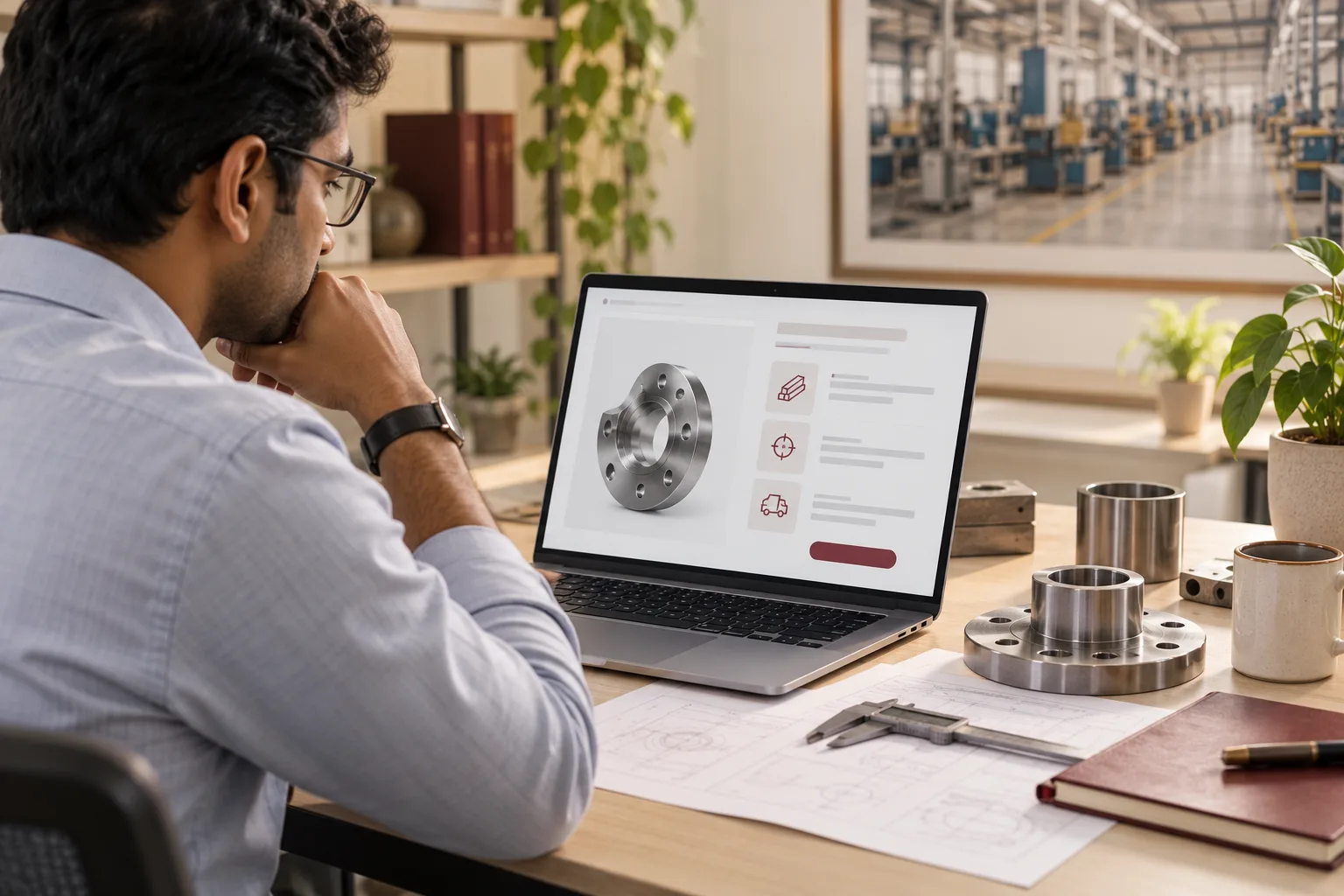
Notes for owners · Branding and communication
A photo and video routine for a machine shop that does not look staged
How a CNC machine shop builds a library of honest photographs and short clips by shooting at four fixed points in every job, what to keep out of the frame, and where each picture goes.
The GullySales team · Updated 17 Oct 2026 · 5 min read

On this page
Take the pictures while the work is happening, not on the day you clean up for them. A buyer looking at a machine shop is judging capability, and a real part on a running machine shows it better than any brochure. Four short shots at fixed points in every job, taken by the supervisor on a phone, build that library. Nobody has to pose. A staged photo gives itself away: a spotless machine, no coolant on the door, a fixture holding nothing.
What a buyer reads in a photograph
Purchase and development engineers look closely. They look at the machine's make and size against the part in it. They look for chips and coolant on the door window, which tell them the machine was cutting when the photo was taken. They notice fixtures, because a shop that builds its own can hold a part the same way a thousand times.
The measuring room gets the longest look. A surface plate, height gauges, bore gauges, a CMM if you have one, and calibration labels that are in date. So does the store, where tagged bar with heat numbers says more about traceability than a paragraph on quality.
What they skip: the reception and the drone shot of the roof.
Four points in every job where the phone comes out
Give the shift supervisor one task. At four moments in a job, take a picture or a short clip. It costs under a minute each time.
- First piece clamped in the fixture, door open, before the cycle starts. This shows the machine, the fixture and the part together.
- Ten seconds of the cut through the door window, coolant running. No talking, no music.
- The measured piece on the surface plate or the CMM table, with the gauge in hand and the reading visible.
- The finished lot, packed and labelled, before it goes on the truck.
Name each file by part family and stage, such as "flange-steel-stage3", and keep them in one shared folder. Never put the customer's name or part number in a file name.
The supervisor is the right person because the supervisor is already at the machine at each point. An owner who plans to take the photos personally will take them twice and then stop.
Whose part is it?
In a job shop the parts belong to the customers. The drawing is the customer's, and many purchase orders or confidentiality agreements forbid showing their parts in public. A clip that looks like good marketing to you can look like a leak to their quality head.
So keep two piles. The private pile is customers' own parts, sent only to that customer. Buyers like a photo of their lot on the machine, and it costs nothing. The public pile holds your own fixtures, test pieces and parts whose owners have agreed in writing.
Before anything goes public, check the frame for four things. Look for a drawing on the bench, an engraved part number, a logo on a packing label and a machine screen showing a program name. Reshoot rather than blur where you can.
Which reader each shot is for
- The purchase engineer on your website sees one photograph per process. The caption names the material, size range, tolerance band and batch size. "Precision engineering at its best" says nothing; "EN8 shafts up to 60 mm, ground to h6, batches of 500" says a lot. See website content writing for the related service.
- A supplier quality engineer checking you for registration wants the measuring room and the store, in the capability sheet and the vendor pack.
- Development engineers on LinkedIn respond to the cutting clips, captioned with material and operation.
- The buyer whose lot is on the machine gets progress photos on WhatsApp during the order.
- Buyers who cannot visit before registering you need a short plant walk-through. Video production is worth paying for here. It is the one clip that needs editing.
A fabricator whose work is erected on site needs a different list. Our post on a site photo portfolio for a fabricator covers it, with a caption template.
For example: a machine shop in Satpur, Nashik
Imagine a VMC and turning shop in Satpur MIDC, Nashik, making valve bodies and brackets for engineering firms in Nashik and Pune. The details are illustrative.
Its website pictures came from a paid photography day. They were bright and clean, with the machines idle and the doors shut, and they could have been taken anywhere. Then the shop posted a cutting clip on LinkedIn: a customer's valve body on the machine, with the drawing taped to the door in full view. The customer's quality head saw it and asked for it to be taken down. Purchase raised it again at the next vendor review.
The owner started the four-point routine, with the frame check built into it. Customer parts now go only to the customer, on WhatsApp. Public posts use the shop's own fixtures and test pieces. The glossy pictures came off the website and the supervisor's measuring-room shots went up. After a few months of clean public posts, the same customer agreed in writing to let one bracket family appear with its markings removed. Enquiries from the website did not jump. The gain was smaller: the vendor-review complaint stopped, and one new buyer mentioned the measuring-room photograph when asking for a quote.
When this is not worth the effort
Some shops cannot show a single customer part and make nothing of their own. Shoot the shop, the machines and the measuring room once, and stop there. The four-point routine has nothing to feed.
If your machines are booked out by existing customers and you want no new ones, the library can wait.
And a supervisor who is behind on a delivery will skip the phone. That is the right call. Miss the shots on a rushed job and catch the next one; a late lot costs more than a missing photograph.
Tape the four points to the next machine
Write them on a card. Tape it beside the control panel on your next new job. When the job ends, pick the two best shots and caption them with material, size and batch. A turning shop's library and a grinding shop's look nothing alike, and the CNC machining and precision engineering section shows what each process's buyer looks for. When the folder is full and you want it turned into pages and a walk-through, tell us what you need.