Notes for owners · CRM, automation and RevOps
Conversation intelligence for small teams: record, review, learn
What call recording captures for a small sales team, how to handle consent, and how to review calls as coaching material so the practice does not feel like surveillance.
The GullySales team · Updated 17 Oct 2026 · 5 min read
On this page
Picture two callers handling enquiries from the same portal, where one converts far more often than the other. The owner cannot say why, having never heard either of them. Call recording for a small team works when it is treated as teaching material, not evidence. Record with notice, keep calls in one place, listen to a few per person with a short sheet, and talk about what you heard within a day or two.
What a recording holds that notes do not
Notes record what the salesperson thought important. A recording holds the rest: the objection said in passing, a competitor's name, the buyer saying "my partner decides" before anyone asked. It also exposes habits nobody notices in themselves, such as talking for four minutes without a question.
It is not the whole sale. Part of a B2B deal happens on WhatsApp, in site visits and in the buyer's head. A recording is a good window on the call, not on the relationship.
Consent comes first
Open every call with one plain sentence: "This call may be recorded so we can check we have understood you correctly." Say it each time, in the language of the call. Put the same notice on your enquiry form and in your standard first message.
Beyond that, the details depend on what you record, where it is stored and who can listen. Rules differ and change, so ask your own legal adviser to read your notice and your retention practice once. Do not copy another firm's wording from the internet. Inside the business, tell the team in writing before you start which calls are recorded, who can listen, what the recordings are for and what they are not for. Settle the last item first.
Keep storage plain: one folder, one named keeper, and a rule for how long calls are held before deletion, set with your adviser's view. Do not let recordings travel to personal phones or chat groups. A call shared in a group for a laugh is a quick way to lose the team's trust in the whole exercise.
A review that does not feel like surveillance
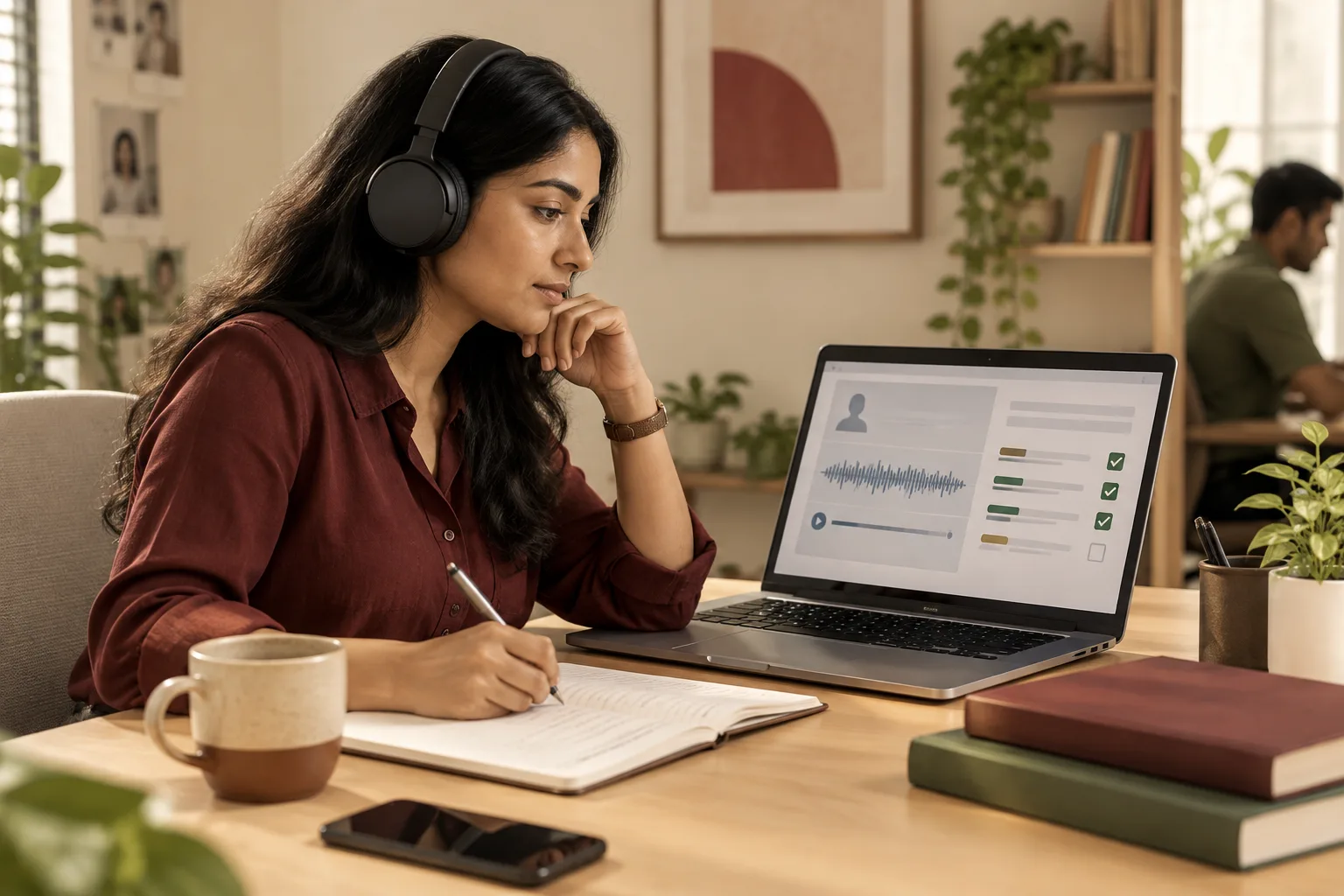
One reviewer per team, the owner or the sales lead. For each person choose four calls: one that closed, one that was lost, one that stalled, and one they pick themselves to show you. The self-picked call matters because it tells the person this is about learning. Use the same sheet every time, like the call review form, so you do not reward the voice you like and ignore the one you do not.
While listening, note the minute and second where each answer sits. A comment like "at 3:40 you asked about timing, good" teaches more than "be more consultative". Five questions are enough:
- Did the caller ask why the buyer called, or start pitching?
- Did the buyer's real constraint come out: budget, timing, who decides?
- Was a next step agreed, with a date?
- What was said about competitors or price, and was it written down?
- Who spoke more, roughly?
A modular-wardrobe studio in Kozhikode
Here is an invented example. A studio in Kozhikode makes modular wardrobes and storage, with two people calling enquiries that come from a property portal and from showroom walk-ins. Sales were uneven and the owner could not tell why.
The owner put recording on the desk phones, added the notice to the greeting and told the callers what it was for. In the first review the owner listened to eight calls over an afternoon and wrote long critical notes. Both callers went quiet for days. The mistake lay in the method, not the calls: only the lost ones had been played.
The plan changed. Each caller chose a call to share, the owner picked one good call from each, and a third was drawn at random. Every call got two notes, one of them on what worked. One caller found they never asked when the flat would be handed over, so quotes went out before anyone could judge the cupboards. That caller added the question and the quotes began to land more often. The other caller's habits changed less, and that review stayed awkward for a while.
Keep the loop short
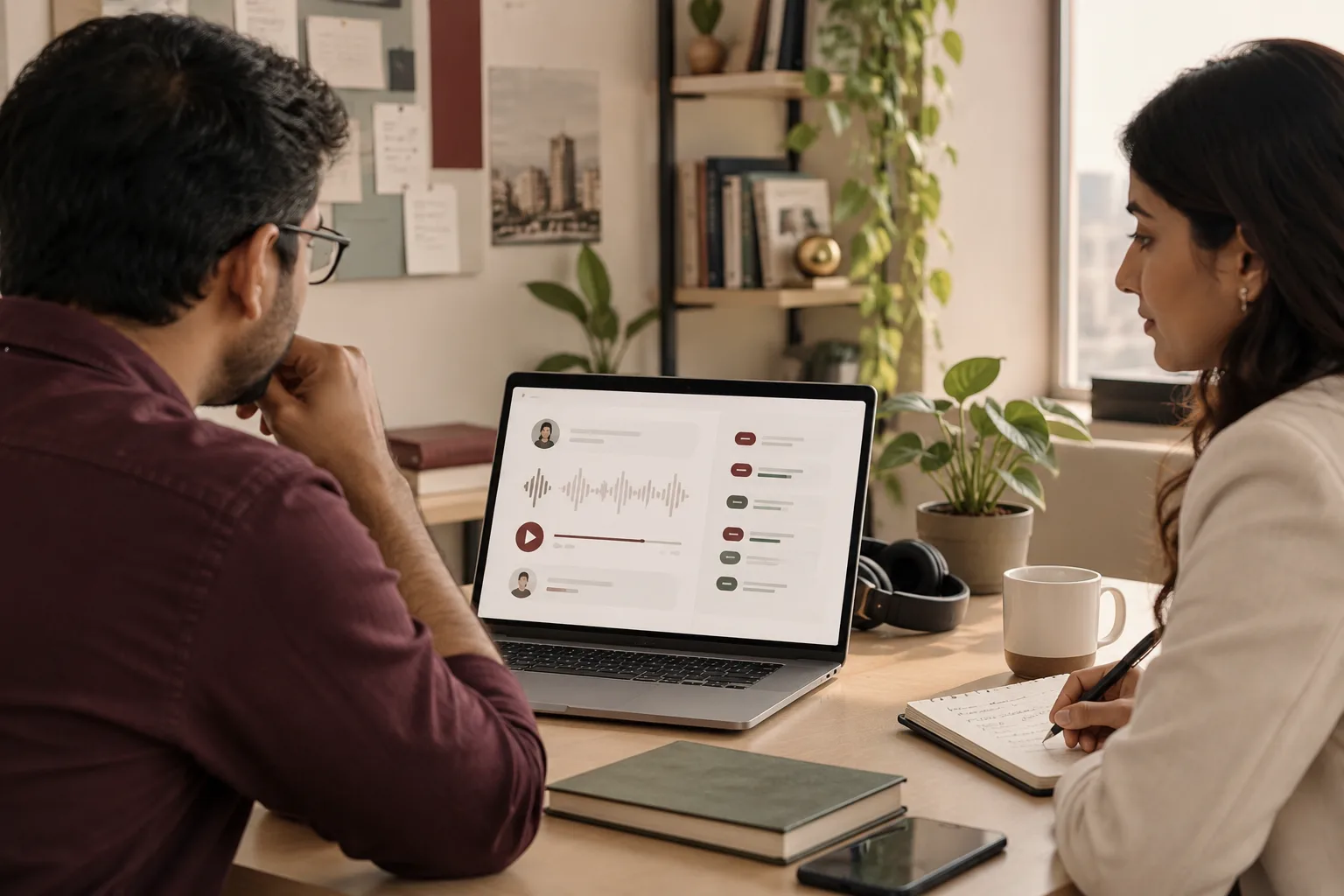
Within a day or two, meet the person, play the thirty seconds you want to discuss and ask what they would say differently before you offer a view. People hear their own mistakes more readily than yours. End with one thing to try on the next call, written on the sheet, and listen for it in the following review. A note with no follow-up is forgotten. The wider habit is described in sales coaching for owners who have never coached.
How it goes wrong, and when to skip it
It goes wrong when it becomes a weapon. If one call appears in a warning letter, the team will perform for the recorder or stop answering. Use recordings to coach and the sales record for performance talks. It goes wrong when nobody listens; a folder of unreviewed calls is a liability that holds customers' voices and does nothing for you. If you will not review, do not record. And it needs extra care in trades where callers handle health, money or other personal matters, so check with your own adviser first.
Skip it if your team makes few calls and the owner already sits beside them, since listening live is better. If most selling happens on WhatsApp or in person, review messages instead. Recording pays when many conversations happen out of earshot.
Record one desk first
Record a single desk with the notice and the written purpose, review three or four calls per person with one sheet, share notes within a day, then decide whether to extend. Conversation intelligence is the service that sets up the recording, scoring and coaching with you, and the rest of our sales work sits under sales. To start, tell us what you need.