Notes for owners · SEO, content and AI search
Everyone knows us here, so why do we need an online presence?
Why a well-known Kerala business still loses the newcomer and the relative abroad who search the trade and the town, and the few things they must find when they do.
The GullySales team · Updated 17 Oct 2026 · 6 min read

On this page
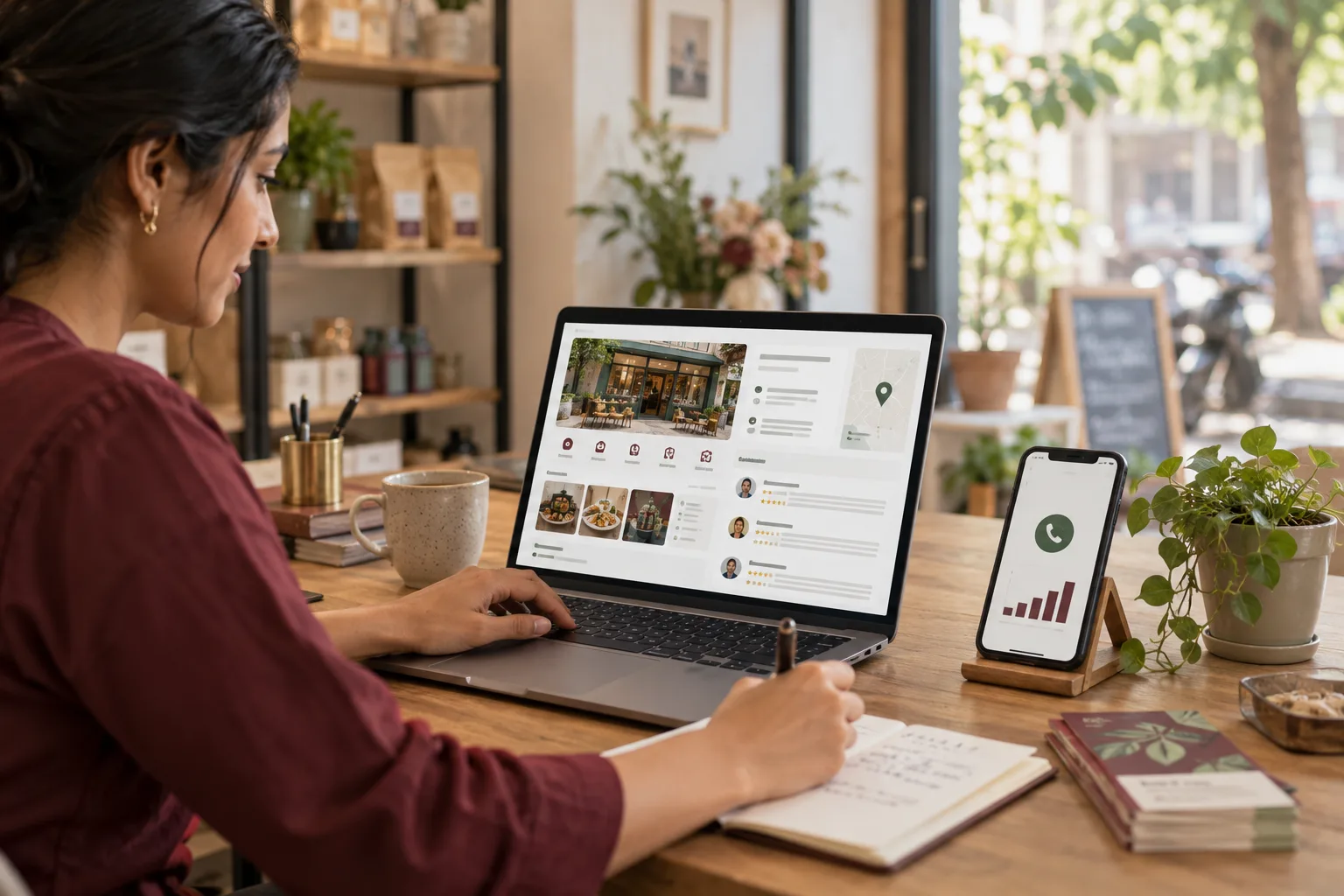
"Thirty years in this town. Ask anyone, they will send you to us." In a Kerala town that is often true for everyone who asks. The trouble is the people who do not ask. A bank officer newly posted to Kottayam types the trade and the town into Google. So does a son or daughter in Dublin arranging repairs on the parents' house. Each calls whoever appears with photographs, recent reviews and a WhatsApp number. Your name never comes up. An online presence is how a known business reaches the buyer outside its circle.
Who is searching for you without your name?
Word of mouth works inside a network. It passes from neighbour to neighbour, through the parish or the temple committee, from an old customer to a brother-in-law. Kerala's towns run on these networks, and for an established firm they still bring in a large share of the work.
Some buyers arrive with nobody to ask. Others ask, and then check anyway.
| Who is searching | What they type | What they need to see before they call |
|---|---|---|
| A family just transferred to the town | "plumber near Collectorate Kottayam", "tile shop Thrissur" | The pin on the map, today's hours, a number that answers |
| A son or daughter abroad arranging work on the family home | "house renovation contractor Thiruvalla", "roof leak repair Changanacherry" | Photographs of finished work, a WhatsApp number, a reply in their evening |
| A Gulf family home for the holidays after years away | The trade and the town, because the old shop has moved | The new address, and some sign it is the same family firm |
| The next generation in a house you served for decades | The trade, the town and the word "reviews" | Recent reviews in plain words from people like them |
None of them types your name. A buyer who has your name is doing a different job, which is checking it. Our note on making an established trading name easy to check online covers that search.
What Google shows them instead
Do the search yourself, on a phone, in the words of that table. Type in English, as many Kerala buyers do even when they speak Malayalam at home, and try Malayalam too. Look at the map results first, since that is where a phone search lands.
You will see three businesses with photographs, a star rating and an "open now" line. One of them opened a few years ago and has more reviews than its age suggests, because the owner asked every customer for one. Below the map come directory pages, perhaps with your old landline. There may be a listing a customer made years ago, pinned on your previous godown.
That is your shop window for everyone who did not grow up near you. Google can only show what someone has told it.
Three things worth doing, in this order
A known business needs less than it fears. Do these three properly before you think about anything else.
- Claim and correct your Google Business Profile. Use the name on your board and put the pin on your real gate. Give a number someone answers, the hours you keep, and the category closest to your trade. Add photographs of the shop front and of finished work. This is the part a phone search shows, and it is the core of our Google Business Profile management work.
- Ask the customers who already praise you to say so where strangers can read it. You have decades of them. Start with the ones whose children live abroad, because those children are your next searchers.
- Give each service you want more of a page of its own. Roof leak repair, truss work, flooring and painting each get a page, with photographs, the towns you cover and a named person. Someone in Dublin forwards that page to their parents. Deciding which pages to build, and in what order, is what website strategy and information architecture means for a firm this size.
After that, local SEO keeps your details identical across directories and adds pages for the areas you serve. Not before.
A renovation contractor in Thiruvalla
This is an invented example. A contractor in Thiruvalla has done roofing, tiling and house repairs for thirty years. The work comes by recommendation, and the contractor has never needed anything online.
A retired couple near one of the contractor's old sites needed their roof redone before the rains. Their daughter in Dublin took charge. The parents mentioned the contractor's name, but she searched "roof work contractor Thiruvalla" first, after work. Two firms came up with photographs of finished roofs and a WhatsApp number. One replied within the hour with a video of a similar job, and she booked its site visit. The contractor her parents trusted appeared nowhere, apart from an old listing with a landline that no longer rang.
The reputation was fine. The one person deciding could not see it.
The contractor and a nephew who handles the phone spent two Sundays on it. They claimed the old listing, moved the pin and changed the number. They added photographs of roofs, floors and staircases from jobs where the owners agreed. A short page for each service named the towns covered: Thiruvalla, Changanacherry and Mallappally. One line spoke to families abroad: site photographs and a video walk-through on WhatsApp before any quote. The nephew now answers messages until eleven at night, still early evening in Dublin. It cost the Sundays and a little for photographs, and the first enquiry from abroad took three months and asked only for a price list.
When word of mouth is still enough
Some businesses can skip most of this. If referrals already fill your diary for months ahead, a correct profile is enough. The same holds for a trade that sells to a closed circle, such as a supplier with five regular hotels on its books.
Leave the WhatsApp number off if nobody will answer it in the evening. A number that rings out is worse than no number, because the searcher assumes you have closed. Advertising will not fix this: it buys a place above the map, not photographs, reviews or a reply.
A first step for tonight
Search your own trade and town on a phone, the way the transferred bank officer or the daughter abroad would. Note who appears, what they show and whether you appear at all. Then set that beside what your regulars would say about you. The distance between the two is the work, and it is ordinary marketing for a known name: be findable where the buyer looks. If you want to talk it through, tell us what you need.