Notes for owners · Websites and conversion
Making an established Gujarati trading name easy to check online
A buyer who already knows your firm's name searches it once before calling. What that search should find, how to test it yourself, and what to fix first.
The GullySales team · Updated 17 Oct 2026 · 6 min read

On this page
Picture a buyer in Pune who got your firm's name from a dealer who has bought from you for twenty years. Before calling, the buyer searches it and finds a JustDial page with your father's old landline, an IndiaMART listing under a spelling you stopped using, and an advertisement for a rival unit in the same GIDC. Your reputation is real. Nothing online confirms it. You do not need a large website for this. Put your address, products, certificates and a few references where a search for your name finds them, with the same details everywhere.
Who is checking your name, and what do they want?
Not strangers browsing for a supplier. The people who search an established name already have it. An importer was given it by an agent. A dealer's son, taking over the counter, wants your current number. A procurement officer is adding you as a vendor, and a bank officer is reading a loan file.
Each of them checks once, briefly, and wants confirmation, not persuasion. Does this firm exist at this address? Does it make or trade what I was told? Is it still in business? Is the number I was given really theirs?
Many old firms across Gujarat built their names through decades of dealer trade, long before anyone searched for them. The online trail they left is accidental: a directory listing a nephew made, a map pin someone else dropped, a portal profile from a trial subscription.
Search yourself the way a stranger would
Do this on a phone that is not logged into your accounts, and write down everything wrong.
- Your firm's name alone. Note the top results, any map listing, and any rival's advertisement sitting on your name.
- Your name with your town added. Does a map listing appear with the right address, pin code and photographs of your premises?
- The other ways your name gets written. "Bros" and "Brothers", "& Co" and "and Company", initials, and the English spelling of the Gujarati name on your board. After a family division, check the other branch's firm too.
- The number on your visiting card, searched on its own. Does it lead to you, to an old partner, or to nothing?
- Your firm on IndiaMART, TradeIndia and JustDial. Count the listings and the numbers on each.
- Your GSTIN, typed into the search on the GST portal. The legal name shown there is the one a careful buyer will compare with your website.
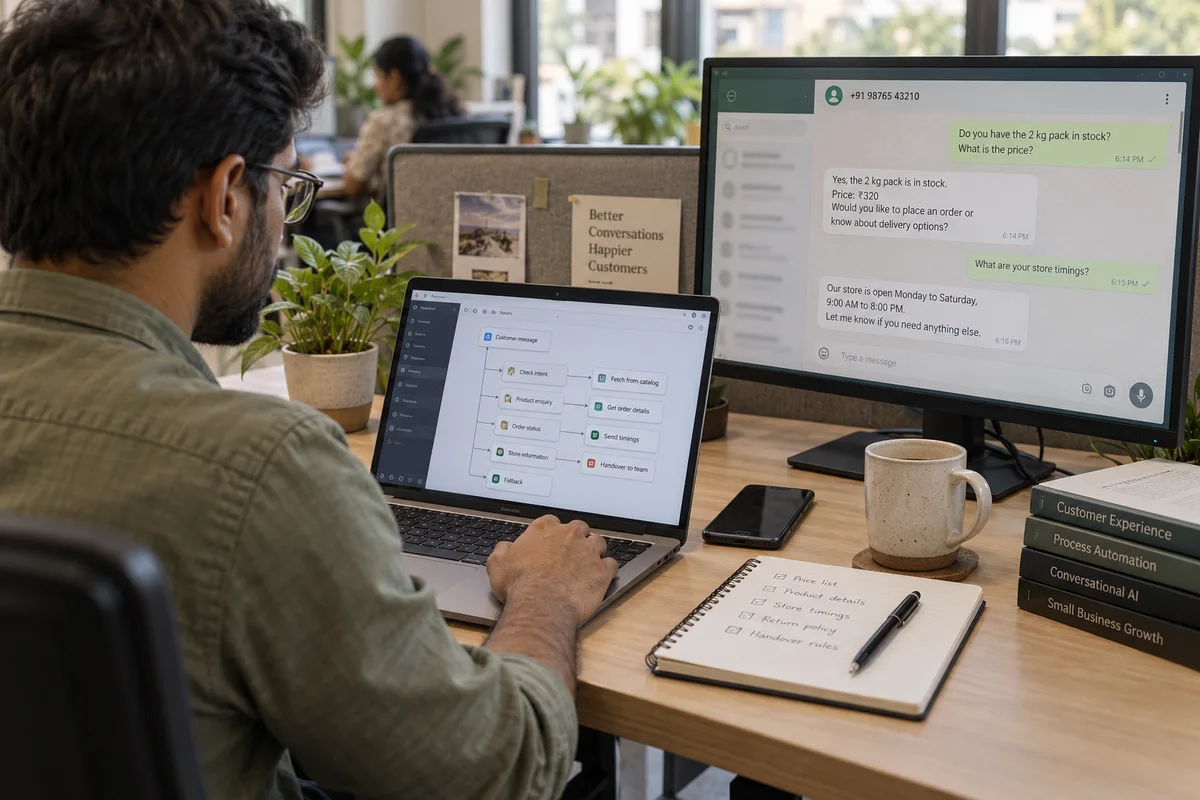
- A WhatsApp message to your business number from another phone. The profile should show the firm's name, address and a catalogue, not a blank picture.
Expect at least one wrong number and one name you no longer use. That list is the work, and it includes the old listings: claim them, change the numbers, merge duplicates, and close the ones you cannot fix.
What a buyer must be able to find
You do not need many pages. You need these, consistent with each other:
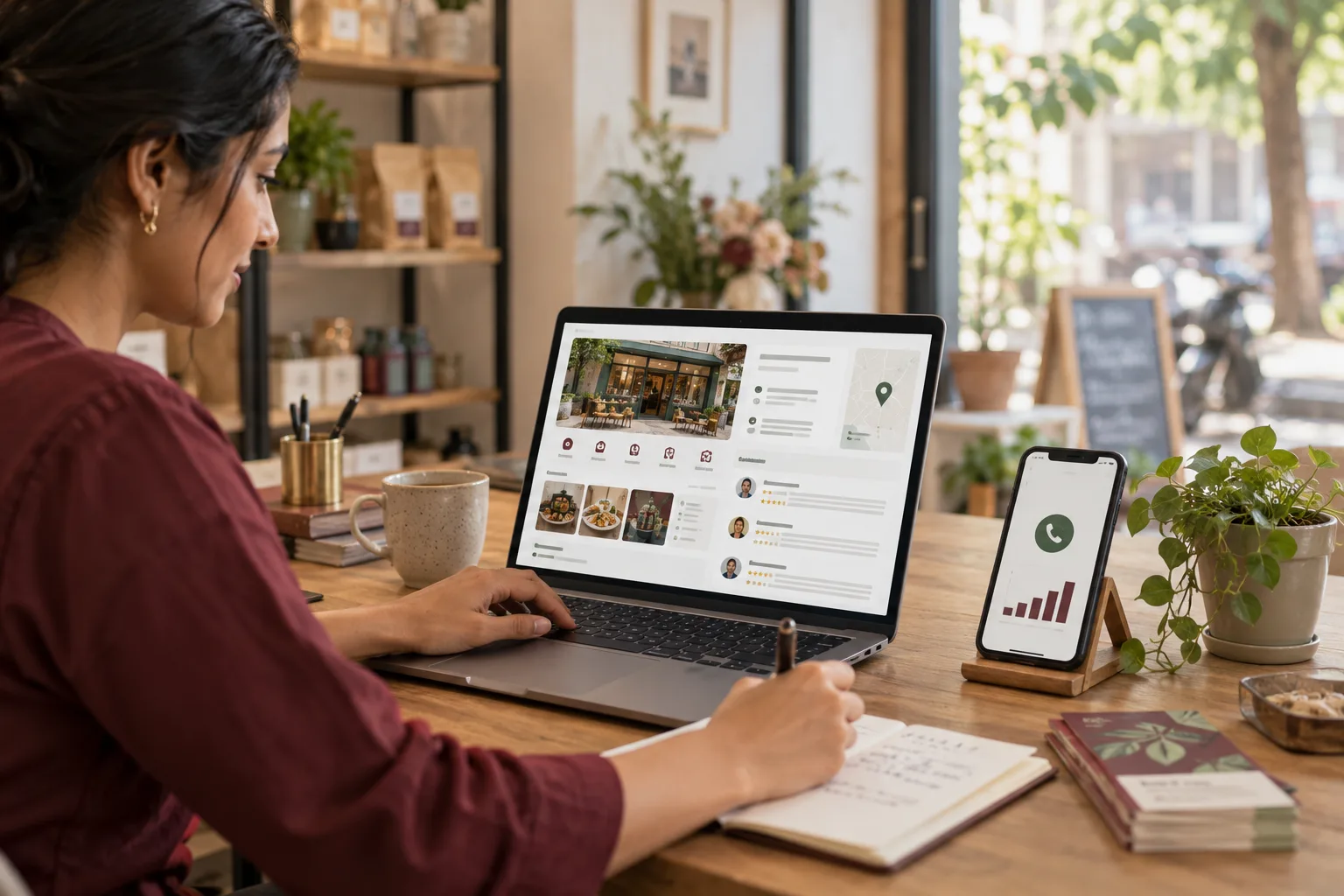
- A Google Business Profile at your real premises, verified, under the name on your board, with the current number and photographs of the signboard, frontage and stock.
- A website contact page carrying the full address with a landmark, a map, the GSTIN and the names of the people who answer. Put the GSTIN where a buyer can copy it.
- Product groups on the site, one page for each line you are known for, with catalogues as PDFs. A dealership you hold goes up only with the brand's letter.
- Certificates, current ones only, with the number and the expiry date: ISO, an IEC if you export, and any product licence your goods need. Rules on which goods need which licence differ and change, so ask your adviser before you describe one.
- References from dealers or buyers who have agreed to be named, or a line saying references are available on request.
- A one-page corporate profile as a PDF that a dealer can forward on WhatsApp in one tap.
For example: a Bhavnagar firm with two branches of one name
Imagine a family firm in Bhavnagar that has sold pipe fittings and industrial hardware to dealers since the grandfather's time. When the brothers divided the business, the elder kept the old name, and the younger's firm added "& Sons". The details are illustrative.
A new dealer from Nagpur was given the old name by a customer, searched it with "Bhavnagar" and found a JustDial page from before the division. Its number now rang at the younger brother's shop. The order, a first lot the elder brother's side never heard about, went there. The elder brother's own website, built by his son, did not help: stock photographs of a large factory and no address at all. To a buyer checking a name, that looked less real than having no website.
Putting it right was plain work. The old JustDial page was claimed and its number changed. A verified Google profile went up at the shop, with photographs of the board and the shelves. A contact page with the GSTIN, the address and the landmark near the bus stand. And one line, agreed with the elder brother, explaining which firm is which, so a buyer does not ring the wrong one. The stock photographs came down, and the website was rebuilt around the people who check the name, not around looking large. The younger branch's own listings were out of reach, and one stayed wrong for months.
What to leave off
Leave off turnover figures you would not show a bank, awards you cannot produce, and customers' names without their permission. "Leading" and "No. 1 in Gujarat" read as filler to a buyer who is checking. Stock photographs of factories read as a warning. So do certificates that expired three years ago.
Do not buy advertisements on your own name unless a rival's advertisement is sitting on it and taking calls. Even then, watch what the advertisement brings in before you keep paying for it.
When you can stop at this
If you sell only through dealers who already know you, such as a firm whose every order arrives from the same few hardware counters, a checkable presence is all you need. Do not spend on ranking for product searches you do not want to win. A firm that wants buyers who have never heard of it needs different work, and that work starts from the same consistent details.
Run the seven searches before a buyer does
Run the seven searches above this week and list every wrong number, old name and missing photograph. Fix the Google profile and the contact page first, because those are what a checking buyer sees. Planning the page structure and the profile together is website strategy and information architecture work; if you would like the list read with you, tell us what you need.