Notes for owners · Websites and conversion
Hindi calls and an English-only website: closing the gap
When customers call in Hindi and the website is only in English, the facts drift apart; how to close the gap with one fact sheet, a Hindi line, a Hindi WhatsApp reply and a few Hindi pages.
The GullySales team · Updated 17 Oct 2026 · 6 min read

On this page
A buyer reads your English website, then calls and asks everything again in Hindi. The person on the phone quotes a different rate. That is the real gap. It is less about language than about two sets of facts. Fix it in this order. Write one fact sheet in both languages. Put a Hindi speaker on the number the website shows, and set a Hindi WhatsApp reply with the same facts. Only then put the few pages Hindi callers need in Hindi. The caller should hear exactly what the page says.
The gap is in the facts
Picture who is calling. A homeowner in Rewari or Gwalior, building a house, has been sent your website link by the contractor. The English is hard to read closely, so the homeowner scrolls the photos and phones. The person who picks up has never read the website either. A rate is quoted from memory, on a different basis from the "starting from" price on the site. Then comes the line that small loads cannot go to Gwalior, while the site speaks of delivery across India.
The caller notices, and concludes not that staff misspoke but that one of the two is lying.
So translating the home page is the wrong first step. A Hindi home page that repeats facts your phone desk contradicts makes the gap wider.
Start with one fact sheet, in both languages
Write down, on one page, every fact a buyer acts on. For a marble or stone business, start with the rate basis: per square foot, by thickness and grade. Add what the rate includes, the minimum order, how transport to the buyer's city is arranged and charged, the yard hours, and who to ask for. English on the left, Hindi on the right, with the Hindi written by someone who uses these words in the trade.
Print it for the phone desk. Use it for the WhatsApp reply. Build the website pages from it. When a fact changes, change it on the sheet first and everywhere else the same day.
Which pages to put in Hindi first
Rank them by the questions Hindi callers ask. For a trade that sells from a yard or a showroom, a sensible order is:
- How you price. The basis, what changes the rate, and what is extra. Mismatches between phone and page start here more often than anywhere else.
- Coming to see the stock. Address, landmark, yard hours, whether Sunday is open, and what to bring, such as room measurements.
- Delivery to the buyer's city. Full loads, part loads, who arranges the truck, and how unloading is handled.
- Questions people ask before buying. Written in the words customers use on the phone, including how to check the quality of what they are buying.
- Contact. A Hindi-speaking person by name, with hours.
Leave "About us" and the history pages in English for now.
Give each Hindi page its own address on the site, so search can show it to someone who types in Hindi. A translate button that rewrites the page in the browser does not do that. Put a clear link to the Hindi version at the top of each English page, and an English link on each Hindi one, with the label written by your Hindi speaker.
Planning several languages is in our note on selling across states when buyers speak different languages. Here the language is one, and the question is whether your facts match.
The Hindi line and the WhatsApp reply
On the website header, next to the number, add a short line in Hindi saying that Hindi is spoken here, and the name of the person who answers. That person needs the fact sheet beside the phone.
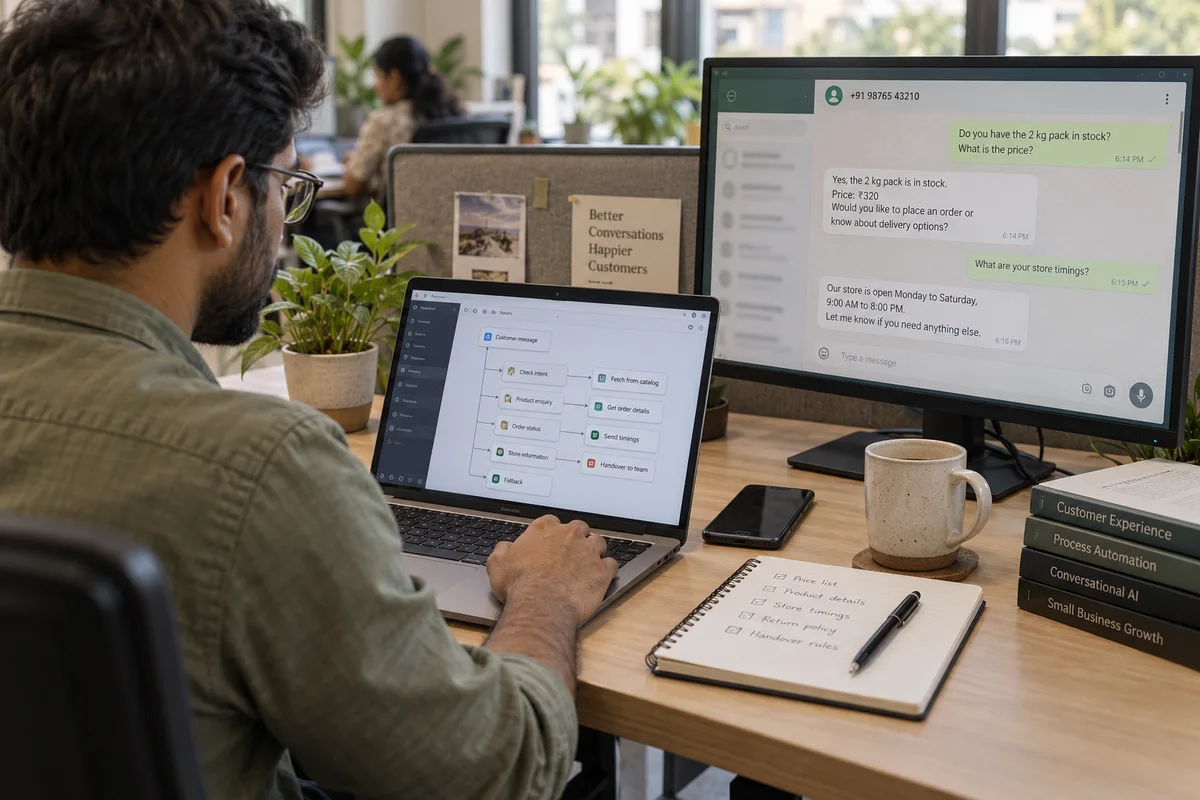
The WhatsApp reply should carry the same facts in the same order. Saved as a quick reply in the WhatsApp Business app, it holds seven things. Have your Hindi speaker write it in your callers' words, not as a translation of this list.
- A greeting, then who is writing, from which firm and town.
- The stone or product the buyer asked about.
- The rate, on its stated basis: per square foot, by thickness and grade.
- A link to the Hindi pricing page.
- Transport charged separately to the buyer's city, and who books the truck.
- Yard hours, and whether Sunday is open.
- One question: how many square feet are needed?
The link matters most. It sends the buyer to a page that says the same thing as the message.
For example: a marble trader in Kishangarh
Imagine a marble and granite trader in Kishangarh with an English website built for architects. The details are illustrative. Most calls come from homeowners and contractors in Haryana, Delhi and Madhya Pradesh, in Hindi.
The website shows "Makrana white from ₹(price) per sq ft". The yard manager quotes callers a rate per square foot for a thicker, better grade, without saying so. Callers compare the two figures and think the yard is adding a margin on the phone. One contractor says it plainly in a Google review.
The trader begins with the fact sheet, setting out the rate basis by grade and thickness. The yard manager and the website both quote from it. Next come Hindi pages on pricing, visiting the yard and delivery, each with its own address. The header gets the Hindi line with the manager's name, and the WhatsApp reply goes out with a link to the Hindi pricing page. The trader answers the contractor's review, explains the two grades, and links the new page. Callers still ask about rates, but now they ask which grade, not why the price changed. The cost was the Hindi writer's fee, and the pricing page was rewritten twice before the yard manager accepted it.
When a Hindi site is the wrong spend
If nobody in your business can answer in Hindi in the evening, a Hindi page makes a promise you cannot keep. Fix the phone first. If your Hindi callers never open the website at all, the fact sheet and the WhatsApp reply do most of the work, and the pages can wait. And if your buyers are architects and exporters who read English, keep investing in the English site.
For the Hindi copy itself, see website content writing and copywriting, and our Rajasthan page for the state.
Ask two people the same three questions
Ask two people in your business, separately, what your rate is, what it includes and how delivery to Gwalior works. Then read your website. If the two people and the page give three different answers, start with the fact sheet. When you want the phone desk, the WhatsApp reply and the Hindi pages saying the same thing, with the WhatsApp sales process kept on a company number, tell us what you need.