Notes for owners · Sales management
A retailer wants your product under their own label: decide your terms before the call
A private-label buyer will ask for minimum quantity, packaging control and exclusivity. Settle your own position on each before the call, so the first meeting does not set your terms for you.
The GullySales team · Updated 17 Oct 2026 · 6 min read
On this page
When a retailer asks you to make the product under their label, they are asking for four things at once: a lot size, control of the pack, a lower rate and a promise that you will not sell the same thing to anyone else. Decide your answer to each before the call. If you do not, the buyer will set the terms in the first ten minutes, and you will spend the next month trying to move them. Write your position on one sheet and take it into the meeting.
What will the buyer ask for?
A chain's buyer or an online brand's sourcing person is working to a margin, a shelf date and a price already agreed upstairs. Expect these questions, often in this order:
- What is the lowest quantity you will make, and at what rate?
- Can the pack carry our name, colours and barcode?
- Can we change the formulation, size or finish?
- Will you make this for anyone else?
- What happens if we return or cancel?
The questions sound like requests for information. They are also requests for concessions.
What position should you decide in advance?
Fill in a table like this before the call. The right column is yours to complete, and the middle column is a prompt.
| Point | Questions to answer for yourself | Your position |
|---|---|---|
| Minimum quantity | What lot covers your setup, material and print costs without a loss? | A number, and what you charge below it |
| Rate | What is your cost per piece, and what lowest rate leaves you a margin you can live with? | A rate band, not a single figure |
| Pack and artwork | Who pays for the artwork and any new mould or plate, and who keeps it afterwards? | Buyer pays, buyer owns; or you keep it |
| Product changes | Which changes are free, which cost extra, which you refuse? | A short list of each |
| Exclusivity | Exclusive for what range, which area, and how long? | None, limited, or only against a committed volume |
| Cancellation | Who carries printed packs and raw material if the order stops? | Buyer pays for what you cannot reuse |
| Payment | Advance, credit or against delivery? | One term you will not go below |
Do not show this sheet to the buyer. It is for you. Decide the minimum below which you walk away, because the pressure to say "let me see what I can do" is highest on the call.
A worked minimum, with illustrative figures. Suppose a new label costs ₹12,000 to set up, and the lot needs ₹6,000 of fixed packing and handling whatever its size. That is ₹18,000 to recover. Over 500 towels it is ₹36 a piece before you have made anything. Over 2,000 it is ₹9. That gap is why a minimum lot exists, and you can explain it to a buyer without sounding stubborn.
When should you say no?
Say no, or ask for a different shape of deal, in three situations.
The buyer wants your best-selling design under their label at a rate that undercuts your own brand. You would be financing a competitor to your own product.
Exclusivity is asked for with no committed volume. Giving up every other buyer for a promise to "see how it goes" is a bad trade. Offer a limited exclusive instead: one range or one city, for a set period, against a stated minimum.
Watch the third case too: the volume would take most of your line and payment would be slow. A buyer who fills your capacity and pays late can sink a small unit faster than no order.
Say yes more readily in three cases. The buyer's quantity fills a slack period in your production. The pack is simple. Your own brand sells in a different type of shop.
For example: a home-linen maker in Karur
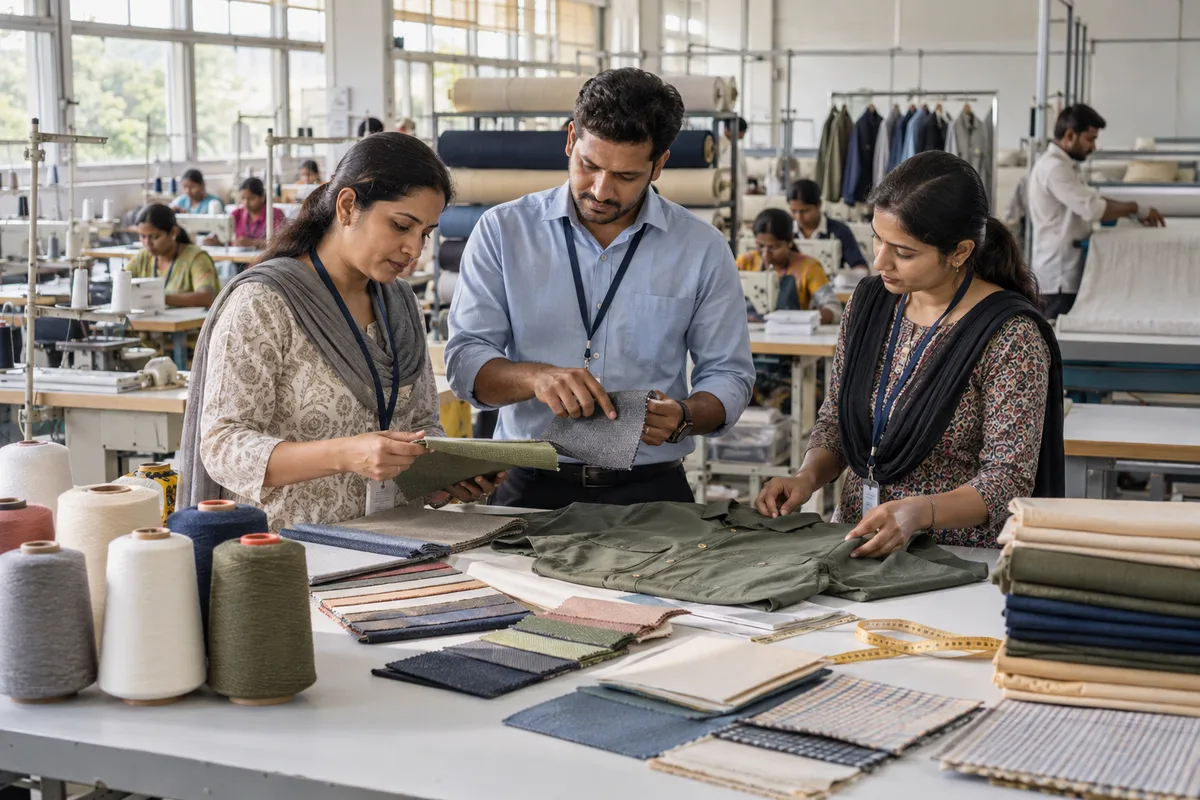
Imagine an invented home-linen maker in Karur, contacted by a supermarket chain in Hyderabad that wanted its towels and bed sheets under the chain's label. The buyer said on the phone, "Give us your best rate for a lot, and keep it exclusive." The owner quoted a rate on the spot and agreed to exclusivity, then began buying yarn. Three weeks in, the chain changed the colour palette and asked for a thinner fabric. The printed labels were already made, and the yarn was dyed to the first palette, a loss of roughly ₹85,000 on dyed yarn and labels (all figures invented).
The mistake was the order of work. Rate came first and terms last. On the next enquiry, from a different chain, the owner reversed it. The one-page quotation set a minimum lot and a freeze date for colour and fabric, after which changes would be charged. It limited exclusivity to the towel range for twelve months against a stated quantity. It also said that printed labels and dyed yarn left over after cancellation would be paid for by the buyer. The buyer asked to move the freeze date and accepted the rest, but pushed the lot down from the 3,000 towels the owner wanted to 2,000, which still cleared the break-even above.
How do you run the call?
Open by asking, not telling. Find out the shelf date, the quantity for the first lot and the price at which the product will be sold. Ask whether the retailer has other makers they are comparing you against. Then ask which of the buyer's requests are firm and which are wishes.
Offer your position in the order of the table, and trade rather than give. If you lower the minimum quantity, ask for advance payment. If you accept exclusivity, ask for a committed quantity. Ask for a committed first quantity, a plan for the next few lots and a statement of who holds the stock if they cancel, and put all three in the quotation, since a retailer who will not commit in writing has told you how firm the order is. Write the agreed points on a page and send them the same day so no version of the call lives only in memory.
Do not promise a delivery date on the call. Give it after you have costed the material and checked the line.
Turning the call into a written offer
A one-page offer that repeats each agreed point is cheaper than a dispute over what was said. For the contract wording itself, ask your own lawyer. Before the next call, fill in the table above for your top product, starting with the minimum lot sum in your own rupees. Makers of everyday goods are described on our page for consumer products manufacturers. If you would like help shaping the offer, proposal development is the service, and you can tell us what you need.
Related services