Notes for owners · Branding and communication
How to write a press release that a local editor will print
A press release built for a district or city editor: the headline, a first paragraph with the news in it, a named person and a photograph, and the habits that send releases to the bin.
The GullySales team · Updated 17 Oct 2026 · 5 min read
On this page
"We sent it to every paper in town and nobody printed a word." A release gets printed when its first paragraph holds something that happened, to a named person, in a place the readers know, with a photograph that shows it. Write the headline as a plain sentence in the paper's own language. Put who, what, where and when into the first thirty words, and send one clear photo. Most releases fail because they announce a company instead of an event.
What does the editor look at before reading past the headline?
A local editor has a page to fill and a pile of notes to choose from. They look for an event, a person's name and a reason their readers should care. An invented headline such as "Sri Venkateswara Packaging celebrates a decade of excellence" has no event and no reader. "Pollachi firm opens a packaging line that will employ 40 local women" has all three, so long as the forty is true and you can say who will be hired.
A brochure says how good you are. A release says what has changed.
The one-page layout
Use this order, on one page of plain text with no letterhead artwork:
- Headline. One sentence, about twelve words, with a subject and a verb.
- First paragraph. What happened, to whom, where, when. Thirty to forty words.
- A quote. One sentence from a named person with their role. It should say something a person would say, not "we are delighted".
- Detail. Two short paragraphs: numbers you can stand behind, the reason now, who benefits.
- Contact. A name and a mobile number, answered during the hours the desk works.
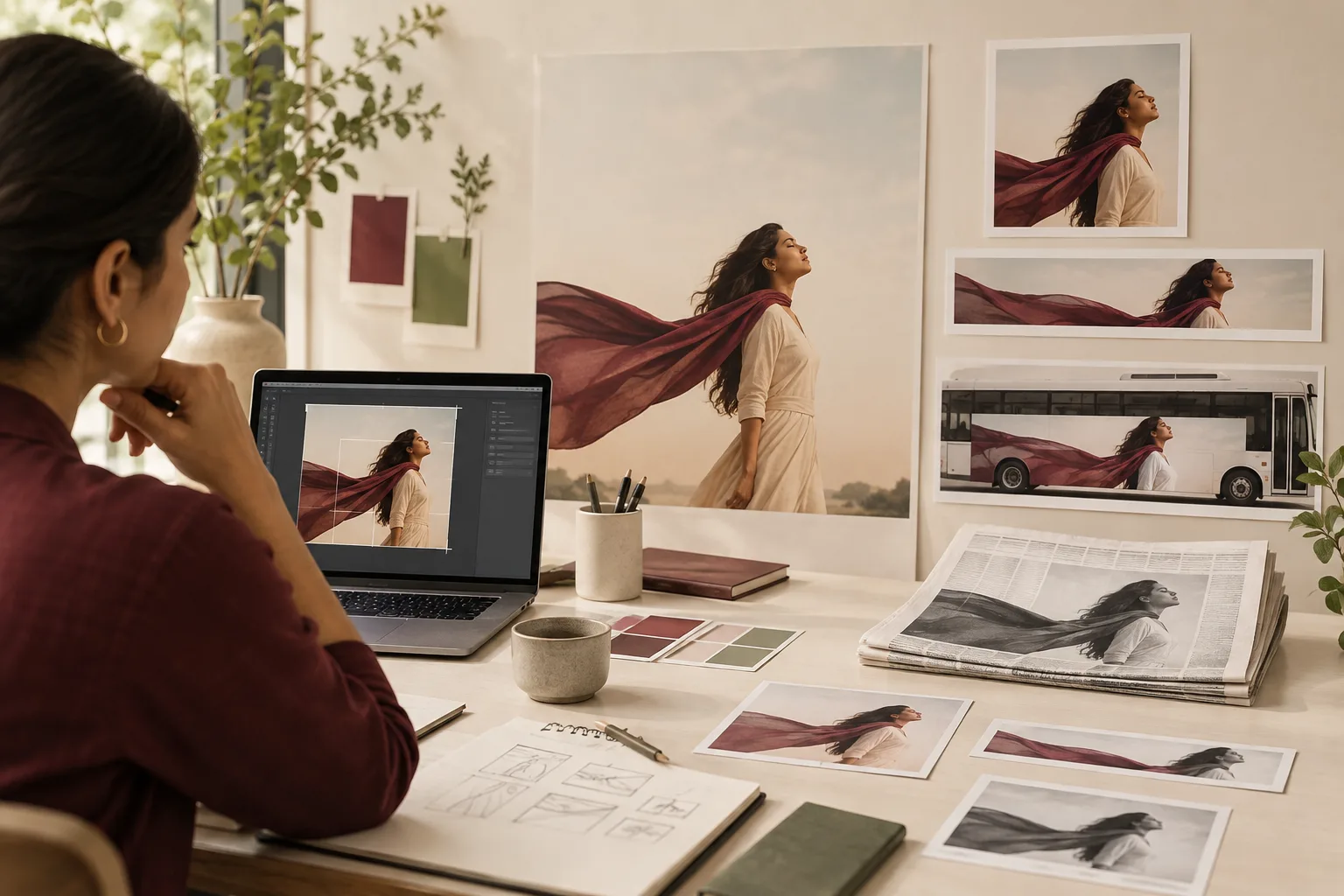
- Photograph. Attached as a file, with a caption naming everyone in it, left to right.
What does a before and after look like?
The same invented item, written twice.
Before: "ABC Industries, a leading name in engineering, is pleased to announce the launch of its new facility, which reflects its commitment to quality and customer satisfaction."
After: "Belagavi: ABC Industries has started a second shift at its sheet-metal unit in the Udyambag area, taking on 25 workers from nearby villages, including 10 women. Managing partner S. Patil said the shift was added after a local two-wheeler parts maker doubled its order."
The second has a place, a number, a named person and a reason. Check each figure against your payroll or order book before you send it. If you cannot prove a number, take it out.
An invented example: an industrial training workshop in Hosur
Imagine a small workshop in Hosur that trains diploma holders on CNC machines and has placed its first batch with local employers. Its first note, "XYZ Technical Centre achieves milestone", was ignored by the district edition.
The second note began: "Twelve young people from Krishnagiri who trained on CNC lathes in Hosur have started work at three SIPCOT units." It named the instructor, quoted one trainee in two lines, and came with a photograph of the group at the machine, captioned with names and villages. Because the news sat in the first paragraph, a desk short of space could cut from the bottom and lose nothing. It did. The district page ran four lines and cropped the photograph so only half the group showed. The workshop got two calls from parents, not a queue.
The first note announced the centre. The second reported twelve people starting jobs, which is what a district reader wants to know.
What sends a release to the bin?
- No date or place at the top, so the desk cannot tell where it belongs.
- A headline made of adjectives: leading, renowned, state-of-the-art.
- A PDF of a scanned letterhead. Editors need text they can paste.
- A photograph that is a logo, a cheque-handing pose, or a crowd with nobody named.
- The same note sent to every paper, addressed "Dear Editor" with no name.
- A claim the paper cannot check. Say nothing about competitors, health outcomes or guarantees. An editor who finds one wrong figure stops trusting the next note.
- A call at deadline. Ask the desk when the page closes.
How do you send it and follow up?
Send to a named person, with a subject line that works as a headline. Paste the text into the body of the email and attach the photograph as a separate file. Put your mobile number under the text.
Phone once, a day later, with a question rather than a push: "Did the note reach the business desk, and is there anything you need from me?" If the answer is no, do not call again about that item. Keep a list of which editor ran which item, so the next one goes to the right person.
Is it worth it?
Local coverage alone will bring few enquiries. What it gives you is a clipping to send to a buyer, a bank or a recruiter. If you need a steady stream of enquiries, spend elsewhere. If you need a credible clipping before a dealer meeting or a tender, one good release is cheap.
Skip a release if there is no event, or if the person quoted cannot be reached. In a regulated trade, say only what happened in plain terms and have your adviser read it first. Rules differ by state and body and change, so check with your own adviser or regulator.
What to do this week
Pick the next real event: a new hire from the town, a contract with a local institution, an opening, an award given by someone other than you. Write the first thirty words, then the quote, and check every figure. For help with sending, GullySales has press release distribution, and the marketing hub lists the wider visibility work. To start, tell us what you need.