Notes for owners · Branding and communication
Photos, video and menus: the assets a hospitality buyer scrolls first
A shot list for rooms, halls, food and staff, the menu and tariff formats that load on a phone, and what to re-shoot when the season changes.
The GullySales team · Updated 17 Oct 2026 · 5 min read
Rules for this trade differ by state and professional body, and they change. Check the current position with your own council or adviser before you act on anything here.
On this page
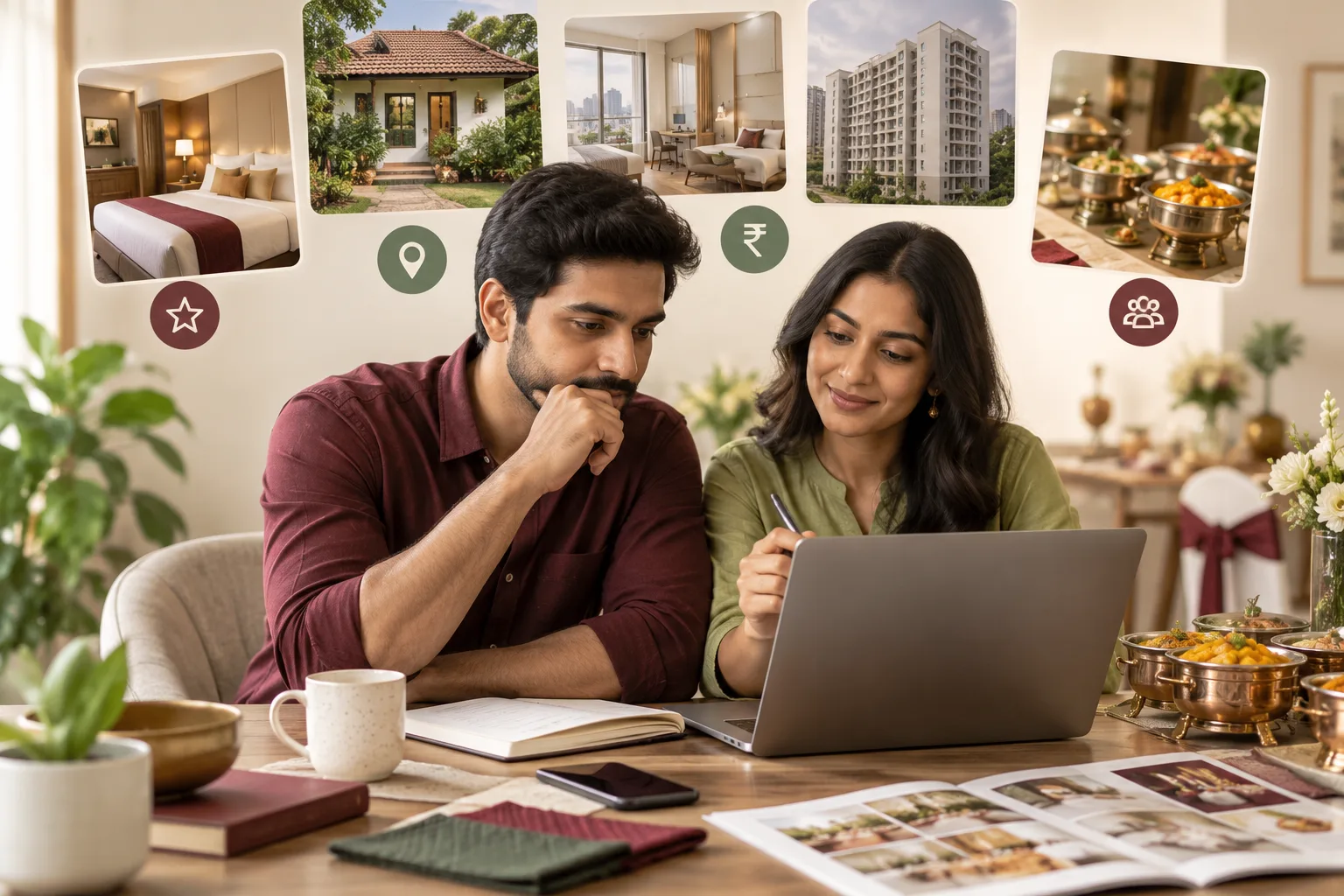
A guest deciding between your hotel and another one scrolls the photographs first, then the tariff, then the reviews. For a hall, the order is the same with the capacity added. So the photographs, a short video and a menu or tariff that loads on a phone are the first sales pitch, and it is made before anyone calls. Shoot to a written list, type the prices, and re-shoot what the season changes.
What does a buyer actually scroll for?
Not for beauty. For proof of the thing they are about to pay for. A family of five checks whether the "family room" has beds for five. A family planning a wedding counts the chairs in the hall photograph and looks for the stage. A corporate travel desk looks for the desk in the room and the lift in the lobby.
So each photograph should answer one question the booker would otherwise ask on the phone. If a photograph answers none, it is decoration and it can wait.
The shot list
Use this as a brief for whoever holds the camera. Tick each line, and tell them to stand where the guest would stand.
Rooms. For each room type, one wide shot from the door, one of the bed with the headboard wall, one of the bathroom (shower, geyser, fittings in view), one of the window view. If a room has a desk, shoot it. If the family room has an extra bed, shoot it made up.
Halls and lawns. The empty hall laid for a seated dinner, then the same hall laid for a stage function. Add the stage, the entrance and porch, the parking area with cars, the bridal room and the washrooms. For a lawn, one shot at the hour a function would actually start.
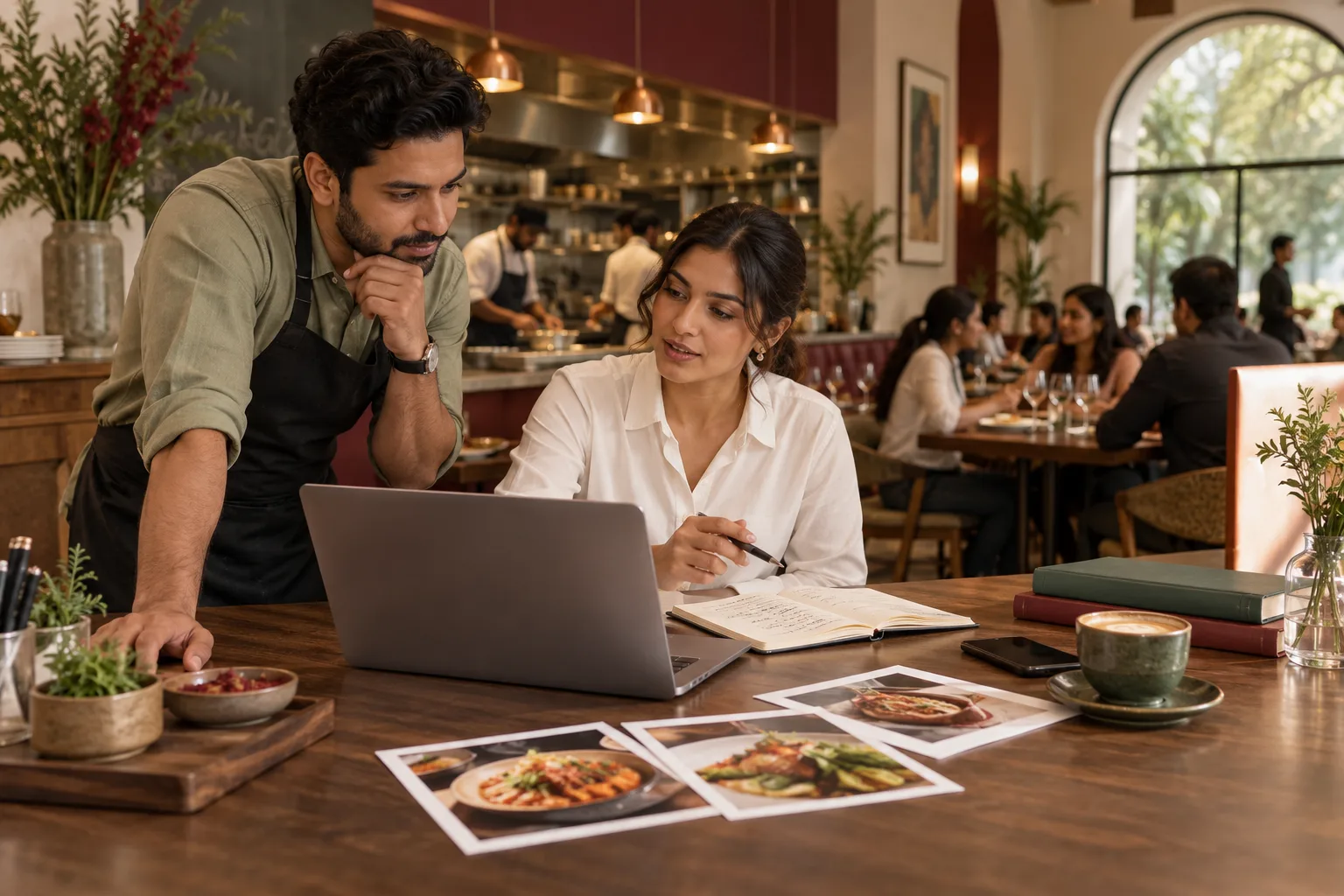
Food. The five dishes people order most, shot in daylight on the plates you serve them on. One buffet counter, laid out as you would lay it for a function. Show portions honestly; a guest who sees a different plate will remember.
People. The front desk, the chef at work, the banquet manager at the entrance. Guests are reassured by people they can picture meeting. Ask each person first.
Approach. The street outside, the gate, the signboard, the first thing a driver sees. A guest arriving after dark and not finding the entrance may say so in a review.
How to shoot a video a guest will finish
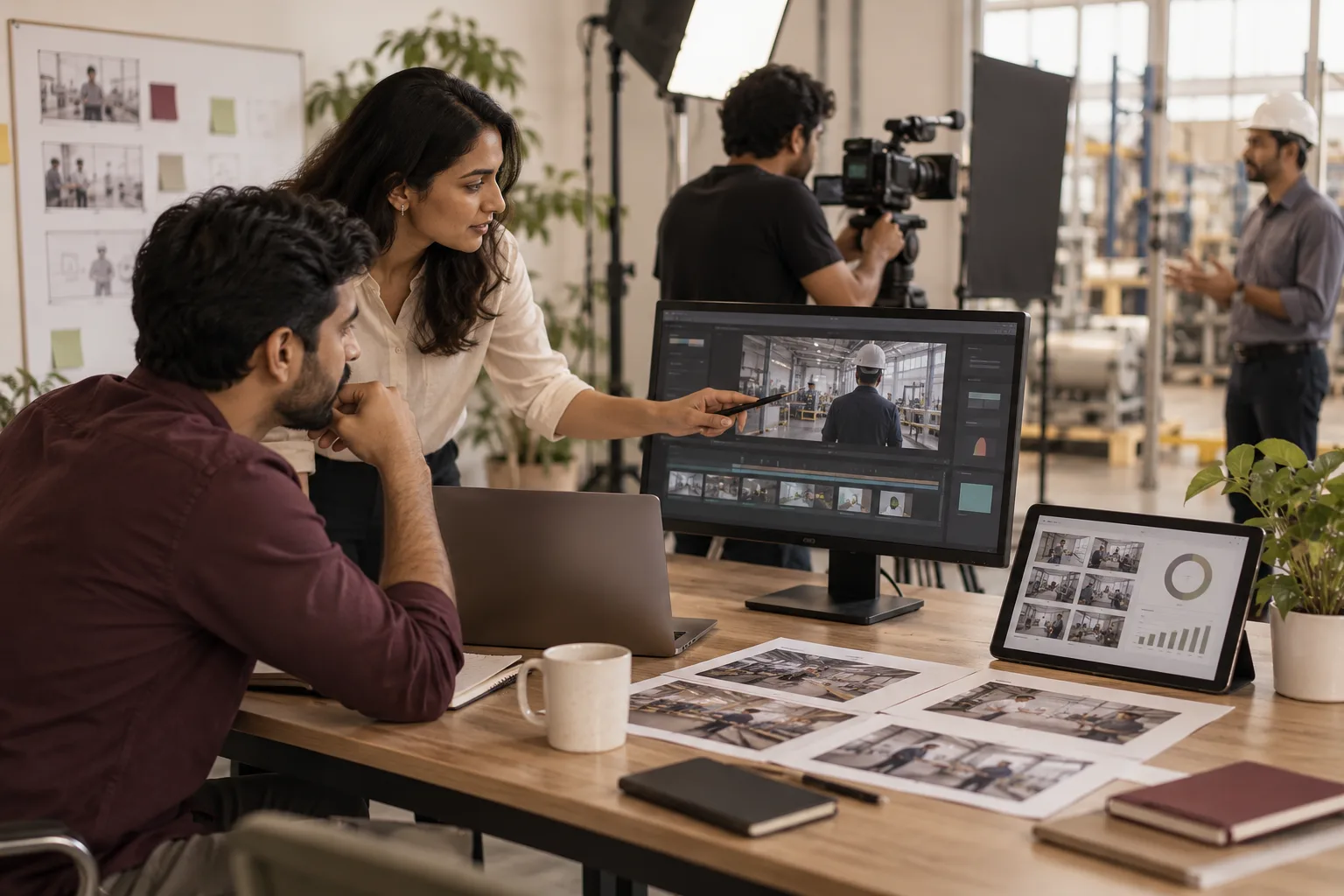
One video, under two minutes, shot as a walk. Start at the gate, go through the entrance, to the front desk, up to one room, to the window, back down to the dining space or hall. No music that fights with the voice, no text on the screen longer than three words. If a staff member speaks, one sentence each: "This is our deluxe room, it faces the lake."
Make a short vertical cut of fifteen seconds for the profile and for messaging apps. Keep the full walk on the website and the video channel.
Menus and tariffs that load
Type the menu. Put it on a web page as text with prices, then offer a PDF for printing. A photograph of a printed menu is invisible to search, impossible to zoom on a small screen and painful to update when a price changes.
Keep the tariff in a table: room type, number of guests, what is included, the price, the extra-bed rate. If prices change by season, say so. Name the season. For a hall, show the capacity for seated and for standing, since they differ, and the catering arrangement in one line. Printed and online versions must match, or two guests are quoted two prices.
What to update each season
| When | What to re-shoot or retype |
|---|---|
| Before the main tourist or wedding season | Exterior, lawn and hall at the start hour; fresh room shots if linen or paint changed |
| After a renovation | Every affected room, and the tariff page as soon as it changes |
| When the menu changes | The menu text first, the five top dishes second |
| After the rains | Approach road and parking, so no guest arrives expecting dry ground |
| Festival decoration | Keep a separate album; do not replace the standard shots with it |
For example: a forty-seat restaurant in Kozhikode
This is an invented case. A family restaurant in Kozhikode is known for its biryani and sadya. Its website has one photo of the building, a menu photographed on a table and a profile with eleven pictures of people eating, none showing the dining room clearly. Callers keep asking if there is a private room.
A half-day shoot settles it. The private room is photographed laid for twelve, with its size written beside the picture. The menu becomes typed text, and the sadya price is listed under the season it is served. The five top dishes are shot again in daylight on the real plates. The front desk then answers "is there a private room" with a link, where before it described the room from memory. The owner also deletes six of the eleven people-eating pictures, since none of them answered a question. The shoot costs a day of kitchen time, and the private-room photograph shows a scuffed wall that has to be repainted before the next one.
This works when the buyer is choosing on looks. If your guests are regulars who book by phone, spend the effort on the menu text and the reply speed first. Other hospitality trades are under hospitality sales and marketing.
Check before you publish
Ask someone who has never been to the property to look at the page for a minute and then tell you how many people the hall seats and what a double room costs. If they cannot, a guest cannot either. If you would rather have someone plan the walk-through video, video production and marketing is the service, and tell us what you need is where we start.