Notes for owners · Sales management
Proofs and sample books: what to show a first-time print buyer
A first-time print buyer is afraid of a wrong colour on 5,000 pieces. This post covers which proof, which sample book and which sign-off line calm that fear and protect the press.
The GullySales team · Updated 17 Oct 2026 · 5 min read
On this page
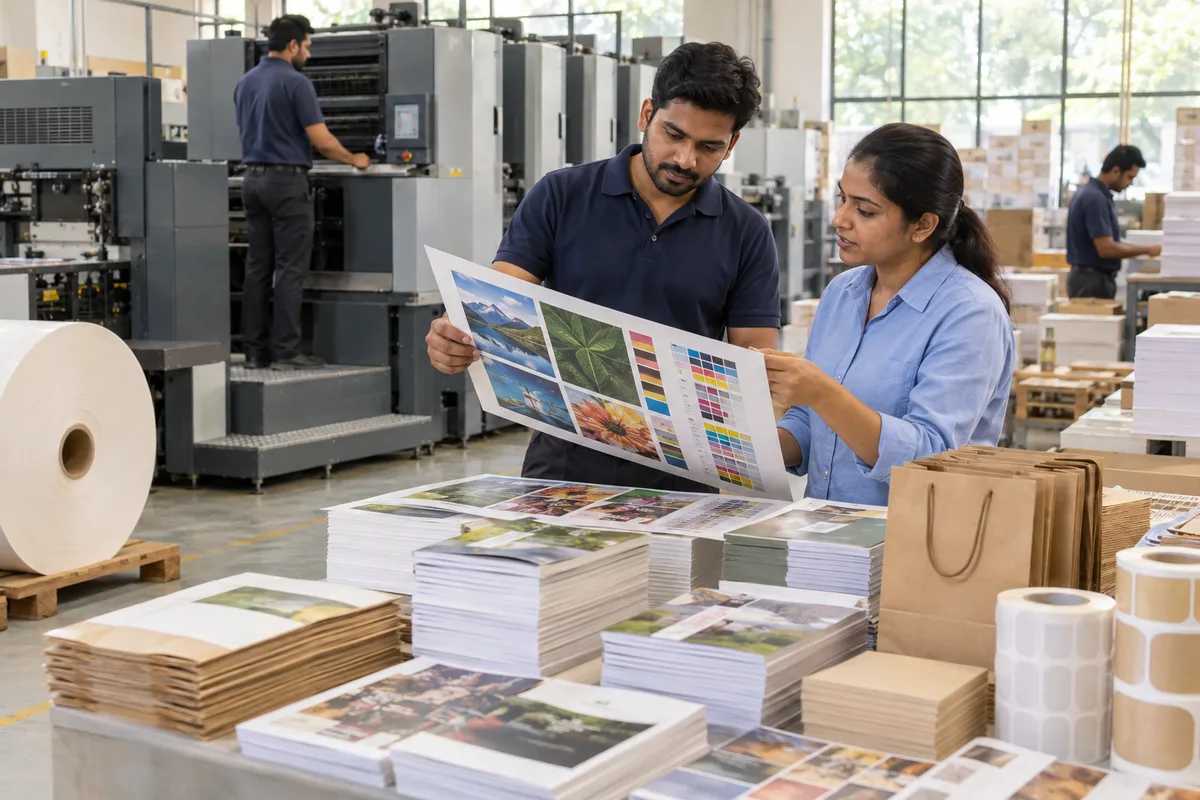
A first-time print buyer is afraid of one thing: five thousand pieces in the wrong colour, with their own boss asking who approved it. Calm that fear with three items, shown in this order. First, a sample book of your own stocks and finishes they can touch. Second, a proof of their actual file on matching paper. Third, a one-line sign-off that says exactly what they are approving. Then say plainly what a proof cannot promise.
What a new buyer is really asking
Repeat customers trust your eye. A new one has a screen file and a worry. Ask where the job will be used before you offer anything. A visiting card in a dealer's pocket, a carton on a shelf and a school prospectus tolerate different amounts of colour drift. Knowing which one you are dealing with tells you how much proofing to offer.
Many first-time buyers worry less about the print than about being blamed. A signed proof turns that blame into a shared decision.
The sample book: what goes in it
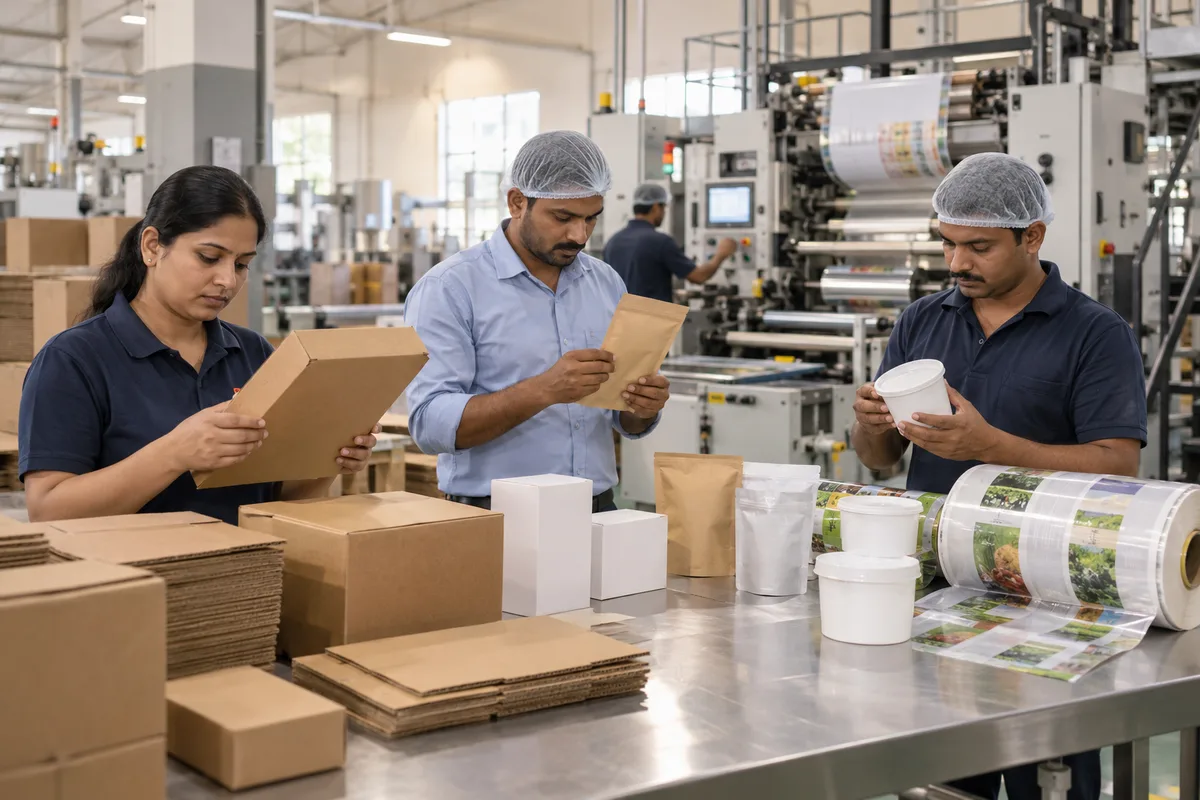
Keep one physical book you can post or hand over, not a folder of phone pictures, because a photograph cannot show the feel of paper.
- Three or four paper stocks with weights labelled. Include one uncoated and one coated.
- Finishes on offcuts: matt and gloss lamination, spot varnish, foil, so the buyer can feel the difference.
- A printed colour strip: the same solid colour on coated and uncoated paper. It explains why their logo looks duller on the cheaper stock.
- One finished job for each product you sell most, such as a brochure, a carton or a catalogue, with quantity and stock written on the back.
Leave out jobs you are not proud of. The book is your shop window.
Which proof to offer
| Proof | What it shows | What it cannot show | Offer it when |
|---|---|---|---|
| PDF on screen | Layout, spelling, image placement | True colour | Always, for every job |
| Digital print on similar stock | Close colour, finish feel | Exact press colour | Cartons, brochures, first jobs |
| Press proof or wet proof | Real ink on real stock | Variation between later runs | Brand colour matters, or the run is large |
| Pre-production sample | Fold, cut, assembly | Colour variation across the run | Boxes, folders, anything die-cut |
Do not offer the most expensive proof by reflex. A buyer ordering flyers for a shop opening needs the PDF and a quick look at the paper. A buyer ordering a thousand rigid boxes needs the pre-production sample.
Decide who pays before the buyer asks. One rule a press can use: the PDF is free and a digital proof on the real stock is free against a confirmed quotation. A press proof is charged, then adjusted against the order if it goes ahead.
The sign-off line
Colour disputes happen because the approval was vague. The proof should carry a sentence the buyer signs or replies to, in words like these:
"I have checked spelling, phone numbers, sizes and images. I understand that printed colour can differ slightly from the screen and between runs. I approve this for printing."
Send it by WhatsApp or email and keep the reply. If the buyer has a colour reference, write it on the proof. That might be a Pantone code or a swatch from a previous printer. Say whether you are matching it or only coming close. Our note on stopping artwork delays goes deeper on how many revision rounds to allow.
When this much effort is not worth it
For a small one-off job from a buyer who will never reorder, a PDF proof and a plain sign-off are enough. A wet proof on a flyer is wasted money.
And if a buyer refuses to sign anything yet wants a guarantee of exact colour, say honestly that no press can promise an identical match to a screen. Better they hear it before the order than after delivery.
For example: a Guwahati tea packer and a gold logo
Imagine, as an invented case, a small tea packer in Guwahati ordering 5,000 gift cartons from a press for the first time. The designer's file is in RGB, and the logo is a rich metallic gold. The press posts its sample book, and the buyer picks a 300 gsm coated board.
The press could have printed straight from the file. On a phone, RGB gold can look like shining metal. Printed in CMYK on coated board, it can turn duller, closer to a flat mustard. So the press runs a digital proof on the chosen board and lays it beside the foil offcut from the sample book. The packer sees the difference at once.
The packer then has a choice that costs money, and makes it knowingly: foil on the logo alone, and plain process colour for the rest of the carton. The foil adds a block charge and, say, ₹0.60 a carton (invented), which the packer grumbles about. The sign-off message names the board, the foil and the quantity. When the cartons arrive, the packer's owner holds one against the signed proof and approves the delivery. The printed gold is a shade flatter than the screen, as the sign-off line said it could be, so the argument stays short. Had the press only said "colour may vary", it would not have.
Putting the order of events on paper
Put the three steps on one page: look at the book, check the proof, sign the line. Send it with your first quotation. A new buyer then knows the road. Start with the sign-off line, since it costs nothing and settles most arguments. The trade is on our paper and printing sales and marketing page, and sales collateral development is the related service. If you want help with the book and the process sheet, tell us what you need.
Related services