Notes for owners · Industry playbooks
Selling appliances online against big marketplaces: what a local seller can offer
A local appliance seller cannot win on the price of a box; this post shows which products to sell online on site checks, installation, demos, stock and service, and which to leave to the marketplaces.
The GullySales team · Updated 17 Oct 2026 · 5 min read

On this page
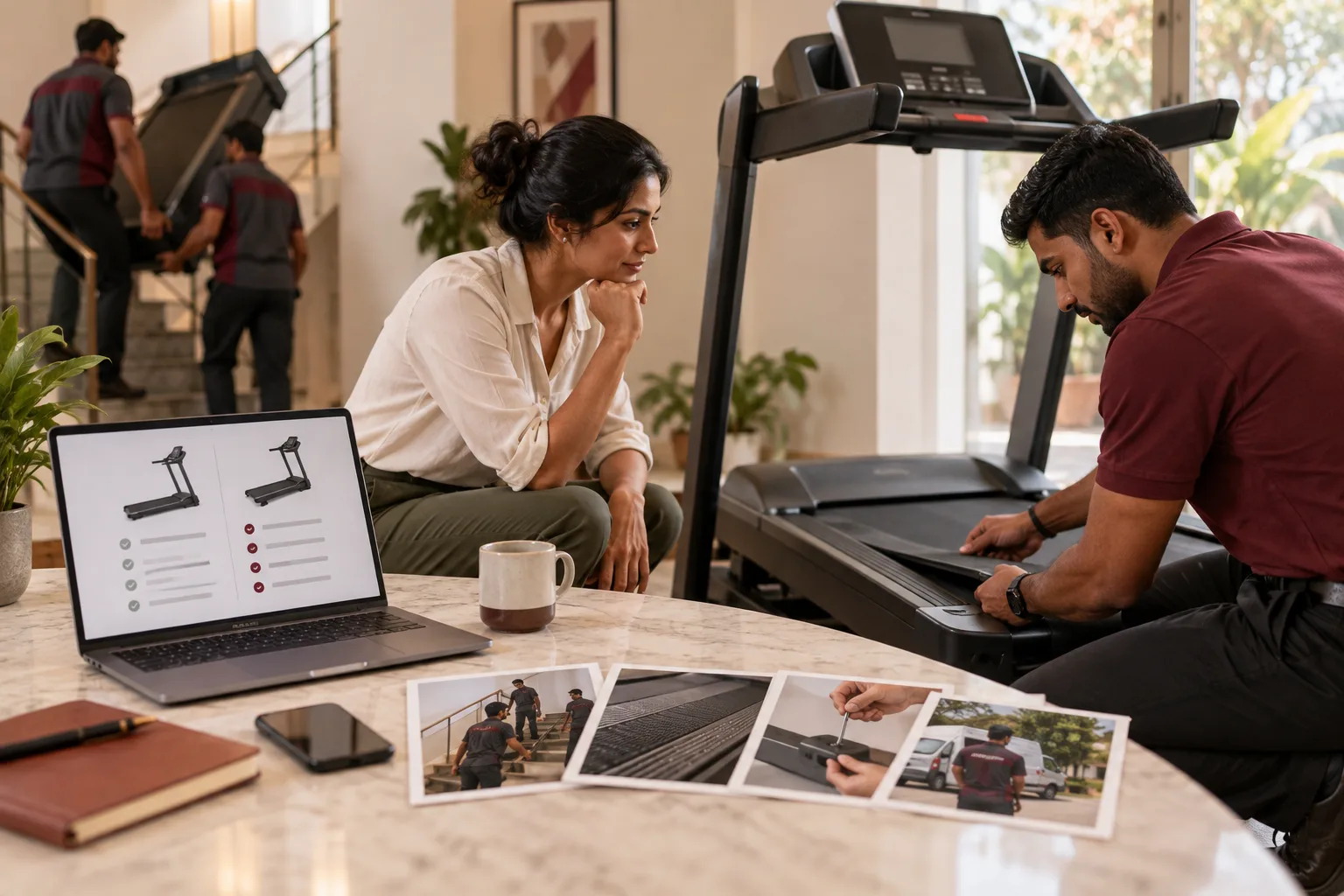
"Buyers walk in, open the fridge door, then show us the marketplace price on their phone." A local appliance seller will not win that on the price of the box, and should stop trying. Sell online what a marketplace finds hard to do. That means a site check before the buyer pays, installation by a team they can call by name, and a demo in the showroom. Add delivery from stock in your area and someone who chases the service when it breaks. Advertise the products that need those, and leave the kettles to the marketplaces.
Where the marketplace beats you, honestly
On price for small appliances. On range, since no showroom stocks every colour of every mixer grinder. On easy returns for a sealed box, and on the bank and card offers that run during festival sales. If the product is a kettle, an iron or a hair dryer, the buyer needs nothing from you except the box.
You will lose those sales. That is fine, as long as you stop spending money to lose them.
Where a local seller wins
Installation first. A site check before payment answers the buyer's worry and shows any extra charge before the box arrives. What to check for each product is in our post on installation and demo bookings.
Then the rest. People want to hear how loud a chimney is and see inside a fridge with the shelves out, so the demo matters. Stock in town means the washing machine arrives the next day, and the old one leaves on the same trip. And service: when the AC stops cooling at the peak of summer, the buyer wants to ring someone who knows the address. You coordinate with the brand's service network. You do not have to promise what the brand's warranty covers, only who answers the phone.
A five-question test for each product line
Before you spend a rupee advertising a product line online, put it through these five questions.
- Does the buyer need a site check, or an installation they worry about?
- Is it heavy or awkward to get up the stairs and into place?
- Does the buyer want to see, hear or open it before paying?
- Can you deliver it from your own stock sooner than the marketplace promises?
- Is the price gap smaller than what your installation and service are worth to this buyer?
Three or more yes answers: build a page for it, advertise it with your offer in the first line, and answer its enquiries the same day. One or two: list it on your site and Google Business Profile, but do not pay to advertise it. None: sell it as an add-on with something bigger, or leave it to the marketplace.
Expect split ACs, chimneys, built-in hobs and front-load washing machines to pass. Expect mixer grinders and irons to fail. Televisions sit in between, and the answer depends on whether you mount them on the wall.
Answering the screenshot
A buyer who sends a marketplace screenshot on WhatsApp is still talking to you. Do not argue the number, and do not cut it in the first reply. Save this as a quick reply, with your own figures in the brackets:
Thanks for sending this. That price is for the box. Ours, ₹[price] for the same 1.5 ton split AC, includes fitting by our own team with up to [length] of pipe, taking away your old AC, and [name] on [number] to ring if it stops cooling. Send one photo of the wall inside and one of the spot outside, and I will tell you today if anything extra, such as a stand, is needed. If you would rather buy online and use your own technician, that is fine; we fit units bought elsewhere at ₹[price] a visit.
The two photos do the work. They turn a price comparison into a site check, and the last line keeps the buyer who leaves.
Some brands set rules on how their dealers show or match prices online. Read your dealer agreement before you advertise a price. Quote star ratings and safety marks exactly as the box and the brand state them, since the rules behind them change.
When not to try: a buyer who only wants the box, has a technician of their own and is ordering tonight. Let them go politely, with the paid-visit line.
For example: a Bareilly dealer in the weeks before the heat
Imagine an appliance dealer with one showroom in Bareilly, getting ready for the summer AC rush. The summer before, WhatsApp enquiry after enquiry came back with a marketplace screenshot. The staff answered each one with a lower number. The margin went, and buyers who had the lower number in writing still checked it against the marketplace once more.
This summer the staff were told not to quote a lower price in the first reply. Every screenshot got the line-by-line message and the request for two photos. One buyer in a top-floor flat sent photos: the outdoor spot was a parapet with no ledge. The dealer's reply said a stand was needed, priced it, and booked the fitter. The buyer paid the dealer's price, because nobody else had mentioned the stand. In this illustration, 14 of 40 screenshot enquiries became orders at full price. About 10 of the other 26 bought the box online, and four of those rang back for the ₹1,200 paid fitting visit, which is where the dealer earned on them. The rest went quiet.
Getting the enquiry to a site check
Appliance enquiries go cold fast, because the marketplace is one tap away. Reply with a question rather than a price list: "Which room, and is it a new point or replacing an old AC?" Then book the site check while the buyer is still answering.
Run the five questions on your biggest lines
Run the five-question test on your biggest product lines, and stop advertising the ones that fail. Fill in the screenshot reply with your own prices and save it on every phone that answers WhatsApp. Appliance dealers are one of the trades on our e-commerce sales and marketing page, and if you want help with the pages, the ads and lead response and follow-up, tell us what you need.