Notes for owners · CRM, automation and RevOps
Selling packaging online to small brands: minimum order, sample and artwork in one flow
How a packaging supplier turns 'need boxes, price?' into a quote on the first reply: show the minimum order and sample options on the page, and ask type, size, quantity, print and artwork stage in one form.
The GullySales team · Updated 17 Oct 2026 · 5 min read

On this page
"Hi, need boxes for my candles, what is the price?" That is the whole enquiry, and it arrives on WhatsApp, Instagram and your website form all week. A small brand cannot answer your questions because it does not know what they are. So answer them on the page instead. Show your minimum order and your sample options above the form, then ask for packaging type, product size, quantity, print and artwork stage in one go. The first reply can then be a price range and a sample offer, not five questions spread over five days.
Why the first reply turns into five questions
The founder of a skincare or candle brand has never bought packaging. They do not know a mono carton from a mailer box, or that you need the inside size, not the outside. Nobody has told them about die charges for a new carton shape, or cylinder charges for a printed pouch, and those one-time costs make a small run look absurd per piece.
So you reply asking for size. A day later they send a photo of a competitor's box. You ask for quantity; they say "start with 100". You quote at your offset minimum, and the price per box is more than their product. They go quiet and buy from a seller whose page said "from 50 boxes".
Each question costs a day. By the third, the brand may well have moved on.
Put the minimum and the samples above the form
Say plainly, near the top of the page, what you can make in small numbers and what you cannot. For example, a page might read: "Plain stock mailer boxes from 50 pieces. Digitally printed boxes from 300. Offset printed cartons from 1,000, plus a one-time die charge for new sizes." Those numbers are illustrative; use your own.
Then set out the sample choices, because small brands often ask:
- A plain stock sample in the size you think fits, free or for the courier cost.
- A printed prototype of their actual design, charged, and adjusted against the first order.
- A PDF proof of the artwork on your dieline, before anything is printed.
A brand that reads this before writing to you sends a better enquiry, or decides you are not for them. Both save you a day.
The quote form, in one screen
Ask what the brand can answer, in words it uses. This is the layout:
1. What are you packing?        candles / cosmetics / food / clothing / other
2. Packaging type               mailer box / product carton / rigid gift box /
                                pouch / label / not sure, show me options
3. Product size (cm)            length x width x height, or "I will courier one"
4. First order quantity         under 300 / 300 to 1,000 / 1,000 to 5,000 / more
5. Printing                     plain / one-colour logo / full colour / not sure
6. Artwork                      print-ready file / logo only / need design help
7. Needed by                    date
8. Name, brand, WhatsApp number, city
Put a small photo beside each packaging type, since "rigid box" means nothing until you see one. Ask for the product's size, not the box's; the brand can measure the product. The "not sure" options keep beginners in the form instead of sending them back to WhatsApp.
If the brand picks food, add one question: does the packaging touch the food directly? Food-contact rules differ by product and change, so the brand should check with its own adviser, and you should state what your material is certified for only if you hold that certificate.
What happens to each enquiry
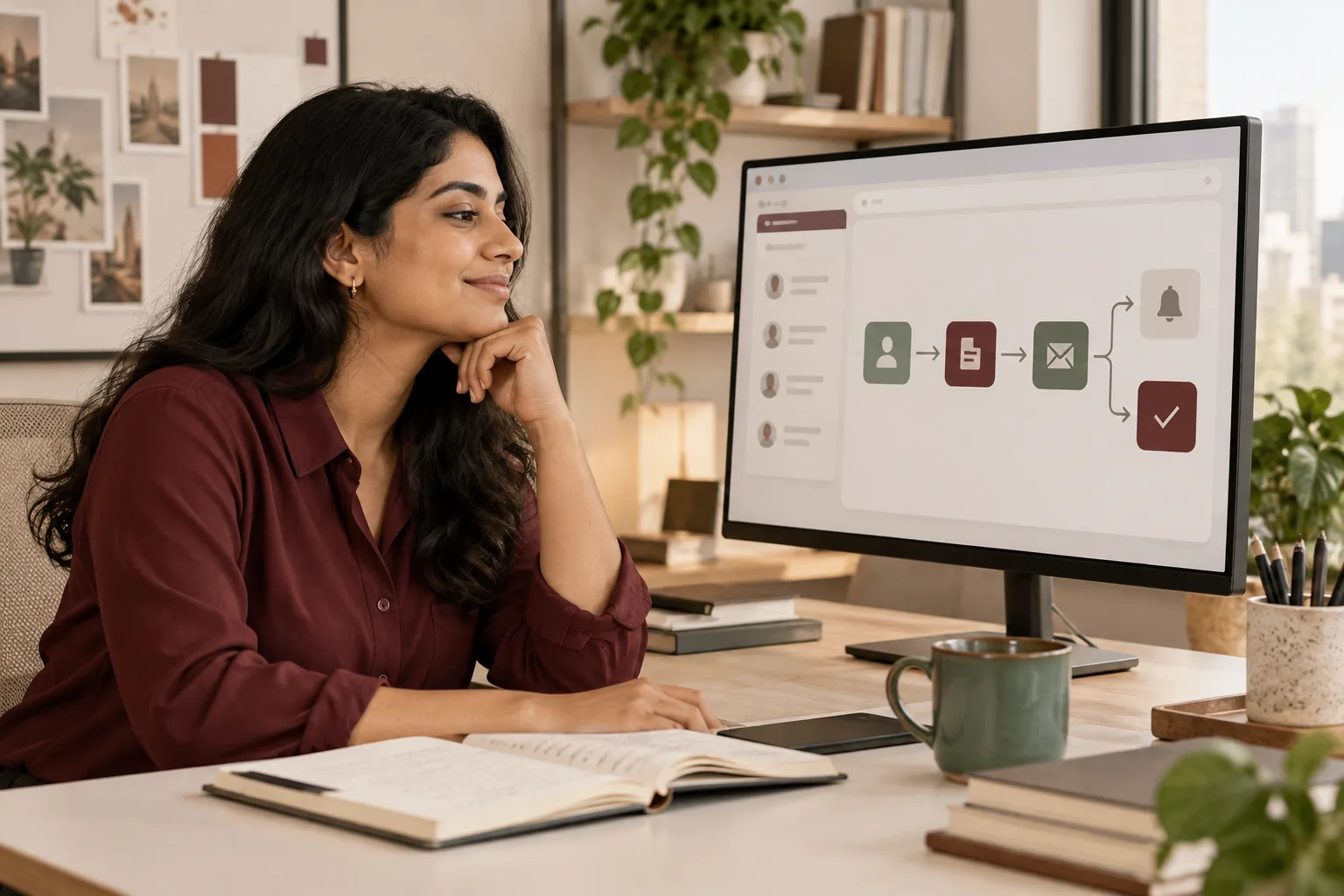
The answers arrive as fields, not a paragraph, so each one can go to the right person and the right reply. Set these rules once, in your CRM or a shared sheet, and the sorting stops depending on who happens to read the message first:
Below your minimum gets the stock route: a plain mailer with a printed sticker or rubber stamp, and a note on the quantity at which printed boxes start to make sense. Do not ignore these brands. One ordering 50 today may need thousands later, and it will remember who answered.
Logo only or need design gets your dieline template the same day, with your design fee or a designer you trust. The quote does not wait for the artwork.
Within range, artwork ready gets a price range and the prototype offer, followed by a call.
Not sure of type gets a ten-minute video call with samples in your hand.
The brand ordering 5,000 cartons with print-ready art should not sit in the same queue as one asking about 50 plain boxes.
Imagine: a carton maker in Bhiwandi
Imagine a carton and mailer box unit in Bhiwandi that started taking enquiries online. Its form asked for name, phone and a message. Every reply began with "please share size, quantity and print details". It quoted offset rates for orders of 100 and sent free printed samples to anyone who asked.
The enquiries were plentiful and almost none became orders. The unit was spending press time on samples for brands that never meant to order at its minimum.
It changed three things. The page now states the minimums by process. The printed prototype is charged and adjusted against the order. The form asks the eight questions above. Enquiries fell from about thirty a month to about twenty (illustrative figures). The ones that came had a size, a quantity and an artwork stage, and the brands below the minimum bought stock mailers instead of disappearing.
When small brands are not your market
If your machines are set up for long runs for FMCG companies, small brands will cost you more in conversation than they pay. Say "minimum 10,000 pieces" on the page, or whatever your real figure is, and do not run ads aimed at founders. A clear minimum is kinder than a slow no.
Count the replies it takes to reach a price
Go through this month's packaging enquiries and count how many replies each one took to reach a price. If any took more than one, rebuild the form along the lines above. Our note on what an enquiry form should collect covers the general case. Packaging is one of many product types in the e-commerce sales and marketing pages, each with its own quote questions. If you want help with the form and the routing behind it, tell us what you need; form and enquiry funnel optimisation and lead qualification are the related services.