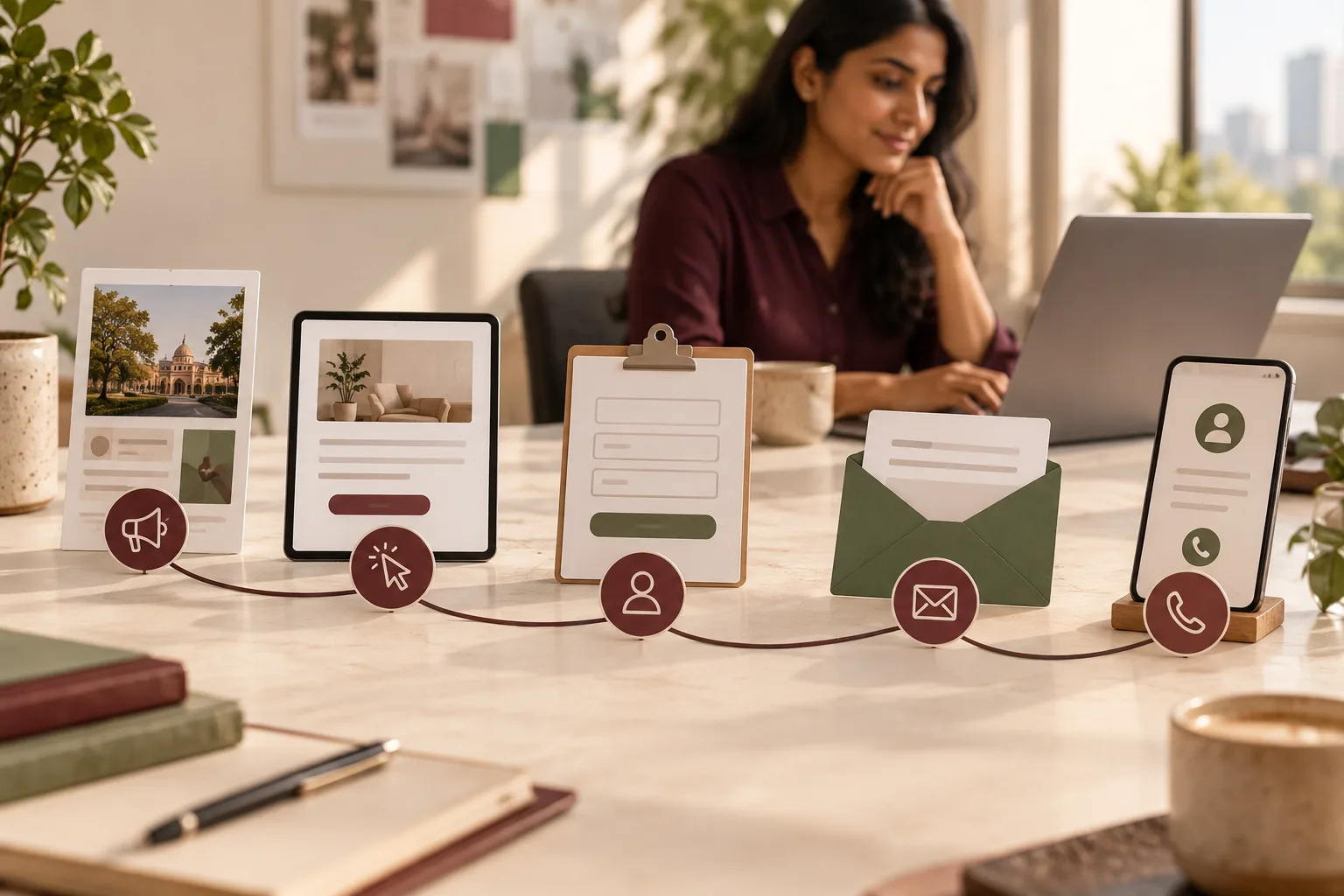
Notes for owners · Digital marketing
Webinars, email and educational content: which one fits a small sales team
A comparison for a team of two: what a webinar, an email list and a written guide each cost in hours, and which one produces a call you can follow up.
The GullySales team · Updated 17 Oct 2026 · 6 min read

On this page
For a team of two, pick the format by the call it produces, not by how modern it looks. An email to people who already know you costs the fewest hours and gives the quickest replies. A written guide that people leave a number for gives a call you can follow up. A webinar costs the most hours and fits only a buyer who will give you an hour to learn. Start with one, and count the calls it brings.
What does each one really cost in time?
Time the last thing you made rather than trusting anyone else's figures. The ranking matters more than the hours.
| Webinar | Email to a list | Educational guide | |
|---|---|---|---|
| Hours before it goes out | Many: topic, slides, test run, invitations, reminders | Few: one message | Several: writing, layout, a page to collect details |
| Hours on the day | The hour itself, plus setup | None | None |
| Hours after | Follow-up to attendees and to no-shows | Replies, as they arrive | Calls to everyone who downloaded |
| Needs an audience first | Yes, you must bring people | Yes, a list you built | No, but needs a way to be found |
| Produces a name and number | Registration form | Only if they reply | Yes, if you ask |
| Lifespan | One event, then a recording | One send | Months, if still correct |
The webinar's real cost is not the hour. It is the invitations. A webinar with five attendees took the same effort as one with fifty, and filling the room is the part small teams underestimate.
Size it with your own numbers before you commit. Take a sheet and fill these four lines:
- How many people can you invite personally, by name, by call or WhatsApp?
- Of the last event or offer you sent them, how many replied? Use your real fraction, not a hoped-for one.
- Multiply the two, then halve it, because many who say yes do not come.
- Would you still run the session for that many people?
If you invite sixty people and the last offer drew six replies, you are planning for about three in the room. A webinar for three is a conversation, and a phone call would have done it in less time. If the answer to line 4 is no, choose another format.
Which one produces a call you can follow up?
Ask one question of each format: at the end, do I hold a person who raised a hand?
A webinar registrant has. An email recipient has not, unless they reply. A guide download has, if you asked for a number and the form is short. A blog post has not.
So the real comparison is between the formats that give you names. If your problem is that you have no one to call, a guide or a webinar solves it, and email does not. If your problem is that you have names and they go cold, email solves it, and the others do not.
For example: a cold-room installer in Mangaluru
Take an invented pair of people who design and install cold rooms for fish and fruit traders. They tried a webinar on "reducing spoilage in storage". A handful registered, fewer came, and none was ready to buy. The team lost a fortnight of site visits preparing it.
The mistake was choosing the format before asking where their buyers learn. When the two of them called five traders afterwards, none had ever joined an online session, and each said they ask another trader or ring the supplier. The team's better move was a one-page guide in Kannada and English, "Five questions to ask before you buy a cold room", with a number to call. They put it on WhatsApp for the traders they already knew and on their Google profile. Each person who asked for it got a call.
It brought fewer people than the webinar promised, and about half of those who downloaded it never picked up the phone. But those who did were talking about a site and a cold room, not about spoilage in general.
What do I do with the people who register but do not come?
Registrants who did not attend asked to hear from you once, and they are warmer than anyone on a cold list. Send each a short message with the recording link and one question: "Which of the three examples was closest to your plant?" Ring the ones who answer. People who attended get a call, not a message, since they gave you an hour.
For a guide, the equivalent is the person who downloaded and never replied. Ring once. If they do not pick up, send the one-line question and stop. Chasing a download three times can turn a helpful guide into a sales trap.
How do I decide?
Use a rule, not a mood. Go through these in order and stop at the first yes.
- Do I have a list of people who know me and have replied to me before? Send email first. It is the cheapest test of whether your offer has any pull.
- Do buyers search or ask for help before they buy? Make a guide that answers their one question and asks for a number.
- Do buyers pay for learning, such as software or compliance tools, and will they give an hour? Then a small webinar for a named group, with a personal invitation to each person.
- None of the above? Neither fits yet. Spend the hours on calling the customers you already have.
When should you not use each?
Not a webinar if you cannot bring at least a handful of the right people yourself. It is also wrong for a trade that buys on price and a visit.
Not email to bought lists or to people who never asked. It can harm your sender name and costs you replies from people who would have talked to you. Keep it to people you have dealt with, and check the consent rules with your own adviser.
Not a guide if it is generic. Tie it to one buyer's one question, in that buyer's words.
Running one for a quarter
Pick one. Decide beforehand what counts: the number of people who gave you a name and number, and how many of those you actually spoke to. Write both on a sheet. Review them with your partner once the sheet holds twenty names, or after three sends, whichever comes first. Keep or drop the format on that evidence. The sales process hub shows where the first call sits afterwards. If you want help choosing, see email marketing or tell us what you need.
Related services