Notes for owners · CRM, automation and RevOps
What to do with a property enquiry that says only 'send details'
How to answer a property enquiry that says only 'send details': one useful question and one relevant item instead of a brochure and price list, with reply scripts that work on WhatsApp.
The GullySales team · Updated 17 Oct 2026 · 6 min read
On this page
When a property enquiry says only "send details", reply with one useful question and one relevant item, not a brochure and a price list. The question tells you what the buyer wants. The single item, such as the floor plan for the size they probably need, shows you listened. A flood of attachments gives the buyer a pile to sort, and a pile is easy to leave unanswered.
What does "send details" actually mean?
It can mean four different things, and the reply should depend on which one you are looking at.
- A buyer who is early and unsure what to ask.
- A buyer who has filled the same form on five listings and is collecting.
- A broker or investor who wants the facts quickly.
- A person who wants to be left alone but will give you a sentence, the way people at a shop say "just looking".
The words do not tell you which. The source does, and so does the time of day, and so does whether they gave a locality or a budget. Look at the enquiry before you reply. An empty form gives you nothing. A portal enquiry on a "2 BHK, east side" listing tells you a lot.
The reply: one question, one item
Here are three versions, each for a different starting point. Use WhatsApp wording if that is how they wrote; a by-hand message works, no buttons needed.
When they have named a unit type or a listing. "Thank you for writing. I have attached the floor plan of the 2 BHK you looked at. Are you planning to move in yourself, or is this for letting out? That helps me tell you what matters most."
When they have named nothing. "Thank you for writing. Before I send the wrong thing, which would you like first: the plans, the price structure, or the location and approach? I will send that now and the rest when you ask."
When the enquiry came from a broker. "Thank you. Which of your buyers is this for, and what size and budget range? I will send the plan and the price sheet that fit, and tell you the earliest visit slot."
Notice what these share. They are short. They offer the next step. They give the buyer an easy one-word answer, which is the point: people reply to questions they can answer in a few seconds.
What not to send
Skip the following in a first reply.
- The full brochure PDF. It is large, it loads slowly on a phone, and the buyer reads page one.
- The whole price list. Prices without the buyer's unit in mind lead to arguments over numbers that do not apply to them.
- A video link with no context. Name what is in the video and why it is relevant.
- "Call me when you are free." It puts the work on the buyer.
The exception: if a buyer writes "send price and plan for the 3 BHK" or something equally specific, do exactly that, plus one question. The advice above is for the vague enquiry, not the specific one.
Timing and channel
Reply while the buyer is still looking at the screen. A buyer on a portal may well have contacted several projects in the same sitting, and the reply that arrives first stands a better chance of an answer. If the enquiry arrives at night, a short acknowledgement that names when you will follow up is better than silence, and better than a long message at midnight.
Match the language too. A buyer who writes two lines in Hindi or Telugu should not get an English template back. Keep a version of each reply in the languages your enquiries actually arrive in, and have the executive who speaks it send it.
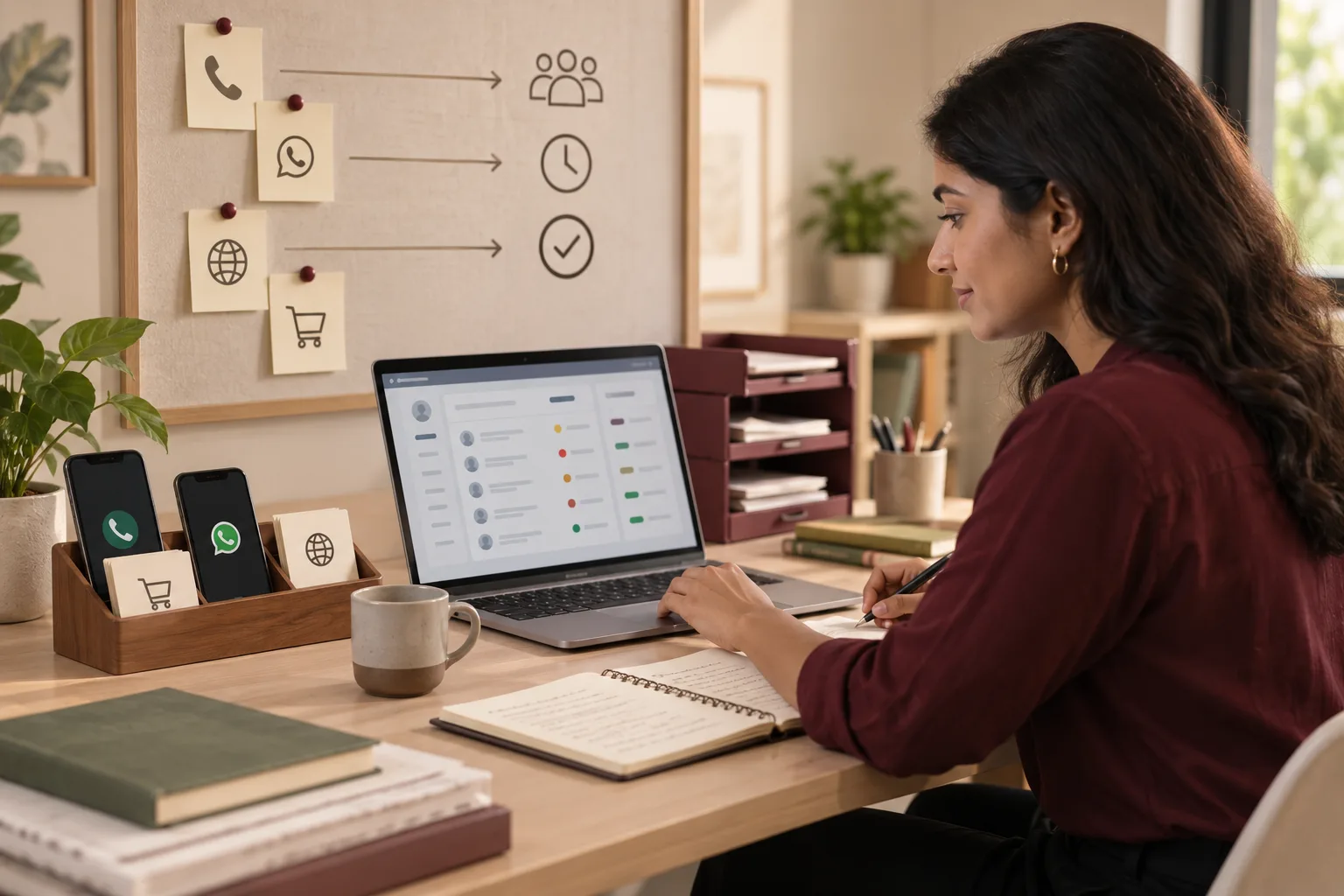
Match the channel. If they wrote on WhatsApp, answer on WhatsApp. If they left a number on a form, call once, and if there is no answer send the message version above. Do not do both in the same minute.
Four messages in one minute
Take an invented case in Jabalpur: a portal enquiry on a two-bedroom listing arrives with the message "send details". The executive replies with the brochure, the price list, an amenities video and a location pin, four messages inside a minute. The buyer reads none of it. Two nudges later ("did you get my message?") the number is blocked.
The next similar enquiry gets one message: the two-bedroom floor plan, because that was the listing, and one question, whether the flat is to live in or to let out. The buyer writes back, "to live in, my office is near Napier Town." That one line tells the executive to talk about the distance, the school run and the lift, not rental income. A site visit becomes a fair next question.
Not every reply lands. The next enquirer answers the question with "just send price", and the executive has to decide whether to send a price for a unit the buyer has not chosen. The team agrees to send the starting price for that size with the note that it depends on floor and facing, and the buyer goes quiet anyway.
This is slower per lead than a broadcast. It will not suit a team that gets hundreds of portal enquiries a day with nobody to read the answers. That team needs a short automatic acknowledgement, and the question goes in when a person takes over. Nor does it suit the buyer who has asked for something specific; send that and stop.
Keep the replies where everyone can find them
Write three or four versions like the ones above, one for each kind of enquiry your project actually gets, and save them as quick replies. After a few weeks, look at which got answers and which got silence, and rewrite the silent ones. Qualifying leads before site visits explains what each question tells you. The guide to CRM and follow-up for real estate companies says where to record the answers, and the real estate and construction hub puts the first reply in the context of the whole sale.
Your first task: open your last ten "send details" enquiries, and write one reply for each of the three starting points above. If you would like the set written for your project, tell us what you need.