Notes for owners · Industry playbooks
Patients from Himachal and Punjab who call once and do not come
Why a family from Mandi or Ropar calls a Chandigarh hospital once and books elsewhere, and how to answer the travel and cost questions on that call and send a plan home.
The GullySales team · Updated 17 Oct 2026 · 6 min read

On this page
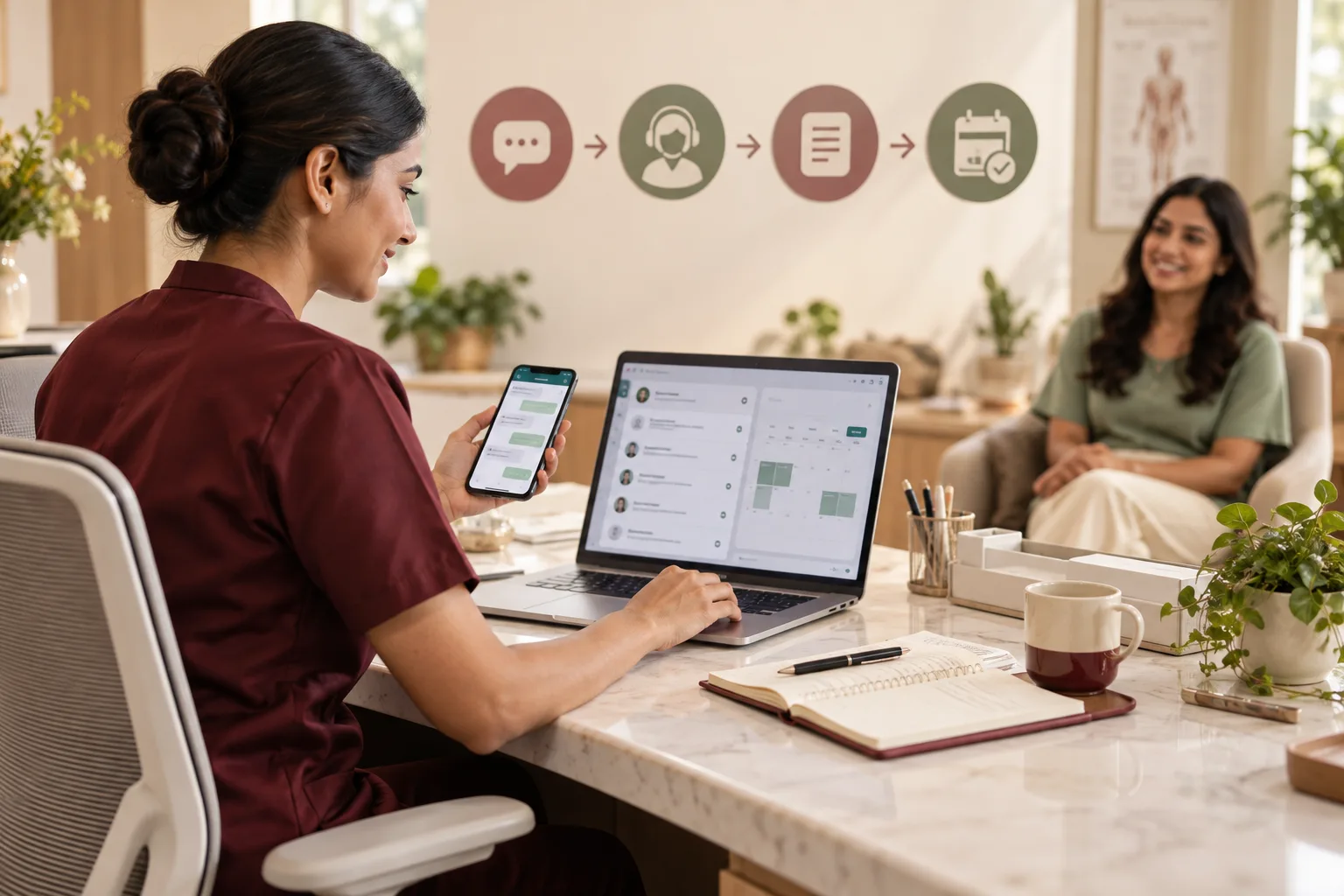
A family in Mandi or Ropar does not call a Chandigarh hospital to book. It calls to find out whether the trip is possible. Which day does the doctor sit? Can the tests and the consultation fit into one day, so they can drive back? Roughly what will it cost, and does their insurance work? Answer those on the first call, then send a written plan the family can discuss at home that evening. A family that gets vague answers may book whichever hospital picked up and spoke plainly.
Why the family calls once
For a family in the hills, a hospital visit is a day's drive down, an attendant taking leave, and the fear of coming home without being seen. The first call is a test of that trip. It is often made by a relative in Ludhiana or someone at home, not by the patient, and the same person rings two or three hospitals that afternoon.
The decision is made that night, at home, with the whole family listening. Whoever gave the clearest answers wins it. A busy reception line at lunchtime, a phone that rings out, or "aap aa jaiye, dekh lenge" can lose them, and few families ring back to complain.
What the first call must answer
Give your desk a sheet with this layout and the answers filled in for every doctor. Clinical questions go to a named nurse or the doctor's assistant with a call-back time; the desk never gives medical advice.
| The caller asks | What the desk says | What the desk writes down |
|---|---|---|
| Which day is the doctor in OPD? | The days and times from the current roster, and offers to hold a slot | Doctor, date and slot offered |
| Can we finish in one day and drive back? | Which tests the doctor's team usually orders the same day, and which need a second visit | Whether they plan to stay over |
| What will it cost? | The consultation fee and the range for common tests, from the billing sheet; for a procedure, that a written estimate follows the consultation | Exactly what was quoted |
| Do you take our insurance or card? | Yes, no, or who will check and call back today | Insurer or scheme name |
| What should we bring? | Old reports, scans, the list of current medicines, ID | Nothing |
| Where do we park, and where can the attendant stay? | The gate to use, parking, and stays nearby | Where they are travelling from |
The last column matters as much as the middle one. Without it, the next person who speaks to the family has no idea what they were promised.
The written plan, sent the same day
After the call, send one WhatsApp message to the caller, and with their agreement to one other family member. It holds:
- the doctor's name, the date and the reporting time;
- which gate to use, with directions from the Kalka side or the Kharar side, whichever way they will come;
- what to bring, and any instruction from the doctor's team, such as coming fasting for a blood test;
- the costs quoted, marked as indicative until the doctor has seen the patient;
- the insurance answer;
- one named person, and a number that is answered.
Here is an invented example:
Namaste. This is Rekha from the appointments desk, about your father's knee. Dr Sood sees orthopaedics patients on Tuesday and Friday, 10 am to 2 pm. Please reach by 9.30 on Tuesday, Gate 2, and ask for me at the desk. Bring old X-rays and the medicine list. The consultation fee is ₹800 and any tests are extra; please treat costs as indicative until the doctor has seen the patient. I will confirm your insurance scheme by evening. Reply here if the plan changes.
Keep it to one screen; the family will read it aloud at dinner. Send a short reminder the day before confirming the doctor is in.
For example: a day's drive for the wrong day
This is an invented case. A family from Mandi calls about the father's knee. The desk says the orthopaedic OPD runs daily and they should just come. They set out before dawn. The surgeon they wanted is operating that day; a junior doctor sees the father and says an MRI is needed, which cannot be done until the next afternoon. The family has nowhere booked to stay. The day costs the family about ₹4,000 in fuel and lost wages. They drive home, and the following month they take the father to a hospital nearer home.
Nothing about the medicine was wrong. The call was. Done properly, the desk reads the surgeon's OPD days off the roster and holds a slot. The question of whether an MRI might be needed on the day goes to the doctor's assistant, who rings back before the family sets out. The written plan carries the date, the gate, a nearby guest house for the attendant, and the indicative cost of the scan. The family still has to stay over a night, and one family in the next five calls says the plan sounded too expensive and goes elsewhere.
Calling back the families who went quiet
Keep a list of enquiries from outside the tricity that did not turn into an appointment. One person makes one call: did they manage to see a doctor, and was there anything the hospital did not answer? Then stop. A hospital that chases a sick person sounds like it needs the money.
Write down the reason each family gives: went to PGI, too far, cost, wrong day, nobody called back. After a few dozen calls the reasons show which part of the first call to fix.
What the desk and the messages should never say
No outcome promises, such as "you will be walking normally in a month". No diagnosis on the phone. No comparisons with a named hospital. No discount offered to make a family decide faster. Rules for how hospitals and doctors communicate with patients differ by state and body and change, so have your adviser read the call sheet and the message before they go live.
If the patient would be better seen nearer home, tell the family so. And give the desk the current roster before anything else.
Ring your own desk at lunchtime
Call your own reception line from a mobile at lunchtime and ask the six questions above as a family from Solan would. Write down which ones got a clear answer. Every vague one is a line for the call sheet. Our Chandigarh page covers the tricity, lead response and follow-up is the related service, and you can tell us what you need.