Notes for owners · Branding and communication
Writing for Bhojpuri, Maithili and Magahi speakers without losing Hindi buyers
Why a Bihar business should keep leaflets, WhatsApp messages and web pages in plain Hindi, and put Bhojpuri, Maithili or Magahi in the voice that answers the phone.
The GullySales team · Updated 17 Oct 2026 · 5 min read

On this page
Your best closer sells in Bhojpuri, so should the next leaflet be in Bhojpuri too? No. Keep everything written in plain Hindi, and put the dialect in the voice that answers the phone. A leaflet, a WhatsApp broadcast, your website and your Google profile should read the same in Siwan, Darbhanga and Gaya, and plain Hindi is the one language that does. Dialect builds trust when a Chhapra buyer hears Bhojpuri on the first call, or a Madhubani farmer is answered in Maithili at your stall. Print one dialect, and buyers from other regions read an advert meant for somebody else.
Why the dialect works on the phone and not on paper
Spoken, a dialect does in one sentence what a brochure cannot. A farmer from Nawada rings, and the person on the line answers in Magahi. The caller hears someone who knows the roads and the market day, relaxes, and asks the real question.
Written, the same dialect works against you. Spelling varies between printers, so one Bhojpuri word can appear three ways in three leaflets, and a dialect leaflet needs a native proofreader every time. A quotation or warranty card cannot afford that doubt. A line in Maithili tells a buyer in Gaya the advert was not meant for that buyer. And a relative in Delhi who forwards your message to an uncle in Ranchi reads Hindi without a pause, but may stop at a dialect he did not grow up with.
Which language goes where
In Hindi: anything a buyer reads, keeps or forwards. Leaflets, banners, the website, the Google Business Profile, WhatsApp broadcasts, quotations, receipts, warranty cards, and every price, date and term a buyer might hold you to.
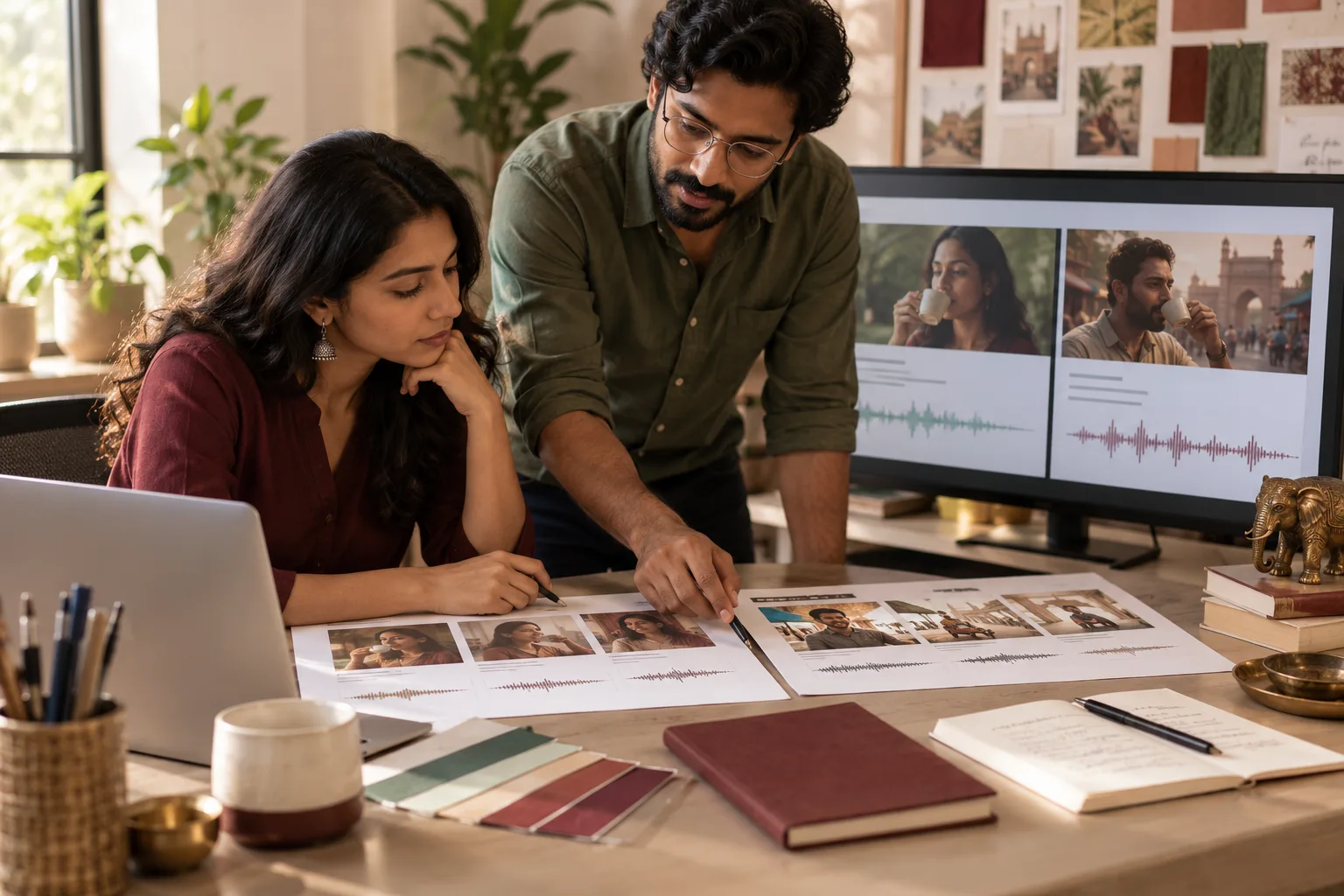
In the dialect: anything a buyer hears. The first call, the call-back, voice notes on WhatsApp, the conversation at the counter or the stall, the demonstration in the village, and the video where your own staff speak to the camera.
Simple Hindi, not office Hindi
Plain Hindi is not the Hindi of a government circular. Words like "kray", "avashyak dastavez" or "nishulk" make a buyer feel they are reading a form. Write the way a shopkeeper in Patna speaks in public: "kharidiye", "kaun se kaagaz laane hain", "koi charge nahin". Keep prices, dates, sizes and model names in numerals and English, because that is how they are written on everything else the buyer sees.
Do not translate English advertising line by line. A slogan that worked in English turns stiff and odd in Hindi. Write the Hindi first, from what the buyer asks, and read it aloud to the person who answers your phone. If they would say it differently, change it to the way they would say it.
Set up the phone so the dialect reaches the caller
The dialect only works if the right person picks up. Before your next campaign or mela, go through this list:
- Write down who on your staff speaks Bhojpuri, Maithili, Magahi, Angika or Bajjika, and who speaks only Hindi.
- Add a "district" field to your enquiry register and fill it on the first call.
- Pass enquiries from each region to someone who speaks its dialect, or have that person call back.
- Print that person's name and number on material for their region: "Maithili mein baat karne ke liye: (name), (number)".
- Send follow-ups as a voice note in the dialect, with the details repeated as Hindi text underneath.
- Stop anyone from putting on a dialect they do not speak. Buyers hear it at once.
For example: the leaflet printed for the wrong mela
This is an invented case. A tractor implements dealer from Patna takes a stall at a farmers' mela in Darbhanga. Someone at the office decides that a dialect will feel friendly and has 5,000 leaflets printed in Bhojpuri, for about ₹15,000. At the stall, farmers pick them up, read a line, smile, and put them down. Mithila farmers are being addressed in a dialect from the other end of the state. The two people at the stall speak Bhojpuri and Hindi. Few calls follow.
Putting it right costs one reprint and one borrowed colleague. The leaflet is reprinted in plain Hindi with prices and model numbers in English. Someone from the dealer's Darbhanga sub-dealer, who speaks Maithili, stands at the stall, with a name on the leaflet under "Maithili mein baat karein". Every enquiry from the mela is written down with the village and district, and call-backs go out in Maithili, with the quotation sent in Hindi text. The second mela brings eleven enquiries, not a flood, and the first 5,000 leaflets stay in a cupboard.
Where the dialect does belong in writing
A festival greeting in the region's own words before Chhath is warm. Nobody holds you to it. A regional creator speaking Bhojpuri to an audience in Saran and Siwan is speaking, not printing. Regional influencer marketing is the one place a dialect campaign makes sense, kept to the districts that speak it. A buyer who messages you in Maithili deserves a reply in Maithili from someone who writes it.
Skip the dialect for anything with a price, a promise or a term in it. In a regulated trade, a hospital or a coaching institute, keep every claim in Hindi and have it checked by your adviser, because rules differ by state and body and change.
Check this against your own call log before you decide: note the language of the last fifty first calls. If most opened in Hindi, your written material is already in the right language.
Read the leaflet aloud at the phone desk
Hand your current leaflet to whoever answers the phone and ask them to read it aloud. Circle every word they stumble on, or would never say to a caller. Under it, write who on your team speaks which dialect. Our Bihar page describes the districts and their buyers, website content writing is the related service for the written Hindi, and you can tell us what you need.