Auto glass, window film and tinting studios · Search engine optimisation
Get found by the owner who types the car model and the problem together.
SEO for a glass and tinting studio is the work of appearing when an owner searches a car model with a cracked screen, or a film with a city. GullySales works on the pages, the wording and the structure that match those searches to your studio.
Scope, fee, reporting and term are agreed in writing after we have read your brief and spoken to you.
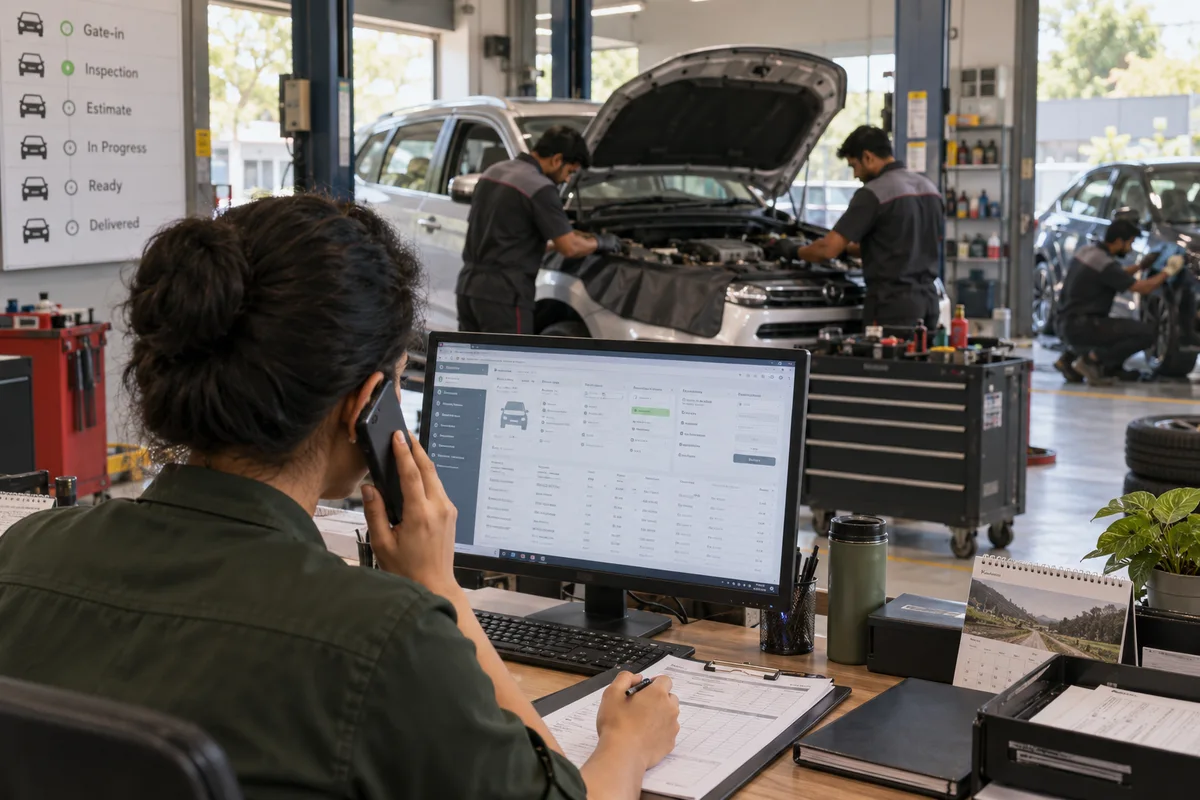
What search engine optimisation means
Search engine optimisation (SEO) is the work of getting your website to appear when a buyer searches Google for what you sell. GullySales builds pages around real search terms, fixes technical issues that block ranking, and tracks which searches actually bring enquiries.
Also for auto glass, window film and tinting studios
- Local SEO for glass and tinting studios
- Website for glass and tinting studios
- Lead generation for glass and tinting studios
- Social media marketing for glass and tinting studios
- Content marketing for glass and tinting studios
- Buyer personas for glass and tinting studios
- CRM for glass and tinting studios
- Follow-up systems for glass and tinting studios
Sales and marketing for auto glass, window film and tinting studios, the overview.
Last updated 14 Nov 2026.
For auto glass, window film and tinting studios
Where it usually goes wrong, and what we would do.
“Searchers name the car, not the service”
An owner types the model and year with windscreen replacement, because the glass differs by car. A single services page is invisible for those searches, while a page for each popular model and a clear way to confirm fitment is found.
“Insurance is half the question”
An owner searching for a windscreen wants to know about cashless claims as well as the price. A page that explains your claim handling in plain language answers the query and stops the reader clicking back to a dealer.
“Film searches are about the shade and the law”
People ask whether a tint is allowed and which film suits a hot city. A page that explains film types, warranty and the legal position in general terms, and tells the reader to check state rules, earns the click.
“Pages for localities beat one city page”
A studio near an arterial road is wanted by people on that road. Pages for the localities you actually reach carry the street names a searcher types.
What we do
What we deliver for auto glass, window film and tinting studios.
The work available for this need. We agree the deliverables and responsibilities for your engagement in writing.
A page per popular car model
Windscreen and door glass pages for the models your bay fits, each with the part type, the fitting notes and a booking route.
Result: The model search lands on a page about that model.
An insurance cashless explainer
A plain page on how a claim works at your studio, what the owner brings and where your involvement ends, checked with your adviser.
Result: The claim question is answered before the call.
Film pages by type and use
Separate pages for sun-control film, paint protection film and home window film, each using the maker's own warranty wording.
Result: Film searches match a page that fits them.
Locality pages from your booking history
Pages for the roads and areas the cars actually come from, with real photographs of the bay.
Result: Local searches show a page that knows the area.
Structured data and a clean sitemap
Technical tags for business, services and reviews, and a sitemap that lists every page you add.
Result: Search engines read each page as intended.
Search Console set up and read
The tool connected so impressions, clicks and queries are visible to you and to us.
Result: You see which searches reach the site.
How the result is measured
- Ranking positions
- Organic traffic
- Enquiries from organic search
Recorded as a baseline before work starts, so every later report has an honest comparison.
Searches your buyers type
Owners search with the car model and the problem together, and each pair needs a page.
- Creta windscreen replacement cost
- A page for models you fit regularly. State what affects the price, such as sensors and glass brand, and give a way to ask for the quote with a photograph.
- cashless windscreen claim near me
- A page on how the claim runs through your studio: what the owner brings and who contacts the insurer. Say the insurer decides the claim and name no outcome.
- windscreen chip repair or replace
- An explainer with photographs of chips and cracks. Say when repair is possible and when replacement is advised, and invite a photograph for a view.
- sun film for car allowed or not
- A page explaining that rules on film differ by state and by window. Tell owners to check with the transport authority, and say what the studio fits.
- rear windscreen replacement [locality]
- A locality page for the areas you serve, with the studio address, the glass types you fit and a booking line. Do not copy text across localities.
- sunroof glass replacement
- A model-specific page on sunroof glass: availability, how it is fitted and the photograph to send. Say the part is confirmed after checking.
Who it is for
This is written for these auto glass, window film and tinting studios.
- Windscreen and door glass replacement for private cars
- Windscreen chip and crack repair
- Sun-control film and tinting for cars and SUVs
- Studios that handle insurance cashless glass claims
- Paint protection film and ceramic coating studios
- Sunroof glass and rear glass replacement
- Fleet glass and film for cabs, school buses and staff transport
- Architectural and home window film installers working beside the car studio
Before you decide
When this may not be the right fit.
- You have no photographs of your own fitting work, and copied pages would not be trusted or ranked.
- You hold no stock of common models and rely on orders from a supplier, so a page promising a same-day job would mislead.
- You expect a page to be live and bringing calls on a set date, which depends on the search engine.
Before you decide
Agree the work. Know how to judge it.
SEO for glass and tinting studios: use these checks to prepare, choose the scope, and review what changes.
Bring the right evidence
Bring the pages for the products or services you want to sell, the search queries available in your reports, and examples of enquiries from search. Separate branded searches from buyers discovering you for the first time.
Make the scope clear
Agree which pages and technical fixes come first, who can publish changes, and who supplies subject knowledge. Link search work to a relevant enquiry route on each priority page.
Check the work in use
Follow the trail from a relevant query to its landing page and then to an enquiry. Review whether those enquiries fit your offer, alongside indexing and search visibility.
Know when to change course
A ranking movement alone is not a buying signal. If traffic grows but relevant enquiries do not, revisit page intent and the offer before producing more pages.
These are discussion points, not a fixed package. GullySales confirms the deliverables, responsibilities, fee, and term in writing after reading your brief and speaking with you.
Before we start
What to have ready before the work starts.
The records, access and decisions this work needs from auto glass, window film and tinting studios. Anything missing is noted in the written scope, with who will supply it.
- Login to the website and search console
- We cannot publish pages or read search data without access. Bring the website login and add us to the search console. If a former developer holds the site, the hosting details come first and publishing waits until the studio controls its own address. Add us to the console as an owner, not as a guest viewer.
- A list of car models you fit
- Searchers name the car, so pages follow the models you really handle. Bring a list taken from your job book, in order of how frequently you fit them. Without it we guess, and a page for a model you rarely stock wastes the visitor's time. Without it, we use the records we can read and ask you to correct the order.
- The insurers and claim steps you handle
- The insurance page must describe how a cashless claim runs at your studio. Bring the insurers you work with, the papers you ask for and who contacts whom. Platforms and insurers change their procedures, so we word the page in broad terms and mark it for review. Each insurer is named only if you currently work with them.
- Photographs of fitted glass and film
- Pages rely on pictures of real work, labelled with the car and the job. Bring originals, not screenshots, and note whether the owner agreed to be shown. Without usable photographs, pages carry text and a diagram until a photo visit is arranged. If an image has no clear permission, it is left out of the page.
How it works
How the search engine optimisation work runs
The work itself, in order. How an engagement starts, from your brief to a written scope, is set out on our method page.
- 1
Search for a cracked screen by car model
We search the way a stranded owner would, typing a car model with a broken windscreen on a phone, and note which studios and sites appear. You tell us which of them you truly compete with. This sets what your pages must answer. Screenshots of both are kept for comparison.
- 2
Read your insurance and film questions from the desk
We ask the desk to list the questions about cashless claims, warranty, shade and paperwork that owners put before booking. You add the ones you hear on the phone. Those questions, in the owners' words, become the headings of the new pages. The questions are written in the owners' words, exactly as spoken.
- 3
Choose which car and film pages come first
From your job book we pick the models and films that fill your bay, and plan a page for each in that order. You approve the list and cut any model you do not stock. We never write a page for work you cannot do. We start with the car and glass your bay fits more than any other.
- 4
Write each page with the fitter and the desk
We write from an interview with your fitter and your desk, covering the glass or film, the fitting, the papers and what the owner should bring. You correct every detail. Film pages state the shade in general terms, and the law is described only as something to check.
- 5
Publish the pages and read the results
We publish the approved pages, fix the sitemap and structured data, and connect the search console. Before this began we noted calls and enquiries that came from search. We read them again afterwards with you, in calls, walk-ins and booked cars, and choose what to write next. We also list any page we chose not to write.
Where this fits
Three pieces of sales work, in this order.
This work sits inside sales process design, at stage 1, prospecting and lead generation. The audit comes before it, and sales management keeps it running.
Step 1
Sales audit
Find where deals are being lost and what to fix first.
Start here if you cannot say where orders are lost.
Step 2 · you are here
Sales process design
One written way to sell, from first enquiry to repeat order.
Start here if every salesperson sells differently.
Step 3
Sales management
A target, a review routine and someone who owns the number.
Start here if the team has targets and no routine.
FAQ
Questions owners ask before they call.
Not here? More answers, or ask on WhatsApp.
How soon will the pages rank?
Do we need a page for every car model?
Can you write our film shade claims?
What should a page say about film legality?
Do we need to rewrite the whole website for search to work?
Who checks the film claims before a page goes live?
How much does it cost?
How long is the contract?
Who will actually do the work?
What do you need from us?
More for auto glass, window film and tinting studios
Related work to consider.
Closest to this: search and visibility
Also for auto glass, window film and tinting studios
Or start from the overview: sales and marketing for auto glass, window film and tinting studios.
Your next practical step
Tell us what you are trying to grow, and we will read it before we call.
Eight short steps, mostly taps. Skip anything you would rather answer on the call.