E-commerce · Board Games & Puzzles
People buy a jigsaw for the picture and then judge it on how the pieces fit.
A jigsaw buyer chooses the picture first. They stay for the piece count, the finished size and the thickness of the board, and they return when the next picture takes their fancy. The category splits cleanly in two: toddler puzzles with a handful of chunky pieces, bought by parents, and adult puzzles of several hundred or thousand pieces, bought by people who do this to unwind.
Scope, fee, reporting and term are agreed in writing after we have read your brief and spoken to you.
In one paragraph
Jigsaw puzzles online are picture puzzles from a few large pieces for toddlers to thousands for adult hobbyists, sold on image, piece count, finished size and cut quality. GullySales works on how your listings show the finished picture and puzzle size, how adult puzzlers are reached, and how a buyer of one puzzle is shown the next.
These are different markets with different pages, and a seller who mixes them confuses both.
Last updated 7 Oct 2026.
Who it is for
This is written for you if you sell jigsaw puzzles online.
- Brands selling toddler and children's wooden and floor puzzles
- Sellers of adult puzzles by piece count and picture theme
- Artists and photographers who print their work as puzzles
- Sellers of puzzle mats, frames and sorting trays
Not for
It is not the right fit if.
- A seller whose pieces are cut badly, who hopes advertising will hide it
- A store that cannot state the real piece count and finished size
How buyers choose
What decides the sale of jigsaw puzzles.
The picture and whether it is a good puzzle picture
Landscapes, Indian art, maps, cities, cartoon characters. Buyers know that some pictures puzzle well and others have a large patch of blue sky.
Piece count and finished size
The number of pieces and the size of the finished picture, in a table with a hand or a table-top for scale. Adult buyers ask for the board size of a puzzle with several hundred pieces.
Cut, thickness and finish
Buyers look for the thickness of the card, whether the pieces fit snugly and whether the picture is glared by a gloss. Reviews that mention the fit settle the question.
Age for toddler puzzles
A parent wants chunky pieces, a tray or a wooden knob, and a picture the child knows. The age line and the piece size matter more than the image.
Where sales are lost
What usually goes wrong when you sell jigsaw puzzles online.
In the words sellers use on the first call.
“Customers say pieces were missing or the box was opened”
A missing piece ruins an evening's work and a thousand-piece puzzle cannot be fixed. The returned box is also hard to resell.
“Our pictures look nicer than the puzzle looks”
The photograph on the listing is a clean print. The finished puzzle has cut lines and a dull finish that buyers did not expect.
“A puzzler does one and then forgets us”
A puzzle takes days to finish, and by then the buyer has forgotten where they bought it. Without a note, the next purchase is made elsewhere.
The scope
The work we would propose for jigsaw puzzles.
Measured on purchases, conversion rate, cost to win a customer, average order value and repeat purchases. Anything here that needs a platform or tool we have not used with you is confirmed with you before it goes in the scope.
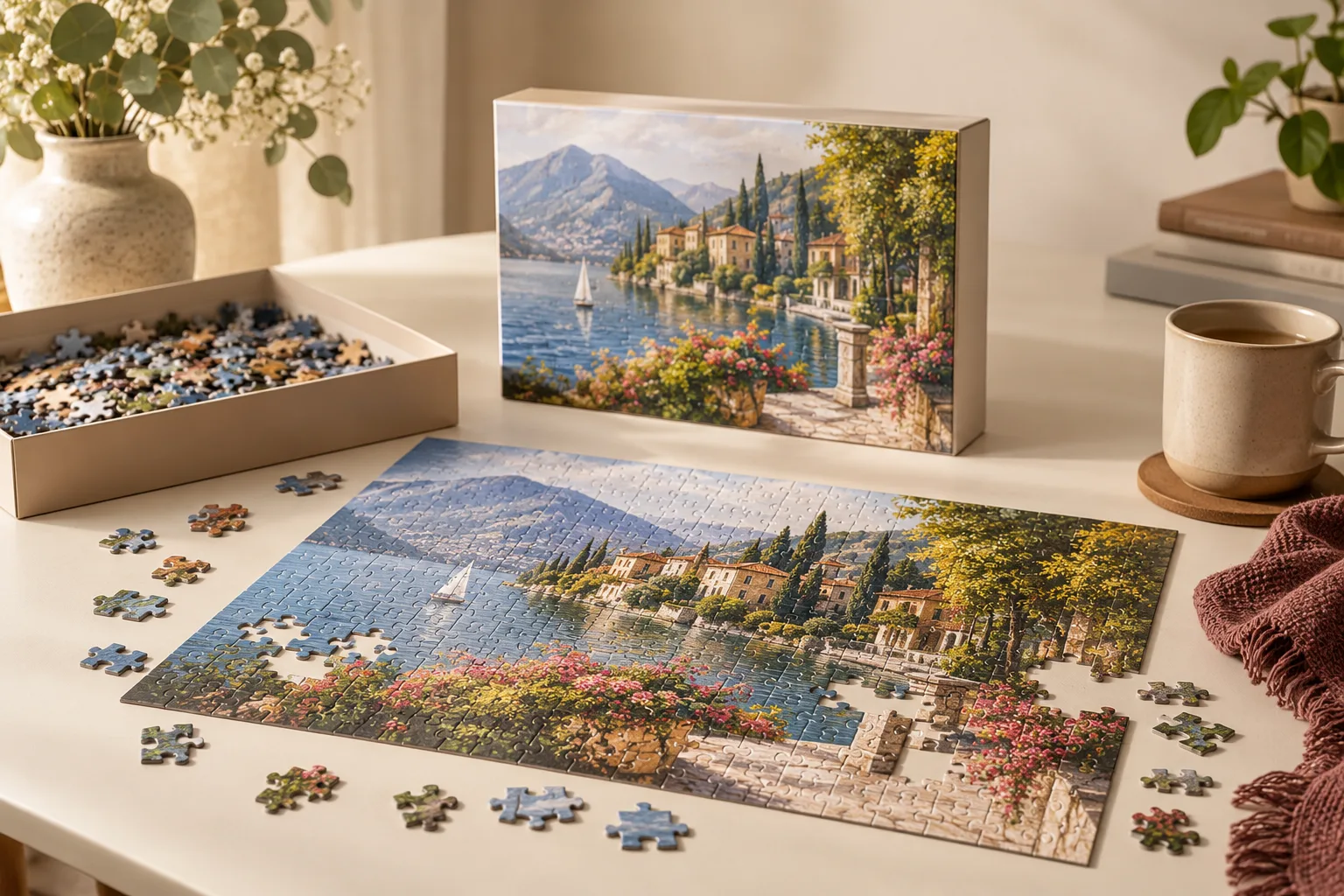
- A finished-puzzle photograph and size tableA photograph of the puzzle assembled on a table, the finished size beside a familiar object, and piece count and thickness set out in the first lines of the listing.
- Collections by picture and difficultyPages for how puzzles are searched: puzzles for adults, Indian art puzzles, puzzles with a small piece count for beginners, puzzles for toddlers by age.
- Puzzlers on Instagram and in clubsHobbyist puzzle accounts, time-lapse completions and local clubs, where the audience already follows puzzles and posts finished boards.
- Artist and photographer puzzlesThe story of the picture, the artist and the print, told for people who care where the image came from, with limited runs announced ahead.
- The next pictureA note to buyers around the time they will have finished the puzzle, with a picture in a similar style and difficulty.
What we do
What you get for jigsaw puzzles.
Each deliverable and what it is there to change.
A finished-size and difficulty table
Piece count, size when built, thickness and a plain difficulty rating for every puzzle on one page, for easy comparison.
A completed-puzzle photograph
A built puzzle on a table with the box beside it, for every picture in the range, to prevent the surprise at unboxing.
A pack check before dispatch
A simple process for weighing or counting a box to catch missing pieces, which are the commonest cause of unhappy buyers.
A picture-by-theme gift guide
Puzzles grouped by interest, such as travellers, art lovers and railway fans, for gift buyers with a person in mind.
How the result is measured
- Purchases
- Conversion rate
- Average order value
- Repeat purchase rate
- Return rate
- Missing-piece complaints
Recorded as a baseline before work starts, so every later report has an honest comparison.
How it works
From your first message to the first piece of work.
No open-ended retainer. Every step gives you something in writing.
First
Your brief
You tell us what you need in a few short steps: your business, what you want, where enquiries come from and how they are handled.
After the brief
A conversation and a written scope
We read it, then talk with whoever handles your enquiries. If you want our help, the scope, the fee and the reporting come in writing, and nothing starts before you have read them.
Before work starts
Baseline recorded
The numbers this work is meant to move, such as enquiries, quotations, orders, visits or renewals, written down so every later report has an honest comparison.
After the baseline
The first fix goes live
The fix we agreed to start with is put in place and measured against the baseline, whether that is a reply, a follow-up, a page, a listing or the handover between marketing and sales.
As agreed
Report against the baseline
What moved, what did not, and what changes next, in plain words. How often you get it is set in writing before work starts.
At renewal
Renew on the numbers
The term ends and you decide whether to continue from the results. The length is agreed in writing before anything starts.
What we need from you
What to have ready before we talk.
None of it has to be tidy. We read what you have.
- Your puzzles with the piece count and finished size
- Complaints about missing pieces, fit and finish
- Which pictures sell and which sit
- Any artists or photographers whose work you print
- Photographs of finished puzzles, or the puzzles to shoot
Selling in India and abroad
Selling jigsaw puzzles beyond your own market.
Where you sell decides sizes, units, seasons and returns. We work from Bengaluru and have no overseas office, so for a new country we start from your own sales and the platforms you already use.
Indian art and places as puzzle subjects
Madhubani, Warli and temple pictures are bought as gifts and as reminders of home by buyers abroad. Check which of those you already sell to overseas addresses.
Box size and postage
A big puzzle is a heavy flat box. Postage is charged by weight and size, so sellers abroad often ship in a bulk lot to a distributor.
FAQ
Questions about selling jigsaw puzzles online.
Not here? More answers, or ask on WhatsApp.
How many pieces should I list?
How do I show the quality of the cut?
Can artists sell their own puzzles online?
How much does it cost?
How long is the contract?
How soon will we see results?
Who will actually do the work?
What do you need from us?
What if we are not happy with the work?
More in Board Games & Puzzles
Sellers of jigsaw puzzles also need
Also selling from a shop, a workshop or a warehouse? See the page for retailers.
This page is part of the e-commerce section. The D2C brands page covers the arithmetic of acquisition cost and the second order for any brand.
Why us
Why owners pick GullySales over an agency.
Marketing and sales, as one job
Most agencies stop at the enquiry. We also fix what happens after it: the reply, the follow-up, the quote and the CRM.
The person on the first call does the work
No account managers in between. You are never handed to someone you have not met.
A baseline before anything starts
Your numbers are written down on day one, so every later report compares against something honest.
The fee in writing, split three ways
Our time, your media spend and production on separate lines. You always see what goes to us.
No guarantees we cannot keep
The term is agreed in writing and never a default twelve months. We never promise a ranking or a lead count, because nobody controls those.
One office, and we say so
Nagarbhavi, Bengaluru. We work across India by call and WhatsApp and travel when a session needs to be in person.
#257, 3rd floor, Sri Nanjundeshwara Complex, Nagarbhavi 8th Block, Outer Ring Road. How we work.
Engagement options
Ways to work with us.
Pick the size of commitment that fits. Every option starts with your brief and a conversation.
Option 1
The conversation on its own
A call after you send your brief. It says honestly whether you need outside help, and many fixes are ones your own team can make.
Option 2
One fix, scoped
Start with the fix that matters most, such as reply time or follow-up. The fee is in writing before anything starts.
Option 3
An ongoing programme
We run the work, report against the baseline, and you renew on the numbers. The term and the reporting are agreed in writing first.
Option 4
Guidance for your own team or agency
We plan, brief and check the work of your in-house team or current agency, instead of replacing them.
Your brief
Tell us what you need, and we will read it before we call.
Eight short steps about your business, what you want and who decides. Most questions are a tap, and you can skip any you would rather answer on the call.
Your next practical step
Tell us what you are trying to grow, and we will read it before we call.
Eight short steps, mostly taps. Skip anything you would rather answer on the call.