Coaching centres and tutors · Transit advertising
Put your batch on the bus the student already takes to class.
Transit advertising for a coaching centre books space on buses, autos, bus shelters and station platforms along the routes students and parents travel to school and tuition. GullySales matches routes and formats to the neighbourhoods your batch draws from, clears the artwork with the media provider, and sets up one way for a parent to reach your admissions desk.
Scope, fee, reporting and term are agreed in writing after we have read your brief and spoken to you.

What transit advertising means
Transit advertising buys space on vehicles and in transport locations, including bus panels, auto fleets, metro platforms, and carriage interiors, for an agreed display period. GullySales compares routes and formats against where your buyers travel, coordinates bookings and artwork approvals with the media provider, and sets up a traceable way for enquiries to reach your team.
Also for coaching centres and tutors
- Apartment advertising for coaching centres and tutors
- Newspaper advertising for coaching centres and tutors
- Outdoor advertising for coaching centres and tutors
- PPC advertising for coaching centres and tutors
- Brochure and flyer distribution for coaching centres and tutors
- Door-to-door promotional campaigns for coaching centres and tutors
- Billboard advertising for coaching centres and tutors
- Auto rickshaw advertising for coaching centres and tutors
Sales and marketing for coaching centres and tutors, the overview.
Last updated 14 Nov 2026. Rules for this trade differ by state and professional body, and they change. We describe restrictions in general terms, so check the current position with your own council or adviser before you publish anything.
For coaching centres and tutors
Where it usually goes wrong, and what we would do.
“Students travel the same routes at the same hours”
A tuition student rides to school, then to the centre, along a handful of roads that a parent can name. A bus panel on those routes is read by the student twice a day and by the parent at the stop. That is a narrower and more useful audience than a general city fleet. The work starts with a list of the roads and stops your own students use, taken from the admission form, and a request to the provider for the vehicles that actually run on them.
“A route can change after you have paid”
A bus is allotted to a depot, and the depot can move it to another corridor. The panel then carries your batch to people who cannot reach your door. Before booking we ask the provider for the allotted routes and vehicle numbers and agree in writing how substitutions and route changes will be handled. For auto fleets the same question applies to the area the drivers work, which is rarely fixed.
“A parent has three seconds at a bus stop”
A rear panel is read by a two-wheeler rider behind the bus, and a side panel by someone waiting at a stop. Neither reads a list of subjects. The artwork for a coaching centre needs one course, one locality and one way to respond, set large enough to read from where the viewer stands. A rank-photo collage that works on a wall becomes a blur on a moving vehicle, and carries its own advertising-rule risk.
“Approvals come from more than one office”
A transit advert passes through the media provider, the transport operator or authority, and sometimes a local body. Education advertising adds its own rules about claims, which differ by state and profession. The owner's own adviser decides the wording of anything about results or selections. Production should not start until the clearance route is clear, otherwise printed vinyl sits in a store while the batch closes without it.
What we do
What we deliver for coaching centres and tutors.
The work available for this need. We agree the deliverables and responsibilities for your engagement in writing.
Student route and stop list
A list built from your admission forms and parent conversations, naming the roads, stops and stations your students use on the way to school and to the centre. You mark the ones that matter, and the list becomes the brief for every quote.
Result: Each proposed route has at least one named stop where your students board or alight.
Format comparison for a student audience
A comparison of bus sides, rear panels, shelter boards, auto hoods and platform panels. Each is judged on reading distance, reading time and whether a parent can respond from where they stand.
Result: Each format has a stated viewing distance and a reason for inclusion or exclusion.
Written placement schedule
A booking record naming the vehicles, shelters or stations, the display dates and the route commitments the provider will give in writing. Substitution and route-change terms sit in the same record before any payment.
Result: The schedule lists vehicle numbers or site names and the agreed substitution terms.
Artwork for a moving reader
Artwork prepared to the operator's dimensions, built around one course, one locality and one response route. You approve the message and every claim before it goes to the media provider.
Result: The artwork passes a reading test at the distance recorded for its format.
Clearance and approval record
A note of each approval the placement needs, from the provider, the operator and any local body. It separates artwork approval from permission to print, so production begins only when both are in hand.
Result: Each approval is recorded with its source and the date it was received.
Installation photographs
Dated photographs of each panel in place, tied to the vehicle registration or the shelter name. They are compared with the schedule, and gaps or damage are raised with the provider under the repair terms you agreed.
Result: Each booked placement has a dated photograph or a recorded gap.
How the result is measured
- Vehicles and sites evidenced live against the booking, with condition issues recorded
- Digital plays reported against the booked schedule, separately from response
- Campaign-number calls and tracked visits or scans, where used
Recorded as a baseline before work starts, so every later report has an honest comparison.
Who it is for
This is written for these coaching centres and tutors.
- School tuition centres for CBSE, ICSE and state boards
- Home tutors and individual subject teachers
- JEE and NEET entrance coaching institutes
- State entrance coaching for KCET, MHT CET and similar exams
- Government exam coaching for UPSC, state PSC, bank and SSC exams
- Commerce coaching for CA, CS and CMA foundation levels
- Language, spoken English and IELTS or PTE coaching centres
- Study abroad and overseas education consultants
- College admission and career counselling advisers
- Online and hybrid tutoring businesses
Before you decide
Agree the work. Know how to judge it.
Transit advertising for coaching centres and tutors: use these checks to prepare, choose the scope, and review what changes.
Bring the right evidence
State the buyer group, catchment, and dates that matter to the offer. Ask for the proposed inventory and available evidence about its audience, with the source and date shown.
Make the scope clear
Agree the exact placements, formats, booking period, and proof of delivery. Separate media charges from design, production, permissions, and installation where these apply.
Check the work in use
Compare delivery evidence with the agreed booking and record enquiries through a distinct response route where practical. Treat audience estimates separately from measured responses.
Know when to change course
Do not buy a placement only because it is discounted. If the location or audience does not fit the buyer, revisit the plan before committing production costs.
These are discussion points, not a fixed package. GullySales confirms the deliverables, responsibilities, fee, and term in writing after reading your brief and speaking with you.
Before we start
What to have ready before the work starts.
The records, access and decisions this work needs from coaching centres and tutors. Anything missing is noted in the written scope, with who will supply it.
- Student addresses and school names
- Routes are chosen from where students live and which schools they attend. Give us a list of localities and school names from your admission forms, without personal details. If the forms do not record them, the front desk should start before the campaign.
- The one course to advertise
- A moving panel can carry one course and one batch. Choose the batch you want to fill first, with its start date. When three courses are given equal space, none can be read, and the panel works as decoration.
- A single response route
- A phone number, a short link or a WhatsApp number that goes to a named person. A parent at a bus stop will not search for your centre by name, so the route on the panel is the only path from the vehicle to the desk.
- Proof for any claim on the panel
- Any wording about results, selections or ranks needs a record in your own files and a check by your adviser. The provider and the authorities may ask to see it. Without it, the panel names the course and the locality and says nothing about outcomes.
- Someone to inspect the panels
- A person who can photograph the panels on the road, or at the depot, within the display period. We can list the vehicle numbers, but a defect is found by someone who looks, and a panel missing for the whole period is lost money.
How it works
How the transit advertising work runs
The work itself, in order. How an engagement starts, from your brief to a written scope, is set out on our method page.
- 1
Where your students travel from
We begin with the admission forms and ask the front desk which routes students and parents describe. You confirm the localities and schools your batch draws from. Without that list a quote for city-wide coverage is a guess, and a fleet that does not pass your students' roads is a cost with no audience.
- 2
Route and format shortlist
The provider's available routes and formats are compared with your student list, with quoted costs beside them. You decide which corridors and which surfaces to book. A large panel on a road your students never use is dropped from the list.
- 3
Terms for route change and repair
Before you pay, we record how the provider handles a bus moved to another route, a panel damaged in service and a vehicle taken off the road. These terms decide whether the booking is worth its price, so they are read and approved along with the schedule.
- 4
Artwork and claims clearance
Your approver checks the message, the batch name and any statement about results against the centre's own records. Your adviser reviews wording that touches results or selections against the current rules for coaching advertisements. The cleared artwork then goes through the provider and operator for approval before production.
- 5
Launch inspection and the admissions desk
Installation photographs are checked against the schedule, and missing or damaged panels are raised with the provider. The admissions desk is told the response number or code, and a test call confirms it works and that the person answering will ask where the caller saw the panel.
- 6
Reading the display against admissions
At the end of the display period we compare the photographs, the recorded calls and the confirmed admissions with the figures noted before the work began. A call from a stop near a panel is useful evidence, though not proof. You decide whether to continue, change the route or use another channel.
Where this fits
Three pieces of sales work, in this order.
This work sits inside sales process design, at stage 1, prospecting and lead generation. The audit comes before it, and sales management keeps it running.
Step 1
Sales audit
Find where deals are being lost and what to fix first.
Start here if you cannot say where orders are lost.
Step 2 · you are here
Sales process design
One written way to sell, from first enquiry to repeat order.
Start here if every salesperson sells differently.
Step 3
Sales management
A target, a review routine and someone who owns the number.
Start here if the team has targets and no routine.
FAQ
Questions owners ask before they call.
Not here? More answers, or ask on WhatsApp.
Is a bus panel better than a hoarding for a coaching centre?
How do we choose between a bus, an auto and a bus shelter?
Can we show toppers on the panel?
What if the bus is moved to a different route?
Can transit advertising tell us how many admissions it brought?
Does transit advertising suit online tutors?
How much does it cost?
How long is the contract?
How soon will we see results?
Who will actually do the work?
From the blog
Further reading for coaching centres and tutors.
 8 min read · 21 Sept 2026Metro advertising in BengaluruNamma Metro sells three audiences under one name: people in the station, people in the train and drivers under the viaduct. Which to buy, and why.
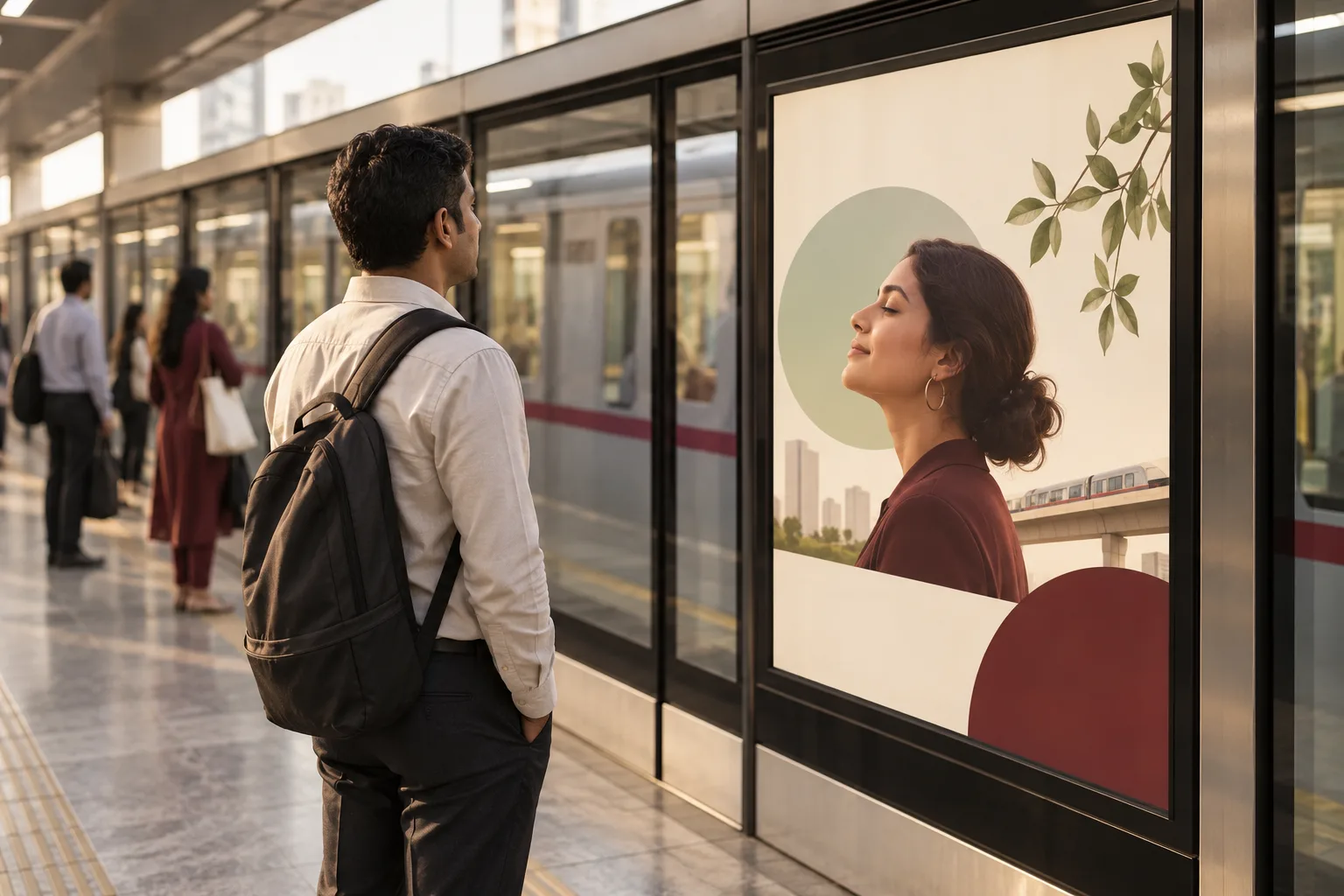 7 min read · 21 Sept 2026How to design metro and transit advertisingA commuter stands still in front of a platform panel for four minutes and passes the same one twice a day for a month. Design for the sixth viewing.
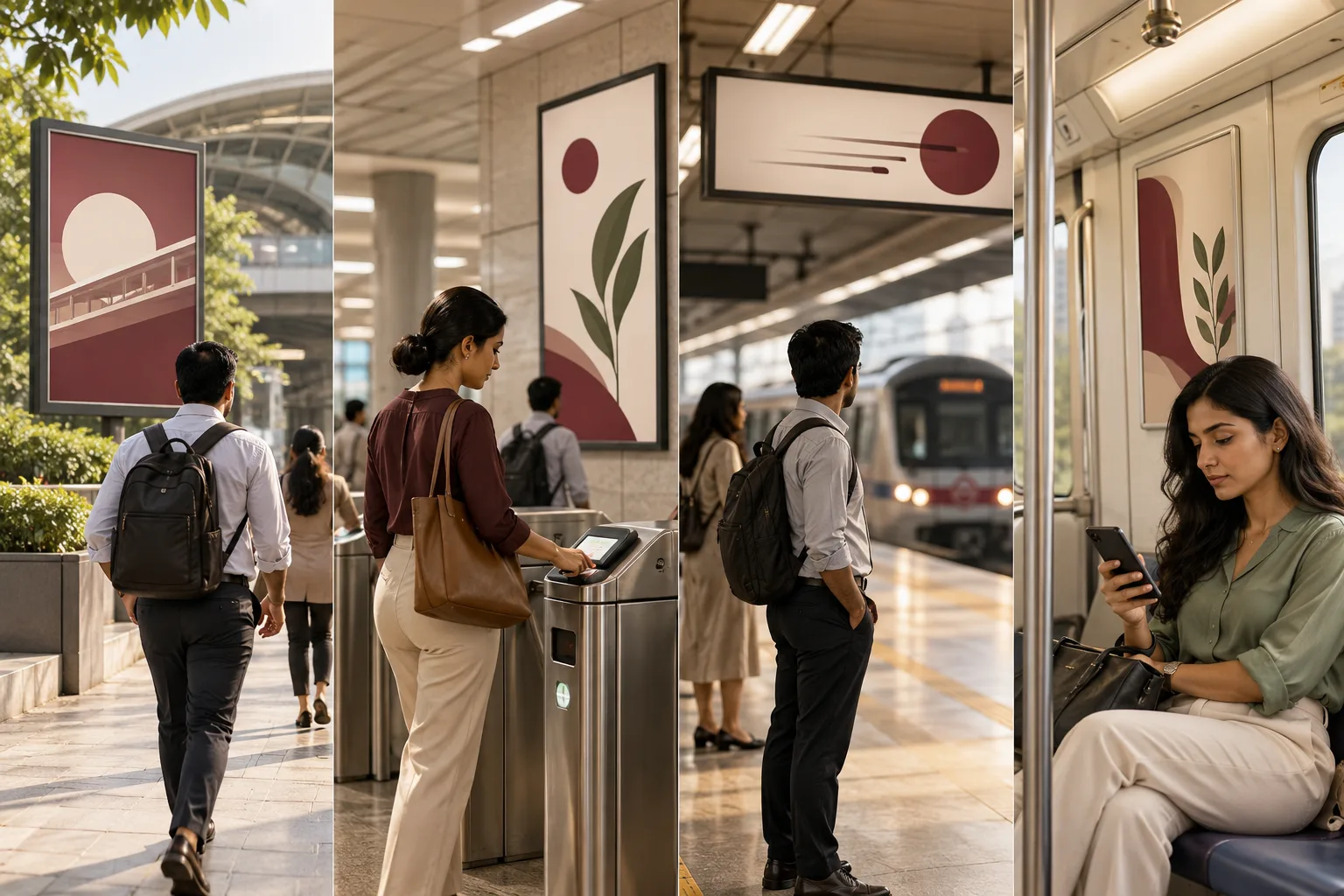 7 min read · 21 Sept 2026How to advertise to metro commutersA commuter is a mode, not a person. The journey has four still moments, each needing different creative, so one design across a station fails.
More for coaching centres and tutors
Related work to consider.
Closest to this: paid and media
- Apartment advertising for coaching centres and tutors
- Newspaper advertising for coaching centres and tutors
- Outdoor advertising for coaching centres and tutors
- PPC advertising for coaching centres and tutors
- Brochure and flyer distribution for coaching centres and tutors
- Door-to-door promotional campaigns for coaching centres and tutors
- Billboard advertising for coaching centres and tutors
- Auto rickshaw advertising for coaching centres and tutors
Also for coaching centres and tutors
Or start from the overview: sales and marketing for coaching centres and tutors.
Your next practical step
Tell us what you are trying to grow, and we will read it before we call.
Eight short steps, mostly taps. Skip anything you would rather answer on the call.