Driving schools · Lead generation
Bring in learners who want your course, from the localities your cars can reach.
Lead generation for a driving school means putting the right course in front of a learner or a parent who is ready to ask about it. The first sign is a call, a WhatsApp message or a Maps tap from someone living within reach of your practice ground. GullySales works on the pages, the sources and the enquiry record that lead to a booked first session.
Scope, fee, reporting and term are agreed in writing after we have read your brief and spoken to you.
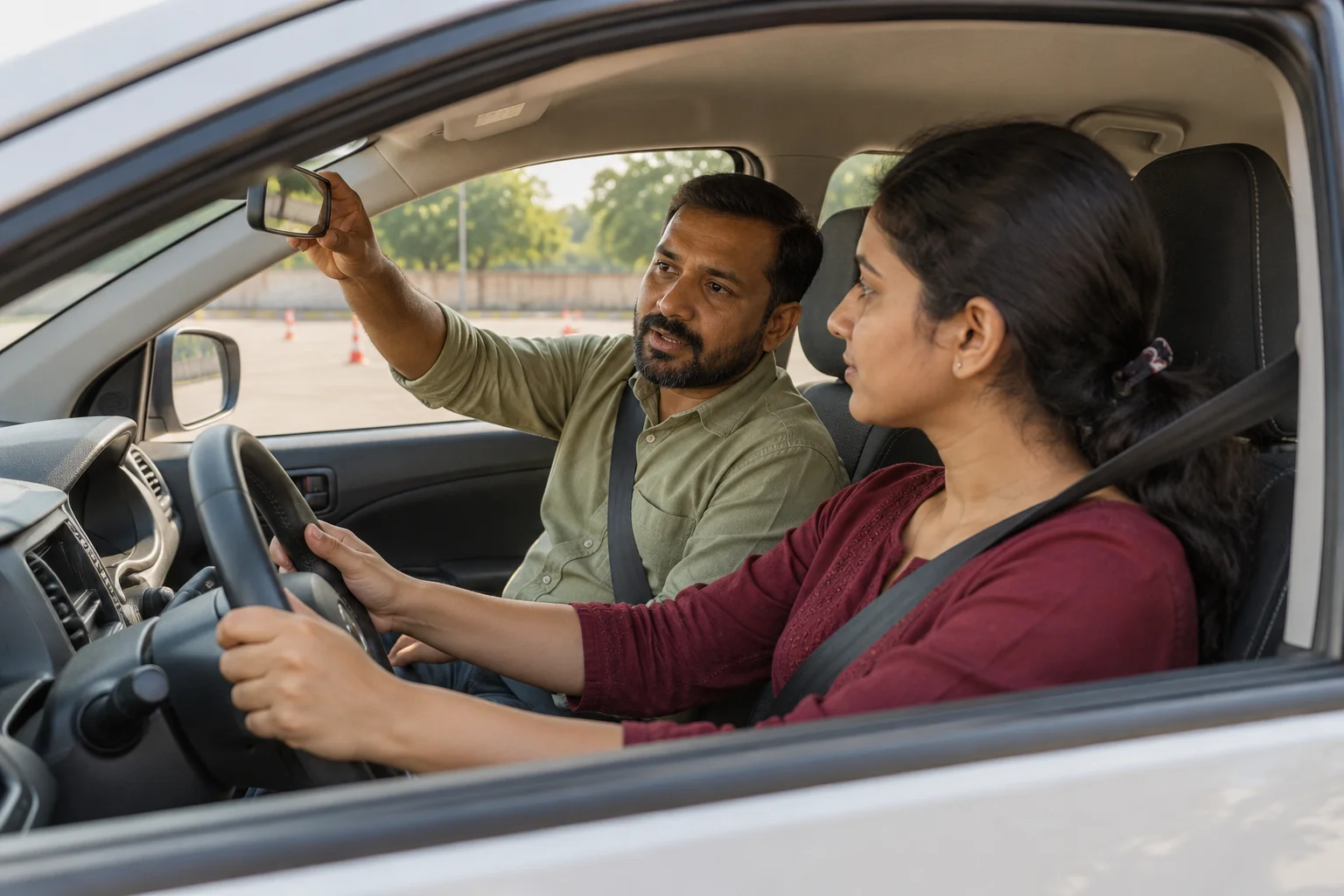
What lead generation means
Lead generation is the combined work of every channel that brings in a new enquiry, whether from search, adverts, referrals or a stall at an exhibition. GullySales runs these channels together and reports the number of enquiries each one produced, not the activity behind it.
Plan the next part of the work
Last updated 21 Nov 2026.
For driving schools
Where it usually goes wrong, and what we would do.
“The learner picks on distance before price”
A learner has to turn up on every training morning, so a school across the city loses to one a short ride away. Lead generation starts with the localities your pick-up covers, not the whole city, and names them where the learner searches.
“A car owner who cannot drive is the warmest enquiry”
The family has bought the car and it stands parked. Showrooms, used car dealers and apartment groups know these people before any search happens, and a school introduced there meets a learner who has already decided.
“Women, seniors and nervous returners ask different questions”
A first-time driver asks the fee. A person returning after years asks about the instructor and the vehicle. One generic ad answers neither, so the enquiry goes to a school that speaks to the fear.
“Each source needs its own label in the register”
A call from Maps, a message from a showroom hand-over and a walk-in from a college poster look identical unless the front desk writes down where each came from. Without that, the next rupee of spend is a guess.
What we do
What we deliver for driving schools.
The work available for this need. We agree the deliverables and responsibilities for your engagement in writing.
Course pages matched to the learner
Separate pages for beginners in a car, two-wheeler learners, refresher courses, automatic gear and corporate groups, each saying what the fee covers and who teaches.
Result: A learner lands on the course they are afraid of, not on one price list.
Locality-led Maps and search presence
The profile and pages name the areas you pick up from, with real photographs of the dual-control car and the practice ground.
Result: The areas on the page match the areas the cars can actually reach.
Showroom and dealer introductions
A one-page note and a leaflet for sales executives who hand over keys to buyers who cannot drive, agreed with each showroom in advance.
Result: You can see which showrooms have sent a learner.
An enquiry register with a source column
A sheet or CRM list where every call and message is entered with its source, the course asked about and the next step.
Result: The owner can count enquiries by source without relying on memory.
A first-session booking prompt
One message that offers a first-session slot and the instructor's name, sent to every enquiry on the register.
Result: Each enquiry gets an offer of a slot, not only a price.
How the result is measured
- Relevant enquiries by source
- Duplicate and unsuitable enquiries
- Time to the first response
- Accepted enquiries reaching an agreed next step
Recorded as a baseline before work starts, so every later report has an honest comparison.
What to capture or send
Each driving enquiry needs the vehicle, the locality and the learner's worry written down.
- Car, scooter or automatic
- Asked on the first call or form. It sends the learner to the right instructor and car, and the right fee.
- Locality and pick-up point
- Entered by the desk. It shows whether a car can reach the learner, and which localities send the most enquiries.
- Has a car but cannot drive
- A tick when the learner owns or is about to buy a vehicle. This is the warmest enquiry, so the callback goes first.
- First-time, nervous or returning
- Chosen from three lines on the form. It decides which instructor is offered and how the first call is worded.
- Learner's licence status
- Whether the learner already holds a learner's licence. It tells the desk if the call is about booking the test or starting lessons.
- How the learner found the school
- Maps, showroom, banner, relative or school gate. It shows which source filled which batch.
Who it is for
This is written for these driving schools.
- Car driving schools teaching first-time learners
- Two-wheeler and scooter training schools
- Women-only driving instruction
- Refresher courses for those who hold a licence but fear the road
- Automatic transmission and electric car training
- Driving schools that handle learner's licence and test booking support
- Heavy vehicle and commercial driver training
- Corporate and fleet driver training
Before you decide
When this may not be the right fit.
- No instructor is free for a new batch, so more enquiries would only turn learners away at the first call
- You have no car or instructor for the locality that sends enquiries, and travel would make the lesson impractical
- The desk phone goes unanswered while instructors are in the car, so a new campaign would only add missed calls
Before you decide
Agree the work. Know how to judge it.
Lead generation for driving schools: use these checks to prepare, choose the scope, and review what changes.
Bring the right evidence
Define the organisations or buyers you can serve and the reasons they would consider a conversation. Bring examples of accepted and rejected prospects so the selection rule is visible.
Make the scope clear
Agree the research sources, contact approach, qualification rules, and handover. Clarify which meetings count as accepted and what happens to replies that are not ready to buy.
Check the work in use
Review why a prospect was selected and what was learned from the response. Count held, relevant conversations separately from contacts found, messages sent, or meetings booked.
Know when to change course
If the same objection appears repeatedly, adjust the offer or buyer group before increasing outreach. Respect a request to stop contact and keep the exclusion in the record.
These are discussion points, not a fixed package. GullySales confirms the deliverables, responsibilities, fee, and term in writing after reading your brief and speaking with you.
Before we start
What to have ready before the work starts.
The records, access and decisions this work needs from driving schools. Anything missing is noted in the written scope, with who will supply it.
- The enquiry notebook or phone log
- Bring whichever record your desk keeps, even a notebook with dates and numbers. It shows where enquiries came from and how many enrolled. If nothing is written, the manager gives us a rough account of the last season, and the starting figures rest on that.
- The batch and seat sheet
- The sheet listing each batch, its timing, car and number of learners. It tells us where there is room to sell. A course that is full does not need leads. Without the sheet, we cannot tell which course to push.
- A decision on introductions from showrooms
- Decide whether the school will accept learners from a showroom and whether anything is given back. Only the owner can decide. Without the decision, we leave showroom introductions out of the plan.
- Instructors' and cars' details for the pages
- The make of each car, its transmission, the instructors' names, and permission to name them. We write pages from these facts. If an instructor does not want to be named, the page speaks of the school's instructors without names.
How it works
How the lead generation work runs
The work itself, in order. How an engagement starts, from your brief to a written scope, is set out on our method page.
- 1
Read the enquiry notebook and the batch sheet
We begin with the notebook, phone log or sheet where your desk writes down enquiries, laid beside the batch sheet showing who actually enrolled. You tell us which courses fill and which batches run half empty. We note where each learner lived and how they first reached you. That shows which streets and which sources are worth building on.
- 2
Mark the practice ground on a map
We draw the circle of localities a learner can reach for morning and evening sessions, using your practice ground, your pick-up points and the roads your instructors use. You correct it with your own sense of who really turns up. The circle decides where the pages, listings and introductions are aimed, so nothing is spent on places beyond reach.
- 3
Write one course page per learner
We write the course pages around the person asking: a first-time adult, a parent booking for a son, a nervous returner, a woman who wants a woman instructor. Your senior instructor checks what each page says about the car, the route and the routine. Every page ends with a booking prompt for a first session.
- 4
Meet the showroom and dealer desks nearby
We help you list the car showrooms, two-wheeler dealers and used car lots near you, and prepare a short introduction note for each. You or your manager carry it to the desk. We agree beforehand what the school does for a buyer who needs lessons, and what, if anything, a showroom executive may receive.
- 5
Label every source and test the booking prompt
We set the source column in your register, with a label for Maps, search, showroom, family referral and walk-in. We then send test enquiries through each source to see whether the desk logs them the right way and offers the first session. After a season we count enquiries and bookings by source against the starting figures. You decide which sources continue, and the desk keeps the label on every enquiry so a learner who came through a showroom is not later counted as a search result.
Where this fits
Three pieces of sales work, in this order.
This work sits inside sales process design, at stage 1, prospecting and lead generation. The audit comes before it, and sales management keeps it running.
Step 1
Sales audit
Find where deals are being lost and what to fix first.
Start here if you cannot say where orders are lost.
Step 2 · you are here
Sales process design
One written way to sell, from first enquiry to repeat order.
Start here if every salesperson sells differently.
Step 3
Sales management
A target, a review routine and someone who owns the number.
Start here if the team has targets and no routine.
FAQ
Questions owners ask before they call.
Not here? More answers, or ask on WhatsApp.
Which source should a new driving school start with?
Can we promise that a learner will get the licence?
Should we pay a showroom executive for each learner sent?
Should we ask for the learner's age on the enquiry form?
Who should answer the first call or message?
Can we collect leads at a car showroom event?
How much does it cost?
How long is the contract?
How soon will we see results?
Who will actually do the work?
More for driving schools
Related work to consider.
Closest to this: leads and follow-up
Also for driving schools
Or start from the overview: sales and marketing for driving schools.
Your next practical step
Tell us what you are trying to grow, and we will read it before we call.
Eight short steps, mostly taps. Skip anything you would rather answer on the call.