Driving schools · Buyer persona
Know the person who enrols, and the person who pays, before writing a word of copy.
A buyer persona for a driving school describes the kinds of people who enrol and the family members who decide with them. It records what each fears, asks and compares before choosing. GullySales builds these from your own enquiry register and instructors' stories.
Scope, fee, reporting and term are agreed in writing after we have read your brief and spoken to you.
What buyer persona means
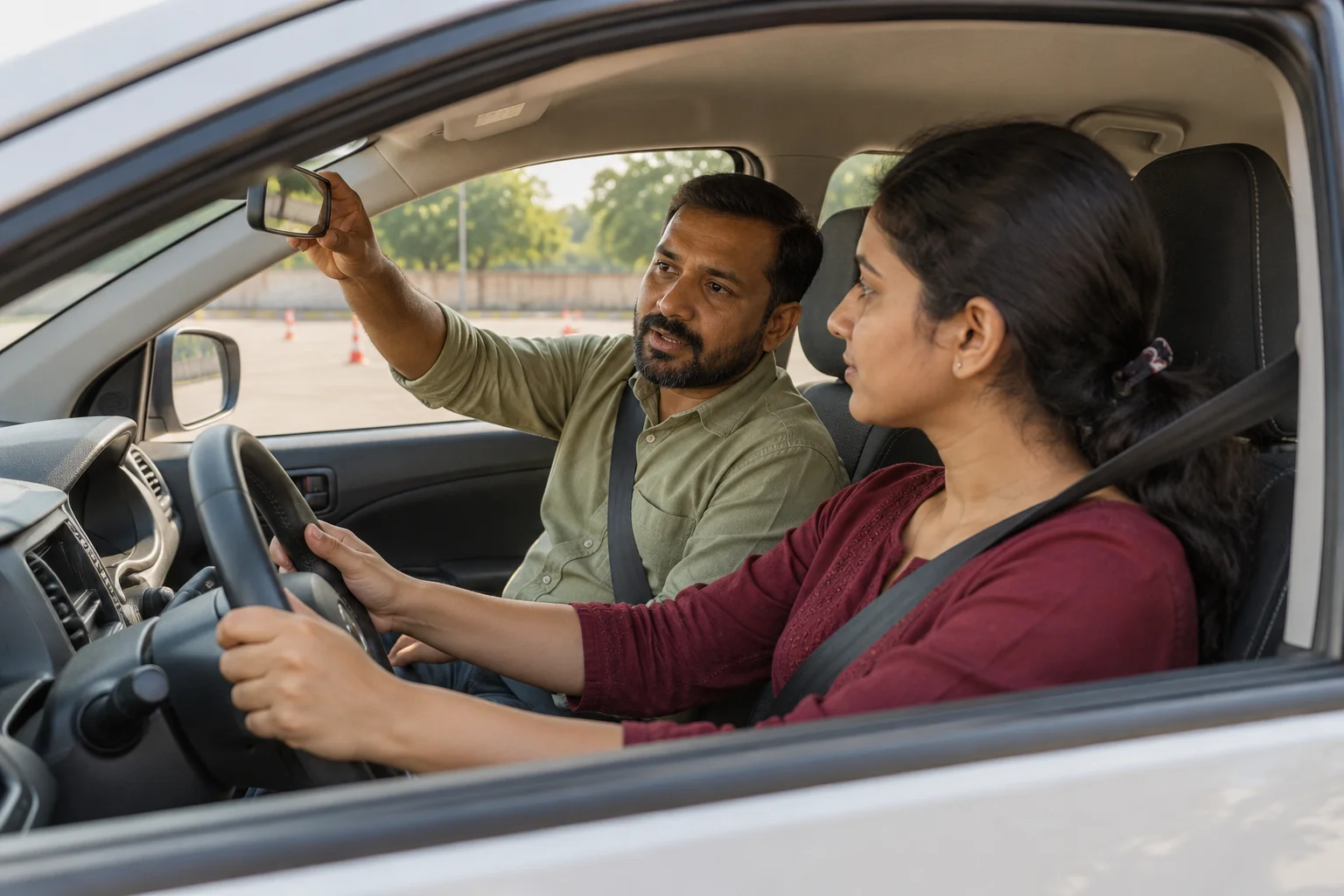
A buyer persona is a plain description of the kind of customer who actually buys from you. It includes what they search, what worries them and who else they ask before deciding. GullySales builds this from real enquiries and past sales rather than a generic template, then uses it to write every page and advert.
Last updated 14 Nov 2026.
For driving schools
Where it usually goes wrong, and what we would do.
“The nervous adult is not the college student”
An adult who bought a car late is afraid of traffic and of looking foolish. A student wants a licence quickly and cheaply. Both ask for a driving school, but they need different pages, tones and times for a call.
“A parent may pay for someone else's course”
A father books a two-wheeler course for a son, a daughter books a car course for a mother. The person who calls is not the person who sits beside the instructor, and the reply must work for both.
“The corporate buyer wants paperwork, not lessons”
An HR or admin head arranging driver training for staff asks about group sessions, a certificate and an invoice. A page written for individual learners fails them.
“Personas drawn from guesses mislead”
An imagined learner is a copy of the owner. A persona made from your recent enquiries shows who actually called, what they asked first and where they went quiet.
What we do
What we deliver for driving schools.
The work available for this need. We agree the deliverables and responsibilities for your engagement in writing.
Persona sheets from your register
One page for each main buyer, such as the first-time adult, the student, the returning driver, the parent and the employer, built from the notes at your front desk.
Result: Each persona cites the enquiries it came from.
A list of questions per persona
The opening questions each buyer asks, in their own words, with the answer your school gives.
Result: The front desk has a ready answer for each opening question.
Channel notes
Where each persona looks first, such as Maps, WhatsApp, a showroom or a college notice board.
Result: Effort goes to the place each buyer actually looks.
Objection notes
The worry that stops each persona from booking, such as fear of the instructor or doubt about the fee, with a plain reply.
Result: A reply exists for every common hesitation.
Copy guidance for each page
A short note on tone and detail for the pages written for each persona.
Result: A writer can match a page to its reader.
How the result is measured
- Enquiry match to persona
- Conversion rate by persona
- Content aligned to persona
Recorded as a baseline before work starts, so every later report has an honest comparison.
Who is asking
A driving school hears from learners and payers who need different first answers.
- Nervous adult who has never driven
- Wants a patient instructor, a quiet practice ground and a promise that nobody will shout, with a lesson on a day of their choice.
- College student with a scooter
- Wants a short batch near the college, a clear fee and a time that fits the class timetable.
- Parent paying for a daughter
- Wants to know the instructor's background, whether a woman instructor is available and where the car goes.
- New car owner
- Wants to learn before delivery, has a date in mind and will pay for an extra session if the instructor is free.
- Person returning to driving
- Wants a refresher on the first session without feeling judged, and a car they can handle.
- Fleet manager booking for drivers
- Wants an invoice, a batch date for a group and a record of who attended.
Who it is for
This is written for these driving schools.
- Car driving schools teaching first-time learners
- Two-wheeler and scooter training schools
- Women-only driving instruction
- Refresher courses for those who hold a licence but fear the road
- Automatic transmission and electric car training
- Driving schools that handle learner's licence and test booking support
- Heavy vehicle and commercial driver training
- Corporate and fleet driver training
Before you decide
When this may not be the right fit.
- You have no enquiry records, so personas would be guessed from other schools' pages
- Your learners are almost all from one group, so extra sheets would repeat each other
- You plan to use personas to charge learners different fees by income, which is not their purpose
Before you decide
Agree the work. Know how to judge it.
Buyer persona for driving schools: use these checks to prepare, choose the scope, and review what changes.
Bring the right evidence
Write the decision the research must support, such as entering a market or choosing a buyer group. Separate what you know from sales records from what the team currently assumes.
Make the scope clear
Agree which buyers to speak to, which sources to review, and what access you can provide. Include lost enquiries and people who chose another supplier, where they are willing to take part.
Check the work in use
Look for source dates, sample limitations, and evidence that disagrees with the preferred answer. A recommendation should show how it follows from the findings.
Know when to change course
Do not treat a few positive conversations as proof of demand. Test the proposed offer with an actual buying decision before committing to a wider launch.
These are discussion points, not a fixed package. GullySales confirms the deliverables, responsibilities, fee, and term in writing after reading your brief and speaking with you.
Before we start
What to have ready before the work starts.
The records, access and decisions this work needs from driving schools. Anything missing is noted in the written scope, with who will supply it.
- The enquiry register for a full season
- Every enquiry with date, source, course and outcome. If you keep only a notebook, bring it. If you have nothing, the desk reconstructs the last months from memory and the sheets are less certain, and we say so on the front page of each one.
- Learners willing to talk
- A few past or present learners who will speak by phone. Ask them yourselves. If none agree, we rely on the desk and the instructors, and the sheets say that no learner was heard directly.
- Time with two instructors
- A short sitting with each. They know what learners fear. Without them the sheets lean on guesses about fear and confidence, which is exactly the part an instructor knows best from the passenger seat.
- A list of courses by importance
- Which courses fill your batches and which you want to grow. We write sheets for the first. Without the list we write a long set of sheets.
- Rules on how learner details are kept
- Tell us how enquiry details are stored and who sees them. We never put names in the sheets. If you have no rule, we suggest one for you to review with your adviser, so notes from the talks are kept safely and then removed once the sheets are done.
How it works
How the buyer persona work runs
The work itself, in order. How an engagement starts, from your brief to a written scope, is set out on our method page.
- 1
Sort the enquiry register by who enrolled
We take the enquiry notebook or sheet and sort the enquiries by the kind of learner and the person who paid: a college student, a woman returning to driving, a parent for a son, a company. You help us where the record is silent. This shows how many types of learner we need to describe, and which ones are only a few enquiries in a year and can be left for a short note.
- 2
Choose learners to talk with
With your desk we pick a few learners: someone who enrolled on the first call, one who hesitated, and a parent who paid. You ask them for a short talk by phone. Their names do not appear in the finished sheets. A talk lasts only as long as they choose.
- 3
Ask what they feared and whom they asked
In each talk we ask what worried them before booking, who they asked, what they compared and what decided it. We also ask about the instructor, the car and the fee. We write their answers in their own words and note where a family member made the decision, for example a parent who chose the school for a daughter, or a spouse who insisted on a woman instructor.
- 4
Hear the instructors' side
We talk to two instructors about the learners they teach: who is afraid, who is overconfident, who stops. Their account tells us what the first week looks like for each type. It also shows which fears are real and which are the school's guess.
- 5
Check each finding against the record
Every statement in a draft sheet is tied to an enquiry, an interview or an instructor's account. If we say nervous returners ask about the instructor, we find the enquiry where this happened. Claims we cannot support are cut. Your desk reads the evidence sheet and tells us where we have the wrong person, since the desk hears the real voice of the learner.
- 6
Use the sheets and compare with new enquiries
We agree where the sheets are used first: the course pages, the first reply and the review request. After a while we read new enquiries against the starting counts to see whether the right person is being reached. You choose where to apply the sheets next, and the desk records on every new enquiry who the learner is and who is paying, so the sheets can be checked against live enquiries.
Where this fits
Three pieces of sales work, in this order.
This work sits inside sales process design, at stage 0, foundation. The audit comes before it, and sales management keeps it running.
Step 1
Sales audit
Find where deals are being lost and what to fix first.
Start here if you cannot say where orders are lost.
Step 2 · you are here
Sales process design
One written way to sell, from first enquiry to repeat order.
Start here if every salesperson sells differently.
Step 3
Sales management
A target, a review routine and someone who owns the number.
Start here if the team has targets and no routine.
FAQ
Questions owners ask before they call.
Not here? More answers, or ask on WhatsApp.
How many personas do we need?
What if we have no enquiry records?
Does a persona change which courses we offer?
Does a persona help the instructor too?
Do we need a persona for the company that books drivers?
What if the persona contradicts what we believed?
How much does it cost?
How long is the contract?
How soon will we see results?
Who will actually do the work?
More for driving schools
Related work to consider.
Closest to this: strategy and research
Also for driving schools
Or start from the overview: sales and marketing for driving schools.
Your next practical step
Tell us what you are trying to grow, and we will read it before we call.
Eight short steps, mostly taps. Skip anything you would rather answer on the call.